

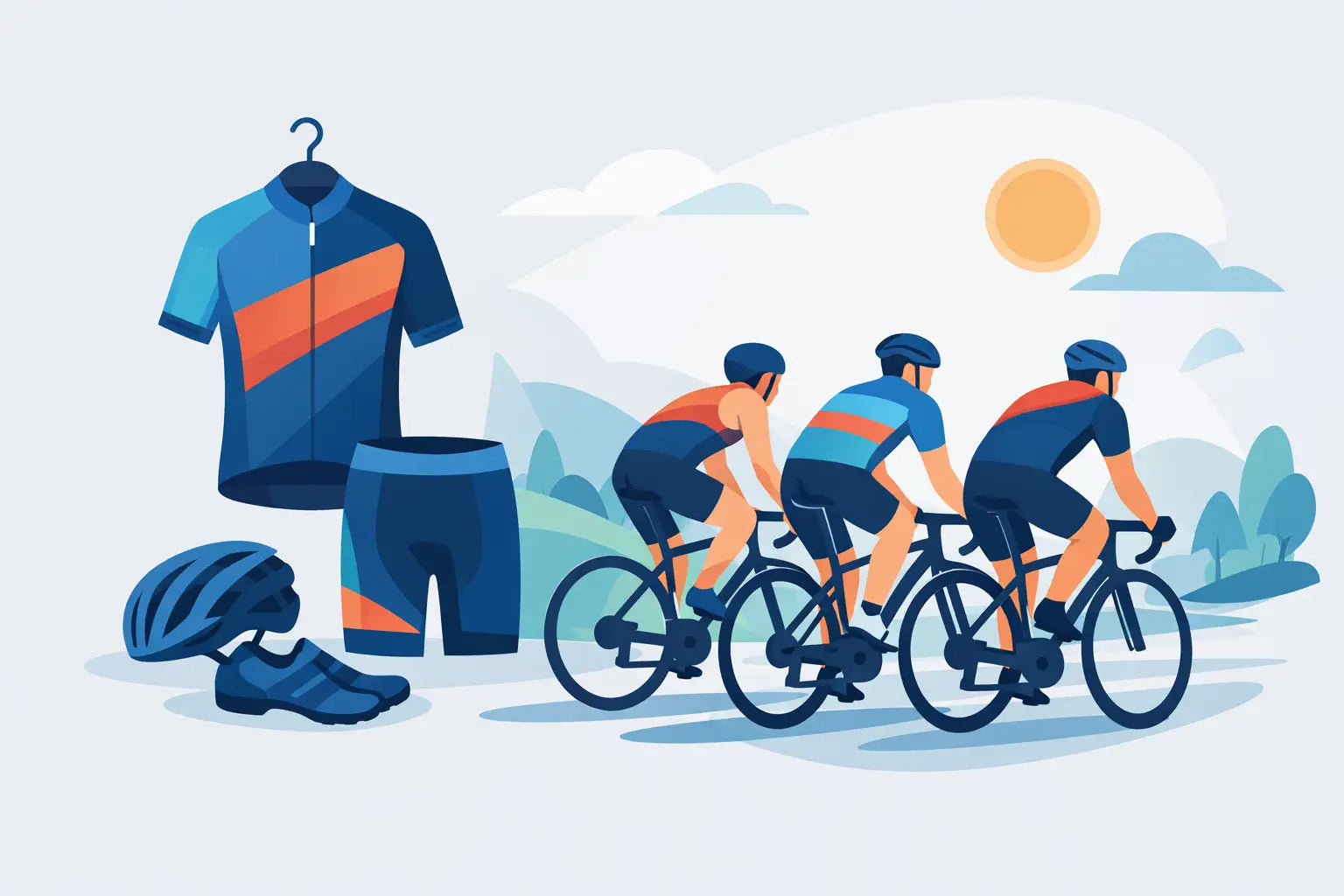
A club kit usually fails in one of three places: the fit is off, the design looks dated after one season, or the ordering process turns into extra work for one volunteer. If you're figuring out how to build club kit, those are the issues to solve first. A strong kit is not just a jersey with your logo on it. It has to perform on long rides, hold up through repeated washing, and make every rider - from your fastest racer to your weekend group ride regular - want to wear it.
What good club kit actually needs to do
Club kit has a harder job than race-day apparel built for one rider. It has to work across different body types, riding styles, and expectations. Some members care most about an aerodynamic fit. Others want all-day comfort, storage, and durability. The best club kit balances those needs without turning into a compromise that satisfies no one.
That starts with clarity. Decide whether your kit is meant primarily for racing, club rides, gravel events, charity rides, or a mix of all four. A race-oriented club may want a close-cut jersey, compressive bibs, and lightweight fabrics. A broader recreational club may need a slightly more forgiving fit and a product range that includes short sleeve jerseys, bib shorts, gilets, arm warmers, and cooler-weather options.
If you skip this step, every later decision gets harder. Design debates get louder, sizing issues increase, and members end up buying pieces they do not really use.
How to build club kit from the inside out
The smartest way to build club kit is to start with function, then move to fit, then finalize design. Most teams do the reverse. They start with colors and graphics, then try to force those ideas onto products that may not suit how the club actually rides.
Start with your riding profile
Look at your calendar and your membership. Are most rides short and fast, or long and steady? Are you outfitting a road team, a mixed-surface club, or a triathlon group with different demands? A summer-focused club in a warm climate can prioritize breathable fabrics and lighter construction. A team that trains through shoulder seasons may need thermal layers and outerwear in the same program.
This is also where you decide how wide your range needs to be. Not every club needs ten SKUs. In many cases, a jersey, bib short, and a few key accessories create a more successful launch than an oversized collection that stretches your budget and complicates ordering.
Choose products riders will reorder
A club kit should feel good enough that members come back for a second set. That means prioritizing the pieces with the highest wear frequency and the biggest effect on comfort.
Jerseys and bib shorts are the foundation. Get those right before you think about extras. Bib shorts, especially, deserve more attention than they usually get. Riders may forgive a graphic they are unsure about. They will not forgive a poor chamois, unstable leg grippers, or straps that create pressure after two hours.
Fabric choice matters here. Lightweight materials feel fast and ventilated, but they are not always the right answer for every rider or every climate. More compressive fabrics can improve support and hold shape better over time, but some members may prefer a softer hand feel for long endurance rides. It depends on your club's priorities, and that is why product selection should come before artwork refinement.
Fit is where club kit succeeds or fails
If you want to know how to build club kit that actually gets worn, focus on fit earlier than most teams do. Riders notice fit immediately, and poor fit creates returns, complaints, and dead inventory.
Build around a realistic size curve
Every club has a few riders who fit neatly into sample sizing, but most do not. Your size range should reflect the real makeup of your membership, not an idealized race team profile. Competitive clubs still need inclusivity if they want broad adoption. That means offering a size run that works for the full group and choosing cuts that make sense for the intended use.
A pure race fit can be excellent for aggressive riding, but it may not be the best single option for a club with mixed experience levels. In some cases, offering both a performance fit and a more standard fit is the better move. It gives riders a choice without forcing one silhouette on everyone.
Use samples and sizing support
Never assume riders know their size in a new brand or cut. Even experienced cyclists get this wrong when moving between suppliers, fabric constructions, and fit profiles. Sample try-ons remove guesswork, and they help club leaders avoid becoming unofficial return departments.
This is where an experienced manufacturing partner makes a real difference. Clear size charts, fit guidance, and sample access reduce friction before orders are placed. For clubs managing dozens or hundreds of riders, that support saves time and protects confidence in the program.
Design for longevity, not just launch day
A club kit should look sharp in photos, but it also needs to age well. Trends move quickly. Club identities usually do not. The strongest designs feel current without being tied too tightly to one season's style.
Keep the visual system clean
Good kit design is disciplined. Limit the number of competing elements. Strong color blocking, readable sponsor placement, and a clear hierarchy usually outperform overloaded graphics. Riders want to look fast and organized, not like a moving flyer.
Contrast matters for both aesthetics and function. A clean back panel can improve logo visibility and help riders stand out in a paceline. Dark bibs are often the smarter choice for practical reasons, even when clubs want a lighter jersey design. They tend to wear better visually and work across more combinations.
Think beyond the front of the jersey
Many clubs spend all their time reviewing the chest graphic and almost none on the parts that matter most on the bike. Pocket placement, side panel transitions, sleeve finish, and bib short branding all affect the final result. Riders see the kit in motion and from different angles. A design that looks balanced on a flat digital mockup may feel awkward on the body.
That is why technical design guidance matters. The best custom kits are built with an understanding of panel construction, stretch behavior, and print placement, not just logo files.
Make ordering simple or expect drop-off
Even the best kit will underperform if the buying process is messy. For many clubs, the real challenge is not design or product choice. It is organizing payments, collecting sizes, managing reorder requests, and answering the same questions repeatedly.
A better club kit program reduces admin for the organizer and uncertainty for the rider. Set a clear order window. Communicate expected delivery timelines early. Make product descriptions specific enough that riders understand the intended fit and use case. If you offer optional items, keep the assortment focused so members can make decisions quickly.
This is also where low minimums and structured team ordering tools become valuable. They let clubs launch with less risk and reorder without waiting until interest builds to an unrealistic volume. For growing teams, that flexibility helps maintain consistency across new members and midseason additions.
Budget matters, but value matters more
Price always comes up, and it should. Clubs need to manage budgets carefully. But the cheapest option is often the most expensive once replacements, dissatisfaction, and low adoption are factored in.
A better question is what riders get for the spend. Are you paying for technical fabrics that hold shape? A chamois built for real ride durations? Reliable construction? Proven production timelines? Those are not small details. They determine whether riders trust the kit enough to wear it weekly.
Factory-direct production can shift that value equation in your favor by reducing middleman costs while keeping quality and customization high. For clubs that want pro-level apparel without inflated pricing, that model is often the most efficient path.
Launch with a plan, not a guess
The strongest club kits are rarely rushed. They are built through a clear process: define the use case, choose the right products, validate fit, refine the design, and organize ordering in a way that members can actually follow.
If you are leading the project, keep feedback structured. Too many opinions too late can slow everything down. Identify a small decision group, set deadlines for approvals, and separate personal taste from performance needs. A kit should represent the club, but it also needs to work on the bike.
One practical benchmark is this: if a rider can wear the jersey on a hard training day and the bibs on a four-hour weekend ride without thinking about them, the project is on the right track. That is the standard worth chasing.
Built well, club kit does more than unify your look. It improves comfort, simplifies logistics, and gives riders something they are proud to wear long after the first order window closes.

Share:
Technical Cycling Fabrics Explained
Cycling Teamwear That Performs Under Pressure