

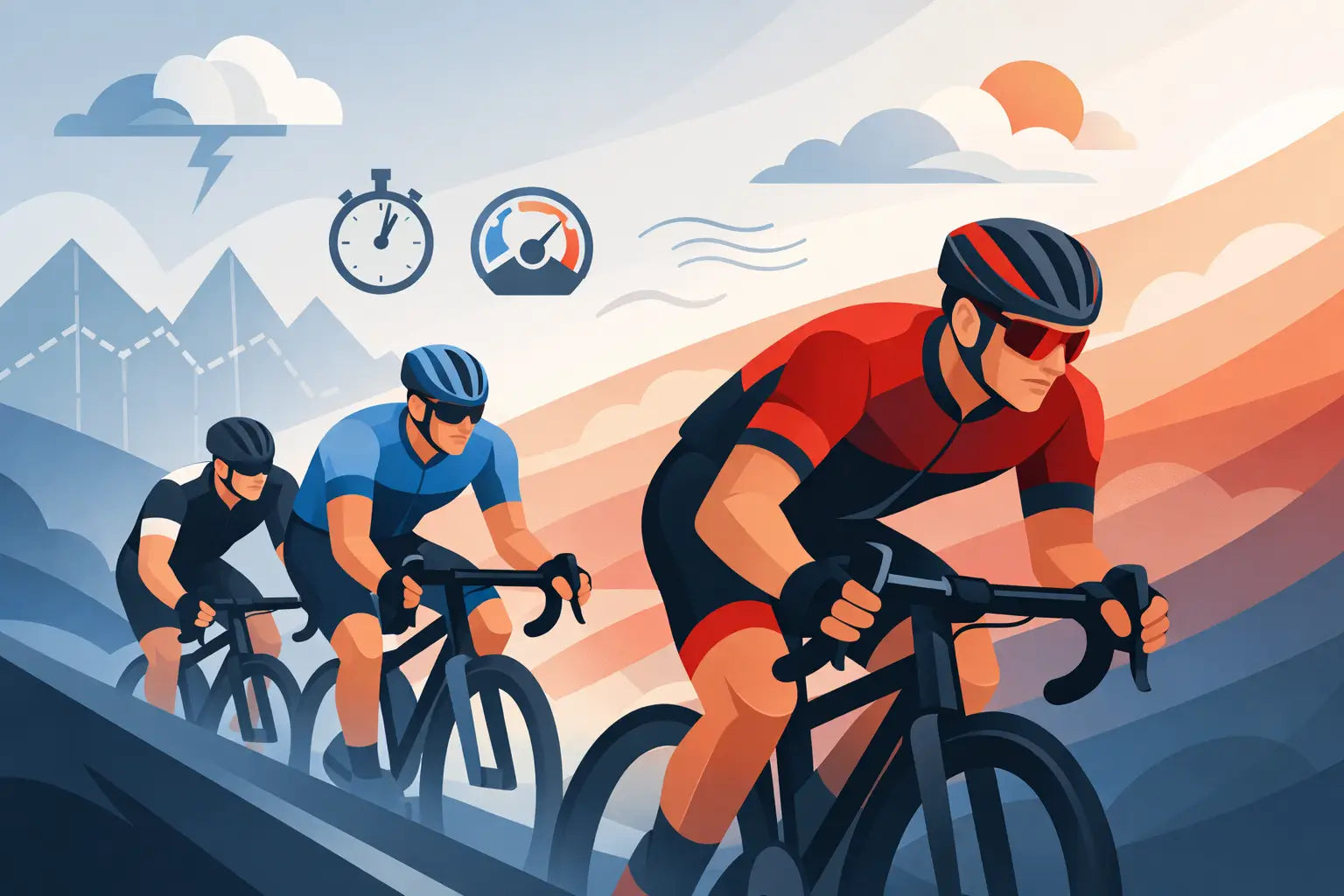
The gap between a kit that looks good on launch day and one that still performs mid-season shows up fast on the road. After long training blocks, repeated wash cycles, and race-day intensity, cycling teamwear either holds its shape, comfort, and identity or it starts costing riders confidence. For clubs, team managers, and competitive riders, that difference matters more than graphics alone.
Team apparel has to do several jobs at once. It needs to deliver a precise on-bike fit, manage heat and moisture across changing conditions, and stay stable under effort. At the same time, it has to represent a team clearly and arrive on schedule without turning ordering into a project of its own. That is why the best cycling teamwear is never just about appearance. It is built around performance, repeatability, and trust.
What makes cycling teamwear actually perform
At speed, small problems become big distractions. A jersey that pockets out when loaded, bib straps that pull too hard on the shoulders, or leg grippers that shift after two hours can all affect how a rider feels and rides. Strong teamwear starts with patterning that is designed for the riding position, not for standing in front of a mirror.
That means fabrics and panel layouts need to work together. A race cut jersey should sit close without restricting breathing. Sleeves should stay smooth in an aggressive position. Bib shorts should provide support without pressure points, and the chamois needs to stay stable over long miles. If one part of the system is off, the rider notices.
Aerodynamics also matter, but only when they are paired with comfort. A highly compressive kit may test well in theory, yet if riders constantly adjust it during training or racing, the advantage fades. The strongest team apparel balances low-drag construction with mobility, temperature control, and a fit range that works across real bodies on a real roster.
Fit is the first performance feature
Most teams focus on artwork first. That is understandable because kit is visible, and team identity matters. But fit is what decides whether riders want to wear it every week.
Cycling teamwear should account for different rider types, event demands, and expectations. A fast local crit squad, a gravel team, and a development program may all want a premium look, but they may not need the same cut or fabric package. A pure race fit can be ideal for aggressive road riders. Club riders doing long mixed-terrain miles may want a slightly more forgiving shape with equal attention to support and breathability.
This is where experience in garment development matters. Good fit is not a single measurement chart. It is the result of tested grading, stable production standards, and a clear understanding of how apparel behaves under load and after repeated use. Teams feel the difference when sizing is consistent from one order to the next.
Fabric and construction decide longevity
A custom kit is a moving billboard for a team, but it also takes abuse. Sun exposure, sweat, road spray, friction from movement, and constant laundering all add up. If colors fade quickly, seams fatigue, or fabric recovery weakens, the kit starts looking older than the season.
Durability in cycling teamwear comes from both material choice and build quality. Lightweight fabrics can still be strong if they are chosen for abrasion resistance and stretch retention. Flatlock or bonded finishes need to be placed where they improve comfort and reduce bulk, not just where they look premium on a spec sheet. Grippers should hold without cutting in. Zippers need to stay reliable under daily use.
Print quality is another detail that separates short-term value from long-term value. Complex team graphics, sponsor marks, and sharp color blocking have to remain clear after repeated washing. A great design loses impact fast if the finish cracks, dulls, or shifts tone after a few weeks.
Team identity matters, but so does clarity
The visual side of teamwear matters because riders want to look unified and sponsors want visibility. But the best designs are not always the busiest. Speed, readability, and clean branding often outperform overloaded artwork once the group is moving.
Good cycling teamwear design starts with hierarchy. Team name, sponsor placement, and color fields should read clearly from distance and from different angles. Contrast matters. So does how graphics wrap across seams, pockets, and side panels. What looks balanced in a flat mockup can distort on the body if the garment construction is not considered early.
There is also a practical side to strong design. Teams often need a kit that works across men’s and women’s styles, multiple garment types, and future reorders. A smart design system scales well. It keeps the team recognizable without creating production complexity every time a new rider joins or an item is added.
Ordering can make or break the experience
A high-performance kit means little if the process around it is slow, confusing, or inconsistent. For clubs and organizations, the operational side of cycling teamwear is often where frustration starts. Collecting sizes, handling payments, managing late additions, and tracking delivery dates can become a burden if the supplier does not have a structured system.
This is why teams increasingly value ordering solutions that are built for real group management. Low minimums can help smaller clubs launch without overcommitting. Reliable production timelines help larger programs plan around race calendars. Clear reorder pathways matter when rosters shift mid-season.
It also helps when development, manufacturing, and fulfillment are closely aligned. When the people building the apparel are directly connected to the process, teams usually get better visibility, faster adjustments, and fewer surprises. That factory-direct model can reduce markup, but more importantly, it can improve control over quality and timing.
Different teams need different kit strategies
Not every program should buy the same way. A local club may prioritize affordability, broad size accessibility, and easy annual reorders. A performance team may want multiple collections for training, racing, and cold-weather use. A triathlon or mixed-discipline program may need apparel that spans road, aero, and multisport requirements.
That is why the right cycling teamwear strategy depends on how the team rides. If riders train and race in hot climates, breathability and moisture transfer move up the list. If the calendar includes shoulder-season events, layering pieces and thermal options matter just as much as the race jersey. If the team has elite ambitions, skinsuits, speed-focused sleeve fabrics, and compressive race bibs may justify the investment.
The strongest apparel partners can support that progression. Teams should not have to start over every time their needs become more demanding.
Why riders notice the details
Individual riders may not always talk in technical terms, but they notice when gear works. They notice when a jersey stays stable with loaded pockets, when bib shorts still feel supportive deep into a hard ride, and when the kit looks sharp month after month. They also notice when it does not.
That rider-level confidence matters for team adoption. If the apparel performs, people wear it more often. That strengthens team identity and improves the return on the order. If the kit becomes the item riders avoid on big days, no design or discount fixes that.
This is where a performance-driven manufacturer stands apart. Brands such as CCN Sport have built around the idea that custom apparel should meet the same standard serious riders expect from race-ready retail gear. That means technical fabrics, tested fit options, dependable production, and customization that does not force teams to compromise on function.
Choosing cycling teamwear with fewer regrets
The safest buying decision is usually not the cheapest one or the flashiest one. It is the option that aligns fit, construction, design, and ordering support with the way your team actually rides. Ask how the kit performs after repeated use. Ask how consistent sizing is across reorders. Ask what happens when you need small quantities, updated sponsor marks, or a fast turnaround before an event.
Good answers usually come from companies that know the demands of racing and club logistics at the same time. That combination is harder to find than a polished mockup.
A strong kit should help riders focus on the road, not on their clothing. When cycling teamwear is built with that standard in mind, it becomes more than a uniform. It becomes part of how a team shows up, rides hard, and stays ready for the next start line.

Share:
How to Build Club Kit That Riders Wear
Custom Cycling Jersey Review That Matters