

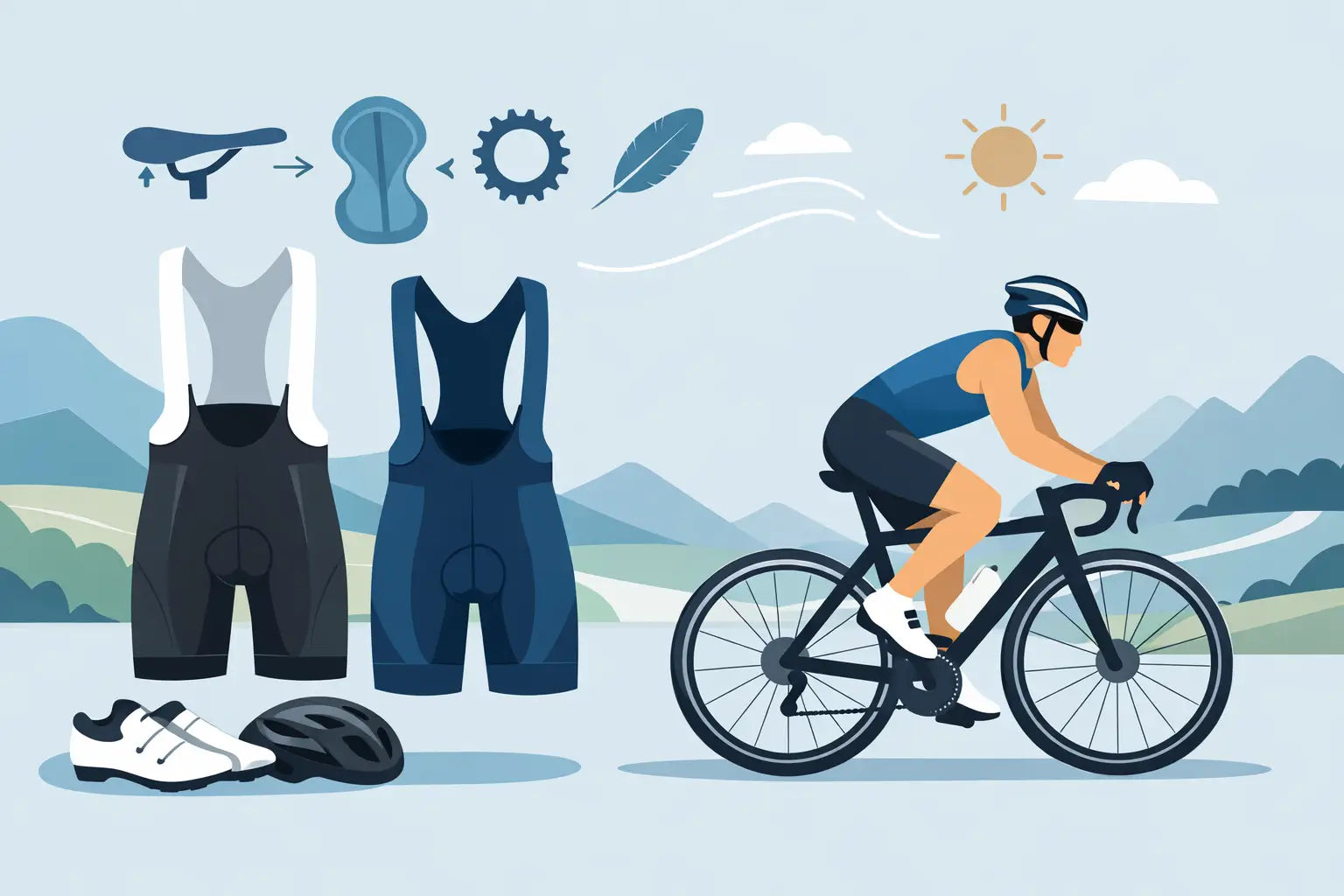
A bib short can feel perfect in the parking lot and become a problem 40 miles later. The difference is rarely the logo on the leg. It comes down to how the short fits your body in a riding position, how its chamois supports your preferred ride length, and whether its materials stay stable under effort. Knowing how to choose bib shorts means looking beyond size and price to the details that protect comfort, power transfer, and focus.
For racing, training, club rides, gravel days, and triathlon preparation, bib shorts are one of the most important pieces of kit you own. A well-chosen pair disappears beneath you. A poor pair creates pressure, chafing, slipping leg panels, and constant adjustments when you should be riding.
Start With Your Ride Type and Time in the Saddle
The right bib short depends on where, how, and how long you ride. A rider doing one-hour indoor sessions has different needs from a cyclist preparing for five-hour weekend rides or an athlete racing criteriums. More padding is not automatically better. The goal is stable, targeted support that works with your saddle and your pedaling motion.
For short, high-intensity rides, look for a performance chamois that stays compact and does not feel bulky when you are rotating at high cadence. A close, compressive fit helps the short remain stable during sprints, accelerations, and repeated efforts out of the saddle.
For endurance road riding, gravel, and long training blocks, prioritize multi-density foam and a chamois shaped to reduce pressure across the sit-bone area. The material should manage moisture effectively, because a chamois that remains saturated can increase friction over a long day. If your rides include rough roads or gravel, stable fabrics and a supportive pad matter more than extra-thick padding alone.
Racers often prefer a more compressive short with fewer seams and a precise race fit. Recreational riders may want slightly more forgiveness through the waist and straps. Neither choice is universally better. The right choice is the one that remains comfortable in your actual riding position.
How to Choose Bib Shorts by Fit
Fit is the first performance feature. Bib shorts should feel snug when you put them on, but they should not restrict deep breathing, pinch at the hips, or pull aggressively across the shoulders. They are designed to fit while you are bent over the bike, not while standing upright in front of a mirror.
A properly fitted short holds the chamois firmly against the body without creating pressure points. If the pad shifts when you pedal, the short is too large, the cut does not suit your shape, or the chamois is not positioned correctly. Movement leads to friction, and friction is what turns a good ride into a painful one.
Check the fit in three places: the waist and hips, the leg openings, and the shoulder straps. The waist should sit smoothly without folding or rolling. The leg grippers should stay in place without leaving deep, painful marks. Straps should lie flat against the torso with enough tension to support the short, not enough to pull your upper body forward.
Race Fit Versus Relaxed Fit
Race-fit bib shorts use more compression and a more anatomical panel layout. They are built to reduce fabric movement and deliver a streamlined feel at speed. This is a strong option for riders who train hard, race, or simply prefer a locked-in fit.
A more relaxed performance fit can work well for newer riders, all-day riders, or anyone who does not enjoy high compression. The fabric should still stay smooth and stable. Relaxed does not mean loose. Loose material around the groin or inner thigh will bunch and rub.
Sizing charts are a useful starting point, but measurements do not replace a fit check. If you are between sizes, consider your preferred compression level, thigh circumference, torso length, and whether your rides are mostly short or long. Riders with longer torsos may need a cut with more forgiving straps, while powerful riders may benefit from leg panels with greater stretch and recovery.
Choose the Right Chamois, Not the Thickest One
The chamois is the engineered interface between your body and saddle. Its job is to manage pressure, absorb vibration, reduce friction, and move moisture away from the skin. It should support your sit bones while remaining flexible enough to pedal naturally.
Look for a chamois with density zones rather than one uniform layer of foam. Higher-density sections provide support where pressure is highest, while lighter areas improve mobility and breathability. For long rides, a chamois with a smooth, low-friction face fabric can make a major difference once heat and sweat build up.
Shape matters as much as thickness. A narrow, performance-oriented pad may suit riders who spend much of their time in an aggressive road position. A wider shape can better serve riders with a more upright position, although saddle width and individual anatomy still play a major role. Men and women should select bib shorts with gender-specific chamois designs when available, as the pressure zones and anatomical requirements differ.
Do not expect a new bib short to solve a saddle that is the wrong width, angle, or height. Bib shorts and saddle setup work as a system. If you experience persistent numbness, sharp pressure, or repeated saddle sores across multiple pairs of quality shorts, review your bike fit and saddle before buying thicker padding.
Evaluate Fabric, Compression, and Panel Construction
High-quality bib shorts use technical stretch fabrics that recover after repeated wear, resist transparency under tension, and manage moisture during hard efforts. The best fabric feels supportive without feeling plastic-like or restrictive. It should remain opaque when stretched, especially across the back and thighs.
Compression can help reduce fabric movement and create a more secure fit, but extreme compression is not always more effective. If the leg panels feel painfully tight or restrict knee movement, size up or choose a less aggressive cut. On the other hand, fabric that becomes loose after a few rides will allow the chamois to move and reduce comfort.
Panel construction affects how the short follows your pedaling motion. Fewer, well-placed panels can reduce seams, while anatomically shaped panels can create a precise fit through the hips and thighs. Inspect where the seams sit. Seams should avoid high-friction areas wherever possible, particularly around the inner thigh and chamois edge.
For warm-weather riding, breathable side panels and quick-drying fabrics help control heat. For cooler conditions, slightly heavier fabrics can provide additional coverage, though bib shorts are typically best paired with leg warmers rather than replaced by a bulky short. Durability also matters. Quality fabric should retain stretch, color, and shape after repeated washing.
Do Not Overlook Straps and Leg Grippers
Straps are what separate bib shorts from standard cycling shorts. They keep the chamois stable without using a restrictive waistband, which is especially valuable when you are breathing hard or riding in an aerodynamic position. Lightweight mesh straps improve ventilation in hot conditions, while wider elastic straps can offer more even support.
Try to judge straps in a riding posture. A strap that feels slightly present while standing may feel exactly right once you are on the bike. It should not dig into your shoulders or pull at the neckline. For riders who need easier restroom breaks, bib shorts with a drop-tail or quick-release design can be a practical feature, particularly on long rides and event days.
Leg grippers should secure the short without causing a tourniquet effect. Silicone grippers are common and effective, but the width of the gripper and the quality of the elastic matter more than silicone alone. A wider cuff often spreads pressure more comfortably and gives the short a cleaner, race-ready finish.
Test Bib Shorts Like You Ride
Before committing to a new pair, move through your normal range of motion. Squat, lift a knee, bend forward, and mimic your position on the hoods and drops. Check that the chamois stays flat, the leg cuffs do not creep upward, and the straps do not create tension across the shoulders.
On the first ride, avoid judging comfort in the first 10 minutes. Pay attention after the first hour, when sweat, vibration, and repeated pedaling reveal whether the fit is truly stable. Small issues such as a rolling cuff or a chamois edge you can feel at the start may become major distractions later.
Wash bib shorts after every ride using a gentle cycle or hand wash, cold water, and mild detergent. Skip fabric softener and high heat, which can damage elastic fibers and reduce the life of the chamois. Rotating between two or three quality pairs also helps each short recover fully between rides.
CCN Sport designs performance apparel around the details that riders feel under pressure: precision fit, technical fabrics, stable chamois support, and durability through hard training and race days. The best bib short is not the one with the biggest claim. It is the pair that lets you settle into the work, stay comfortable when the pace rises, and finish the ride thinking about the effort rather than the kit.

Share:
Best Cycling Rain Gear for Fast Wet Rides
How to Design Triathlon Team Kits That Race Fast