

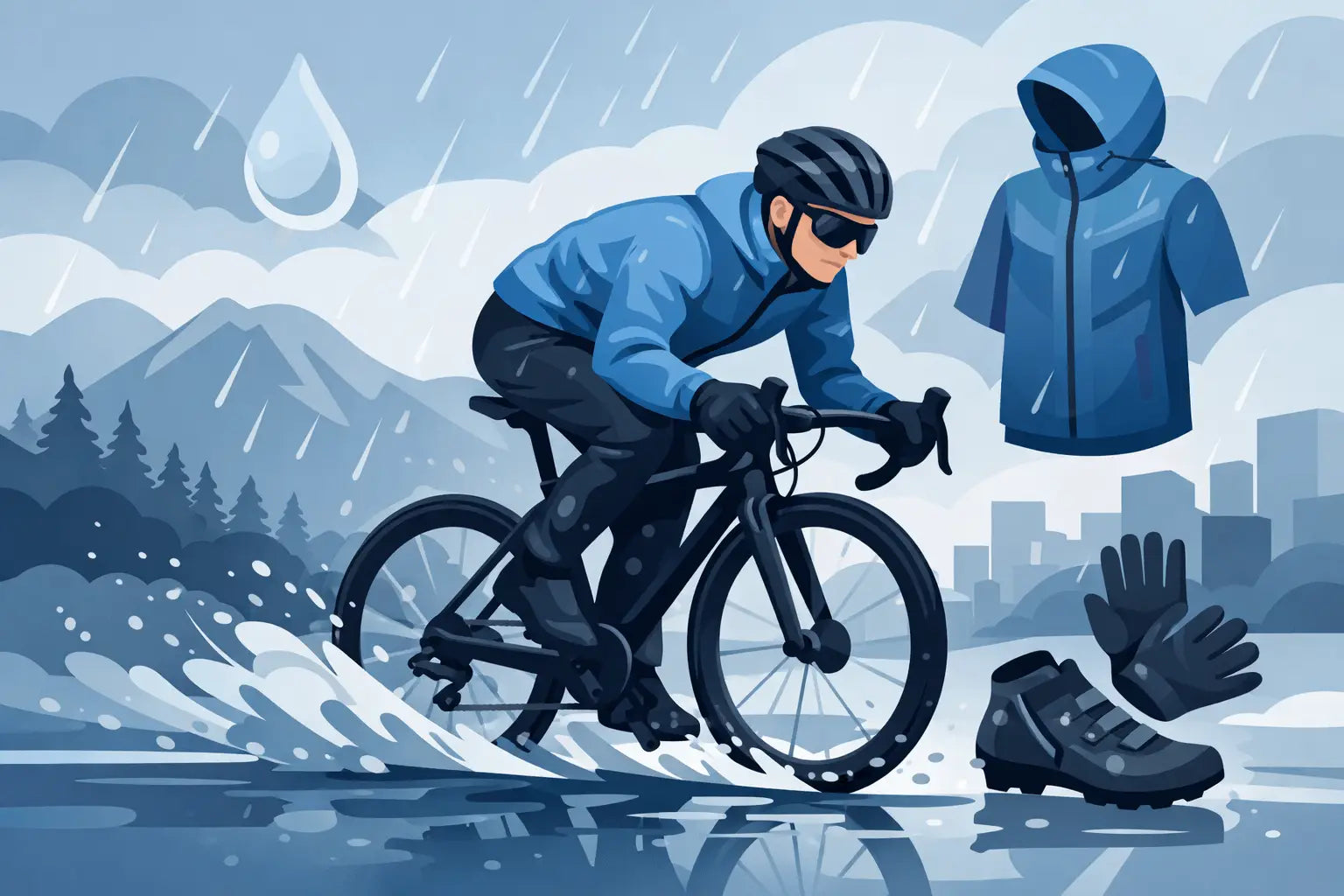
The ride starts dry, the forecast looks manageable, and then 20 minutes later your gloves are soaked, road spray is working through your shorts, and every descent feels colder than it should. That is exactly when the best cycling rain gear stops being a nice extra and starts becoming performance equipment.
Wet-weather riding is not really about staying perfectly dry. For most riders, that is not realistic once the rain settles in or the pace goes up. The real goal is controlling heat loss, preserving mobility, and keeping the contact points - hands, feet, and core - functional enough to ride well. If your kit can do that without turning into a flapping, overheating shell, you are on the right track.
What the best cycling rain gear actually needs to do
A lot of riders buy rain gear based on one word - waterproof. That usually leads to disappointment. The best cycling rain gear balances weather protection with breathability, fit, and stability on the bike. A jacket that blocks every drop but traps all your heat can leave you just as wet from sweat, especially on hard climbs or race efforts.
Fit matters just as much as fabric. A road rider holding tempo in the drops needs a close, articulated cut that does not bunch through the shoulders or balloon in the wind. Gravel and mountain riders may tolerate a little more room, but excess fabric still costs comfort and control. In the rain, loose gear gets heavier, noisier, and colder.
There is also a difference between gear for steady endurance rides and gear for high-output efforts. If you are racing or doing threshold work, breathable water resistance often beats maximum storm protection. If you are commuting, coaching, or riding long miles in cold rain, more coverage becomes worth the trade.
Start with the jacket, but choose it by conditions
The jacket is the anchor piece, but there is no single solution for every wet ride. In light rain or unpredictable conditions, a lightweight shell with a tight race fit is usually the most useful option. It cuts wind, sheds passing showers, and packs easily into a jersey pocket when the sky clears.
For persistent rain and lower temperatures, a true waterproof jacket earns its place. Look for sealed seams, a drop tail for wheel spray, and cuffs that work cleanly with gloves. A two-way zipper can help with ventilation, but only if the jacket stays stable when partially open.
The mistake many riders make is using the same jacket year-round. In warm rain, a heavy waterproof shell can feel like a sauna after the first hard effort. In cold rain, a minimal shell may wet out too quickly and leave your core exposed on descents. It depends on intensity, temperature, and how long you expect to stay out.
Race fit vs all-day fit
Race-oriented rain jackets should sit close to the body, with enough stretch or panel shaping to stay comfortable in an aggressive position. That cut reduces drag and prevents the fabric from collecting water. It also layers better over a jersey and light base layer than over bulky insulation.
An endurance or all-day jacket can be slightly more forgiving, especially for gravel and mixed-terrain riding. The key is controlled volume, not bagginess. If the jacket shifts every time you move, it will distract you long before the ride is over.
Your base layer decides more than you think
Riders often focus on outer layers and ignore the layer touching the skin. That is a mistake. In the rain, a good base layer manages sweat, stabilizes body temperature, and reduces the clammy feeling that ruins comfort once the weather turns.
In mild to cool rain, a lightweight synthetic or performance mesh base layer usually works best. It moves moisture efficiently and dries faster than a standard cotton-like fabric. In colder conditions, a slightly heavier thermal base layer can help, but only if your jacket can still vent enough heat.
Too much insulation is a common wet-weather problem. Riders dress for the air temperature, forget the heat they create on the bike, and end up overheated within the first hour. The result is damp layers from the inside out. Good rain setup is less about piling on warmth and more about managing moisture under effort.
Protect your hands and feet first
If your hands go numb and your feet stay soaked, the rest of the kit stops mattering. Gloves and shoe protection are often the difference between a strong wet ride and a shortened one.
Rain gloves need to do two jobs at once: block wind and water while preserving bar feel. Bulky winter gloves can keep you warm but reduce braking confidence and shifting precision. A better solution in many conditions is a close-fitting, weather-resistant glove with enough insulation to take the edge off cold rain without compromising control.
For your feet, overshoes are usually the highest-value upgrade. They block wind, reduce road spray, and add a meaningful layer of insulation over your cycling shoes. In steady rain, your feet may still get damp eventually, especially from water running down the legs, but overshoes can delay that point and keep temperatures much more stable.
Why road spray changes everything
A lot of rain discomfort is not falling from above. It is thrown upward from the road. That is why shoe covers, a rear-extended jacket hem, and lower-leg protection matter so much. On wet roads, even light rain can feel like heavy exposure once the wheels start kicking water up.
If you ride with a team, club, or regular training group, this becomes even more important. Long pulls and close wheels mean extended spray exposure, especially for the riders behind. Gear that handles road spray well tends to feel better over three hours than gear judged only by waterproof ratings.
Bibs, tights, and leg protection in the rain
Your lower body does not always need a dedicated rain shell. In fact, many riders are more comfortable using standard bib shorts or bib tights paired with the right upper-body protection and overshoes. Unless it is very cold, trying to fully waterproof the legs can create more heat buildup and restriction than benefit.
For cool wet rides, thermal bib tights or knee warmers paired with a high-performance shell up top often strike the best balance. For milder rain, bib shorts that dry quickly and maintain good pad stability are usually the better call. Chamois comfort matters here. A pad that holds water, shifts under load, or becomes abrasive when saturated can turn a manageable ride into a miserable one.
This is where fabric quality shows. Performance-focused bibs built for long hours tend to maintain compression and support even when wet. Cheap fabrics often lose structure fast, which is why wet rides expose weak kit so clearly.
Visibility is part of performance
Rain changes traffic behavior, visibility, and reaction time. That makes reflective detailing and smart color placement more than a safety add-on. In low light, spray, and gray skies, contrast helps drivers and other riders read your position earlier.
That does not mean every piece needs to be high-visibility neon. For many riders, especially teams and clubs, a clean performance look still matters. The better approach is targeted visibility - reflective trims, visible rear panels, and colors that stay readable in poor weather.
For organized teams, this is also a design consideration. Custom kit built for wet-weather training should not only look sharp. It should remain identifiable and visible when conditions get ugly.
How to choose the best cycling rain gear for your riding
The best cycling rain gear for a racer in a one-hour criterium warm-up is not the same setup a club rider needs for a four-hour winter base ride. Buy for your most common conditions, not your worst-case fantasy scenario.
If you ride hard in mixed conditions, prioritize a close-fitting shell, a moisture-managing base layer, weather-resistant gloves, and overshoes. If you ride long in cold rain, move toward more protective outer layers and warmer hand coverage. If your riding includes gravel or mountain routes, think about abrasion resistance and mud as much as rainfall.
For teams and clubs, consistency matters too. Riders benefit when their wet-weather kit follows the same performance logic across the group - stable fit, dependable fabrics, and options matched to training conditions. That is one reason brands with real manufacturing control, like CCN Sport, can offer an advantage. Precision fit and purpose-built layering are easier to get right when performance apparel is designed with the rider’s position, effort, and weather exposure in mind.
The smartest rain gear does not promise the impossible. It gives you enough protection to stay efficient, enough breathability to keep producing power, and enough comfort to hold form when the weather turns. If your setup lets you stop thinking about the rain and focus on the wheel ahead, it is built for the job.
The next time the radar looks questionable, dress for the ride you actually plan to do, not the one you hope the weather will allow.

Share:
Team Store vs Bulk Ordering for Cycling Kits
How to Choose Bib Shorts for Better Rides