

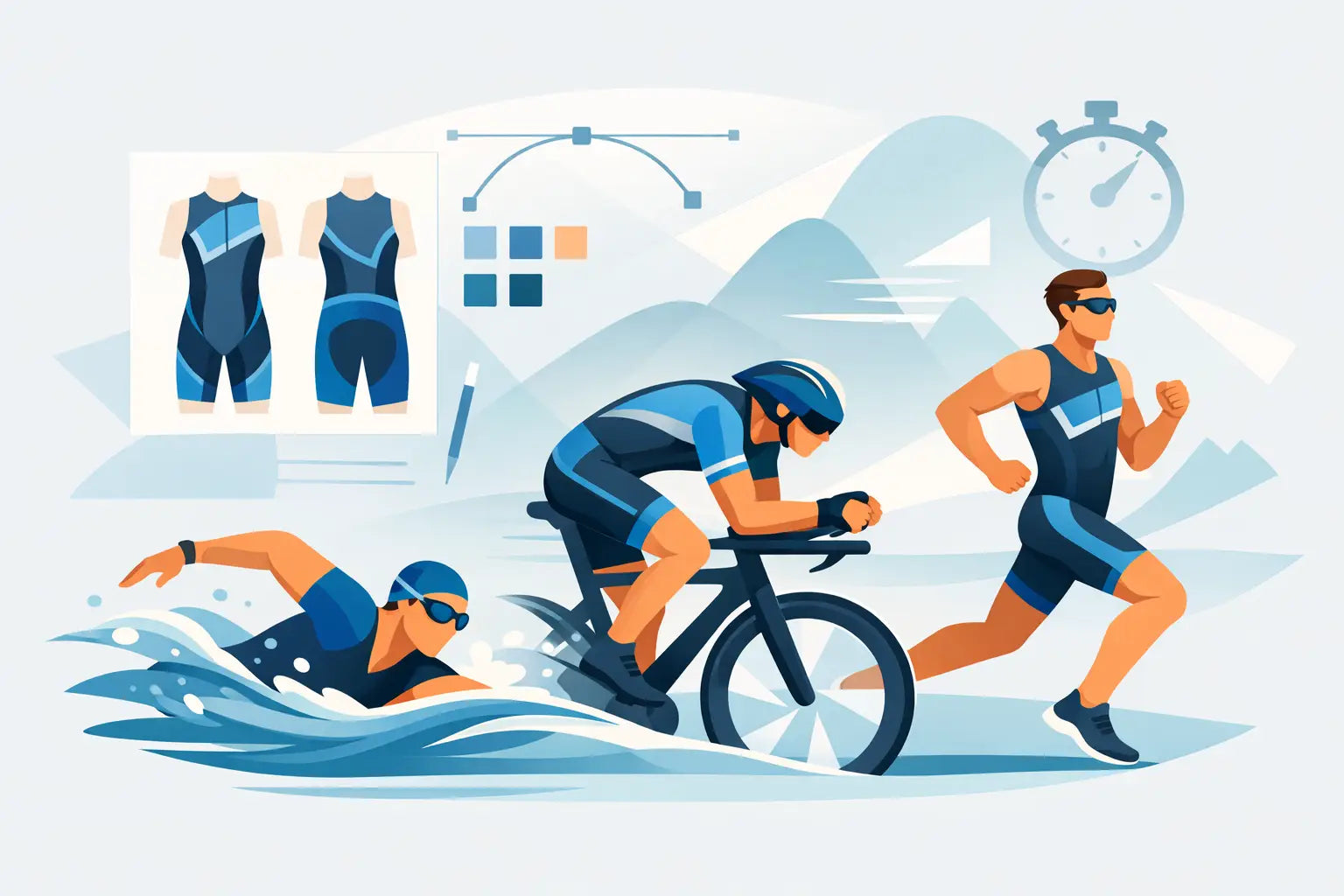
A triathlon kit has to perform through three sports, two transitions, changing body temperatures, and hours of movement. That is why knowing how to design triathlon team kits starts with more than choosing colors and adding a logo. The strongest team kits combine a clear identity with discipline-specific function, so athletes feel fast on the bike, unrestricted in the water, and comfortable through the run.
For a club manager or team captain, the goal is straightforward: create a kit riders and triathletes are proud to wear, then make sure it holds up when race day gets hard. Every decision, from fabric placement to pocket design, should earn its place.
Start With the Race Distance and Team Use
A sprint-distance kit and a long-course kit should not be designed the same way. Sprint and Olympic athletes often prioritize low drag, fast drying, and a close race fit. Long-course athletes need those same qualities, but storage, sun coverage, chafe prevention, and all-day comfort become far more important.
Ask your athletes where they race most often. A team focused on local sprint events may prefer a minimal, aerodynamic tri suit with reduced storage. A group racing 70.3 and full-distance events may need integrated pockets for nutrition and a chamois that supports several hours on the bike without becoming intrusive on the run.
Also consider whether the kit will be used only for racing or for regular training. Race-only pieces can be more aggressive in fit and simpler in construction. If your members expect to train in their kit every week, durability, wash performance, and versatile comfort deserve more weight in the brief.
Build the Fit Around Movement, Not a Flat Sketch
Triathlon apparel is a moving system. It needs to sit cleanly in a swim position, stay stable over the bike, and avoid restriction when the athlete is running upright. A good design starts with body mapping and panel placement, not artwork.
A close, aerodynamic fit reduces fabric flutter on the bike and prevents the suit from shifting during the run. But compression should support the body without limiting shoulder rotation or making the chest feel restricted during hard breathing. The arm openings, neckline, zipper position, and leg grippers all affect how the garment feels after the first hour.
For one-piece suits, make sure the torso length works across a range of athlete heights. A suit that is too short can pull at the shoulders and create pressure through the chamois. One that is too long may bunch at the stomach or lower back. This is where a reliable size run and fit samples matter. Do not assume a cycling jersey size will translate perfectly to a tri suit.
Choose a Chamois for Triathlon, Not Road Riding
A thick road chamois may sound comfortable, but it can hold water after the swim and feel bulky during the run. Triathlon-specific pads are thinner, quicker drying, and shaped to provide support in the riding position without becoming a distraction afterward.
The right pad depends on race duration and personal preference. Athletes racing short, high-intensity events may favor a minimal pad. Long-course athletes often want slightly more density and strategic support. The best choice is rarely the thickest option. It is the one that disappears once the athlete is moving.
How to Design Triathlon Team Kits With a Clear Identity
A fast kit should be recognizable at race speed. Build the visual system around one strong idea rather than trying to display every sponsor, team slogan, and graphic effect at once. Clean blocks of color, intentional contrast, and readable logos usually look more professional than a crowded design.
Start with your team’s primary color, then select one or two supporting tones. High-visibility accents can work well on shoulders, side panels, or lower legs, particularly for teams that train on open roads. If the team has established cycling, running, or club colors, use them consistently so athletes look connected across disciplines.
Sponsor logos deserve a hierarchy. The main partner should receive the most visible placement, often on the chest, upper back, or thigh. Secondary logos can sit on side panels, sleeves, or the lower back. Keep each logo large enough to read from a reasonable distance, and avoid placing important marks across seams, zippers, or high-stretch zones where they can distort.
Dark colors can create a sharp race look and hide road grime, but they may absorb more heat in exposed events. Lighter panels across the shoulders and upper back can help manage heat while keeping the team’s overall visual identity intact. There is no universal answer. It depends on your climate, race calendar, and the balance your athletes want between visibility, cooling, and style.
Make Fabric Placement Work Harder
Not every section of a tri suit needs the same fabric. The body creates different demands at the shoulders, chest, back, hips, and legs. Strategic material selection improves comfort without adding unnecessary complexity.
Breathable fabrics on the back and side panels help release heat when athletes are running in direct sun. Smoother, more aerodynamic materials across the front and sleeves can reduce drag on the bike. High-stretch fabric around the shoulders supports swim mobility, while durable compression fabric through the legs helps the suit stay stable as fatigue builds.
UPF protection is another practical consideration for long outdoor events. Teams racing in hot, exposed conditions should prioritize coverage and fabric performance over a purely cosmetic design. A clean-looking kit is valuable. A kit that helps athletes manage heat and sun exposure is more valuable.
Plan Storage Before Finalizing the Artwork
Pockets are easy to overlook until an athlete is trying to carry gels, salt, and a phone on a long training day. For long-course racing, rear pockets should be secure, easy to reach, and positioned so nutrition does not bounce or create pressure against the lower back.
The placement must also work with your graphics. A bold logo can disappear when a pocket stretches around several gels, while a pattern may help conceal the pocket structure. Coordinate pocket layout and artwork from the beginning rather than treating storage as an afterthought.
For teams that race with a number belt, consider where race bibs, timing chips, and sponsor marks will sit. The kit should still look organized once race-day essentials are added. Details like this separate a good mockup from a kit built for competition.
Use a Design Process That Includes Athlete Feedback
The most effective team kit projects have one decision-maker, a clear approval path, and athlete input at the right stage. Too many voices early on can turn a focused design into a compromise that satisfies no one. Start with a small working group, establish the performance requirements, then present a refined direction to the wider team.
Before placing the full order, review the design at actual garment scale. Check logo legibility, color contrast, panel breaks, and placement around zippers and seams. Ask athletes to confirm sizing using measurements, not guesswork. A polished design cannot overcome poor fit.
A factory-direct custom partner such as CCN Sport can help teams align artwork with proven triathlon garment construction, keeping the final kit faithful to the concept while protecting the performance features that matter on race day.
Avoid the Most Common Team Kit Mistakes
Most preventable issues come from treating a tri kit like a standard cycling jersey. Watch for these four problems during the approval process:
- Overloaded graphics that make sponsors, team names, and race colors difficult to read.
- Heavy or misplaced pockets that bounce during the run or interfere with the riding position.
- A road-specific chamois that stays wet and feels bulky after the swim.
- Choosing sizes by preference instead of using the supplier’s measurement chart and fit guidance.
Design for the Moment Your Team Is Under Pressure
The best triathlon team kit does not ask for attention during a race. It stays in place through the swim exit, supports the athlete in the aero position, dries quickly, carries what is needed, and still looks unified when the team reaches the finish line. Start with the race demands, build the visual identity around them, and give every athlete a kit they can trust when the pace rises.

Share:
How to Choose Bib Shorts for Better Rides
In House Production vs Outsourcing for Cycling Kits