

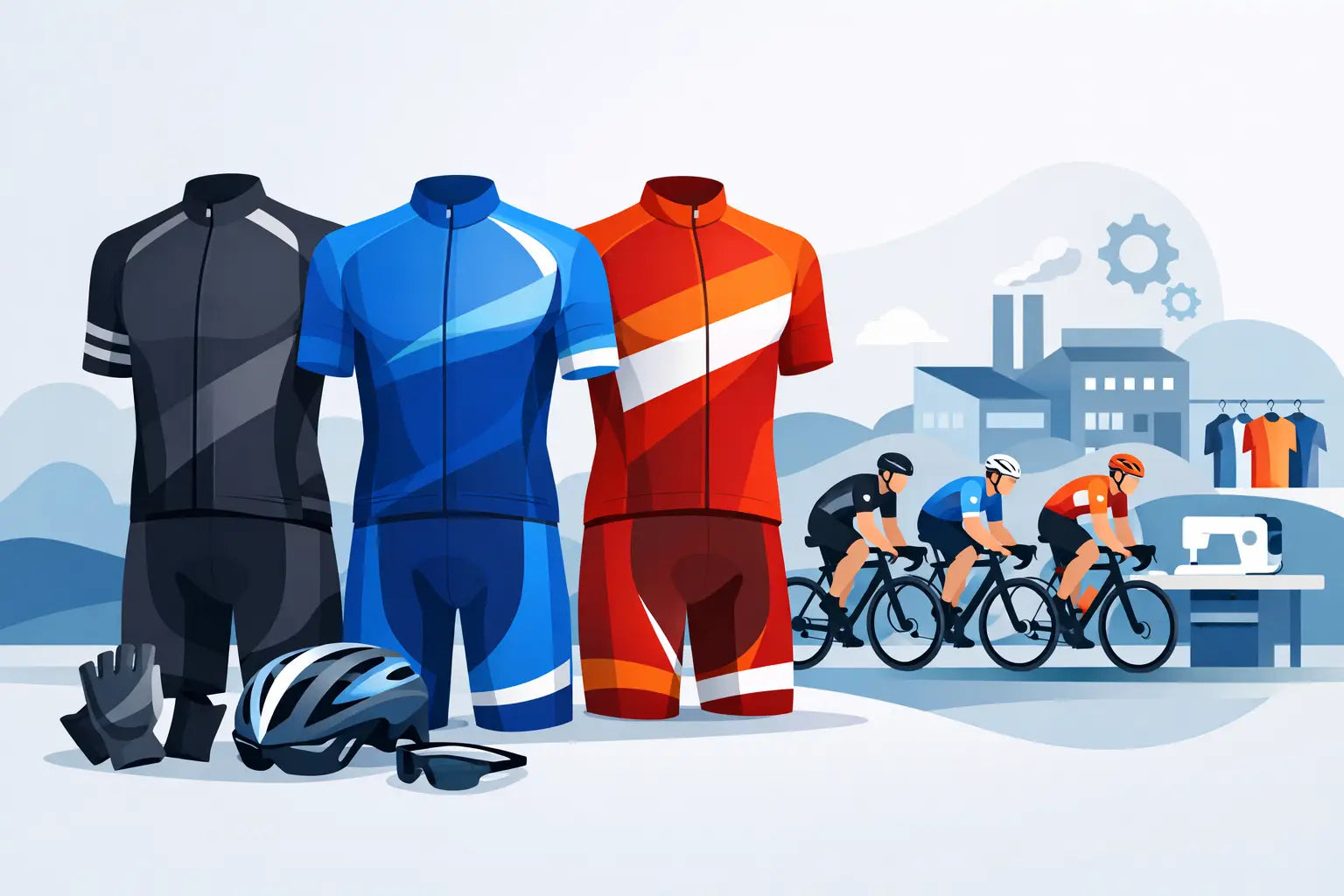
A 10-rider club shouldn't have to order like a national program. That is exactly why low minimum custom cycling kits matter. For smaller teams, new clubs, gravel crews, event organizers, and boutique brands, the challenge is rarely design ambition. It is finding a supplier that can deliver real performance apparel without forcing a large opening order, long delays, or compromises on fit and finish.
The best custom kit programs remove that pressure. They let you build a serious jersey and bib short package around the size of your actual group, not the production model of an outsourced factory. That changes the economics, but it also changes the quality of the result. When minimums are lower, teams can order with more precision, launch faster, and keep riders in gear that feels built for racing instead of built around volume targets.
Why low minimum custom cycling kits make sense
For many cycling groups, demand is uneven by nature. A local road team may need 18 jerseys but only 9 skinsuits. A triathlon squad might want a small first run to test sizing before opening a wider team store. A mountain bike club may need a few technical trail jerseys now, then outerwear later in the season. High minimums force those groups into guesswork.
Low minimum custom cycling kits reduce that risk. You are not tying up budget in extra inventory, storing unnecessary stock, or asking riders to commit months before they are ready. That matters for clubs managing cash flow, but it also matters for fit accuracy. Smaller, more targeted orders make it easier to get the right size mix and the right product mix the first time.
There is a branding advantage too. Teams with lower minimum access can refresh graphics, sponsors, and rider needs without waiting to justify a huge reorder. That flexibility is especially valuable for development squads, new event series, coaching businesses, and emerging cycling brands that need a polished look but cannot afford excess.
Performance should not drop just because the minimum is lower
This is where buyers need to look carefully. Some suppliers treat low minimums as a concession product - basic fabrics, generic patterns, and limited customization. That may be acceptable for a casual event tee. It is not acceptable for a race jersey, bib short, or speedsuit where fit, breathability, and durability directly affect the ride.
A strong custom program keeps the same performance mindset regardless of order size. That means technical fabrics that manage heat and moisture, patterning that stays stable in an aggressive riding position, and chamois options that hold up through long training days and race efforts. It also means print quality that stays sharp, stitching that survives repeated wash cycles, and construction that does not feel like an afterthought once the pace rises.
Low minimum should describe the order threshold, not the standard of the garment.
Fit is still the first performance feature
Cyclists notice fit before anything else. If the sleeves bunch, the bib straps pull awkwardly, or the torso panels flap at speed, the kit is not doing its job. A custom program worth considering should offer a clear range of fits and product options, because a club ride, a masters team, and an elite crit squad may all want different levels of compression and cut.
The trade-off is straightforward. The more technical and dialed the fit, the more important sizing support becomes. Lower minimums help with that because teams can avoid overcommitting before confirming what riders actually need.
Fabric and construction still separate good from average
A custom jersey can look fast in a mockup and feel ordinary on the road. Buyers should pay attention to fabric hand, stretch recovery, pocket stability, zipper quality, and how the garment behaves after repeated use. For bib shorts, the big variables are leg gripper hold, panel shape, pad support, and whether the short maintains comfort under sustained pressure.
If a supplier cannot explain the purpose of its materials and construction choices, that is usually a sign the product is being sold as decoration first and performance second.
Who benefits most from low minimum custom cycling kits
Smaller cycling clubs are the obvious fit, but they are far from the only one. Low minimum programs are useful for any group that values control.
New teams benefit because they can launch with professional presentation without carrying excess stock. Established clubs benefit because they can handle mid-season adds, new member requests, and discipline-specific apparel without reopening a massive production run. Event organizers can create rider kits for premium entries or staff apparel without overordering. Coaches and boutique cycling brands can test market demand before scaling.
This model also works well for mixed-discipline communities. Many groups now ride across road, gravel, MTB, and indoor training. They do not need 100 of one item. They need the ability to build the right assortment at the right time.
What to ask before choosing a custom supplier
The minimum order number is only one part of the picture. A low threshold means little if the process is slow, sizing is unclear, or reorders become difficult.
Start with product depth. Can the supplier support jerseys, bibs, outerwear, speedsuits, tri kits, and accessories with a consistent fit and finish? Then ask about manufacturing control. Factory-direct production usually gives better visibility into timelines, quality standards, and customization flexibility than a brand that relies heavily on third-party sourcing.
Next, look at artwork and approval workflow. Strong custom partners make the design phase efficient and technical. They understand sponsor placement, panel limitations, and how graphics behave across different cuts and sizes. That reduces revisions and helps prevent surprises in the final product.
Reorder support matters too. If your first run is intentionally small, the next step should be simple. A supplier should be able to reproduce approved designs, maintain consistency, and help teams scale without rebuilding the project from scratch.
Speed matters, but predictability matters more
Every team wants fast turnaround. What most teams actually need is dependable turnaround. A realistic timeline that holds is more valuable than an aggressive promise that slips. Race calendars, sponsor activations, and team launches are not flexible just because production gets messy.
That is one reason in-house manufacturing has become more attractive to serious buyers. It tightens quality control, shortens communication loops, and gives teams a clearer path from concept to delivery.
The real cost of ordering too much
High minimums are often defended on unit pricing. On paper, ordering more can reduce per-piece cost. In practice, many teams spend more overall because they buy inventory they never fully use.
Leftover sizes, outdated sponsor versions, and unsold extras all chip away at the value of a large run. A lower minimum can produce a better financial result even if the unit price is slightly higher, because the order is closer to actual demand. For clubs and brands watching budget closely, that is a smarter use of capital.
There is also a morale factor. Riders are more likely to wear team apparel consistently when it fits correctly, looks current, and reflects the group they are riding with now - not the roster or sponsor deck from two seasons ago.
Why this model fits modern teams
Cycling teams are more dynamic than they used to be. Membership shifts. Disciplines overlap. Sponsors rotate. Riders want more say in fit and product choice. The old model of one big order, once a year, no longer suits many organizations.
Low minimum custom cycling kits fit the way teams actually operate today. They support phased ordering, cleaner inventory management, and a more responsive apparel strategy. Done well, they also give smaller groups access to the same technical standards expected by bigger programs.
That is the point. Custom apparel should not be limited by volume. It should be built around the demands of the ride, the identity of the team, and the realities of the order. For clubs, brands, and race-focused riders who want pro-level execution without overbuying, a factory-direct partner with low minimums and real product expertise is a competitive advantage. CCN Sport is built around exactly that approach.
The right kit order should feel measured, fast, and performance-led from the first sample plan to the final delivered box. When the minimum fits your team, everything else gets easier.

Share:
How to Size Cycling Jerseys Correctly
Cycling Apparel Sizing Guide for Better Fit