

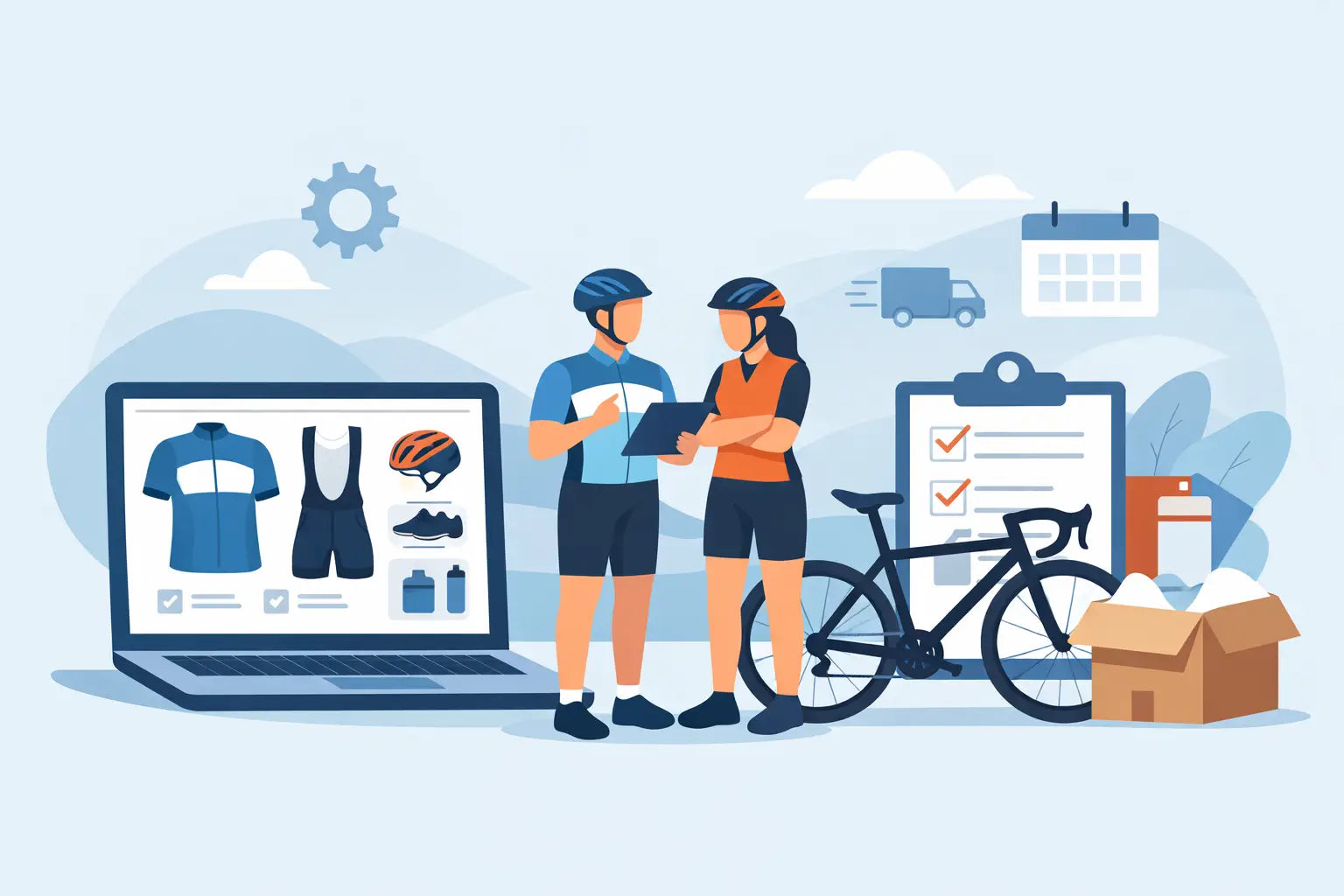
When a club misses a kit deadline, everyone feels it on the road. New riders show up in mixed gear, race weekends turn into sizing debates, and one volunteer ends up chasing payments, spreadsheets, and late change requests. A strong team store ordering guide fixes that before it starts. It gives clubs, race teams, and event organizers a cleaner way to collect orders, control timelines, and get riders into the right kit without adding friction at every step.
For cycling teams, ordering is never just about collecting jersey quantities. It is about fit accuracy, product selection, branding consistency, and delivery you can plan around. If the process is loose, mistakes compound fast. If the process is structured, the entire team moves better.
What a team store should actually solve
A team store is not just an online page with products and prices. For an organized cycling group, it is a control point. It should help riders order the correct items, reduce manual admin, and give team managers confidence that the final order reflects what the group actually needs.
That matters because custom apparel has more variables than standard retail. Riders may need race fit jerseys, endurance cuts, women-specific bibs, youth sizing, cold-weather layers, or add-ons like vests and base layers. Some teams want one annual order window. Others need multiple drops for new members and mid-season replacements. The right store setup depends on your team size, schedule, and level of kit complexity.
If your club is small and stable, a shorter ordering window with a tight product range may be enough. If you are managing a larger roster or multiple disciplines, you need more structure from the start. Road, gravel, mountain bike, and triathlon teams often need different garments even when they share the same visual identity.
Team store ordering guide: start with the product mix
Most team ordering problems begin before the store goes live. The issue is usually product sprawl. Too many options create hesitation, inconsistent kit appearance, and sizing errors. Too few options can leave riders without the gear they actually need.
The best approach is to build your store around how your team rides. A race-focused road club may center the store on short sleeve jerseys, bib shorts, long sleeve layers, and speedsuits. A club with broad participation may need a more balanced range that includes relaxed-fit tops, women-specific cuts, arm warmers, jackets, and off-bike pieces.
This is where discipline matters. A store should be curated, not overloaded. Riders order faster when the range is clear and the purpose of each item is obvious. Team managers also get better results when they separate mandatory pieces from optional add-ons. That keeps the core kit consistent while still giving members flexibility.
It also helps to think seasonally. Spring and summer orders tend to move quickly because riders know what they need. Fall and winter stores often need more guidance, since layering systems are more technical and sizing preferences can change based on intended use.
Fit is the detail that decides whether the order works
Custom graphics get attention, but fit determines whether riders actually wear the kit every week. In any team store ordering guide, sizing should be treated as a performance issue, not an afterthought.
Cycling apparel is built close to the body for good reason. Fabric behavior, aerodynamic efficiency, and on-bike comfort all depend on precision. But that also means riders can guess wrong if they are ordering based on casual clothing habits. A jersey that feels right in a T-shirt mindset may not perform the same way in an aggressive riding position.
The safest process combines a clear size chart, straightforward fit notes, and internal communication from the team. If your group has existing riders in the same garments, their feedback is valuable. New members often benefit from practical comparisons such as whether a piece is cut for racing or for all-day comfort.
There is also a trade-off here. Some teams want a pure race silhouette across the full store. That looks sharp and supports performance, but it may reduce confidence for newer riders. Other teams broaden the fit range to encourage participation. Neither choice is wrong. The right decision depends on your culture and how you want the kit to function across the roster.
Build clear deadlines before you open the store
Ordering windows fail when the calendar is vague. Riders assume they have time, managers expect last-minute exceptions, and production planning becomes harder than it should be. A team store works best when deadlines are fixed and communicated early.
Start with the date the team needs the apparel in hand, then work backward. Factor in design approval, store setup, the open ordering period, production lead time, shipping, and a small buffer. If the order is tied to the first race, a training camp, or a sponsor launch, leave room for reality. Teams that cut it too close usually end up paying for that decision with stress, not speed.
A shorter ordering window often produces better response rates than a long, open-ended one. Two weeks is usually enough if the store is ready, the size guidance is clear, and the team has already communicated what members are expected to buy. Longer windows can help larger organizations, but they also invite procrastination.
Payment and admin should not run through one exhausted volunteer
One of the main reasons teams move to a dedicated store model is simple: manual ordering burns time. Collecting sizes in email threads, chasing unpaid invoices, and consolidating line items by hand is slow and error-prone.
A good team store ordering guide should reduce admin at every stage. Riders should place their own orders, select their own sizes, and complete payment directly during the open window. That removes bottlenecks and gives each rider ownership of the details that are easiest to get wrong when handled secondhand.
For team managers, that changes the role from order taker to order coordinator. Instead of processing individual requests, they focus on setting the range, sharing deadlines, and helping riders make informed choices. That is a much better use of time, especially for clubs run by volunteers.
There are cases where centralized payment still makes sense. Development teams, sponsored squads, and organizations with stipend structures may need a master billing approach. But even then, the ordering workflow should stay structured. Admin flexibility is helpful only if it does not compromise clarity.
Communication is where most stores succeed or fail
Even a well-built store can underperform if the team message is weak. Riders need more than an opening email. They need clear direction on what to buy, when the store closes, how items fit, and whether reorders will be available later.
The strongest teams communicate in layers. They announce the store early, send a reminder at launch, and follow up before close. They also answer the questions riders always ask: Which jersey is mandatory? Are bibs optional? Is there a women-specific version? Will there be another order this season?
That kind of communication feels basic, but it directly affects order accuracy and participation. It also reduces the last-day rush, when avoidable mistakes usually happen.
Don’t treat reorders the same as the main launch
A first team order and a mid-season reorder serve different needs. The main launch is about outfitting the group. Reorders are usually about onboarding new riders, replacing worn gear, or adding seasonal pieces.
Because of that, the store setup should change. Main launches can support a broader range and more educational content. Reorders usually work better with a tighter catalog and a faster decision path. Riders joining mid-season often just need the core pieces and a deadline they can trust.
For teams with frequent roster changes, a more repeatable store structure is worth planning from the start. That does not always mean keeping every item available all the time. It means creating a process that is easy to relaunch without rebuilding the entire system every time the roster shifts.
Why the supplier model matters more than many teams expect
The store experience is only as strong as the production behind it. Teams often focus on design and storefront convenience, but manufacturing control plays a major role in what happens after the order closes.
If your supplier has direct oversight of production, communication is tighter and turnaround is easier to manage. That becomes especially important when timelines are compressed, quantities are mixed, or the order includes multiple garment categories. Factory-direct custom programs generally give teams more visibility and fewer handoff points than layered outsourcing models.
For clubs that want pro-level apparel without inflated pricing or long delays, that structure matters. It is one reason many teams choose partners like CCN Sport when they need race-tested gear, low minimums, and dependable delivery from a single source.
The best result is not just a good-looking kit. It is a repeatable ordering system that riders trust.
A team store should make your club faster off the bike too. When the products are right, the fit is clear, and the ordering window is disciplined, the process stops feeling like admin and starts feeling like part of the team standard. Build it that way once, and every future order gets easier.

Share:
Best Women's Cycling Bibs for Real Performance
How to Size Cycling Jerseys Correctly