

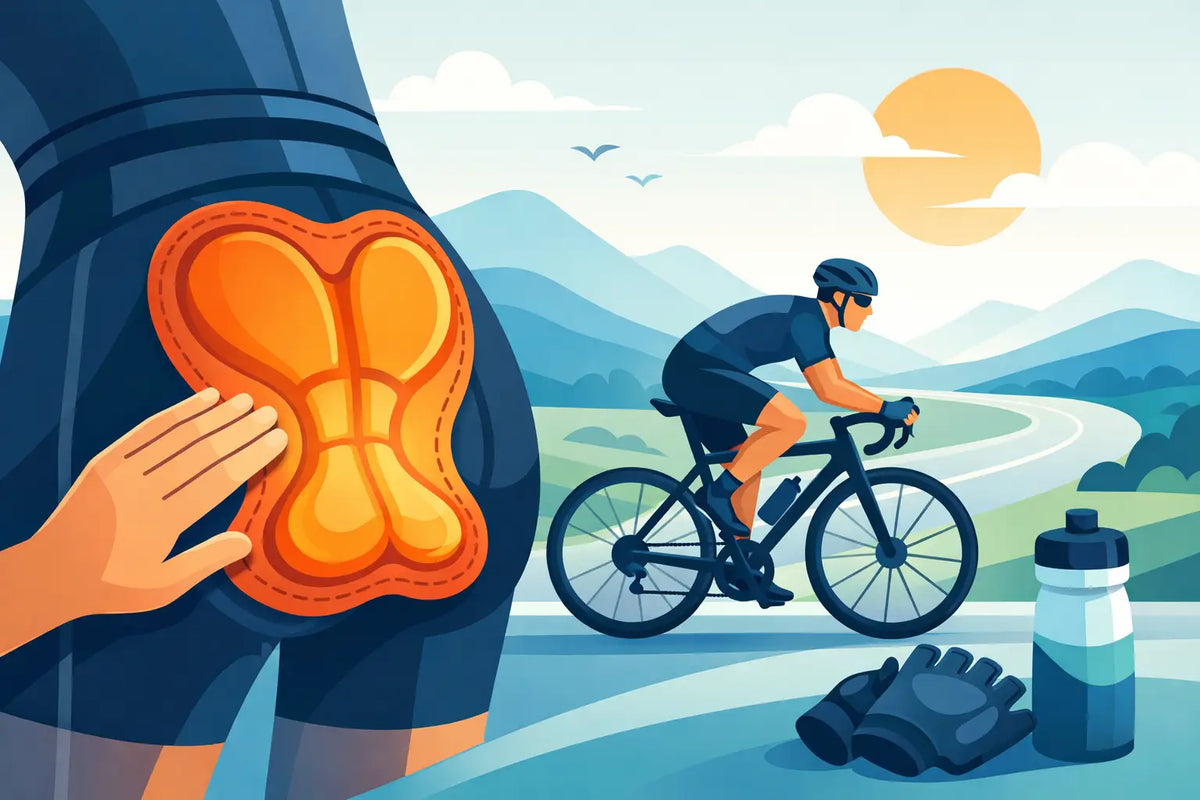
The first hour of a ride can make almost any pair of bib shorts feel acceptable. Comfort reveals itself later - when road vibration builds, your position changes on a climb, and you settle into the saddle for another hard block. What makes cycling chamois comfortable is not simply extra padding. It is a precise balance of density, shape, breathable materials, stable fit, and support that works with your body and riding position.
A quality chamois is built to manage pressure, friction, heat, and moisture without interfering with pedaling. For racers, club riders, gravel athletes, and endurance cyclists, that balance can be the difference between finishing strong and spending the final miles shifting constantly in the saddle.
What Makes Cycling Chamois Comfortable?
Modern cycling chamois are engineered inserts, not the leather pads that gave them their name. Most use layered foam, bonded fabrics, and anatomical shaping to create protection where a rider needs it while keeping bulk low where it does not.
The best pad is not always the thickest one. A very thick chamois can feel soft in a fitting room, yet bunch under the sit bones, hold heat, or create friction once you start pedaling. Effective comfort comes from targeted support: denser foam beneath high-pressure zones, smoother transitions around the edges, and enough flexibility for the pad to move naturally with each pedal stroke.
Comfort also depends on the rider. A road racer holding an aggressive position, a gravel rider spending six hours on mixed terrain, and a mountain biker moving frequently in and out of the saddle can all benefit from different pad profiles. The right choice matches the ride, not just the advertised thickness.
Density Supports the Sit Bones
Chamois foam density determines how well a pad resists compression. Lower-density foam feels plush initially but can flatten quickly under sustained load. Higher-density foam provides more durable support, particularly for longer rides, but it must be shaped and perforated correctly to avoid feeling hard or restrictive.
Premium pads commonly use multiple foam densities. Firmer sections sit under the ischial bones, commonly called sit bones, where most saddle pressure should be carried. Less dense, more flexible areas allow the chamois to conform through the center and around the legs. This zoned construction reduces pressure without building a bulky diaper-like profile.
Thickness is part of the equation, but not the deciding factor. A thinner, well-designed endurance chamois can outperform a thicker generic pad because it stays stable and maintains support after hours of compression. Look for cushioning designed for the duration and discipline you actually ride.
Shape Matters as Much as Foam
A chamois needs to match the way a rider rotates the pelvis on the bike. In a more upright posture, pressure tends to sit farther back. In a low road or time trial position, the pelvis rotates forward, shifting contact toward the front of the saddle and soft tissue area.
That is why anatomical shaping matters. A well-contoured pad supports contact points while reducing excess material through the center. It should lie flat against the body, follow the curve of the saddle area, and remain controlled as you pedal. Poorly shaped pads can fold, curl, or create seams that become pressure points over distance.
Gender-specific construction can also improve comfort. It is not just a marketing label. Pelvic anatomy and pressure distribution differ, so a chamois designed around those differences can place support and relief channels more effectively. The goal is the same for every rider: stable contact, reduced soft tissue pressure, and unrestricted movement.
The Top Fabric Controls Friction and Moisture
The fabric against your skin has a major job. It must feel smooth, manage sweat, dry efficiently, and maintain low friction as your position changes. When this layer is rough, overly absorbent, or slow to dry, the risk of chafing rises quickly.
Quality chamois top sheets are typically soft, stretchable, and moisture-wicking. Many use perforations or channels that help move heat and perspiration away from the body. This is especially valuable during hot-weather training, indoor sessions, and long climbs, when sweat can accumulate faster than it evaporates.
A breathable pad should not feel soggy halfway through a ride. However, airflow alone is not enough. The material also needs to hold its position against the skin. A slippery top sheet may sound desirable, but too much movement between the chamois and your body can increase rubbing. The best fabrics create a smooth, low-friction interface while allowing the short and pad to move as one.
Flat Construction Reduces Hot Spots
Seams, rough edges, and abrupt changes in foam thickness are small details with large consequences. Repeated thousands of times during a ride, even a minor edge can become a hot spot.
Higher-quality chamois construction uses smooth transitions between zones and minimizes seams around sensitive areas. Bonded or carefully stitched layers help preserve a clean surface. The pad should feel integrated into the shorts rather than like a separate component placed inside them.
This is where manufacturing precision matters. A well-engineered chamois can only perform if it is accurately positioned and securely attached. If the insert twists, sags, or shifts after repeated washes, its original shape and support no longer matter.
Fit Keeps the Chamois in the Right Place
Even the most advanced pad cannot compensate for bib shorts that fit poorly. The chamois must stay close to the body so it moves with you, not against you. Loose shorts allow the pad to migrate and rub. Shorts that are too tight can pull the chamois out of its intended position or create tension across the groin and inner thigh.
A proper fit feels supportive without compression that restricts breathing or circulation. When standing, the chamois may feel noticeable because it is designed for a seated riding position. Once on the saddle, it should settle naturally beneath the sit bones without folding at the front or bunching at the sides.
Bib straps, leg grippers, panel design, and fabric recovery all contribute to this stability. A secure upper holds the short in place, while well-cut panels keep the pad centered through the pedal stroke. Race-ready bib shorts are designed as a system: the fabric, fit, and chamois have to work together.
Your Saddle and Position Are Part of the System
Cyclists often blame the chamois for discomfort that starts elsewhere. A saddle that is too narrow, too wide, poorly angled, or placed incorrectly can overload areas no pad can fully protect. Likewise, excessive reach to the bars or an unstable pelvis can create unwanted pressure and rubbing.
If discomfort appears in every pair of shorts, assess the bike setup before buying another chamois. Saddle width should support the sit bones in your typical riding position. A small adjustment to saddle tilt, fore-aft position, or bar reach can change pressure distribution significantly. These adjustments should be deliberate, because moving one contact point can affect the others.
Chamois cream can help during long, hot, or wet rides by reducing friction and protecting the skin. It is useful insurance, not a fix for poor fit or an unsuitable saddle. Apply it directly to clean skin or to the chamois top sheet, depending on the product instructions, and use only enough to create a protective layer.
Care Preserves Long-Ride Comfort
Sweat, bacteria, skin oils, and dried chamois cream degrade both hygiene and fabric performance. Wash bib shorts after every ride, ideally soon after finishing. Turn them inside out, use a mild detergent, and avoid fabric softener, which can leave residue that reduces wicking performance.
Air drying is the safer choice for elastane, grippers, adhesives, and foam. High dryer heat can shorten the service life of technical fabrics and affect the bonds that hold a multi-layer pad together. Never leave used shorts sealed in a gym bag or car trunk, where moisture and heat create ideal conditions for odor and bacterial growth.
Inspect older shorts honestly. If the pad stays compressed, the fabric has become loose, or seams are breaking down, comfort will decline. Rotating between two or more quality pairs gives each garment time to dry fully and helps extend its usable life.
Choose for the Ride You Actually Do
For short, high-intensity training rides, a lighter pad may offer freedom and a direct feel on the saddle. For fondos, gravel events, stage races, and long weekend club rides, more structured multi-density support is usually the smarter choice. Triathlon-specific pads are often thinner so they dry faster and remain comfortable during the run, while mountain bike liners may prioritize flexibility for frequent position changes.
There is no universal best chamois. The right one supports your anatomy, your saddle, your position, and your time in the saddle. That is why CCN Sport approaches bib-short performance as a complete fit-and-function problem, not a single material choice.
Give a new chamois a fair test on a ride long enough to reveal its behavior. Notice where pressure develops, whether the pad stays centered, how it handles sweat, and how your skin feels the next day. The right chamois should fade into the background, leaving your attention where it belongs: on the road, the group, and the effort ahead.

Share:
Custom Apparel Manufacturer Versus Broker Compared
Cycling Manufacturing Built for Race-Day Performance