

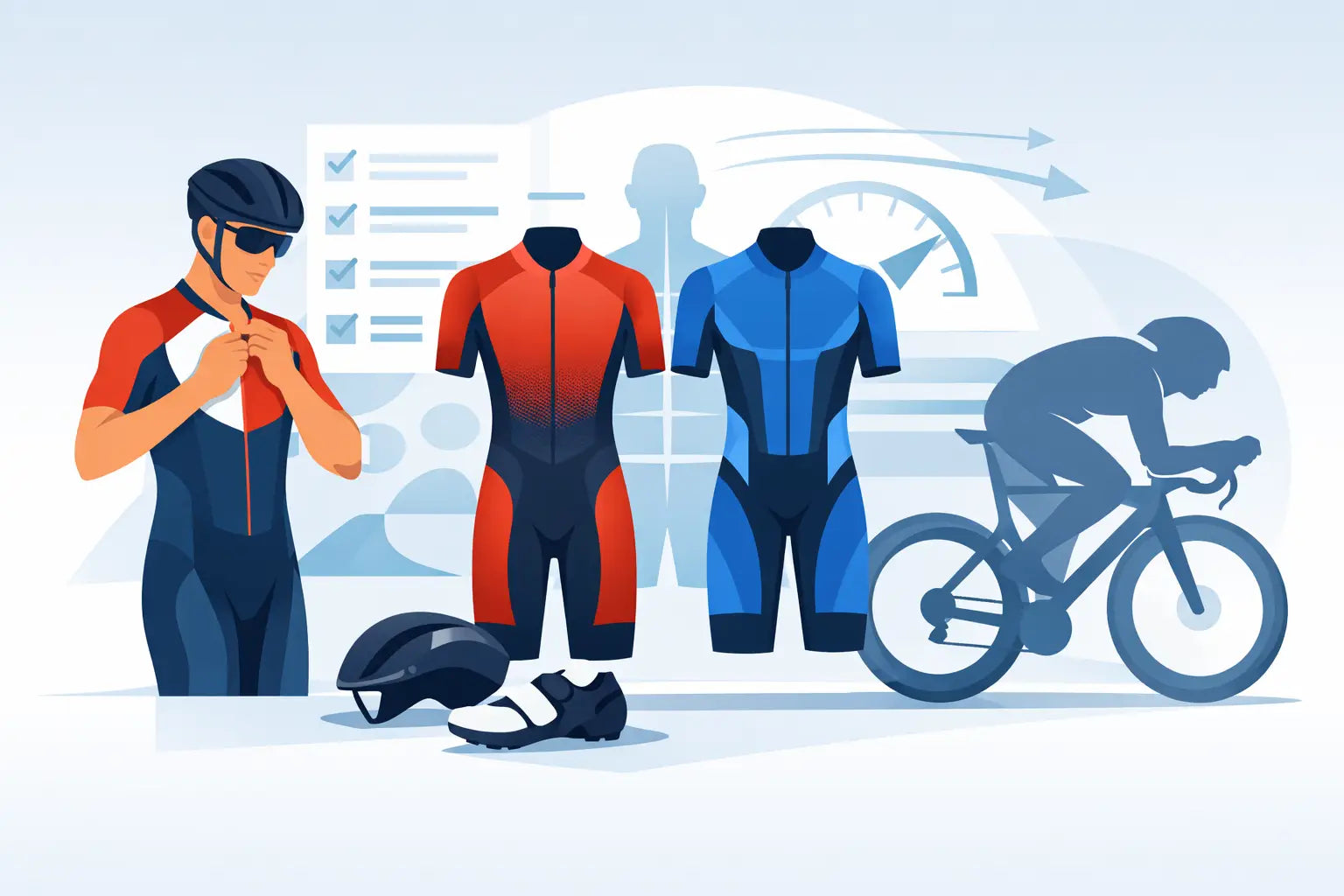
A race skinsuit can save watts, reduce excess movement, and clean up your position on the bike - but only if it fits the way you ride. If you are figuring out how to choose race skinsuits, the real question is not just which one looks fast. It is which one stays fast after an hour in the drops, through repeated accelerations, and across the final miles when comfort starts affecting output.
That is why skinsuit selection should start with use case, not marketing. A suit built for a short road race, a technical criterium, a time trial, and a gravel event may all claim aerodynamic performance, but the right choice depends on how you produce power, how aggressively you position on the bike, and what kind of demands the race puts on the fabric, pockets, and chamois.
How to choose race skinsuits for your discipline
The fastest option on paper is not always the fastest option on race day. Discipline matters because body movement, riding posture, and race duration all change how a skinsuit performs.
For criteriums and road racing, you usually want a skinsuit that combines close compression with enough flexibility through the shoulders and upper back to handle repeated attacks, cornering, and out-of-saddle efforts. A suit that feels too restrictive when sprinting or moving around the bike can cost more than it saves.
For time trials, the priorities shift. Aero fabric placement, sleeve length, low-flutter panels, and a position-specific cut matter more because the rider is holding a narrow, sustained posture. In this case, a suit that feels slightly more aggressive off the bike can be the right call if it settles perfectly in the aero position.
For gravel or long mixed-surface racing, durability and storage become more relevant. Some riders need additional pocket support, more forgiving fabrics, or a chamois suited to longer hours in the saddle. Aerodynamics still matter, but not at the expense of stability and comfort on rough terrain.
Triathlon adds another layer. Heat management, quick drying materials, and transition practicality matter alongside bike performance. A cycling-first skinsuit will not always be the best solution if the event demands versatility across disciplines.
Fit is the first performance feature
If there is one rule that holds across every category, it is this: fit comes first. The best skinsuit should feel compressive, stable, and race-oriented without creating hot spots, bunching, or breathing restriction.
Too loose, and the promised aerodynamic benefit starts disappearing. Fabric can ripple at speed, sleeves can shift, and the suit can move under effort. Too tight, and you may get pinching at the shoulders, pressure on the neck, discomfort in the chamois area, or restricted movement that shows up later in the race.
A proper race fit is meant to feel more precise than standard training apparel. That does not mean painfully tight. It means the suit should contour cleanly when you are in your riding position. On the bike, the fabric should lie smooth across the chest and thighs, the leg grippers should stay planted, and the upper body should not pull excessively when you reach for the bars.
This is where many riders make the wrong call by judging fit while standing upright in front of a mirror. Skinsuits are built for the bike. If you want a real read on fit, assess it in an aggressive riding posture.
What to check during a fit test
Start with the shoulders and sleeves. There should be light compression and no loose fabric, but you still need free movement for sprinting and cornering. Check the torso next. The zipper area should sit flat without bulging, and the abdomen should feel supported rather than squeezed.
Then pay attention to the seat area and chamois placement. If the chamois shifts or feels out of position before you even start riding, it will only get worse under load. Finally, check the leg length and gripper tension. Legs should finish cleanly and stay stable without cutting into the skin.
Aerodynamics matter, but only when the suit stays stable
A race skinsuit earns its place by reducing drag. That benefit comes from more than a sleek appearance. Fabric texture, panel layout, sleeve construction, and seam placement all influence airflow.
Textured fabrics on the sleeves and shoulders are common because those areas face direct airflow and can benefit from surface engineering. Smooth compression fabrics often appear through the body and lower half where fit stability and support matter most. Bonded finishes can also reduce bulk, though the trade-off is that some riders prefer the structure of more traditional construction depending on body type and race duration.
The key is stability. Aero gains depend on the suit staying in the intended position. If the sleeves creep, the torso wrinkles, or the zipper bows out, the design is no longer working as intended. A stable fit usually beats a more aggressive aero concept that only works for the first ten minutes.
Fabric choice affects speed, comfort, and race range
One of the most overlooked parts of how to choose race skinsuits is understanding fabric behavior over time. Race-day apparel has to manage more than wind. It has to deal with heat, sweat, repeated movement, and in some cases changing weather.
Lighter fabrics can feel excellent in hot conditions and help with moisture transfer, but they may be less protective on rougher surfaces or in cooler starts. More compressive fabrics can improve support and reduce movement, but if they trap too much heat for your climate, your comfort and pacing can suffer.
That is why there is no single best fabric package for every rider. A racer in hot, humid conditions may prioritize breathability and fast drying materials. A rider doing powerful shorter events may lean harder into compression and aerodynamic surface fabrics. For longer races, the right answer often sits in the middle - enough support to feel race-ready, enough ventilation to stay composed deep into the event.
Chamois quality is not optional
Riders often focus on sleeves and aero claims first, but poor chamois selection can ruin an otherwise strong skinsuit. Even in shorter races, saddle stability matters. If the insert is too bulky, it can interfere with movement. If it is too minimal for your anatomy or race duration, pressure builds fast.
Look for a chamois that matches the kind of effort you do most. High-intensity road racers may prefer a more streamlined interface that disappears under hard pedaling. Riders doing longer road races, gravel events, or uneven surfaces may need more support and vibration management.
There is always a balance. The thickest pad is not automatically better, and the thinnest pad is not automatically faster. The right one supports your position without drawing attention to itself.
Pockets, zipper design, and practical details
Not every race skinsuit needs the same feature set. A pure TT suit may keep storage to a minimum. A road race suit may need functional rear pockets. Gravel and endurance riders may need more carry capacity and easier access.
Zipper length also affects usability. Full-length zippers can improve ventilation and make the suit easier to get on. Shorter zippers can feel cleaner and more secure depending on the application. Again, it depends on the event.
Practical details are often what separate a suit that tests well from one riders actually want to race in. Grippers that hold without irritation, pockets that do not sag when loaded, and fabrics that keep shape after repeated use all matter. Built for performance means built for repeat performance, not just a single fast impression.
How teams and clubs should choose race skinsuits
For teams, the process is wider than individual preference. You still need elite-level fit and performance, but now consistency, sizing access, and production reliability come into play.
A team skinsuit has to work across different body types and racing roles. A sprinter, a climber, and a masters racer may all wear the same design, but they will stress the garment differently. That is why size range, pattern accuracy, and proven manufacturing control matter just as much as fabric specs.
Customization also needs to preserve function. Clean logo placement, panel-aware design, and stable print quality are part of race-day performance. A strong custom program should not force you to choose between team identity and technical execution. This is where an experienced factory-direct partner like CCN Sport can make a real difference, especially for clubs and programs that need speed, consistency, and race-ready detail at scale.
Common mistakes riders make
The first mistake is buying by appearance alone. A sharp-looking skinsuit is easy to sell, but racing exposes every weakness in fit and construction.
The second is choosing the wrong size to chase compression. More pressure does not always mean more speed. If the suit restricts movement or creates fatigue points, you will feel it before the finish.
The third is ignoring the demands of the event. A short, flat race and a four-hour mixed-surface effort should not be approached the same way. The right skinsuit is specific to the job.
A good race skinsuit should disappear once the effort starts. You should notice the support, the stability, and the clean fit - then get on with racing. Choose the suit that matches your position, your discipline, and your real race conditions, and it will do what performance gear is supposed to do: help you hold speed when it matters most.

Share:
A Better Team Apparel Reorder Process
Custom Club Kit Launch Example That Works