

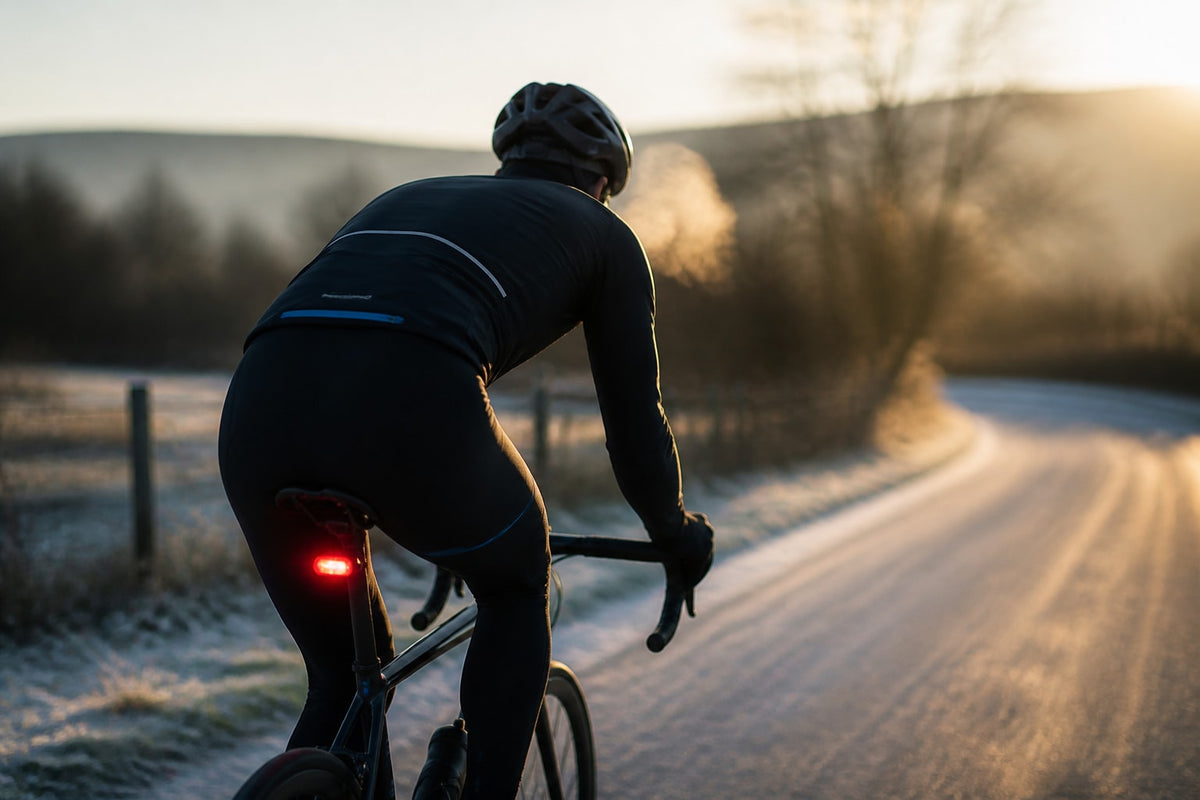
Cycling in winter works when you control four things: warmth through layering, grip and braking on cold or wet roads, visibility in low light, and bike maintenance that fights salt and moisture. Get those four right and cycling winter miles become a productive part of the training calendar rather than a season to endure on a trainer.
The sections below cover the clothing system, safety on ice and wet roads, tire and lighting choices, bike care, and a planning point that matters to teams and clubs: ordering winter kit early enough to be ready when the first cold block arrives.
How Should You Dress for Cycling in Winter?
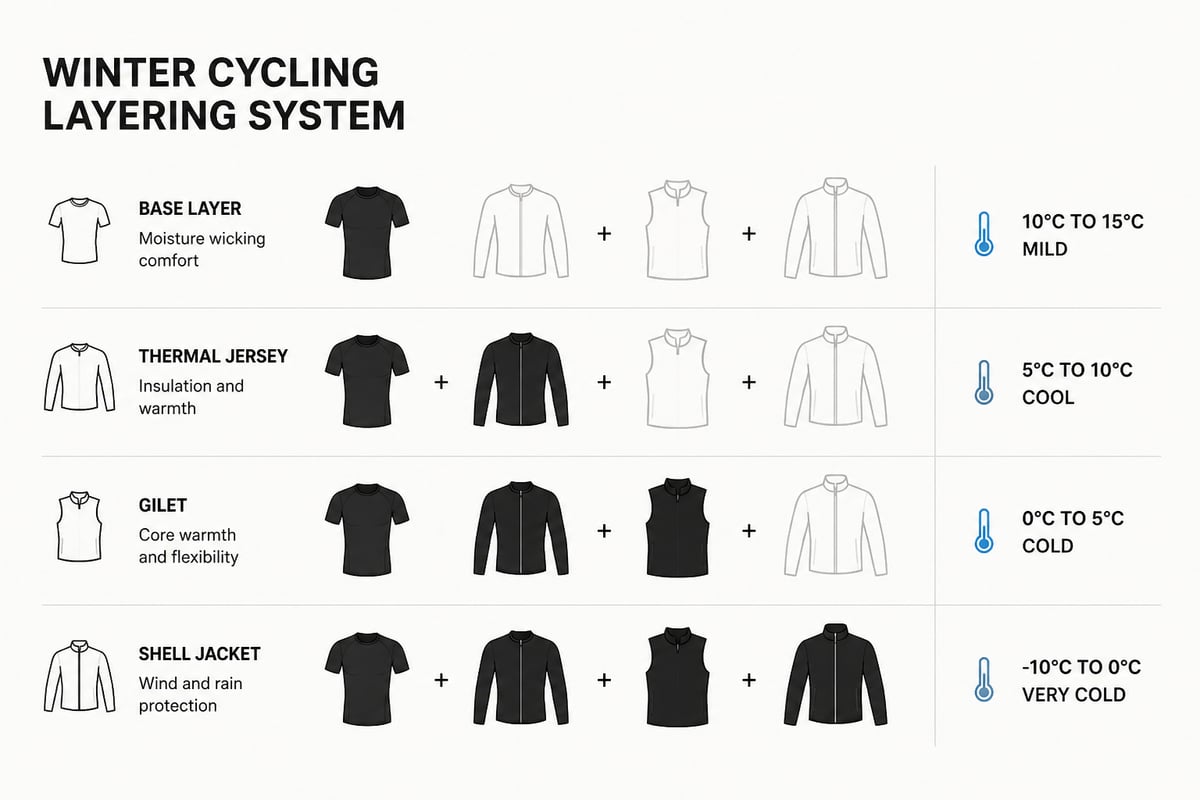
Dress in layers that manage moisture first and wind second, because sweat that cannot escape chills you faster than cold air does. A well-built system uses a base layer, an insulating mid layer, and a protective outer shell, with each piece chosen for the temperature range you ride in most often.
Here is how the layers divide up:
- Base layer: A close-fitting merino or synthetic piece that moves sweat away from the skin. Avoid cotton, which holds moisture.
- Jersey or thermal mid layer: A long-sleeve fleece-backed jersey provides the main insulation. Pockets at the back keep food and spare layers reachable.
- Gilet: A windproof vest protects the chest and core while leaving the arms free to vent heat on climbs.
- Shell jacket: The UK Met Office recommends a windproof, waterproof and breathable jacket, along with gloves, as key winter cycling clothing.
- Bib tights or bib shorts with warmers: Thermal tights suit temperatures near freezing. Leg and arm warmers give flexibility on days that start cold and warm up.
For a deeper look at how these pieces stack together, the winter cycling jacket layering guide and the best winter cycling apparel layers walk through combinations by temperature band.
Protecting Hands, Feet, Head and Neck
Extremities lose heat first, so they need dedicated attention. Insulated, wind-blocking gloves matter more than almost any other single item, and a thin liner glove under a heavier outer glove gives you adjustable warmth. CCN Sport's article on cycling warmer gloves for winter rides covers what to look for in insulation and fit.
For feet, thermal socks plus overshoes that block wind and spray keep toes functional on longer rides. A thin cap under the helmet and a neck warmer close the gaps where cold air gets in. A cycling cap worn under the helmet also keeps rain off your face on drizzly days.
Which Safety Risks Matter Most in Cold Conditions?
The biggest winter risks are black ice, longer stopping distances on wet roads, and poor visibility, and each one calls for a specific change in how you ride rather than general caution.
Ice. Below freezing, thin layers of water can freeze quickly and form black ice, according to the City of Boston. Shaded corners, bridges and road edges freeze first. Summarizing Cycling UK guidance, the Met Office's page on cycling in icy conditions stresses slowing down, choosing tires with grip, staying visible, and switching to another mode of transport when conditions are unsafe. That last option is a legitimate decision, not a failure.
Braking. Allow extra stopping distance in winter. The Met Office notes that wet rims may need a few wheel revolutions to clear before braking works well, and it recommends braking smoothly with both brakes and finishing your braking before you enter a corner.
Visibility. Short days mean many riders train in the dark. Fog adds another layer of risk, and the Met Office's winter weather and cycling advice covers lights and high-visibility clothing for low-visibility days.
Group Riding in the Cold
Club rides need extra discipline in winter. Space riders a little wider than usual, call out ice and standing water early, and agree on a pace that keeps the group together when someone needs to stop and add a layer. Reflective detailing on matching club kit helps drivers read a group as a single, larger shape, which is one reason many clubs specify high-visibility panels in their winter designs.
What Tires, Lights and Setup Changes Help Most?
Wider tires at slightly lower pressure, reliable lights with spare power, and full-coverage mudguards are among the most useful upgrades for winter riding on a road bike.
- Tires: Move to a wider tire if your frame allows it, and drop pressure a few psi below your summer setting for more contact patch on cold, damp tarmac. Tires with puncture protection reduce the number of roadside repairs in freezing weather, when fingers work poorly.
- Mudguards: Full guards keep spray off your feet, drivetrain and the rider behind you. Group riders will thank you for them.
- Lights: Run a front light and a rear light, and consider a second rear light for redundancy. Cold weather can drain bike-light batteries faster, so Boston's winter biking advice suggests carrying spare batteries and bringing lights indoors after you ride.
- Hydration and food: Insulated bottles slow freezing, and food that stays soft in the cold, such as bars kept inside a jersey pocket, is easier to eat with gloves on.
Do you need a dedicated winter bike? For riders putting in many weekly miles through salt and slush, a cheaper aluminum or steel bike with mudguards protects your race machine. If that is not possible, a thorough cleaning routine, covered next, serves the same purpose.
How Do You Maintain a Bike Through the Winter?
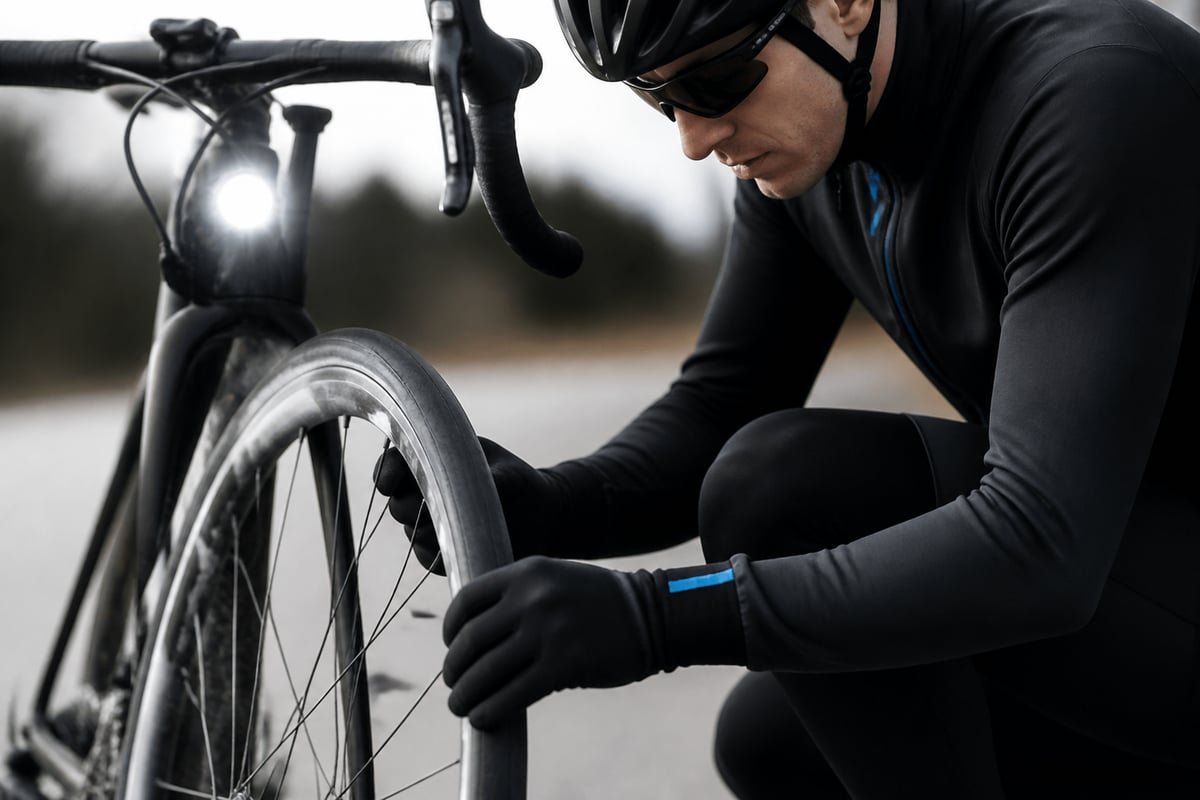
Wash, dry and lubricate the bike after every wet or salted ride, because road salt and moisture corrode components faster than summer dust ever does.
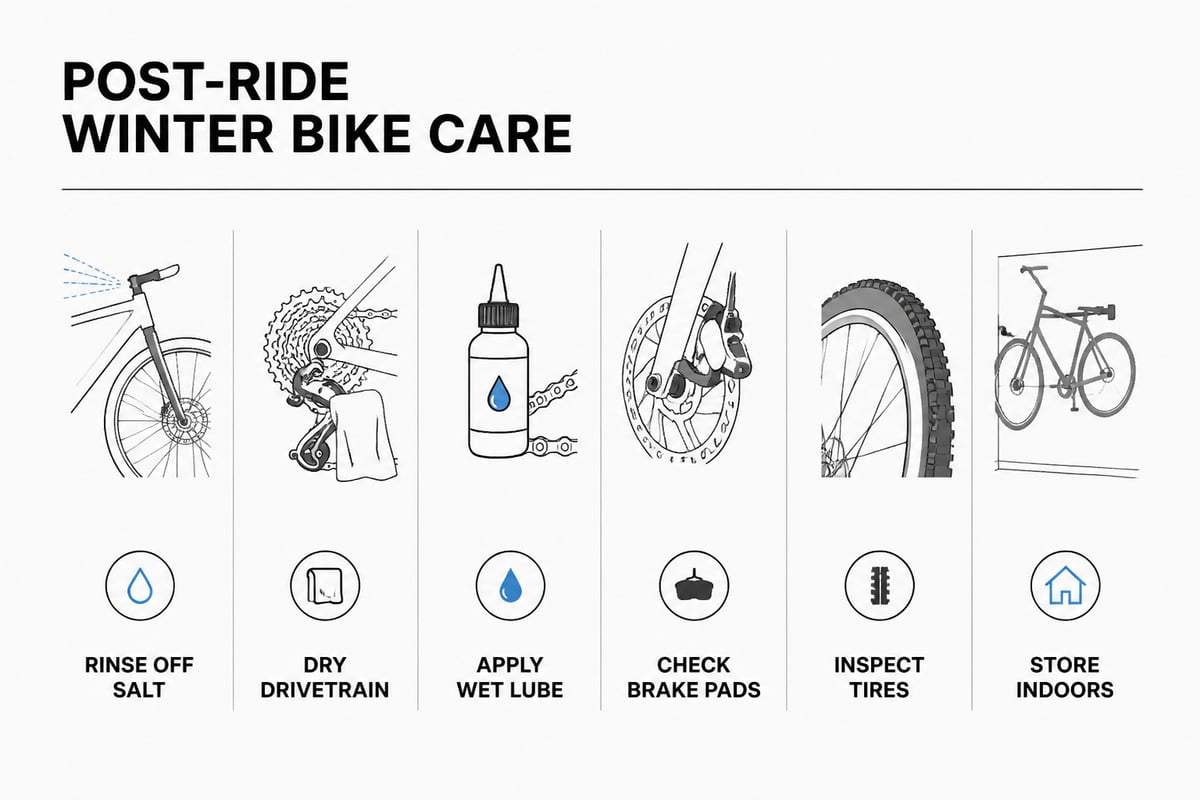
Boston recommends cleaning and lubricating the chain more often in winter, using a water-resistant wet lube, and wiping salt and moisture from the bike after each ride. Turn that guidance into a short routine:
- Rinse the frame, wheels and drivetrain with low-pressure water to remove salt and grit.
- Wipe the chain, cassette and brake surfaces dry with a clean cloth.
- Apply wet lube to the chain, let it soak in, then wipe off the excess.
- Check brake pads for wear, since winter grit consumes them quickly.
- Inspect tires for embedded flint or glass before the next ride.
- Store the bike indoors in a dry space so condensation does not form on bare metal.
Pay attention to cables, bolts and bottom brackets too. Grease on seatpost and stem bolts prevents seizing, and a quick check of quick-release or thru-axle tightness takes seconds. A short service in early winter, before the worst weather, usually costs less than an emergency repair in January.
Why Plan Cycling Winter Kit Before the Cold Arrives?
Teams and clubs that order matching winter kit in late summer or early autumn have it in hand when training blocks begin, instead of scrambling mid-season. Custom orders take design approval, production and delivery time, so the planning window is longer than most riders expect.
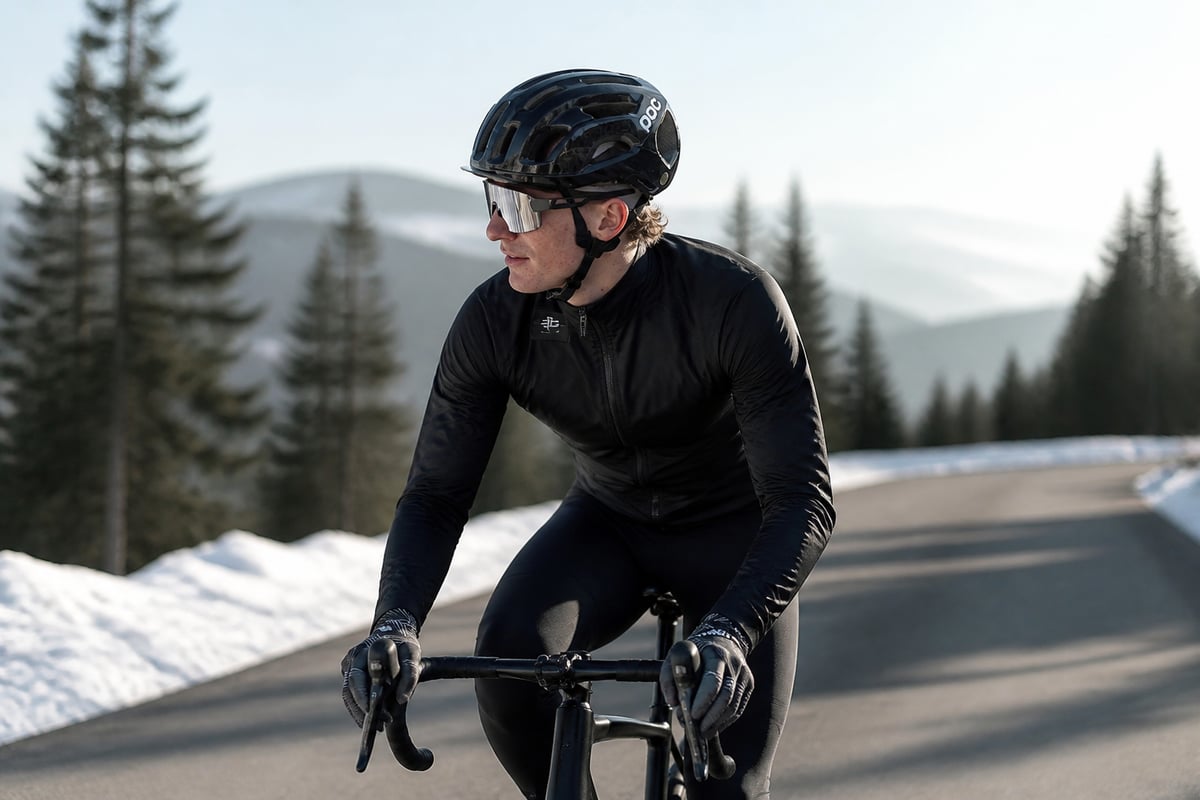
Winter kit also carries a heavier design load than summer kit. Thermal fabrics, windproof fronts, reflective trim, longer cuts and sleeve cuffs that seal under gloves all need to be specified, and sizing needs more thought because layers go underneath.
CCN Sport builds custom race and training apparel in its own facilities in China and the Philippines, and its Custom Cycling Apparel service covers design support from the in-house team, advanced sublimation printing and precision finishing.
A few practical points help a club order go smoothly:
- Collect sizes early and measure riders in the base layers they will actually wear.
- Decide which pieces the whole squad needs, such as jacket, gilet and thermal jersey, and which are optional.
- Add reflective elements to the design brief from the start rather than as an afterthought.
- Plan for crash and size changes. CCN Sport offers discounted reorder options, which can help when a rider needs a replacement mid-season. Confirm sizing and design carefully before approving a custom order.
How Do You Keep Training Consistent in Cold Weather?
Consistency comes from lowering the friction of getting out the door: prepare kit the night before, set realistic goals for cold days, and keep a plan B ready for dangerous conditions.
Lay out your base layer, jersey, gloves and lights before bed so the morning decision is already made. Shorten your warm-up expectations too. Cold muscles need ten to fifteen easy minutes before any hard effort, and starting with a tailwind home leg, rather than a headwind, helps you avoid finishing the ride chilled and sweaty.
Plan route choices around conditions. Main roads that are salted and gritted can be safer than quiet lanes that stay icy, even if they are busier. Keep a small kit on the bike: a spare tube, a multitool, a compact pump, and a thin emergency layer. Tell someone your route on long rides, especially in remote areas where a mechanical failure in freezing weather becomes a safety problem.
When ice or deep snow makes riding unsafe, move the session indoors on a trainer, swap to a strength or mobility day, or skip it. A missed ride costs less than a crash. Clubs can build the same flexibility into their calendars by scheduling indoor group sessions for the worst weeks.
What Should Winter Riders Check Before Every Ride?
A thirty-second pre-ride check catches most of the small problems that become big ones in the cold.
- Tire pressure and condition: Cold air lowers pressure, so check before you leave.
- Brakes: Squeeze both levers and spin the wheels to confirm pads clear the rims or rotors.
- Lights: Test front and rear lights and confirm the battery level.
- Chain: Look for a dry, squeaky chain that needs fresh lube.
- Clothing: Confirm gloves, cap and shell are in the bag, even if the morning looks mild. Winter temperatures can drop quickly once the sun goes down.
- Phone and ID: Charge your phone fully, because cold also shortens phone battery life.
Cycling winter miles are a long game. Riders who dress with a system, brake early, keep the drivetrain clean and make smart calls about ice arrive in spring with a strong base and a bike that still shifts cleanly.
Start by listing the winter pieces your squad actually needs, such as a thermal jacket, gilet, bib tights and gloves, and collect each rider's sizes before the first cold block arrives. When you are ready to turn that list into matching kit, the team at CCN Sport can help through its Custom Cycling Apparel service, which brings together in-house design, advanced fabrics and precision printing from factories in China and the Philippines. Share your brief and quantities to start your custom kit with a team that has built custom cycling apparel since 2005.

Share:
Cycling Shorts on Sale: How to Choose a Pair That Fits
How to Prepare Race Day Kit for Fast, Calm Starts