

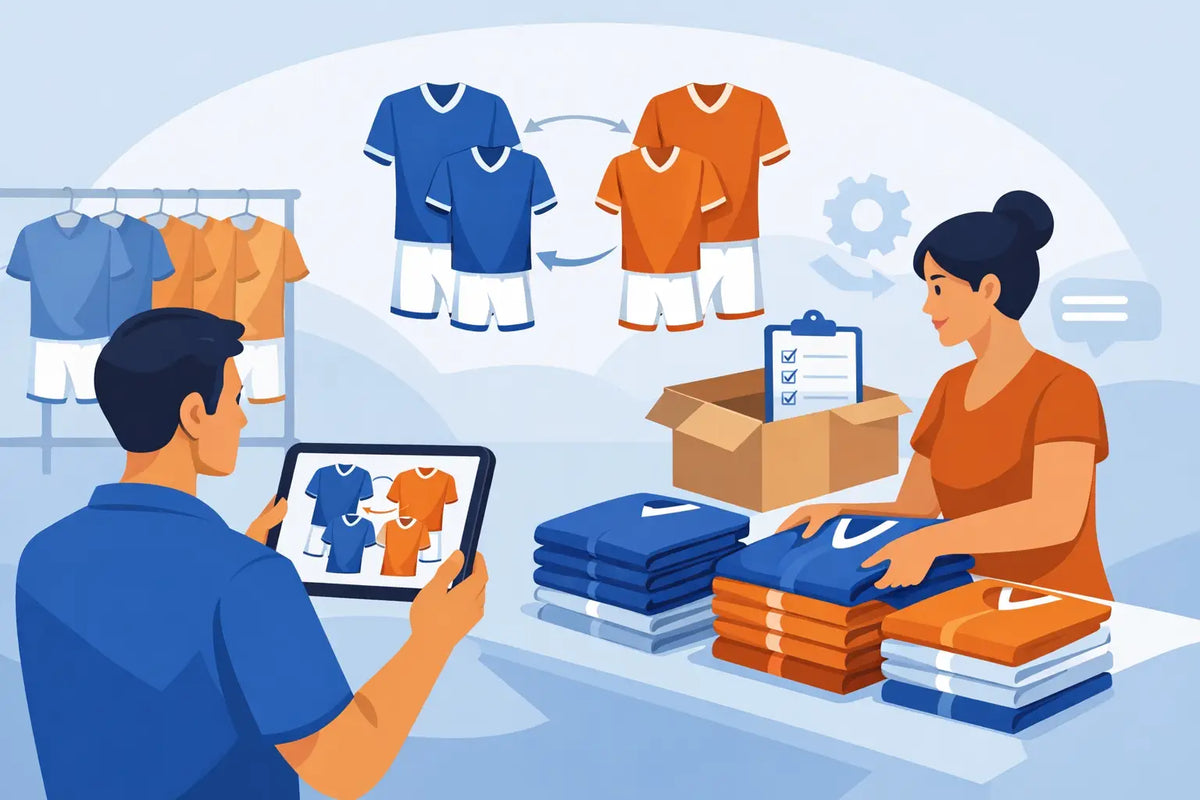
A new rider joins two weeks before the season opener. A current rider needs a replacement bib short after a crash. The club adds a women’s cut that was not included in the original order. Can teams reorder matching kits in these situations without compromising the look and performance of the original run? Usually, yes - but the answer depends on how the kit was built, documented, and managed from day one.
A reorder should feel like a continuation of your team program, not a new design project. The goal is simple: riders should line up in kit that carries the same team identity, delivers the expected fit, and performs consistently on race day. Getting there requires more than saving a logo file.
What Makes a Kit Reorder Truly Match?
A matching kit is not just a jersey in the same colors. It is the combination of approved artwork, production specifications, fabric selections, garment patterns, trim details, and sizing options. If one part changes without a clear decision, a reorder can look close enough in a photo while feeling noticeably different on the bike.
The most reliable reorders begin with a complete production record. That record should include the final art files, placement guides, color references, garment models, panel layout, approved size chart, and any rider-specific details such as names, numbers, or sponsor variations. A team manager who can provide only an old jersey photo will have fewer options than one who can reference the original approved specification.
Color deserves particular attention. Sublimated apparel holds color well, but a screen image, a printed flyer, and a worn three-year-old jersey are not reliable standards for judging a new production run. Screen calibration, fabric base color, and normal wear can all affect what riders perceive. The right benchmark is the approved digital artwork and production reference, not the most faded garment in the team box.
Fit is equally important. A race-cut jersey and bib short built for an aggressive position should not be casually substituted with a different model just because the artwork is available. New riders need to integrate with the team, but they also need the same ride comfort and technical intent their teammates expect.
Can Teams Reorder Matching Kits at Any Time?
Teams can often reorder after the initial production run, especially when the supplier retains the team’s artwork and specifications. Still, “any time” is not the same as “with no variables.” Apparel manufacturing follows material availability, production scheduling, and seasonal demand. A last-minute request before a major event may limit delivery options, even when the design is already on file.
The best approach is to treat reorders as part of the team’s annual apparel plan. Many clubs place a primary order before the racing season, then schedule a second ordering window for late recruits, replacement pieces, and riders who discovered their preferred fit after the first few rides. This gives the team greater control over delivery timing and helps avoid expensive urgency.
Smaller reorders are often possible, but minimums can vary by garment, decoration method, and factory workflow. A single replacement jersey may be handled differently from a small batch of jerseys and bibs. Ask early about the practical reorder threshold for your specific program rather than assuming the original minimum applies forever.
There is also a strategic choice between a direct reorder and a team store. For a stable club with steady membership, an online team ordering system can let riders order approved items during defined windows. For a race team with sponsor changes, a tightly managed reorder process may be better. It prevents outdated logos, incorrect sponsor hierarchy, or old event branding from appearing in the bunch.
Why Reorders Sometimes Do Not Match Perfectly
A trustworthy apparel partner should be clear about potential changes rather than promising that every future garment will be identical forever. Materials evolve. A fabric may be discontinued, a zipper specification may be updated, or a garment pattern may improve based on new technical development. These changes can improve comfort, durability, or aerodynamic performance, but they should be reviewed before production.
The question is whether a change affects visual consistency, fit, or function. A revised internal label may not matter. A replacement side-panel fabric with a different surface texture or a revised bib short chamois may matter a great deal to riders. For competitive teams, the product decision should be intentional.
Sponsor updates create another common complication. If a title sponsor changes midseason, the team may need both old and new versions of the kit for a short period. This is manageable when artwork versions are clearly named and approved. It becomes costly when team managers request “the old design, but with the new logo” without confirming placement, colors, and approval rights.
Avoid relying on a rider’s personal order history as the master record. Riders move between teams, buy different cuts, and may have ordered a limited-edition item that was never part of the core collection. The team’s approved kit specification should remain the source of truth.
Build a Reorder System Before You Need One
The strongest teams make reordering easy before the first garment is produced. During the design and approval stage, assign one or two people to own the final artwork and product decisions. That does not mean every rider loses input. It means the team has a clear final approval process when timing matters.
Keep a simple internal kit file that records the official design name, approval date, garment models, color references, logo permissions, and the contact responsible for authorizing changes. Include notes on which items are compulsory for racing and which are optional, such as gilets, thermal jackets, base layers, or casual apparel. This prevents a new rider from ordering a training jersey when the team requires a race-cut model for competition.
Before submitting a reorder, confirm four practical details:
- The artwork version is current, including all sponsor logos and required marks.
- The garment model and fit category match the original team issue.
- The rider’s size is based on the current size guide, not an assumption from another brand.
- The required-in-hand date accounts for production, shipping, and any final checks.
Match the Rider, Not Just the Design
A reorder is also a chance to make the program work better for the person wearing it. Teams frequently grow beyond a single body type, discipline, or climate. A road racer may want a close aerodynamic jersey, while a gravel rider may prefer slightly more storage and an endurance-oriented fit. A triathlete may need a different suit altogether.
Visual unity does not require forcing every athlete into an unsuitable product. It requires a disciplined design system that translates across the right garments. The same color blocks, logo hierarchy, and team identity can carry from a road jersey to a women’s-specific bib short, skinsuit, vest, or winter layer while each piece remains built for its job.
This matters for retention as much as appearance. Riders are more likely to wear team kit proudly when it fits correctly and performs through long training days, wet commutes, fast descents, and hard race efforts. A cheaper replacement that looks similar but rides poorly can undermine the confidence the original kit created.
Choosing a Partner for Long-Term Team Kit
Teams that expect to reorder should look beyond the first quote. The useful questions are about continuity: Will the artwork be retained? Can the supplier reproduce the approved design across future orders? How are material or pattern updates communicated? What options exist for new riders, replacement pieces, and different garment categories?
Factory-direct production can be especially valuable because the communication path between design, manufacturing, and team management is shorter. With CCN Sport, teams can build a custom program around performance-focused apparel while keeping future kit needs in view. The advantage is not simply getting more apparel. It is having a repeatable system for keeping a growing roster aligned.
A team kit should withstand more than a single launch order. When artwork is protected, specifications are clear, and reorders are planned with enough lead time, every new rider can look like part of the squad from their first start line onward.

Share:
Are Cycling Skinsuits Worthwhile for Racing?
What Is Aerodynamic Cycling Clothing and Why?