

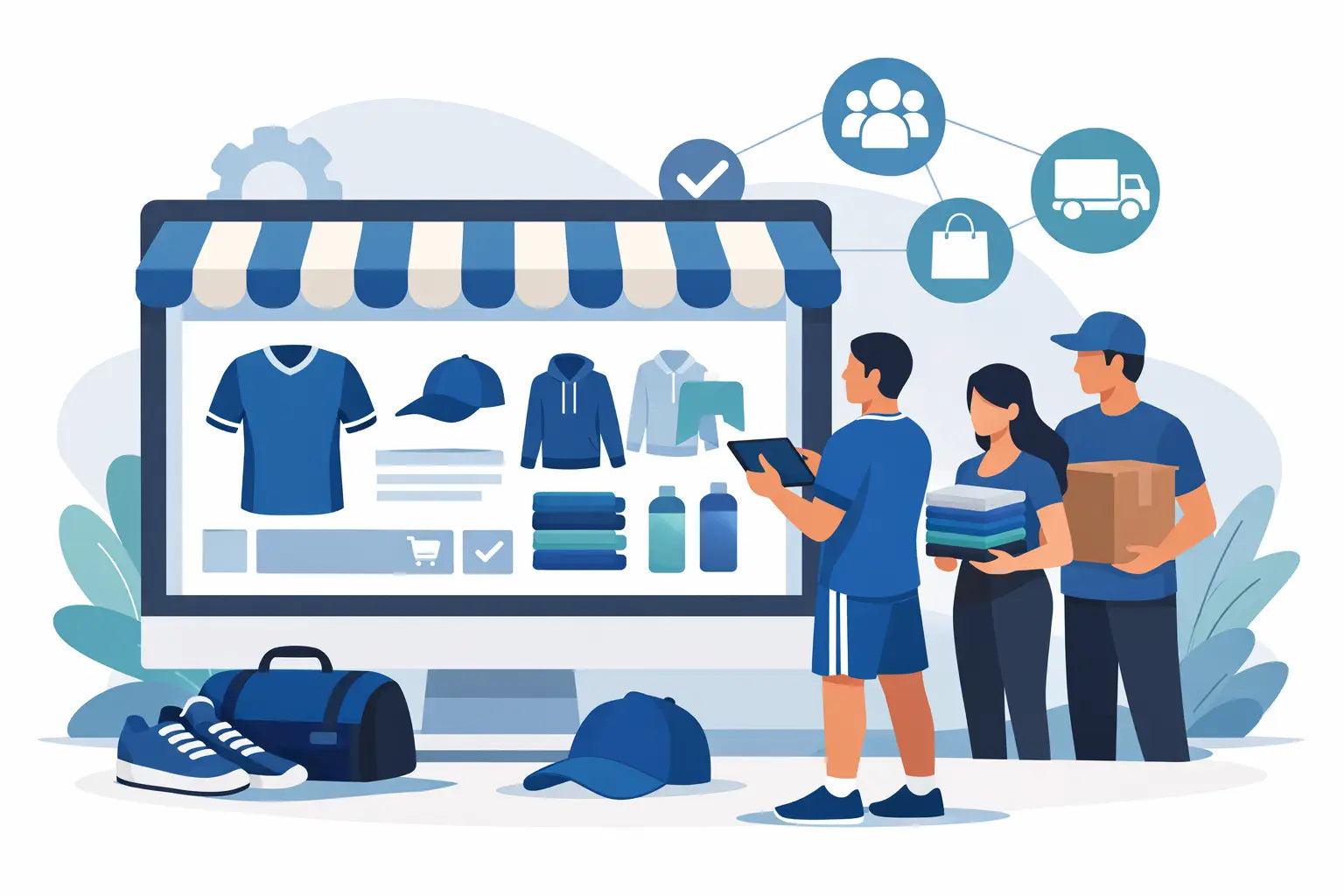
If you have ever tried to outfit a cycling club by passing around size charts, collecting Venmo payments, and chasing riders for jersey choices, you already know why people ask, what is a team order store? It is a private or branded online storefront built for group apparel ordering. Instead of one team manager handling every detail manually, riders place their own orders within a set window, choose approved items, enter sizing, and pay directly through the store.
For cycling teams, that changes the process from messy and time-consuming to controlled and trackable. It is not just an ecommerce page with a logo on it. A true team order store is a structured ordering system designed for custom kit programs, club apparel drops, and repeat team purchases where timing, accuracy, and product consistency matter.
What is a team order store in cycling?
In cycling, a team order store is usually a dedicated online portal for a club, race team, shop team, corporate team, or event group to order custom apparel. The store is typically preloaded with the team’s approved designs, selected garments, colorways, and ordering rules. Riders log in or access the store during the open sales period, choose what they need, and submit their order directly.
That sounds simple, but the value is in the control behind it. The team does not need to manually collect spreadsheets, confirm SKUs, or reconcile who has paid and who has not. The supplier can also keep the product selection aligned with the team’s branding and production requirements, which reduces mistakes before manufacturing even starts.
For teams ordering jerseys, bib shorts, jackets, base layers, skinsuits, or tri suits, that structure matters. Cycling apparel is fit-sensitive, discipline-specific, and often seasonal. A system that keeps the ordering process clean helps avoid expensive errors later.
How a team order store works
Most team order stores follow a straightforward workflow. First, the team and apparel partner finalize the product lineup. That might include race jerseys, training bibs, vests, arm warmers, and cold-weather pieces, depending on the program. Once the assortment is approved, the supplier builds the store with the correct products, team branding, sizing information, and ordering dates.
Next, the store opens for a limited period. Team members receive access and place their orders individually. They choose sizes, quantities, and approved items, then check out themselves. In many setups, each rider pays directly, which removes one of the biggest administrative headaches for team organizers.
After the ordering window closes, production begins based on the final confirmed quantities. Because the store is tied to a defined deadline, the supplier can move cleanly into manufacturing without waiting on late replies from half the roster. Once production is complete, orders are packed and delivered according to the agreed fulfillment method.
That last part can vary. Some programs ship bulk orders to a team manager. Others ship individual rider orders directly. Which approach works best depends on budget, geography, and how the team is organized.
Why teams use a team order store
The biggest reason is efficiency. Team managers are usually volunteers, coaches, or athletes themselves. They do not want to spend nights sorting through messages that say, “I think I’m a medium, unless the fit is race cut.” A team order store cuts down on back-and-forth by giving each rider a defined place to order the right products.
It also improves payment handling. Instead of one person fronting a large invoice and collecting reimbursements later, riders can often pay at checkout. That is cleaner for the team and reduces the chance of unpaid orders holding up the entire project.
Accuracy is another major advantage. Custom cycling apparel is not something you want to reorder because three riders selected the wrong item or because an old spreadsheet was used. When the store is set up correctly, only approved products are available, sizes are selected at the rider level, and order records are centralized.
There is also a branding benefit. A good store keeps the entire team buying from the same design system. That matters for club identity, sponsor visibility, and a professional look on race day.
What makes it different from a regular online store
A normal online store is built for ongoing retail sales. Products are available all the time, inventory is usually stocked in advance, and customers shop whenever they want. A team order store is different because it is usually tied to custom production and limited ordering windows.
That changes how the system is managed. The store may only be open for a week or two. The products may be made after the order window closes, not pulled from warehouse inventory. The assortment is often restricted to team-approved items rather than a full retail catalog.
There is also more coordination behind the scenes. Custom artwork, minimum order quantities, production scheduling, and delivery timing all need to line up. That is why team order stores are especially useful in categories like cycling, where performance apparel is technical and custom work requires precision.
The biggest benefits for cycling clubs and team managers
For cycling clubs, the administrative relief is real. A team order store gives managers a cleaner way to organize orders without becoming a full-time customer service desk. Riders take more responsibility for their own selections, and the team has a single ordering framework instead of a patchwork of emails and payment apps.
For riders, the process feels more professional. They can see the approved kit selection in one place, review sizing, and order on their own schedule before the deadline. That tends to create fewer misunderstandings than collecting orders informally.
For the apparel partner, the benefit is production clarity. Final counts are easier to confirm, payment status is easier to track, and the transition from order intake to manufacturing is smoother. In a factory-direct custom program, that clarity supports faster turnaround and more dependable fulfillment.
This is where a specialized cycling apparel partner can make a big difference. A brand like CCN Sport can pair technical product knowledge with a structured ordering platform, so the store is not just convenient - it is aligned with fit, performance use, and production reality.
Where team order stores can fall short
They are effective, but they are not magic. If the team has not finalized artwork, product choices, or pricing before the store opens, confusion can still happen. A team order store works best when the setup is disciplined.
Sizing is another area that requires attention. The store can present sizing tools and garment information, but it cannot guarantee every rider will choose perfectly. Teams still need to communicate fit guidance clearly, especially when ordering race-cut apparel or first-time custom pieces.
Deadlines can also frustrate late buyers. Since many team stores are built around batch production, once the window closes, it often closes. That is good for manufacturing efficiency, but it can be challenging for teams with riders who join late or forget to order.
There is also an inventory trade-off. Because many custom stores are made-to-order, teams do not always have immediate access to replacement pieces. If a rider crashes and needs a new jersey next week, that may require a separate reorder process unless the team also holds spare stock.
What to look for in a team order store provider
Not every platform is built for cycling teams. If you are evaluating options, look beyond the storefront itself. The real question is whether the provider understands custom apparel production, technical garment categories, and the timing pressures that teams face.
A strong team order store provider should offer clear setup support, controlled product selection, dependable deadline management, and straightforward payment handling. It should also support the realities of cycling apparel, including multiple garment types, detailed size ranges, and season-specific kit planning.
It helps if the provider can scale with your team. A small club may only need a basic annual order, while a larger program may need several store launches a year for race, training, casual, and winter gear. The platform should support both without turning every order cycle into a reset.
The final piece is fulfillment reliability. A polished order store means little if production timing slips or product quality is inconsistent. In cycling, fit, comfort, and durability are not extras. They are the product.
Is a team order store right for every group?
Usually, yes, but the exact setup depends on the group. A racing team with strict kit standards may need a tightly controlled store with narrow product options and hard deadlines. A large recreational club may want more flexibility, wider sizing access, and a broader mix of performance and casual items.
Very small teams sometimes manage orders manually, especially if they are only buying a few pieces once a year. But even then, manual systems tend to break down as soon as the roster grows, product options expand, or multiple reorder cycles come into play.
If your group values accurate ordering, less admin work, and a cleaner path to production, a team order store is usually the stronger option. It brings structure to a process that often gets messy fast.
The best part is not the software itself. It is what the system protects - your time, your team identity, and the confidence that when kit arrives, it is the right gear for the riders who ordered it. For any club that wants ordering to feel more like race prep and less like damage control, that is a smart place to start.

Share:
How to Order Custom Skinsuits for Racing
Club Cycling Kit Budget Planning That Works