


Mountain biking demands more from your clothing than road cycling ever will. The trail throws rocks, mud, branches, and sudden weather changes at you while you navigate technical descents and grueling climbs. Your mountain bike attire needs to protect you from impacts, manage sweat and temperature extremes, and move with you through every pump, jump, and corner. Choosing the right gear isn't about fashion-it's about staying safe, comfortable, and in control when the trail gets rough.
Understanding the Mountain Bike Attire System
The foundation of effective mountain bike attire starts with understanding how different garments work together as a system. Unlike casual sportswear, trail-specific clothing addresses multiple challenges simultaneously: abrasion resistance, impact protection, moisture management, and freedom of movement.
Base Layer Fundamentals
Your base layer sits next to skin and serves as the first line of defense against temperature fluctuations. Research on thermophysiological comfort properties of cycling fabrics demonstrates that material choice significantly impacts moisture transfer and thermal regulation during high-intensity riding.
Key base layer characteristics:
- Moisture-wicking synthetic fibers or merino wool
- Seamless construction to prevent chafing
- Close fit without compression restriction
- Odor-resistant treatments for multi-day rides
The right base layer pulls sweat away from your body before it saturates fabric and causes temperature swings. On technical climbs, you generate enormous heat; on long descents, you cool rapidly. Your base layer bridges that gap.
Mid-Layer Strategy
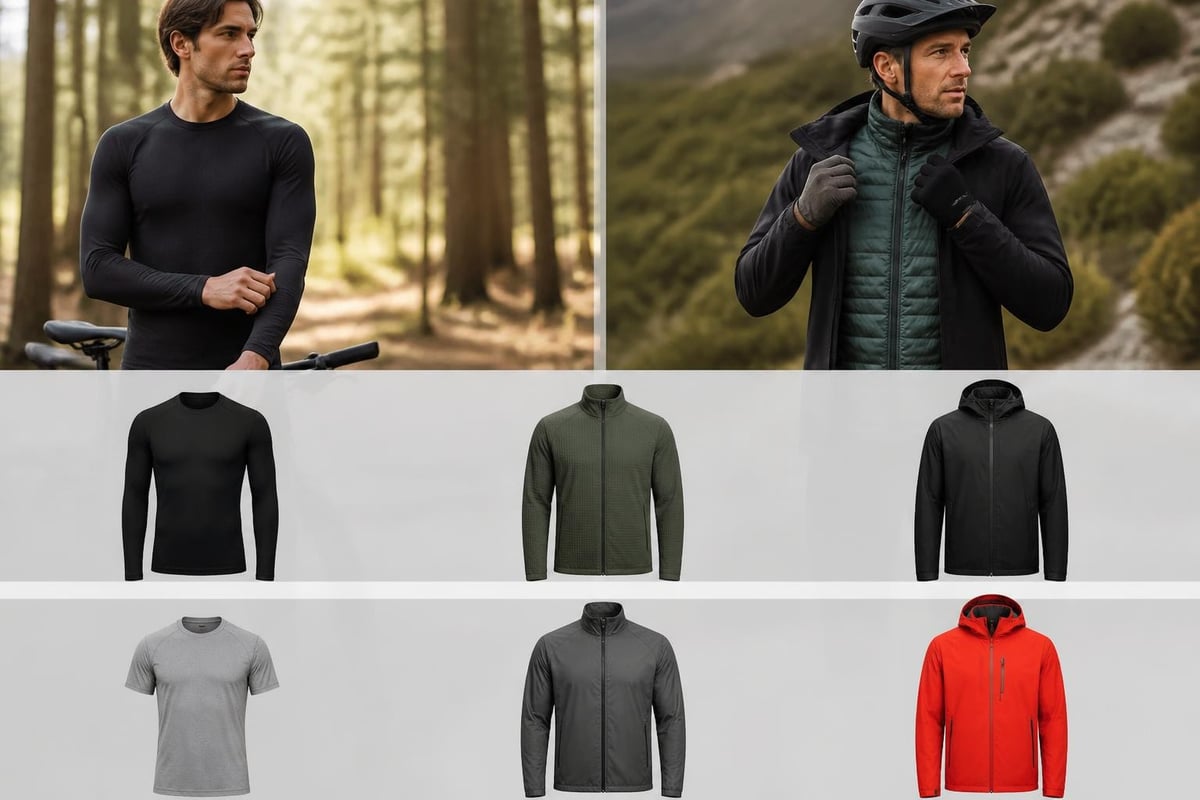
Mid-layers provide insulation when temperatures drop but remain breathable enough to vent excess heat during climbs. The Appalachian Mountain Club's layering guide offers practical principles that translate directly to mountain biking: avoid cotton, prioritize breathability, and choose layers you can add or remove quickly.
Fleece jerseys, lightweight insulated vests, and long-sleeve technical shirts all serve as effective mid-layers. The key is matching insulation weight to your riding intensity and ambient temperature. A rider tackling steep climbs in 40°F weather needs less insulation than someone rolling gentle trails at the same temperature.
Essential Mountain Bike Attire Components
Building a functional wardrobe requires understanding which pieces deliver the most value across different riding conditions and trail types.
Shorts and Pants Selection
| Garment Type | Best For | Key Features | Considerations |
|---|---|---|---|
| Baggy shorts with liner | Trail, all-mountain | Casual look, pocket storage, chamois comfort | Can catch on seat during technical moves |
| Form-fit shorts | XC racing, climbing | Aerodynamic, no snag points | Less impact protection |
| Padded trail pants | Cold weather, enduro | Full leg coverage, knee-pad compatible | Overheating risk in warm conditions |
| Convertible zip-off | Variable conditions | Versatility, quick adjustment | Extra weight, more seams |
The liner short-whether built-in or separate-determines comfort on long rides. Quality chamois padding reduces saddle pressure and prevents chafing. Just like with specialized sports socks, purpose-built cycling liners outperform generic athletic underwear in every measurable way.
Jersey and Top Considerations
Mountain bike jerseys balance durability with breathability. Trail-specific cuts offer longer backs for riding position, reinforced shoulders for pack straps, and strategic ventilation panels.
Jersey features that matter:
- Fabric weight: 140-180 gsm for warm weather, 200+ gsm for cooler conditions
- Pocket configuration: Rear pockets for tools, zippered security pocket for keys
- Ventilation zones: Mesh panels under arms and across back
- Length: Dropped tail prevents exposure during descents
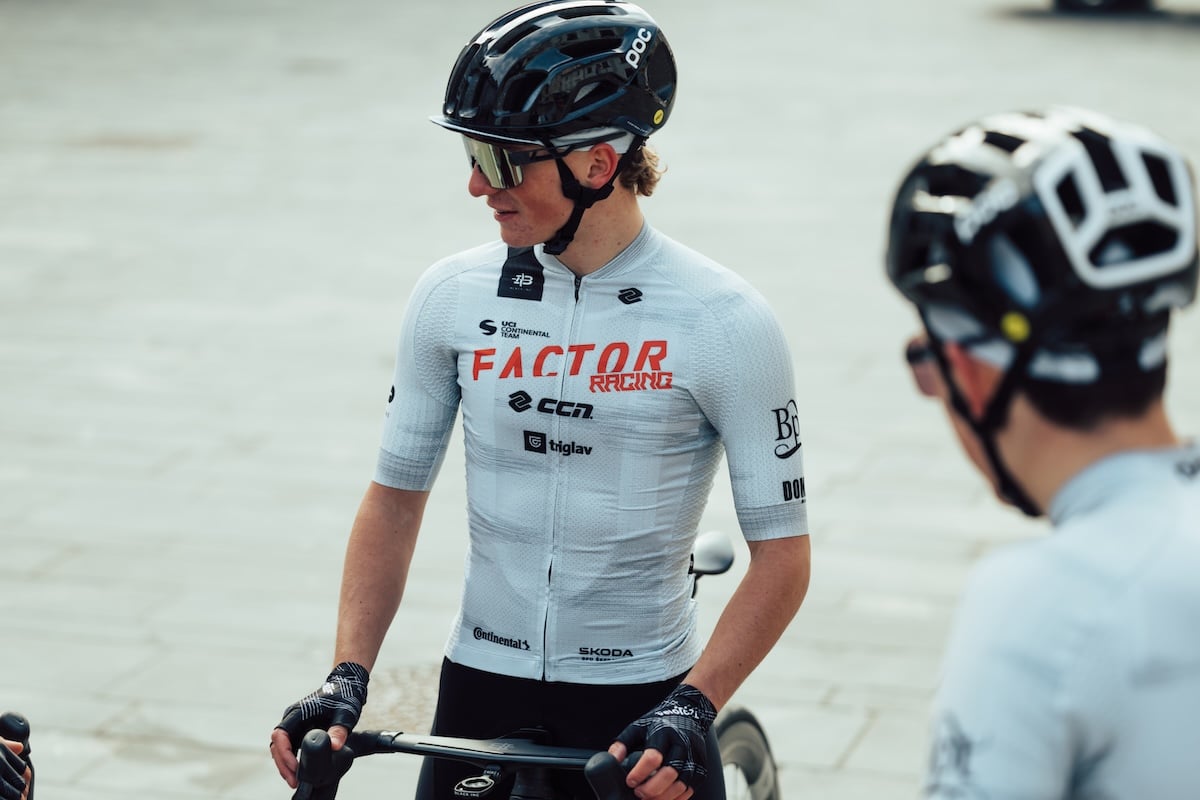
Riders investing in custom team kits or club apparel should prioritize these functional elements alongside visual design. At CCN Sport, our Custom Cycling Apparel service combines advanced sublimation printing with performance-focused construction, ensuring your team's mountain bike attire looks sharp while delivering trail-ready durability across every ride.
Protective Gear Integration
Mountain bike attire extends beyond clothing to include protective equipment that reduces injury risk. Youth mountain-biking injury data reveals that protective equipment use varies widely among riders, yet significantly impacts injury outcomes during crashes.
Essential protective elements:
- Gloves: Full-finger designs with padded palms and knuckle protection
- Knee and elbow pads: Low-profile options for trail riding, heavy-duty for downhill
- Body armor: Chest and back protection for aggressive riding
- Eyewear: Impact-resistant lenses protecting from debris and UV
The Cycling UK mountain biking guide emphasizes that protection choices should match your riding style and terrain. Cross-country riders often skip heavy armor, while enduro and downhill specialists layer comprehensive protection into every ride.
Weather-Specific Mountain Bike Attire
Trail conditions change with seasons and altitude. Your mountain bike attire strategy must adapt accordingly.
Hot Weather Configuration
High temperatures create unique challenges: heat exhaustion risk, increased sweat production, and sun exposure. Light-colored, loose-fitting jerseys with maximum ventilation keep core temperature manageable.
Riders should also consider hydration system integration. The best hydration packs for mountain biking work seamlessly with your clothing layers, sitting comfortably without restricting movement or trapping heat against your back.
Cold and Wet Conditions
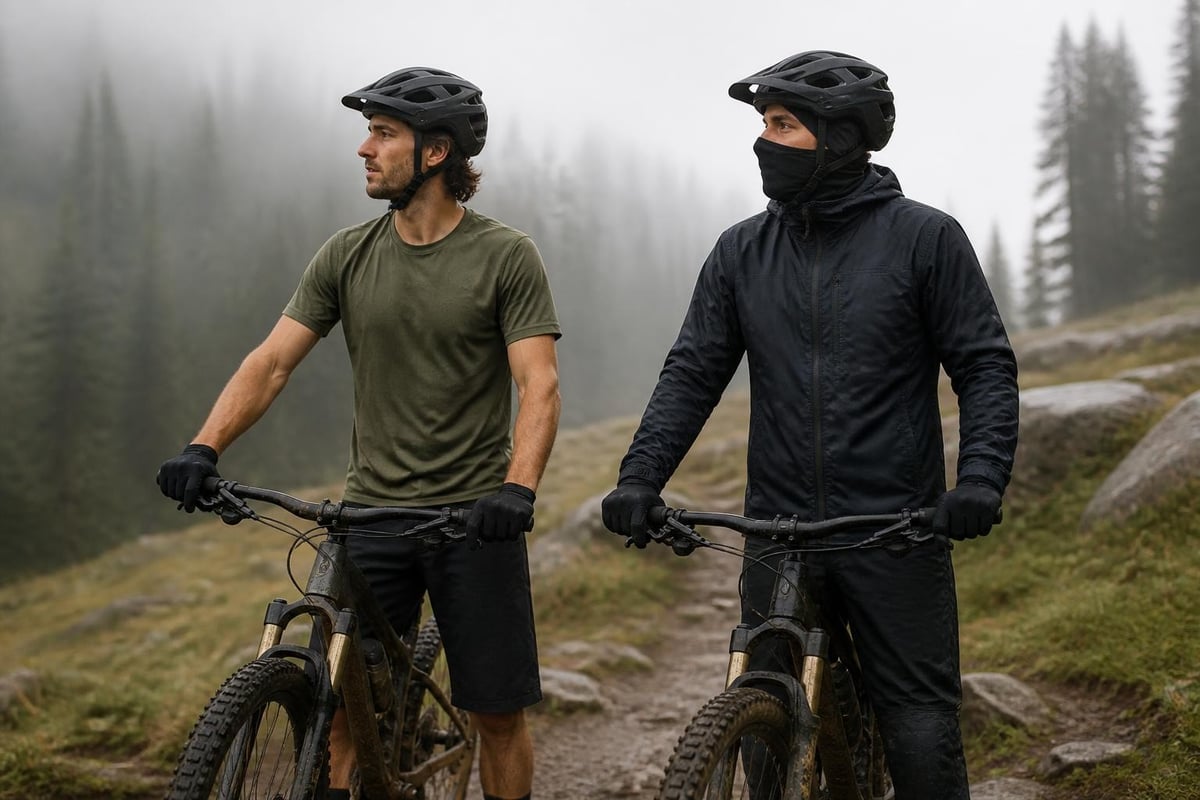
Winter mountain biking requires aggressive layering and strategic coverage. Start with a moisture-wicking base layer, add an insulating mid-layer, and finish with a wind- and water-resistant outer shell.
Cold-weather essentials:
- Thermal leg warmers or full tights
- Wind-blocking vest or jacket
- Neck gaiter or balaclava
- Insulated, waterproof gloves
- Wool or synthetic thermal socks
Remember that you'll generate significant heat on climbs even in freezing temperatures. Choose outer layers with ventilation zippers you can open quickly, and select pieces you can stuff into a pack when conditions warm.
Footwear and Lower Extremity Protection
Your connection to the pedals influences control, power transfer, and comfort. Mountain bike shoes differ dramatically from road designs.
Shoe Selection Criteria
Flat-pedal shoes feature sticky rubber soles that grip platform pedals during technical sections. Clipless mountain bike shoes use recessed cleats that don't interfere with walking or hiking, plus aggressive tread for trail scrambling.
| Feature | Flat Pedal Shoes | Clipless MTB Shoes |
|---|---|---|
| Pedal connection | Friction-based | Mechanical cleat |
| Walking comfort | Excellent | Very good |
| Power transfer | Good | Excellent |
| Crash ejection | Immediate | Delayed (practice needed) |
| Best for | Gravity, technical, beginners | XC, trail, experienced riders |
Sock Technology
High-quality cycling socks manage moisture, prevent blisters, and provide cushioning where pedal pressure concentrates. Compression zones improve circulation during long rides, while reinforced toe and heel areas extend sock life on demanding trails.
Accessory Integration and Storage Solutions
Mountain bike attire works alongside essential trail accessories. Coordinating these elements prevents frustration mid-ride.
Pack and Pocket Strategy
Dedicated mountain bike packs carry tools, spare tubes, food, and extra layers. Choose pack capacity based on ride duration:
- 2-5 liters: Short rides, racing
- 6-10 liters: Half-day adventures, extra protection
- 10-15 liters: All-day epics, variable weather
- 15+ liters: Multi-day trips, expedition riding
Jersey pockets supplement pack storage for items you need quickly: energy gels, phone, trail map. Distribute weight carefully-heavy items low and centered in your pack, light frequently-accessed items in jersey pockets.
Helmet Selection and Fit
Proper helmet fit forms the cornerstone of mountain bike safety. The CPSC's helmet selection guide provides clear fitting instructions: the helmet should sit level on your head, two finger-widths above your eyebrows, with straps forming a V beneath each ear.
Mountain bike helmet categories:
- Trail/all-mountain: Extended rear coverage, visor, good ventilation
- Enduro/gravity: More coverage, often with removable chin bar options
- Full-face: Maximum protection for downhill and bike park riding
- XC race: Minimal weight, maximum ventilation, less coverage
Performance Fabric Technology in Modern Mountain Bike Attire
Material science drives the evolution of cycling clothing. Understanding fabric properties helps you evaluate quality and make informed purchasing decisions.
Moisture Management Systems
Advanced fabrics use hydrophobic outer surfaces and hydrophilic inner surfaces to pull moisture away from skin and spread it across the garment's exterior for rapid evaporation. This two-phase moisture transport keeps you drier than single-layer cotton or basic polyester.
Durability and Abrasion Resistance
Trail riding subjects clothing to constant abrasion from branches, rocks, and crashes. Reinforced fabrics in high-wear zones-shoulders, elbows, hips, and seat-extend garment life significantly. Look for ripstop construction and higher-denier materials in these areas.
Stretch and Recovery
Four-way stretch fabrics move with you through the full range of motion required for aggressive riding: crouching through compressions, extending over jumps, twisting through switchbacks. Quality materials return to their original shape after stretching, preventing bagging and maintaining fit over time.
Custom Team Kits and Club Apparel Considerations
Teams, clubs, and riding groups often invest in matching mountain bike attire for identity, sponsorship visibility, and group cohesion. Whether you're outfitting a competitive race squad or a casual weekend crew, Sideline Sport Supply offers complementary equipment solutions that align with your team's performance goals and budget.
Design Elements That Work
Custom kit design balances aesthetics with function. Bold colors and clear sponsor placement serve marketing goals, but trail-specific cuts and fabric choices determine whether riders actually wear the kit.
Effective custom design priorities:
- High-contrast sponsor logos visible in action photos
- Sublimated graphics that won't crack or peel
- Team colors that maintain visibility in varied lighting
- Functional pocket placement that doesn't interfere with logos
Size Range and Fit Inclusivity
Quality custom programs accommodate diverse body types with comprehensive size ranges and fit options. Offering both men's and women's-specific cuts ensures proper fit across your entire roster, improving comfort and compliance with team kit requirements.
Maintenance and Care for Mountain Bike Attire
Proper care extends the life of technical cycling clothing and maintains performance characteristics.
Washing Best Practices
Do:
- Wash after every ride to remove sweat and bacteria
- Use technical-fabric detergent without fabric softener
- Close all zippers and turn garments inside out
- Air dry or use low-heat dryer settings
Avoid:
- High-heat drying that degrades elastic and damages prints
- Fabric softener that clogs moisture-wicking fibers
- Bleach or harsh chemicals that break down technical treatments
- Delaying washing, which allows bacteria to degrade fabrics
Storage and Organization
Store clean, dry mountain bike attire in a cool, dark location. UV exposure fades colors and degrades fabrics over time. Organize by season and function: base layers together, protective gear accessible, rain shells ready to grab.
Building Your Mountain Bike Attire Wardrobe
New riders often ask how many pieces they need. The answer depends on riding frequency, climate, and laundry access.
Starter Kit Essentials
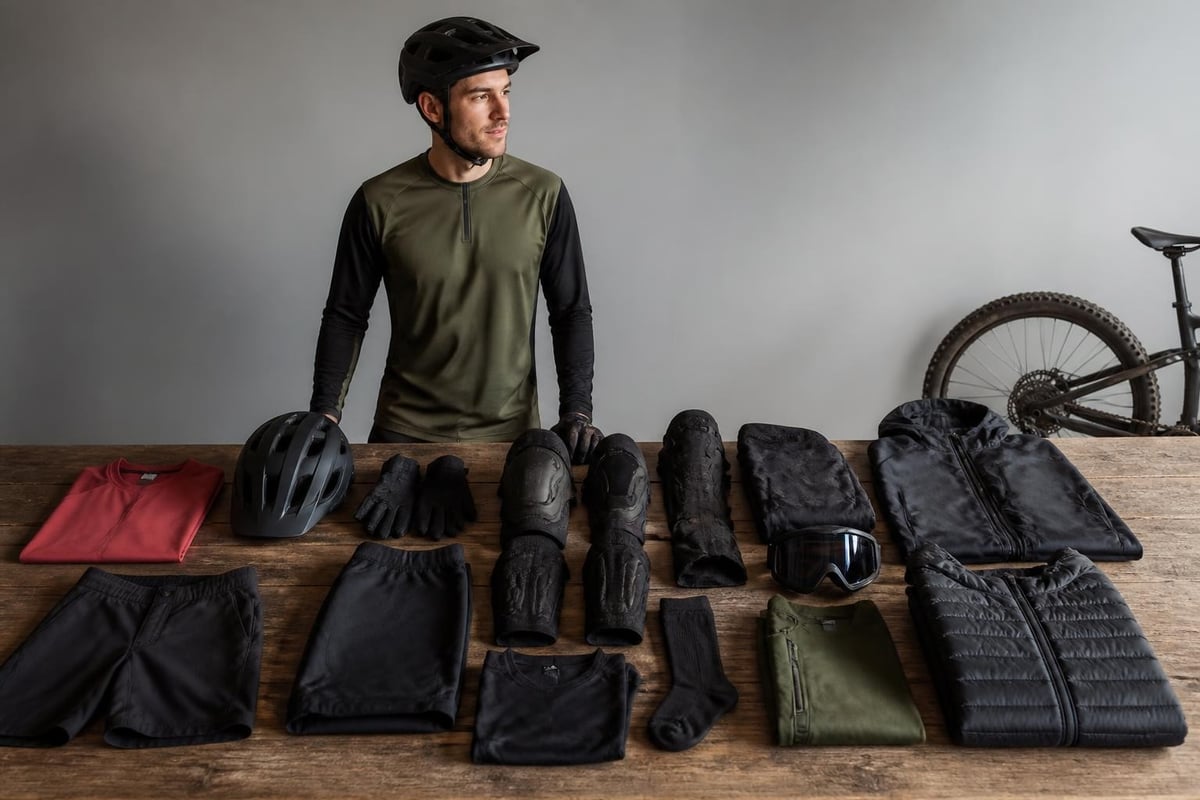
Minimum functional wardrobe:
- Two pairs of mountain bike shorts (one to wear, one to wash)
- Three moisture-wicking base layers or jerseys
- One pair of quality gloves
- One helmet
- Trail-specific shoes
- Weather-appropriate outer layer
This foundation supports 3-4 rides per week with regular washing. Add pieces as riding frequency increases or conditions diversify.
Expanding for Year-Round Riding
Serious riders eventually accumulate season-specific gear that optimizes comfort across temperature ranges. Thermal tights, waterproof jackets, arm and leg warmers, and multiple glove weights expand your effective riding season without requiring complete outfit changes for minor temperature shifts.
Youth and Junior Mountain Bike Attire
Young riders need appropriately sized, properly fitting gear that protects growing bodies while accommodating rapid size changes.
Protection Priorities for Young Riders
Research consistently shows that younger, less-experienced riders face higher injury rates on technical terrain. Comprehensive protective gear-especially helmets, knee pads, and gloves-reduces injury severity when crashes occur.
Size and Fit Challenges
Kids outgrow clothing quickly, creating budgetary pressure. Look for brands offering youth-specific cuts rather than scaled-down adult designs. Consider adjustable features like elastic waistbands and grow-room in jersey length.
Advanced Considerations for Competitive Riders
Racers optimize every detail, including mountain bike attire choices that might seem excessive to recreational riders.
Race-Day Advantages
Aerodynamic fabrics, precisely positioned padding, and weight-minimized construction create measurable advantages over long races. Cross-country competitors especially benefit from form-fitting cuts that reduce drag while maintaining moisture management.
Pre-Ride Preparation
Professional riders test new kit extensively before race day, ensuring no surprises from chafing, restriction, or equipment incompatibility. Break in new shoes gradually, verify pocket accessibility with race nutrition, and confirm that protective gear stays positioned during maximum effort.
Choosing the right mountain bike attire transforms your trail experience from uncomfortable endurance test to controlled, confident adventure. From moisture-wicking base layers and protective padding to season-specific shells and technical fabrics, each component serves a specific purpose in keeping you safe, comfortable, and performing at your peak. Whether you're building your first trail kit or outfitting an entire team, investing in quality cycling apparel pays dividends through better rides and longer-lasting gear. At CCN Sport, we combine over 20 years of sublimation expertise with precision manufacturing to create custom mountain bike attire that performs as good as it looks-turning your design vision into trail-ready reality that stands up to whatever the mountain throws your way.

Share:
Cycling Clothing Essentials That Earn Their Place