

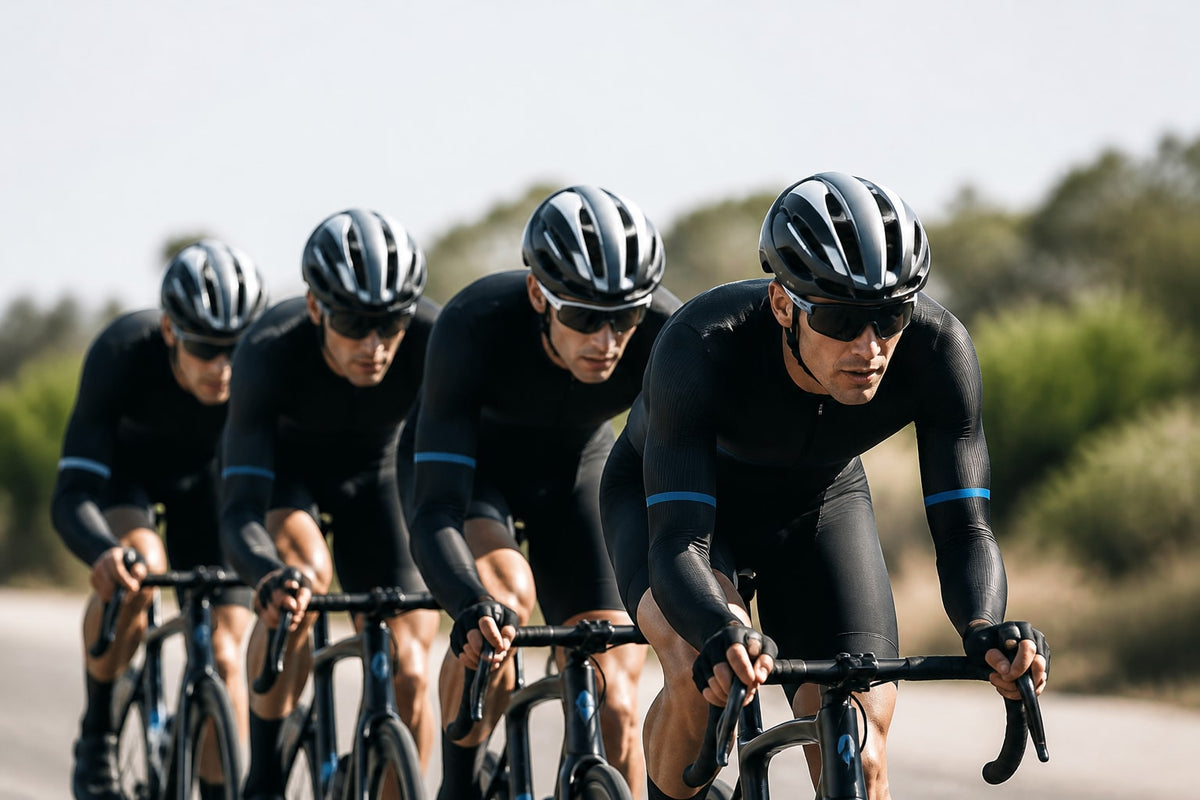
A men's cycling suit is either a one-piece skinsuit or a matched jersey and bib-short set, and the right choice depends on your discipline, your body measurements and how long you ride. For teams and clubs ordering matching race kits, fit consistency across every rider matters as much as the design itself.
This guide explains how to pick between suit types, how to measure riders accurately, which fabric and chamois features deserve attention, and how to manage a team order so every member receives a kit that works.
What Counts as a Men's Cycling Suit?
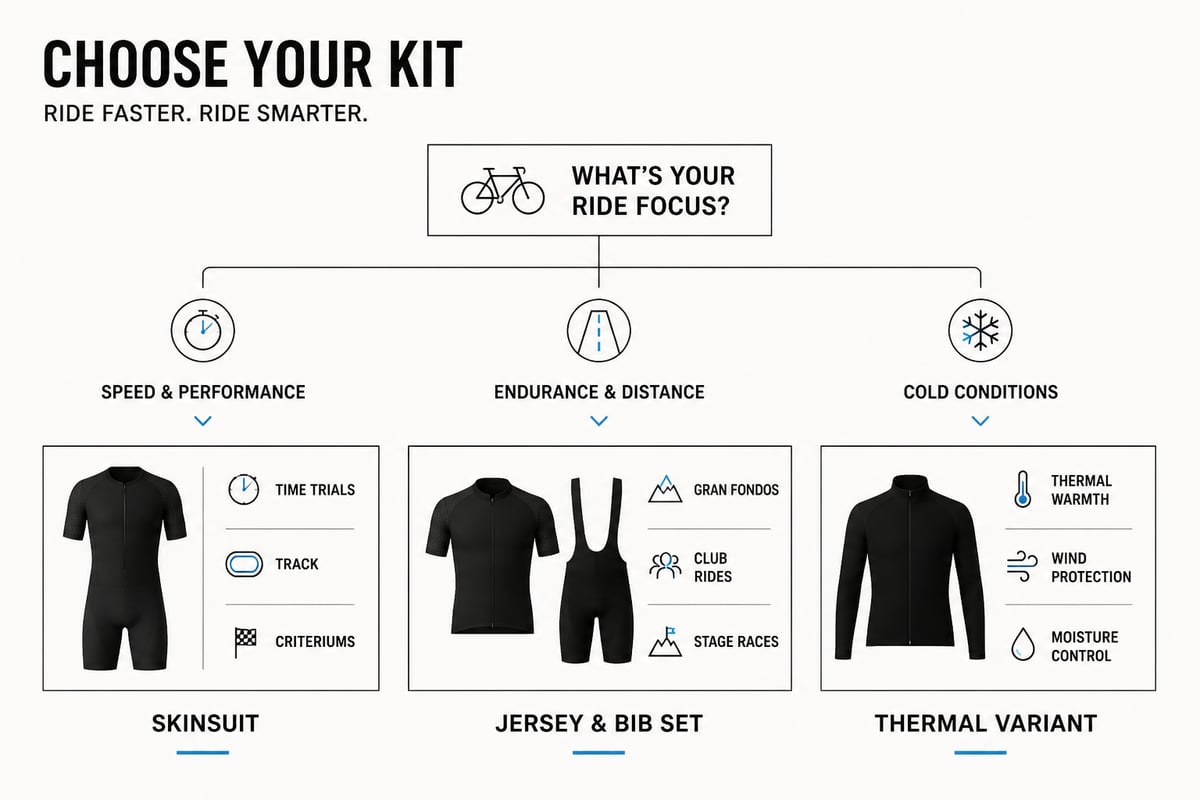
A men's cycling suit is any matched garment system built for riding, and it falls into three main formats: the one-piece skinsuit, the two-piece jersey and bib set, and the thermal or winter variant of either.
A skinsuit combines jersey and shorts in a single garment with a continuous cut. It removes the seam at the waist, reduces fabric flutter and sits closest to the body, which is why it dominates time trials, track events and criteriums. If you want a closer look at how this format compares to a standard jersey, the CCN Sport breakdown of a cycling skinsuit versus a jersey covers the practical trade-offs.
A jersey and bib combination gives you flexibility. Riders can swap tops for temperature, take comfort breaks more easily and mix sizes when proportions differ between chest and hips. Most road clubs default to this format for group rides and long events.
A thermal suit adds brushed fabric or windproof panels for cold-season riding, either as a long-sleeve skinsuit or as a set with a thermal jersey and bib tights.
Skinsuit or Two-Piece: Which Suits Your Team?
Choose a skinsuit when aerodynamics and a clean race-day look are the priority, and choose a two-piece set when riders need versatility and easier bathroom stops on long rides.
Consider these factors before committing a whole squad to one format:
- Event type: Time trials, track, criteriums and short road races favor skinsuits. Gran fondos, club rides and stage races favor two-piece sets.
- Rider variation: A squad with riders of differing torso and leg proportions will find two-piece sets more forgiving, since top and bottom sizes can differ.
- Climate range: Two-piece sets let riders add or remove layers. Skinsuits are less adaptable once a ride is under way.
- Ride duration: Over four or five hours, many riders prefer the freedom of separate pieces.
Aerodynamic gains from a skinsuit depend on the garment fitting without wrinkles or bagging. The detail on aero cycling skinsuit benefits explains where those gains come from. If your program runs both road and time-trial events, many teams order a skinsuit for the TT calendar and a jersey and bib set for everything else.
How to Measure Riders for a Men's Cycling Suit
Accurate sizing starts with five body measurements taken in a riding posture, not standing straight, because a cycling suit must fit a rider who is bent forward on the bike.
Measure each rider using a soft tape and record these figures:
- Chest: Around the fullest part, under the arms, with the tape level.
- Waist: At the narrowest point of the torso, usually just above the navel.
- Hips: Around the widest part of the glutes.
- Inseam: From crotch to the ankle bone, which sets the leg length of bibs and skinsuits.
- Torso length: From the shoulder, between the legs and back up to the same shoulder. This matters most for skinsuits, since a short torso length causes the garment to pull across the shoulders while the rider is on the hoods or in the drops.
Take measurements again after any significant change in training load or weight. A rider who has built leg mass over a winter block may need a different size from the one used last season.
Compare the results against the size chart supplied with the order, and when a rider sits between sizes, size according to the intended use. A race cut should feel firm but not restrictive, and a club cut can allow a little extra room.
Getting the Fit Right: Race Cut Versus Relaxed Cut
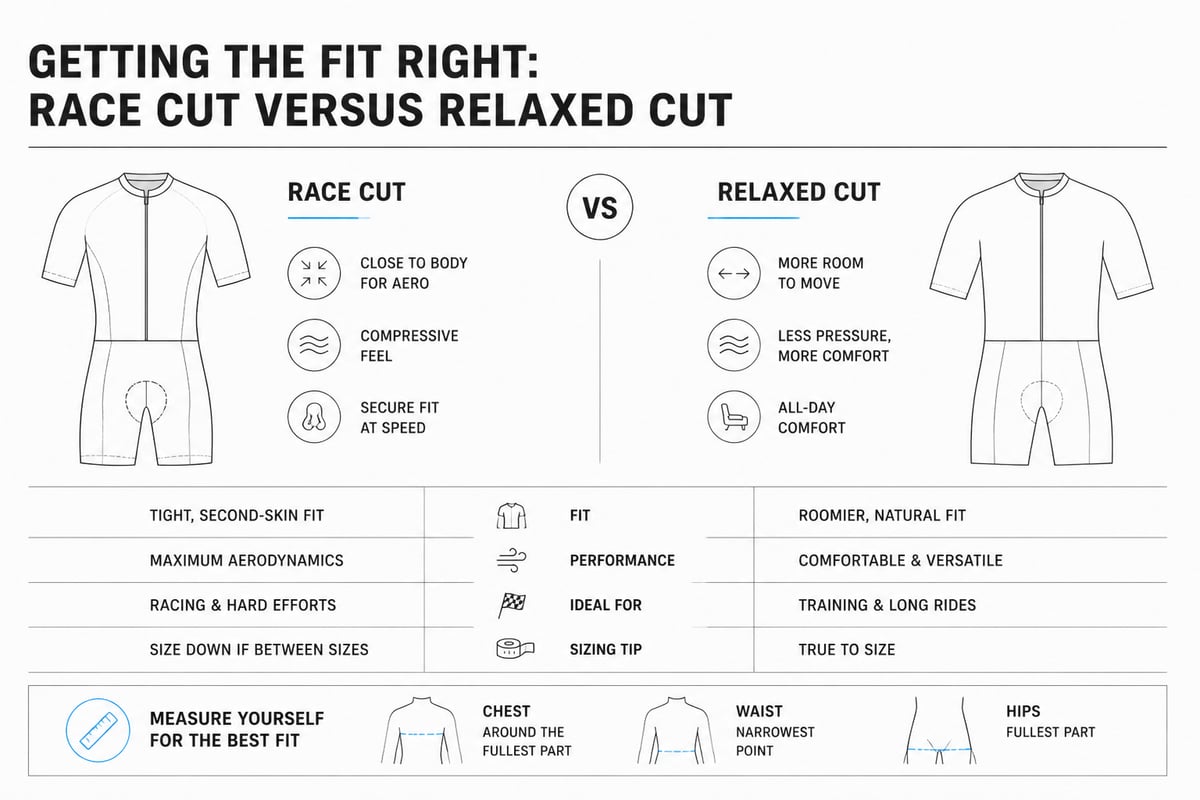
A race cut is compressive and designed to sit flat against the skin, while a relaxed cut allows more room and suits long, comfortable days in the saddle.
According to a 2025 bib-short review from 220 Triathlon, a more aerodynamic fit comes from compressive, tight-fitting bib shorts, while a more relaxed fit may suit comfort on all-day rides. That balance applies to the whole suit, not only the shorts.
| Fit style | Best use | Feel on the bike |
|---|---|---|
| Race cut | Time trials, criteriums, road racing | Firm compression, minimal fabric movement |
| Standard cut | Club races, training rides | Close but flexible, easier to wear all day |
| Relaxed cut | Long endurance rides, casual club outings | More room through chest and thigh |
Test fit in the riding position. Sit on a bike or trainer, reach for the bars and check three points: the suit should not bunch at the stomach, pull tight across the upper back, or ride up at the thighs. Rolling sleeves and tugging collars are signs the size or cut is wrong.
Chamois, Leg Grippers and Other Comfort Details
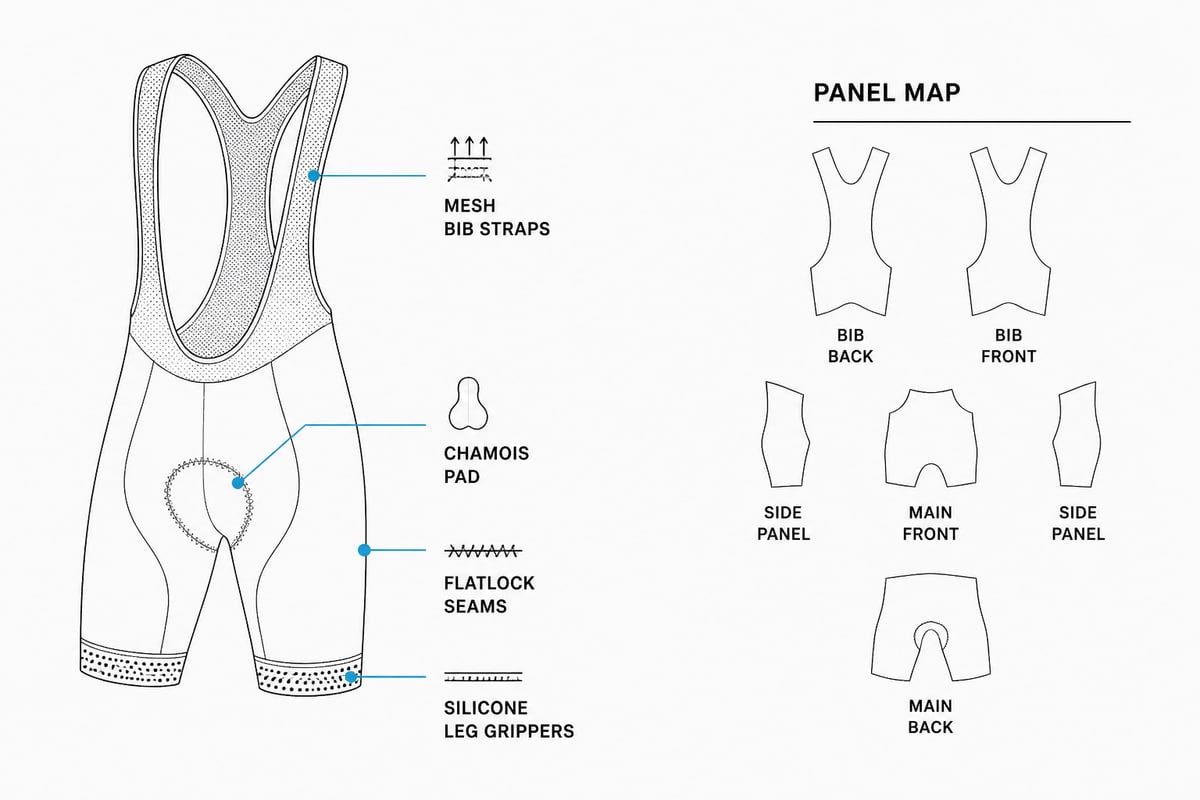
The chamois pad, the leg gripper and the bib strap design determine whether a men's cycling suit remains comfortable after three hours, and each deserves attention before a team commits to a spec.
The same 2025 220 Triathlon review states that bibs should feel snug and comfortable in the pedalling position, with no movement of the chamois pad. A pad that shifts causes friction, and friction can lead to discomfort. Ask whether the pad density suits your riders' typical ride length, since a thin race pad suits short events while a thicker pad suits endurance work.
The review also recommends silicone leg grippers to keep shorts in place without rubbing. Look for wide, soft-edged grippers rather than narrow bands that dig into the thigh.
Other details worth checking:
- Bib straps: Flat, stretchy mesh straps distribute pressure better than thick elastic.
- Zipper length: A full-length zipper helps with ventilation, while a shorter one reduces bulk and flapping.
- Rear pockets: Three pockets are standard for jerseys, and skinsuits may add a single rear pocket or none at all.
- Fabric panels: Mesh in the back and underarms aids cooling, and textured fabric on the arms and legs can reduce drag.
CCN Sport builds its kits with advanced fabrics, pro-tested fit and precision digital printing, so these choices can be specified when a team places an order.
Matching Fabric to Season and Temperature
Fabric weight and construction should follow the temperature range your team rides in, and layering beneath or over the suit does the rest of the work.
Lightweight, breathable knits suit summer racing, since they move sweat away from the skin. Mid-weight fabrics handle shoulder seasons. Brushed thermal fabrics and windproof fronts suit winter training. Cold-weather riders benefit from understanding how layers interact, and the POC guide on what to wear for cycling by temperature explains how base, mid and outer layers manage moisture, insulation, wind and rain.
Ride intensity changes the equation. A rider in a hard race generates far more heat than one on a steady training ride, so the same suit may feel too warm in one case and too cool in the other. POC's guidance on layering in cold conditions covers how fit, intensity, wind chill and precipitation affect clothing choices.
For a squad that races across a full calendar, a practical kit plan usually includes:
- A lightweight skinsuit or jersey and bib set for warm-weather races
- A long-sleeve option for spring and autumn
- A thermal jersey and bib tights for winter training
Ordering Matching Kits for a Team or Club
Ordering a men's cycling suit for a whole squad works best as a staged process: design approval, a sizing round, a sample check and then full production.
CCN Sport produces custom kits in its facilities in China and the Philippines, which suits small clubs as well as national programs. Its Custom Cycling Apparel service covers design, sublimation printing and finishing under one roof.
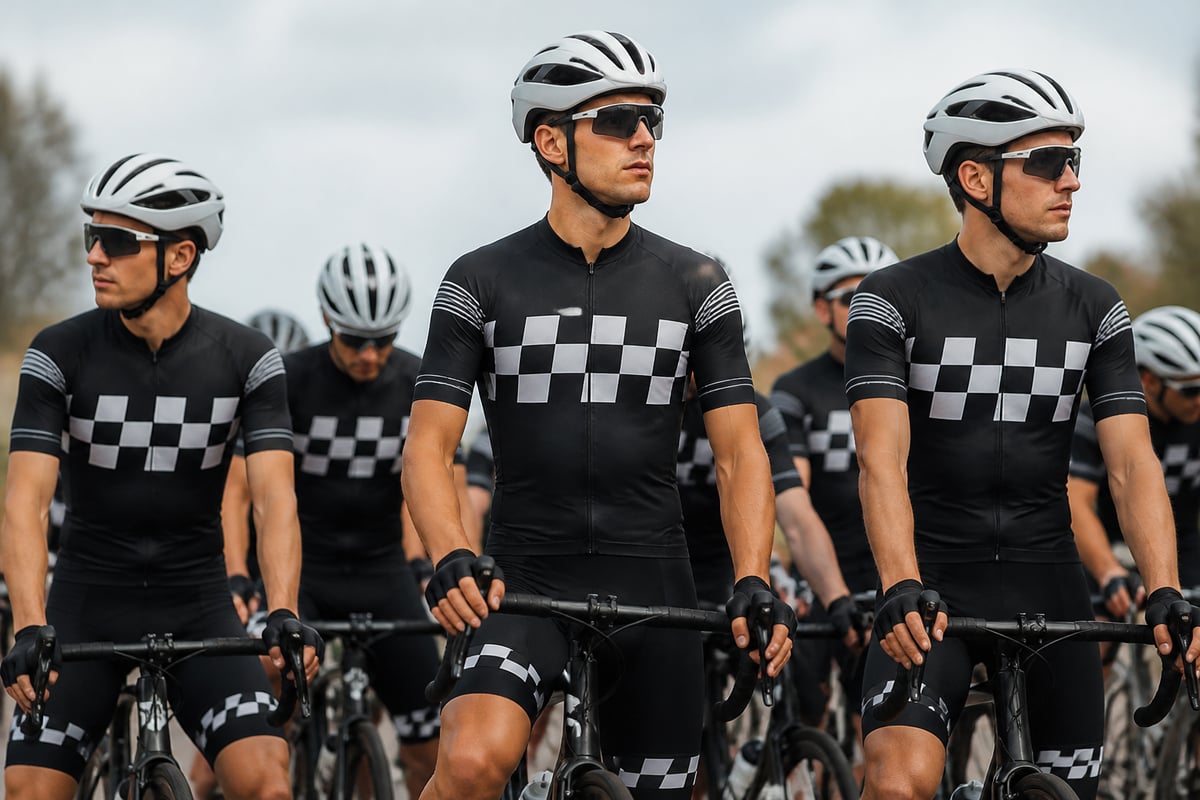
A sound ordering sequence looks like this:
- Collect measurements: Gather the five body measurements for every rider, and confirm them before submitting.
- Agree on the cut: Decide on race, standard or relaxed fit for the whole squad, then allow exceptions only for clear reasons.
- Finalize artwork: Confirm sponsor logos, colors and placement before production begins, because custom products are non-refundable.
- Review the proofs: Check the digital mock-ups for logo position, spelling and color matching.
- Plan for replacements: Riders crash, and sizes change. CCN Sport offers reorder options for crash and size replacements, which helps a team keep its kit uniform through a season.
Design planning deserves time. The notes on custom cycling skinsuit design outline how layout, color blocking and panel placement affect both appearance and function. For a look at what finished race kits can look like, the Factor Racing men's Komsa skinsuit shows a team-specific skinsuit in detail.
Common Fit Problems and How to Fix Them
Most fit problems with a men's cycling suit come from a wrong size, a mismatched cut or an unrealistic expectation, and each has a straightforward fix.
- Fabric bunching at the stomach: The suit is too large in the torso or the rider is sitting too upright. Try the next size down or a shorter torso length.
- Pulling across the shoulders: The torso length is too short for the rider's reach. Move up a size or switch to a two-piece set.
- Leg grippers rolling or digging in: The thigh circumference sits between sizes. Check the gripper width and consider a size adjustment.
- Chamois moving: The bib is too loose in the hips or the pad shape does not suit the saddle. Re-measure and confirm the sizing.
- Sleeves or hems riding up: The cut is too short for the rider's proportions, so ask about extended length options.
A fitting day before the full order is placed saves money. Have each rider try on sample sizes in the riding position, record the feedback and apply it to the final order. This is especially useful for national programs where several riders train together and need exactly matching kit.
Care and Longevity
Washing technique and storage determine how long a men's cycling suit keeps its compression, print quality and chamois shape.
Wash cold, inside out and with a mild detergent, and avoid fabric softener because it breaks down elastic fibers and clogs the wicking structure of the fabric. Air dry rather than tumble dry, as heat degrades both elastane and sublimated prints over time. Rinse promptly after sweaty rides and avoid leaving damp kit in a bag.
Rotate suits across a season where possible. Alternating between two sets lets elastic recover between wears and reduces the wear rate on chamois pads. Sublimation printing, which dyes the fibers rather than sitting on top of them, generally resists cracking and fading better than surface prints, which helps keep team colors sharp through repeated washing.
Start by measuring every rider in the riding position and agreeing on one cut for the squad, since that single step prevents most fit problems before an order is placed. When you are ready to turn those measurements into matching kits, CCN Sport can produce your design through its Custom Cycling Apparel service, with low minimums and factory-direct pricing. Share your sizes and artwork to start your custom kit and get a quote built around your team's needs.

Share:
Spinning Apparel Guide: What to Wear for Spin Class
Sublimated Versus Screenprinted Cycling Kits