

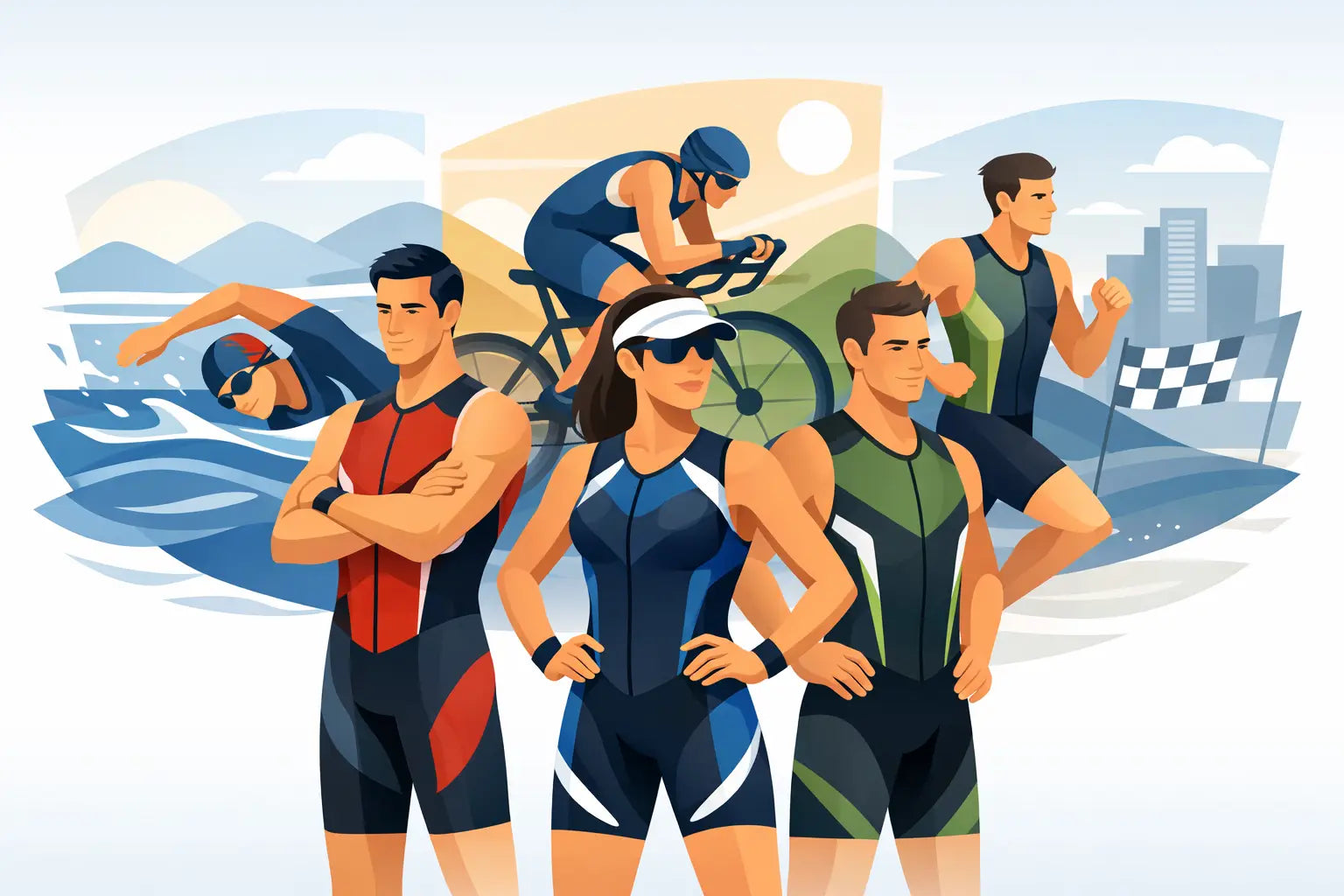
A team suit has to do more than look sharp in race photos. In triathlon, one piece of apparel has to swim without drag, ride without hot spots, and run without turning into a distraction. That is why custom triathlon suits for teams need to be built around performance first, then graphics, then ordering convenience - not the other way around.
For coaches, team managers, and club leaders, the stakes are higher than a single race-day purchase. You are choosing kit that has to fit different body types, hold up through a season, represent your team professionally, and arrive on time. If the suit misses on comfort, construction, or logistics, the whole team feels it.
What teams actually need from a tri suit
A good team tri suit is not just a cycling skinsuit with different branding. The demands are broader, and the margin for error is smaller. The fabric has to manage water, heat, and sustained movement across three disciplines. The pattern has to stay stable in an aero position on the bike while still allowing a natural stride on the run. And the chamois has to provide support on the bike without becoming intrusive afterward.
This is where many team orders go wrong. Buyers often focus heavily on artwork approval and price per unit, then assume performance details will be close enough. In practice, the small details are what riders remember. Leg grippers that pinch, zippers that buckle in the aero position, poorly placed seams, or pockets that bounce on the run will get noticed immediately.
The best custom program starts with a simple question: how will this team actually race? Sprint and Olympic-distance athletes may want a lighter build and minimal storage. Long-course teams often need more fuel capacity, more sun protection, and a chamois that remains comfortable deep into the bike leg. One suit does not solve every use case equally well.
How custom triathlon suits for teams should fit
Fit is where race-day speed and comfort meet. A team suit should feel compressive, but not restrictive. That balance matters because triathletes need support on the bike, free shoulder movement in the swim, and zero friction late in the run when form starts to break down.
A race fit should sit close to the body to reduce drag, but that does not mean every athlete should size down. Over-compression can create pulling at the shoulders, stress around the zipper, and fatigue from constant pressure points. On the other side, a suit that is too relaxed can hold water, flap on descents, and shift enough to create chafing.
For teams, broad size coverage is not a nice extra. It is part of performance. Clubs and programs are made up of different builds, different race preferences, and different levels of comfort with compression. A supplier that understands team apparel should be able to support that range rather than forcing everyone into a narrow fit window.
Women’s-specific and men’s-specific patterning also matters. So does the option to evaluate samples before locking an order. This step slows the process slightly, but it often prevents the more expensive problem of delivering a full team order that looks right on paper and races poorly in reality.
Fabric, chamois, and construction matter more than the design mockup
Custom design gets attention because it is visual. Performance construction is what keeps the suit useful after the first event.
Fabric choice drives much of the riding and running experience. Teams should look for materials that dry quickly, resist transparency when stretched, and maintain compression without feeling heavy. Surface texture also matters. In some panels, smoother or aero-optimized fabrics can improve airflow on the bike, while more elastic materials in high-mobility zones can improve comfort.
The chamois is another area where compromise shows up fast. Tri-specific pads should be slim, quick-drying, and stable. A bulky cycling pad may sound more comfortable during a quick fit check, but in actual racing it can hold water and interfere on the run. A proper tri pad supports the bike leg without overstaying its welcome.
Then there is seam placement. Flatlock or similarly low-profile construction can help reduce irritation, especially around the neck, underarms, and inner thigh. Silicone grippers, laser-cut sleeves, and secure but low-bulk pocket construction can all improve stability. None of these features should exist just to sound premium. They have to solve race problems.
Team branding should support performance, not fight it
A custom suit carries your team identity, sponsors, and presence on course. That matters. It builds recognition and creates a more professional impression. But the branding process should never ignore how graphics interact with construction.
Placement affects visibility, but it also affects function. Large dark blocks can absorb heat in hot races. Highly detailed artwork may lose clarity on curved panels. Sponsor logos placed over seams or zipper lines can distort. Good custom apparel design accounts for panel shape, stretch direction, and how the body moves in each discipline.
Color choice matters too. Bright colors can improve visibility on course and during training. Darker palettes can look sleek and hide road grime, but they may run warmer in direct sun. There is no universal right answer. It depends on climate, race calendar, and how the team wants to balance aesthetics with practicality.
The strongest team kits are usually not the busiest ones. Clean branding, deliberate color blocking, and smart logo hierarchy tend to age better across a full season and photograph better across different body types.
Ordering custom triathlon suits for teams without the usual friction
Performance apparel can still become a headache if the ordering process is weak. Team managers know this part well. Chasing sizes, collecting payments, managing reorders, and answering fit questions can become a second job.
That is why the operational side of custom matters almost as much as the product. Teams should ask early about minimum order quantities, lead times, size support, artwork revisions, and whether there is a system for individual member ordering. A low unit price can lose its appeal quickly if the process creates delays or admin work that eats up your time.
Factory-direct production has real advantages here. When development, manufacturing, and order coordination are handled in a more connected way, teams usually get better visibility, more flexibility, and fewer handoff errors. That can mean faster approvals, cleaner communication, and a better chance of receiving kit when promised.
For growing clubs and development teams, reorder capability is especially important. New athletes join. Sizes change. Race calendars expand. A custom program should be able to support the season you planned and the season that evolves after the first order ships.
When a team should choose one suit versus multiple options
Not every team needs a single all-purpose suit. In fact, many do better with a more specific setup.
If your athletes race mostly short-course events in warm weather, a streamlined suit with minimal storage and an aggressive race fit may be the right call. If your calendar leans toward long-course racing, athletes may benefit from added pocket utility, more coverage, and a slightly more forgiving fit profile for long hours in the saddle.
There is also the question of athlete level. Elite squads often prioritize aerodynamic refinement and a tight race silhouette. Community teams and age-group clubs may need a broader balance of comfort, accessibility, and durability. Neither approach is wrong. The wrong move is buying an elite-style suit for a group that values all-day comfort, or choosing a basic build for athletes who care about every watt.
This is where an experienced custom partner helps. Instead of pushing one standard template, they should help match the suit to the team’s race demands, budget, and rider expectations. At CCN Sport, that performance-first approach is central to how custom apparel gets built.
What to ask before you place the order
Before approving artwork, teams should get clear on a few practical points. Ask how the suit is patterned for swim, bike, and run movement. Ask what type of tri pad is used and why. Ask how the fabrics differ by panel. Ask what happens if you need a size run for fit testing, and what reorder options look like later in the season.
Also ask about timeline discipline. Custom apparel is only useful when it arrives in time to train and race. A dependable production plan matters more than optimistic promises.
The right team suit should make race day simpler. Athletes should be able to focus on pacing, transitions, and execution instead of adjusting gear or managing discomfort. That is the standard worth ordering to.
A custom tri suit is part uniform, part equipment, and part statement of intent. When it is built correctly, your team feels faster before the gun even goes off.

Share:
Winter Cycling Jacket Layering Guide
Gravel Cycling Apparel Essentials That Work