

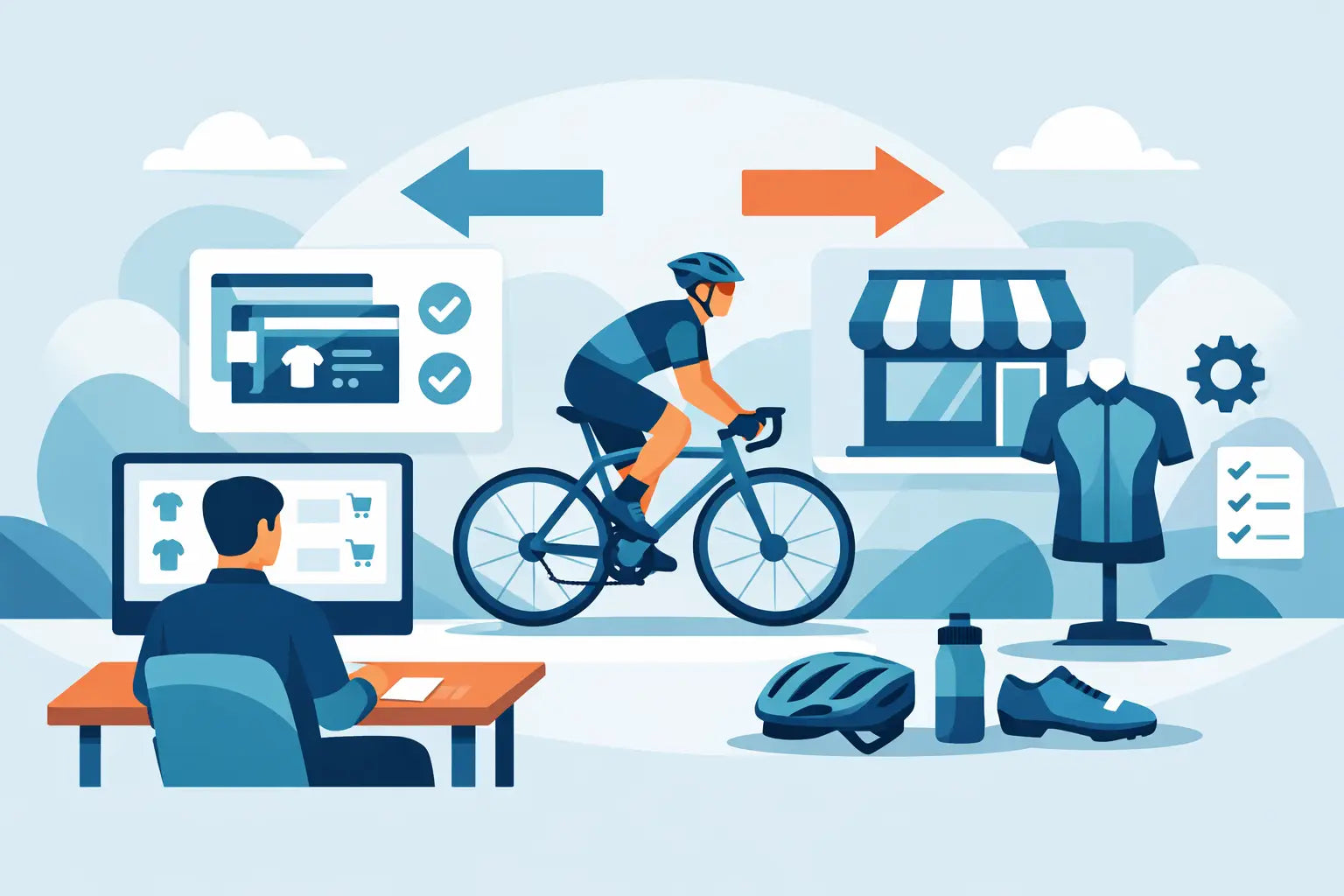
A team order usually starts with excitement and ends with someone chasing sizes, unpaid invoices, and one rider asking if the women’s bibs can still be changed after the deadline. That is exactly why a strong cycling team store platform matters. It is not just a checkout page for custom kit. It is the system that keeps your season organized, your riders aligned, and your apparel order moving without costly friction.
For clubs, race teams, development squads, and event organizers, the best platform does two jobs at once. It gives riders a simple way to order the right gear, and it gives team managers control over timelines, products, pricing, and approvals. If either side breaks down, the entire order gets harder than it needs to be.
What a cycling team store platform should actually solve
A lot of team stores promise convenience. That sounds good, but convenience is not the real benchmark. The real test is whether the platform reduces mistakes while making it easier to outfit a group at scale.
In practice, that means riders should be able to enter the store, see the correct collection, choose approved items, select sizes, and place orders without confusion. On the management side, the platform should make it easy to control the buying window, organize product assortments, and keep everyone working from the same final version of the kit.
This becomes even more important when your apparel range goes beyond one jersey and one bib short. Many teams now need race fit and club fit options, men’s and women’s cuts, outerwear, accessories, skinsuits, and cold-weather gear. Without a structured store environment, those choices can turn into ordering errors fast.
Why team managers outgrow spreadsheets
Spreadsheets work when the team is small, the product range is narrow, and nobody changes their mind. That is rarely the case for long.
Once a club grows, manual ordering starts creating drag. One rider pays late. Another sends sizes by text. Someone orders from an outdated price sheet. Then the design changes and half the team is looking at the wrong mockup. None of that improves performance, and all of it takes time away from training, racing, sponsors, and actual team operations.
A purpose-built cycling team store platform creates a cleaner process. It centralizes the order window, approved kit lineup, and rider purchasing flow in one place. That does not remove every decision, but it reduces the admin load that slows down custom apparel projects.
The features that matter most
The right platform is not always the one with the longest feature list. It is the one that matches how your team orders.
A good store should support private team access, clear product presentation, size selection by item, and visible order deadlines. If your team has special pricing, sponsor-backed products, or restricted categories for certain riders, those controls matter too. Teams also benefit from a platform that reflects final approved artwork rather than rough concepts, because visual clarity cuts down on expensive misunderstandings.
There is also a fulfillment side to consider. The store experience should connect cleanly with production, not exist as a disconnected front end. If the platform is separate from the manufacturer’s workflow, delays and communication gaps can creep in between order collection and actual production.
That is where an integrated model has an advantage. When the same partner manages custom product development, store setup, and manufacturing, there are fewer handoffs. For teams, fewer handoffs usually mean fewer errors.
A cycling team store platform is also a fit tool
In cycling apparel, size mistakes are not minor. A jersey that sits wrong at the shoulders or bib shorts that do not support correctly can turn a race day into a long ride home. So while team stores are often discussed as admin tools, they also play a direct role in fit accuracy.
The platform should help riders choose confidently. That can come through clear product descriptions, discipline-specific item separation, and size guidance that is easy to follow. Race-oriented teams need especially clear distinctions, because aerodynamic cuts and compression-focused garments do not fit like casual club apparel.
This is one of the quiet advantages of working with a brand that understands technical cycling kit at the product level. A team store is only as useful as the apparel logic behind it. If the store treats every garment like a generic T-shirt, riders will feel the difference later.
Not every team needs the same setup
This is where trade-offs matter.
A local club with two annual orders may want a straightforward store with a short product menu and a firm deadline. A regional race team may need more structure, with separate kits for athletes, staff, and supporters. A national program or large event series may need layered access, broader product segmentation, and tighter oversight of branding consistency.
The best cycling team store platform for one group may be too complex for another. More customization is not always better if it creates unnecessary admin. On the other hand, a minimal store can become restrictive when your program expands.
That is why scalability matters. You want a platform that works for your current order cycle but does not force a full reset when your team adds riders, expands categories, or starts placing more frequent seasonal orders.
Speed matters, but clarity matters more
Teams often focus on turnaround time first, and for good reason. Riders want kit in hand before key events, and managers do not want apparel timelines drifting into race season.
But speed without order clarity can backfire. A fast setup means little if the wrong products are listed, size information is unclear, or late changes keep disrupting the process. The best platform supports speed by removing ambiguity early.
That starts with accurate store configuration and a disciplined approval flow. Once the store opens, riders should know exactly what is available, when ordering closes, and what they are committing to. Clean process design is what makes fast production realistic.
What teams should ask before committing
Before choosing a provider, look beyond the storefront itself. Ask how the team store connects to manufacturing, how product approvals are handled, and who manages revisions if something changes before launch. Ask whether the system supports low minimums, because that can make a major difference for smaller squads and specialty add-on items.
You should also ask what happens after the store closes. Is the order data already aligned with production requirements, or does it need to be reformatted manually? Can the platform support repeat orders or seasonal refreshes without rebuilding everything from scratch? Those details affect real-world efficiency more than polished screenshots do.
For many teams, reliability is the deciding factor. A team store is not successful because it looks modern. It is successful when riders order correctly, managers spend less time fixing problems, and the final kit arrives as expected.
The advantage of a performance-first partner
A cycling team store platform works best when it is backed by real apparel expertise. Teams are not just buying an ordering tool. They are buying into a production process, a fit standard, and a delivery system that has to hold up under pressure.
That is why factory-direct capability matters. When design, production, and team ordering work inside the same operating model, communication gets tighter and timelines become more dependable. For teams balancing budget, quality, and race calendars, that structure can make a meaningful difference.
At CCN Sport, that approach is built around performance from the start - technical apparel, in-house production, and team ordering solutions designed for real cycling programs, not generic merchandise stores. For clubs and teams that care about precision, that alignment matters.
The right platform should make your team faster before anyone pins a number
The best team systems do not just sell kit. They remove friction. They help managers spend less time collecting orders, help riders get the right apparel the first time, and help organizations present a more professional identity from training camp to race day.
If your current process still depends on email threads, spreadsheets, and last-minute corrections, the issue is not just inconvenience. It is lost time, avoidable mistakes, and unnecessary strain on the people holding the team together. A well-built cycling team store platform gives that time back - and that is useful long before the first hard effort of the season.

Share:
Low Minimum Custom Cycling Jerseys That Perform
Why Factory Direct Cycling Apparel Wins