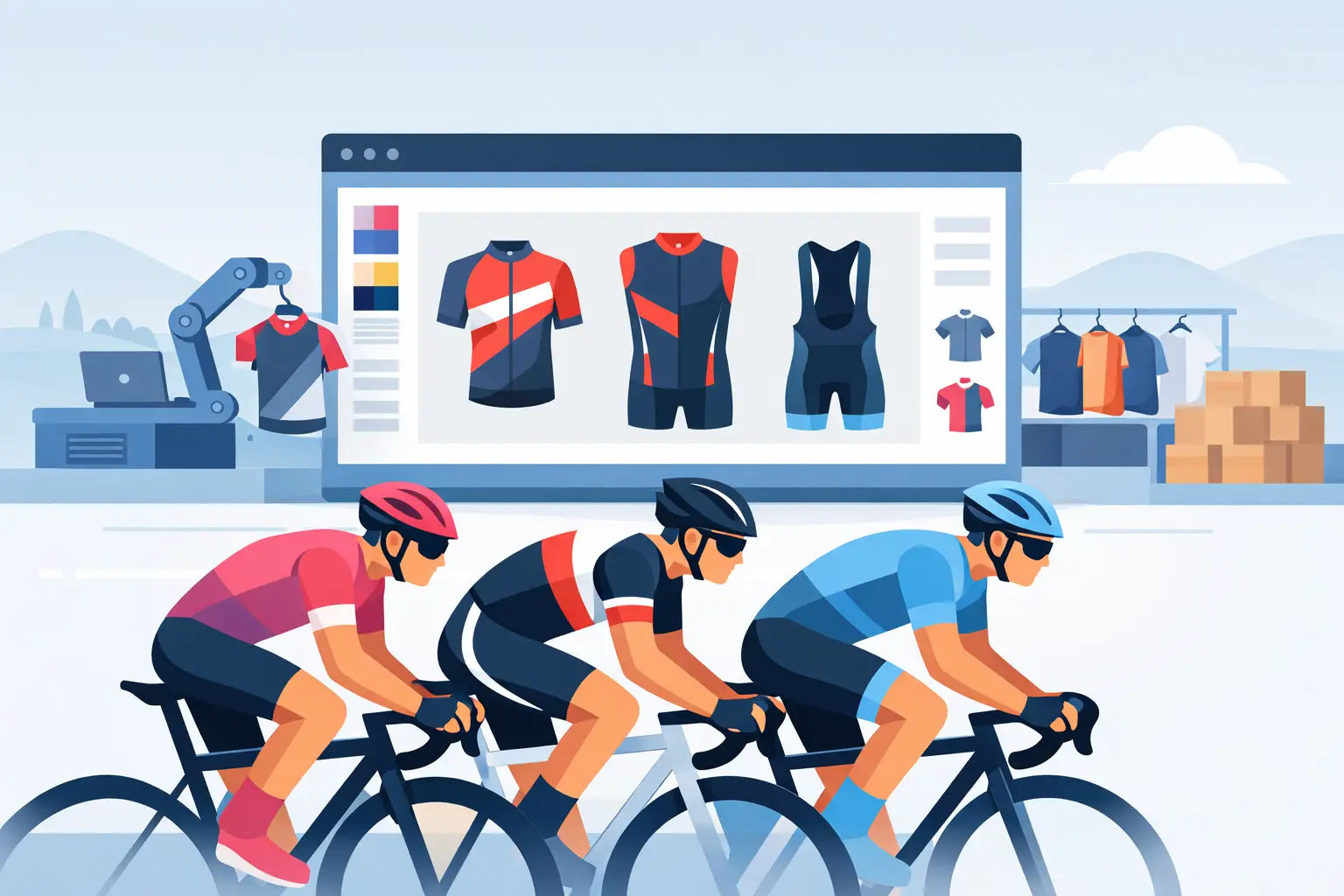
A team kit is not a logo placed on a jersey. It is the equipment your riders wear through six-hour fondos, hard criteriums, wet training blocks, and race-day warmups. The best custom team kit platforms make it easier to create a unified look, but more importantly, they deliver the fit, fabric performance, and ordering reliability that keep riders focused on the road.
For a club manager, coach, or brand buyer, choosing a platform can feel deceptively simple. Most suppliers can show a digital mockup. The real difference appears when the kit arrives: whether bibs stay stable under load, whether jerseys breathe on a climb, whether colors remain sharp after repeated washing, and whether every rider receives the right size before the event.
What Makes the Best Custom Team Kit Platforms Different?
The strongest platforms are built around the full kit program, not only the artwork approval. They combine technical product development, experienced production, responsive design support, and an ordering process that works for a group with different sizes, disciplines, and budgets.
A low price can be attractive, especially for a large club order. But low initial cost is not the same as value. A jersey that loses shape, a bib short with an inconsistent chamois, or a delayed delivery can cost far more in rider confidence and team goodwill than the difference between two quotes.
The right choice depends on your team. A local recreational club may prioritize low minimums and a simple online store. A development squad may need race-cut jerseys, durable bib shorts, and repeatable colors for sponsors. A triathlon team needs a supplier that understands pockets, quick-drying fabrics, and discipline-specific construction. Start by defining the riding your kit must support, then evaluate each platform against that standard.
Fit is the performance baseline
No design system can compensate for poor fit. Look for a platform with clearly defined cuts, accurate size charts, and sample options before a full run. A race fit should sit close to the body without restricting breathing or shoulder movement. A club fit should provide a more accommodating profile while remaining stable in riding position.
Ask how the supplier handles size consistency across reorders. Teams grow, sponsors change, and riders replace individual pieces. If a medium jersey fits differently six months later, your kit program becomes harder to manage. Reliable pattern control is especially valuable for teams that expect to order over multiple seasons.
Bib shorts deserve the same scrutiny as jerseys. Check the leg grippers, panel construction, strap support, and chamois specification. For riders logging serious mileage, these details are not upgrades. They are the difference between a kit that looks good in the parking lot and one that performs in the final hour.
Fabric and construction should match the conditions
Custom apparel platforms often offer multiple product tiers. That is useful only if the differences are clear. Premium race fabrics usually prioritize aerodynamic texture, compression, moisture transfer, and low weight. More economical options may be better suited to casual club riding, event merchandise, or large participation groups.
There is no single best fabric for every team. Hot-weather road teams may value highly breathable side panels and lightweight sleeves. Gravel riders may prefer a slightly more durable fabric choice. Cold-weather programs need access to thermal jerseys, vests, arm warmers, and jackets that match the core kit rather than treating winter gear as an afterthought.
Pay attention to construction details that hold up under real use: flatlock or low-profile seams, reinforced pockets, stable zippers, silicone grippers, and clean transitions between panels. These are practical indicators of how a supplier approaches durability and ride comfort.
Comparing Custom Team Kit Platforms Beyond the Mockup
A polished online configurator is helpful, but it should not be the deciding factor. Custom cycling apparel involves technical choices that are easier to make with experienced human support. The best providers pair efficient digital tools with people who understand print placement, garment panels, fit, and production timelines.
Design capability matters because cycling garments are moving surfaces. A logo that looks centered on a flat template can shift visually when a rider reaches the drops. Ask whether the platform provides production-ready artwork review and whether designers understand how sleeve panels, side panels, pockets, and bib straps affect a finished layout.
Color management is another overlooked point. Sponsor colors, club identities, and national-program branding need consistency across jerseys, shorts, jackets, and accessories. Request guidance on matching colors and ask how repeat orders are controlled. A kit program should look intentional whether riders purchase during the first order window or join the team next year.
Ordering tools should reduce team admin
The platform needs to work for the person collecting orders, not just the person wearing the jersey. Team managers benefit from private online stores, individual payment options, deadline controls, and a clear view of order status. These tools reduce spreadsheet work and avoid the common problem of chasing payments and sizes across dozens of riders.
Still, online stores are not essential for every order. A small race team ordering a fixed roster may prefer a direct, guided process. What matters is that the supplier can match the ordering method to your organization instead of forcing every group into the same workflow.
Minimum order quantities are equally important. Low minimums give smaller clubs and new teams room to create a professional identity without overbuying inventory. Higher minimums can make sense when they deliver better unit economics for a large annual program, but they should be transparent from the beginning.
Delivery promises need production context
Turnaround time is often the deciding factor, and it is also where vague claims create problems. Ask when production begins, whether the timeline starts after artwork approval and payment, and how shipping is handled. A platform that communicates realistic production windows is more valuable than one that promises speed without explaining the process.
If your team has a target event, build in room for sampling, revisions, and rider sizing. Last-minute orders are sometimes unavoidable, but custom apparel is most reliable when the production calendar is treated as part of the race plan. A supplier with in-house manufacturing can often provide stronger visibility and control than a brand relying on several outsourced steps.
A Practical Selection Process for Your Team
Begin with a short product brief. Define your rider count, disciplines, expected order frequency, budget range, target delivery date, and the pieces you need beyond the standard jersey and bib short. This prevents you from comparing quotes that cover very different garments and service levels.
Next, review samples in riding position. Have riders test the jersey pockets with a loaded phone and nutrition, assess sleeve tension on the hoods, and spend real time in the bib shorts. Fit feedback from a five-minute try-on is useful, but a training ride tells you more.
Then evaluate the support behind the product. Can the provider explain the fabric choices? Will it flag artwork issues before production? Does it offer a clear path for replacement items and future reorders? These answers show whether you are buying a one-time kit or establishing a long-term apparel partner.
For teams that want factory-direct access to race-focused garments, CCN Sport is designed around that partnership model, with in-house production, low minimums, and custom ordering solutions built for clubs through professional programs. The goal is simple: give teams greater control without compromising the technical details riders feel every mile.
Choose the Platform Your Riders Will Trust
The best custom team kit platforms are not necessarily the ones with the flashiest configurator or the lowest headline price. They are the ones that understand that a team kit has to work at speed, under pressure, and across an entire roster.
Choose a partner that treats your colors with care, your riders' fit as a priority, and your deadline as a real commitment. When the kit performs as well as it looks, riders do more than wear the team identity. They take pride in representing it.

Share:
Cycling Apparel Trends That Earn Their Place
Road Skinsuit vs Jersey Combo for Fast Rides