

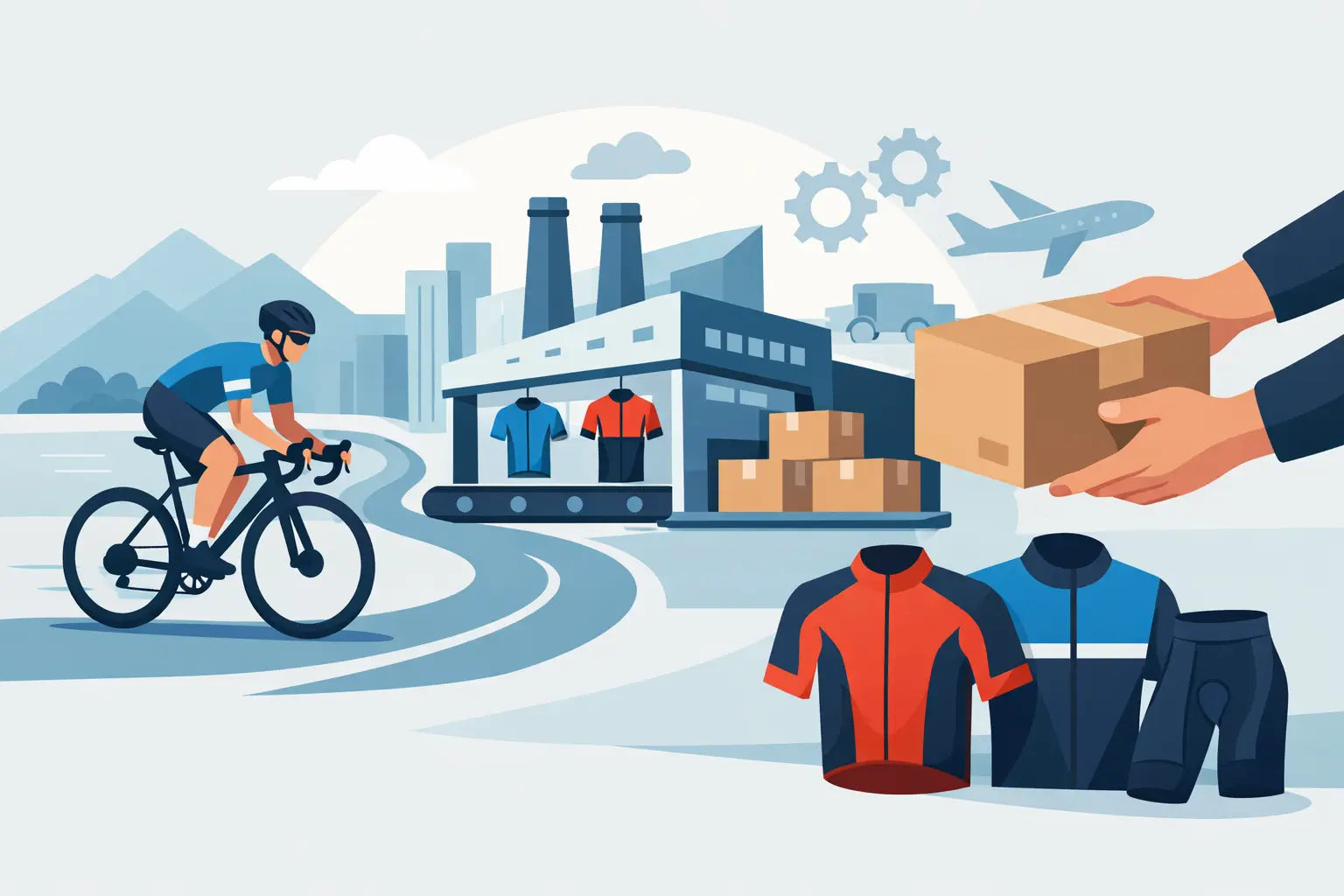
A missed delivery window before race weekend can wreck more than morale. It can leave a team scrambling for mismatched kits, compromise sponsor presentation, and force riders to pin numbers onto gear that was never meant for the effort ahead. That is why factory direct cycling apparel matters. It is not just a pricing model. For serious riders, clubs, and team managers, it is a performance decision.
What factory direct cycling apparel really means
In cycling, "factory direct" gets used loosely. Sometimes it simply means a brand sells online without a retail middleman. That can lower cost, but it does not always mean the brand controls development, production, or quality from start to finish.
The stronger version of factory direct cycling apparel is built around in-house capability. Design, patterning, fabric selection, printing, construction, and fulfillment stay under one roof or within a tightly controlled production structure. That changes the result in ways riders can feel on the road and team organizers can see in the ordering process.
When a brand owns more of the process, decisions happen faster. Fit updates do not need to pass through layers of agents and offshore handoffs. Production schedules are clearer. Quality control becomes more consistent because the same organization that promises the product is also responsible for making it.
For teams, that control matters even more. Custom kit is rarely simple. There are logos, rider size ranges, sponsor deadlines, race calendars, and reorders that need to match the original run. Factory-direct manufacturing makes those moving parts easier to manage because the people handling the order are closer to the people building the garment.
Why riders feel the difference
Performance apparel is only as good as its execution. A jersey can look sharp on screen and still fail in the final mile if the fabric traps heat, the sleeves shift under load, or the pockets sag when filled. Bib shorts can promise endurance comfort and still fall short if the chamois placement is off by a small margin. In cycling, small margins are the whole story.
That is where factory direct cycling apparel has a clear advantage. When the maker is directly accountable for the finished product, fit and function tend to improve together. Aerodynamic panels, compression support, moisture management, and seam placement are not left to chance. They can be refined based on rider feedback and adjusted without waiting on a disconnected supply chain.
This does not mean every factory-direct product is automatically superior. Materials still matter. Pattern development still matters. Experience still matters. But when those pieces are combined with direct manufacturing control, the odds shift in the rider's favor.
For individual cyclists, that often shows up as better value at a given price point. Instead of paying for multiple markups between factory, distributor, and retailer, more of the spend can go into fabric quality, construction, and technical detailing. The result is not just lower cost. It is often stronger performance per dollar.
Why teams and clubs benefit even more
Individual riders usually think about fit, comfort, and price first. Team buyers have a longer list. They need consistent branding, reliable timelines, clear communication, and a system that does not collapse when one rider forgets to order until the last minute.
Factory-direct production helps solve those practical problems.
The first gain is speed. When a team works with a brand that designs and manufactures directly, approvals and revisions move faster. There is less lag between artwork changes and production readiness. That can be the difference between hitting a race deadline and missing an entire event cycle.
The second gain is flexibility. Traditional suppliers often require higher minimums because every change adds cost across several intermediaries. A factory-direct model usually allows lower minimum order quantities and easier repeat orders, which is a major advantage for clubs, development squads, and niche programs that do not need massive runs.
The third gain is consistency. Teams need reorder confidence. If a new rider joins midseason, the replacement jersey should match the original kit in color, cut, and overall finish. That gets harder when production is fragmented. It gets easier when one manufacturer controls the process.
The trade-off most buyers miss
Factory direct sounds like the obvious choice, but there is still a trade-off to understand. A direct manufacturing brand is usually strongest when you want technical depth, fit precision, and dependable repeatability. If you are shopping purely on lowest possible price, there will always be ultra-budget options that cut corners more aggressively.
That is the wrong comparison for most serious riders.
Cycling apparel is subjected to sweat, wash cycles, UV exposure, road vibration, and repeated hours in an aggressive position. Cheap gear can look acceptable on day one and break down quickly in the areas that matter most - grippers, stitching, pad support, zipper reliability, and panel stability. Paying less upfront often means replacing gear sooner or tolerating a poorer fit for the life of the garment.
So the real comparison is not factory direct versus cheap. It is factory direct versus marked-up apparel with less production control, or versus lower-grade apparel that underperforms. For riders who train consistently and teams that need to show up looking professional, that difference is easy to justify.
How to evaluate factory direct cycling apparel before you buy
Not every brand using the term is built the same way. The smartest buyers look past the headline and ask better questions.
Start with fit architecture. Does the brand offer race-focused cuts alongside more relaxed options? A factory-direct model is most valuable when it serves actual riding positions, not generic sizing blocks. A race jersey should hold close without restricting breathing. Bib shorts should stabilize muscle movement without creating pressure points.
Next, look at product range. A credible performance manufacturer does not stop at one jersey and one short. It understands the full system - base layers, skinsuits, outerwear, tri suits, and seasonal pieces that work together across conditions. That breadth usually reflects real manufacturing expertise rather than simple reselling.
Then consider custom capability. If a brand can support clubs, teams, and organizations with organized ordering, low minimums, and repeatable production, that is a strong sign it is operating with genuine factory control. Custom is where weak processes are exposed fastest.
Finally, pay attention to how the brand talks about performance. The right manufacturer speaks in specifics: aerodynamic fit, fabric behavior, pad design, durability, and delivery reliability. Vague lifestyle language does not help much when your event date is fixed and your riders need gear that performs under load.
Where the model fits best
Factory direct cycling apparel is especially well suited to three buyers.
The first is the committed individual rider who wants better technical quality without paying inflated retail pricing. This rider trains often, notices fit differences, and wants apparel that holds up over time.
The second is the club or team manager who needs a reliable custom partner. Ordering for a group adds complexity fast. Direct production reduces friction and gives the organizer more confidence in deadlines, reorders, and communication.
The third is the developing program or brand that needs pro-level presentation without enterprise-scale order volumes. Lower minimums and closer manufacturing access make it easier to launch, refine, and grow without taking on unnecessary inventory risk.
For all three, the appeal is the same. Better control. Better value. Better alignment between what is promised and what arrives.
Why this matters more now
Cyclists have more buying options than ever, but more choice does not always mean better outcomes. In many corners of the market, product pages have become polished while supply chains have become less transparent. Riders end up guessing who actually makes the gear, how often patterns are updated, and whether a reorder six months later will match the first run.
That uncertainty is a problem in a category where fit and consistency are central to performance.
A true factory-direct approach cuts through some of that noise. It gives buyers a clearer line between design intent and finished garment. It also creates accountability. If the fit is off, if the lead time slips, or if the reorder does not match, there is no maze of intermediaries to blame.
That is one reason brands with in-house authority continue to stand out. At CCN Sport, the factory-direct model is not a marketing angle. It is the operating system behind race-tested gear, custom team support, and apparel built to perform in real conditions.
The best cycling kit should disappear once the ride starts. You should notice the pace, the line through the corner, the effort in the final pull - not the jersey bunching at the zipper or the shorts shifting every hour. When the people making the apparel are close to the riders wearing it, that outcome becomes much more likely.

Share:
Choosing a Cycling Team Store Platform
Best Bib Shorts for Long Rides