

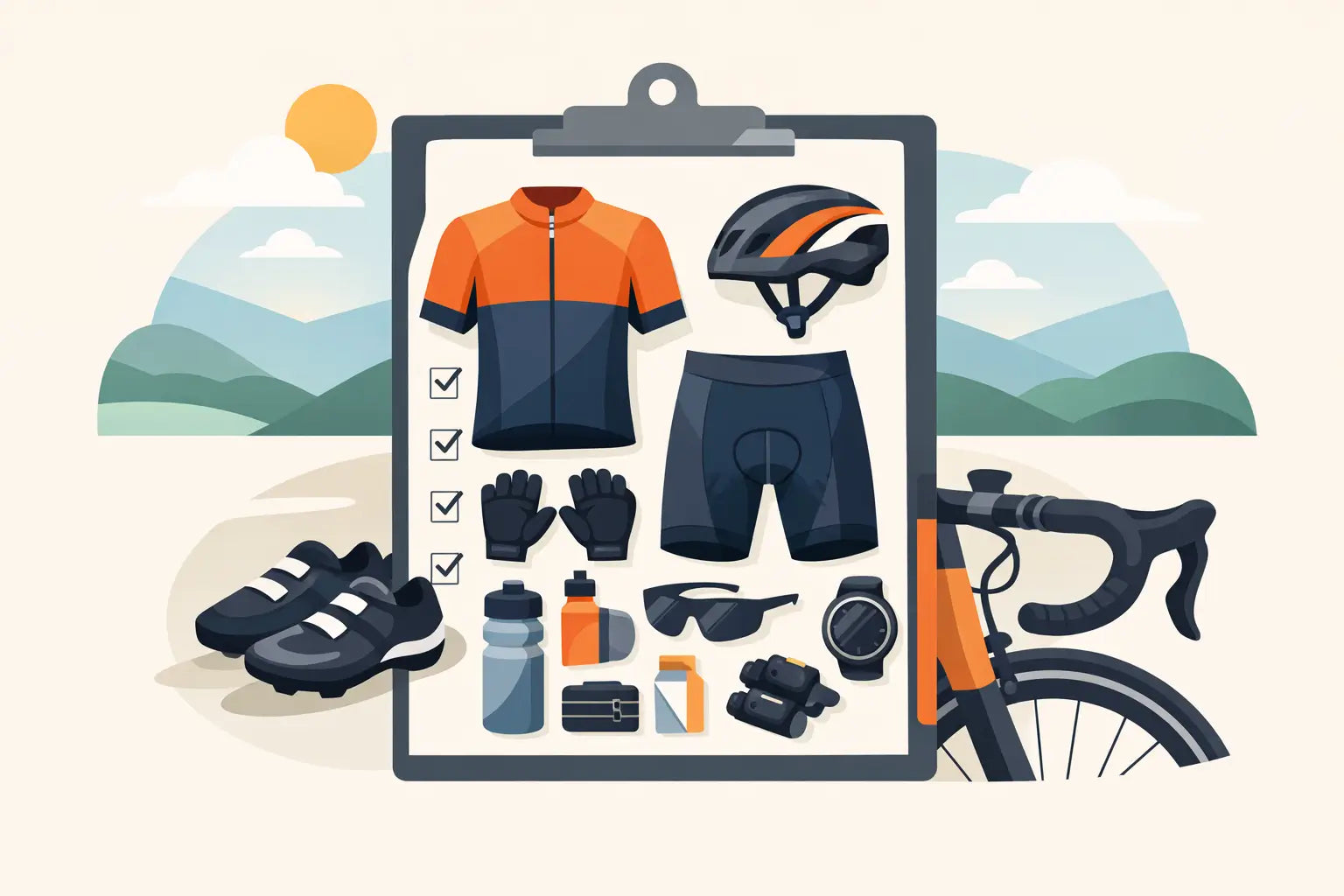
The wrong glove, a base layer that runs too warm, socks that slide inside the shoe - small kit mistakes show up fast once the pace lifts. A solid race day cycling kit checklist is not about packing more gear. It is about removing friction, protecting comfort, and making sure every piece earns its place when the effort gets serious.
For competitive riders, club racers, and team managers, the best checklist starts before race morning. Your kit has to fit properly, match the conditions, and stay reliable under pressure. That means thinking beyond jersey and bibs. Fabric weight, pocket layout, gripper tension, chamois support, and weather options all affect how the day feels after the neutral roll-out is over.
What a race day cycling kit checklist should actually do
A useful checklist does three jobs. First, it confirms you have every essential piece. Second, it helps you avoid overlap, like carrying both arm warmers and a thermal jacket when one is enough. Third, it reduces decision fatigue on race morning, when your focus should be on timing, nutrition, and the course ahead.
There is also a performance side to this. Race kit is not just clothing. It is part of your equipment system. A jersey that sits close without restricting breathing, bib shorts that stay planted in the aero position, and layers that regulate temperature without bunching all help you hold power more comfortably. The gains are rarely dramatic on their own, but they add up over a hard hour or a long road race.
Race day cycling kit checklist for the core setup
Start with the pieces that almost never change. Your jersey and bib shorts should be the most proven combination you own, not the newest one you have not tested. Race day is the wrong time to find out a sleeve hem pinches or a bib strap sits awkwardly when you are deep in the drops.
Your jersey should fit close through the shoulders and torso without pulling across the zipper. Aerodynamic fit matters, but so does stability. If rear pockets sag once they are loaded, that affects comfort and access. A good race jersey stays quiet on the body and keeps everything secure.
Bib shorts deserve even more scrutiny. Chamois shape, leg gripper hold, and panel support all matter once intensity rises. For shorter events, some riders prefer a more compressive feel and a firmer pad. For longer races or rougher surfaces, slightly more support can be the better trade-off. Fast does not always mean minimal.
Add socks that stay in place and manage heat well. This is one area riders often overlook. Socks that are too thick can create pressure points, while very thin options may feel great in hot weather but offer less comfort on longer efforts. Choose the pair you trust, not the pair that only looks race-ready.
Then come gloves, if you use them. Some racers skip them for pure road events, while others want the grip and control they provide, especially in wet conditions or technical courses. It depends on discipline, weather, and preference. The key is consistency. If you normally race in gloves, wear them. If you never do, race day is not the moment to experiment.
Layering decisions win or lose comfort early
The most common race morning mistake is over-layering. Riders dress for the parking lot instead of the first hard lap. A base layer should help regulate temperature and move sweat, not trap heat. In cool conditions, a lightweight base layer under a close-fitting jersey is often enough once the race is fully underway. In cold or wet weather, you may need more, but every extra layer has a cost in bulk, heat retention, and sometimes aerodynamics.
Arm warmers, a gilet, and a rain cape all have a place, but they solve different problems. Arm warmers are ideal when the day will warm up or when you want a flexible option that can be removed mid-race. A gilet works well for a cold start or long descent because it protects the core without fully insulating the arms. A rain cape is there for genuine wet conditions, not just a cool forecast.
Leg warmers, knee warmers, and toe covers follow the same logic. Use them when the conditions justify them and when you have tested the combination in training. If your warmers slip, bunch, or interfere with shoe closure, they are not race solutions. They are distractions.
The fit details riders notice at race pace
A race fit is not the same as a casual ride fit. You spend more time in aggressive positions, your breathing is under strain, and repeated accelerations expose every weak point in a garment. That is why exact fit matters.
Look closely at the shoulders, sleeve length, bib strap tension, and leg grippers. Tight is not always faster if it restricts movement or creates hot spots. Loose is rarely efficient if it flaps or shifts. The goal is precision. You want the kit to disappear once the race starts.
For teams and clubs, this is where apparel consistency matters. A custom program with stable sizing, proven fabric selection, and race-tested construction removes a lot of uncertainty across the roster. CCN Sport built its race apparel approach around that principle - dependable fit, technical performance, and repeatable quality riders can trust when it counts.
Don’t forget the small items that save the day
The best race day cycling kit checklist includes the small essentials that are easy to miss when you are rushed. A race number belt may matter for triathlon, while safety pins may still matter for some events. If your event uses transponders, check placement requirements before you leave home.
You should also account for clear or tinted lenses based on light conditions, a cap or headband if the weather calls for it, and any anti-chafing product you regularly use. These are not dramatic choices, but they prevent the kind of irritation that slowly drains focus.
Pockets need a plan too. Decide what goes in each pocket before race day. If you are carrying a gel, radio, or a light outer layer to discard after warm-up, know exactly where it goes. Random stuffing leads to bouncing pockets and fumbling hands at the wrong moment.
Pre-race checks the night before
The cleanest race mornings are built the night before. Lay out your full kit in order, from base layer to shoes. Check that everything is dry, clean, and where it should be. If weather is uncertain, set aside one alternate setup rather than three or four extra options. Too many choices create last-minute hesitation.
This is also the time to inspect wear points. Look at bib straps, seams, zipper function, and grippers. A small issue can become a major problem under race load. If anything feels questionable, replace it now. Familiar backup gear is always better than failing primary gear.
For team managers, this matters at scale. Confirm rider names, race numbers, and any discipline-specific apparel needs well before event day. Skinsuits, road race jerseys, thermal layers, and rain options should all be assigned with conditions and rider roles in mind.
A simple race morning system
Keep race morning practical. Put on the exact kit you already decided on. Do a brief mobility check. Make sure the jersey sits correctly once pockets are loaded and the bibs feel right in riding position, not just while standing still.
If conditions are borderline, favor the setup that will feel right 20 minutes into the race, not five minutes before the start. Most riders can handle a slightly cool start better than overheating after the first real effort. That trade-off is worth respecting.
Finally, make sure nothing is new. New kit can be excellent, but only after training miles confirm the fit, fabric behavior, and comfort. Race day rewards equipment you trust.
A strong race setup does not need to be complicated. It needs to be proven, deliberate, and built for the conditions. When your clothing works with you instead of asking for attention, you get to spend your energy where it matters most - on the race itself.

Share:
Why Do Cyclists Wear Bib Shorts?
Skinsuit vs Jersey Bibs: Which Wins?