

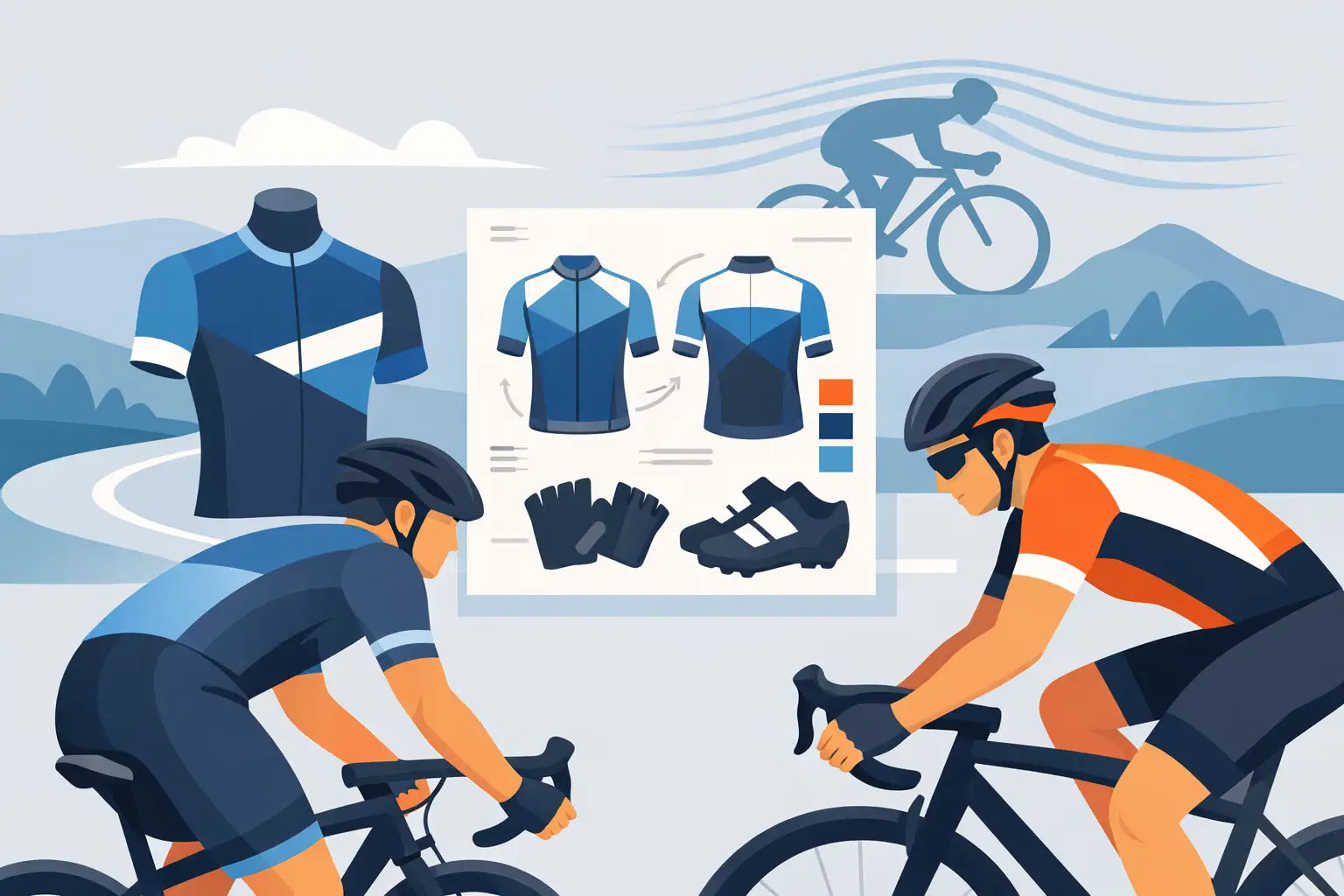
A fast club kit can still fail if the fit is off, the logos fight each other, or half the team refuses to wear it after the first wash. That is the real challenge in how to design club cycling kit - not just making it look good on a screen, but making it ride well, reorder cleanly, and represent your club every time it rolls out.
For most clubs, the best kit starts with a simple question: what is this kit expected to do? A race-oriented road team needs something different from a weekend club with mixed abilities, mixed body types, and riders spread across several climates. If you skip that question and jump straight to colors and graphics, you usually end up redesigning later.
How to design club cycling kit with a clear purpose
Strong kit design begins with use case. If your club races seriously, fit, fabric choice, and aerodynamic cut should lead the conversation. If your members are mostly doing long social rides, fondos, gravel events, or charity miles, comfort across a wider range of riders may matter more than a pure race silhouette.
That choice affects more than jersey style. It changes sleeve length, pocket layout, fabric weight, bib strap construction, and whether you need accessories like gilets, arm warmers, speed suits, or winter layers in the same visual system. Clubs that think beyond one jersey and one bib usually get a better result because they are designing an identity, not a single item.
This is also where team managers should set expectations on budget. There is always a trade-off between premium fabric packages, broad product range, and total order cost. The right answer depends on your membership. Some clubs want one high-end race line and one more accessible training line. Others want every rider in the same top-tier build. Both approaches can work if the decision is made early.
Start with identity, not decoration
The strongest club kits are recognizable at speed. You should be able to spot the group from a distance and know exactly who it is. That does not come from adding more graphics. It comes from building a clear visual hierarchy.
Begin with your club name, primary colors, and the one or two defining elements you want riders to remember. That might be a clean chest wordmark, a bold side panel, a distinctive shoulder treatment, or a signature pattern tied to your region or team history. Keep it disciplined. A kit is not a flyer.
Color deserves extra care because what works on a laptop does not always work on fabric in bright sun, overcast weather, or race photography. Very light colors can become transparent in the wrong fabric zones. Very dark kits can run hot in summer conditions. Fluorescent accents can improve visibility, but too much can overpower a premium look. In practice, most clubs do best with one dominant color, one support color, and one accent.
If sponsors are involved, handle them like part of the structure rather than afterthoughts. Sponsor logos need clean placement, readable contrast, and enough space to breathe. When every sponsor demands front-and-center treatment, the kit usually loses coherence. Someone has to own the design standard and protect the overall result.
Fit and fabric matter as much as the artwork
A club kit gets judged on the ride, not the mockup. That is why fit and material selection should move alongside the visual design process.
For jerseys, think about who is actually wearing them. A close race cut may look sharp and save watts, but it can alienate club members who want a more forgiving fit. A performance cut with multiple size options often lands in the best middle ground. The same logic applies to bib shorts. Riders will remember the chamois, leg grippers, and strap comfort long after they forget a clever graphic detail.
Fabric selection should match climate and intensity. Lightweight, breathable panels are excellent for hot conditions and race efforts, but a club with shoulder-season riding may need more versatile choices. Durability matters too. Training kits take repeated washing, constant sun exposure, and hours in the saddle. A great-looking kit that degrades early becomes expensive fast.
This is where working with an experienced manufacturer helps. Clubs often focus on visual customization, but the technical platform underneath is what determines whether the kit feels pro-level or merely branded.
Design for the full range, not one hero piece
One common mistake in how to design club cycling kit is treating the jersey as the entire project. In reality, the jersey and bibs need to work together first, and then the rest of the range should follow logically.
If your club plans to offer skinsuits, vests, jackets, base layers, or casual items, establish rules early for logo position, typography, color blocking, and trim details. That way the collection stays consistent even when product shapes change. A chest treatment that looks balanced on a jersey may not work on a speed suit. A sleeve graphic that looks great in summer may disappear under a winter jacket. The system needs flexibility.
Think about men’s and women’s versions too. Good design should translate across cuts without feeling like one version was adapted as an afterthought. The same goes for inclusive sizing. Clubs work best when more riders feel like the kit was built for them.
Keep ordering practical for real clubs
A beautiful kit can still create headaches if the ordering process is messy. Clubs should think about reorders before the first design is approved.
That means choosing elements that can stay consistent over time, even if membership changes or sponsors rotate. If your design depends on a one-year sponsor setup or a very specific naming convention, you may have to rebuild the whole file next season. A more durable framework saves time and reduces confusion.
It also helps to decide which details are fixed and which are flexible. Club branding, core colors, and major placements should remain locked. Rider names, national flags, or role-specific details can be optional if they are managed carefully. Too much personalization can slow production and complicate replacements.
This is especially important for clubs with new members joining throughout the year. Low minimum reorder capability and consistent production standards make a big difference. That factory-direct control is one reason many clubs choose experienced custom partners like CCN Sport.
Use mockups, but validate on body position
Digital mockups are useful, but cycling apparel does not live flat. It stretches across shoulders, wraps around side panels, and shifts when a rider is in an aggressive position. What looks centered standing upright may disappear when hands go to the drops.
Before final approval, review every key panel with riding posture in mind. Check the visibility of logos on the back pockets. Check whether a side graphic gets distorted when the jersey is zipped. Check whether bib branding remains visible when the rider is on the bike. Small adjustments at this stage can protect the whole project.
If possible, request samples or compare the design against proven templates. Clubs that treat approval as a technical review, not just an aesthetic one, usually avoid the most expensive mistakes.
Get club buy-in without designing by committee
Every club has opinions. That is normal. The problem starts when ten people are effectively art directing one kit.
The best process is usually a small decision group with clear authority - often a club manager, one or two rider representatives, and someone focused on sponsor or operations needs. Gather member input early around priorities such as visibility, fit, product range, and budget. Then let a smaller group make final calls.
Too much consensus tends to produce safe, crowded, compromised design. A better goal is clarity. Riders do not need every preference reflected. They need a kit they are proud to wear and comfortable riding in.
A strong club kit balances performance and identity
The best custom kits do two jobs at once. They perform under load, and they give your riders a shared identity that feels credible on race day, training day, and every ride in between.
That balance is what separates a good-looking design from a successful club program. If the fit is right, the graphics are disciplined, and the ordering setup is built for real life, your kit will keep working long after launch. Design it for the road, not just the reveal, and your riders will feel the difference every time they pin on a number or roll out before sunrise.

Share:
Custom Jerseys Built for Real Performance
Last fight day of the block in Poland!