

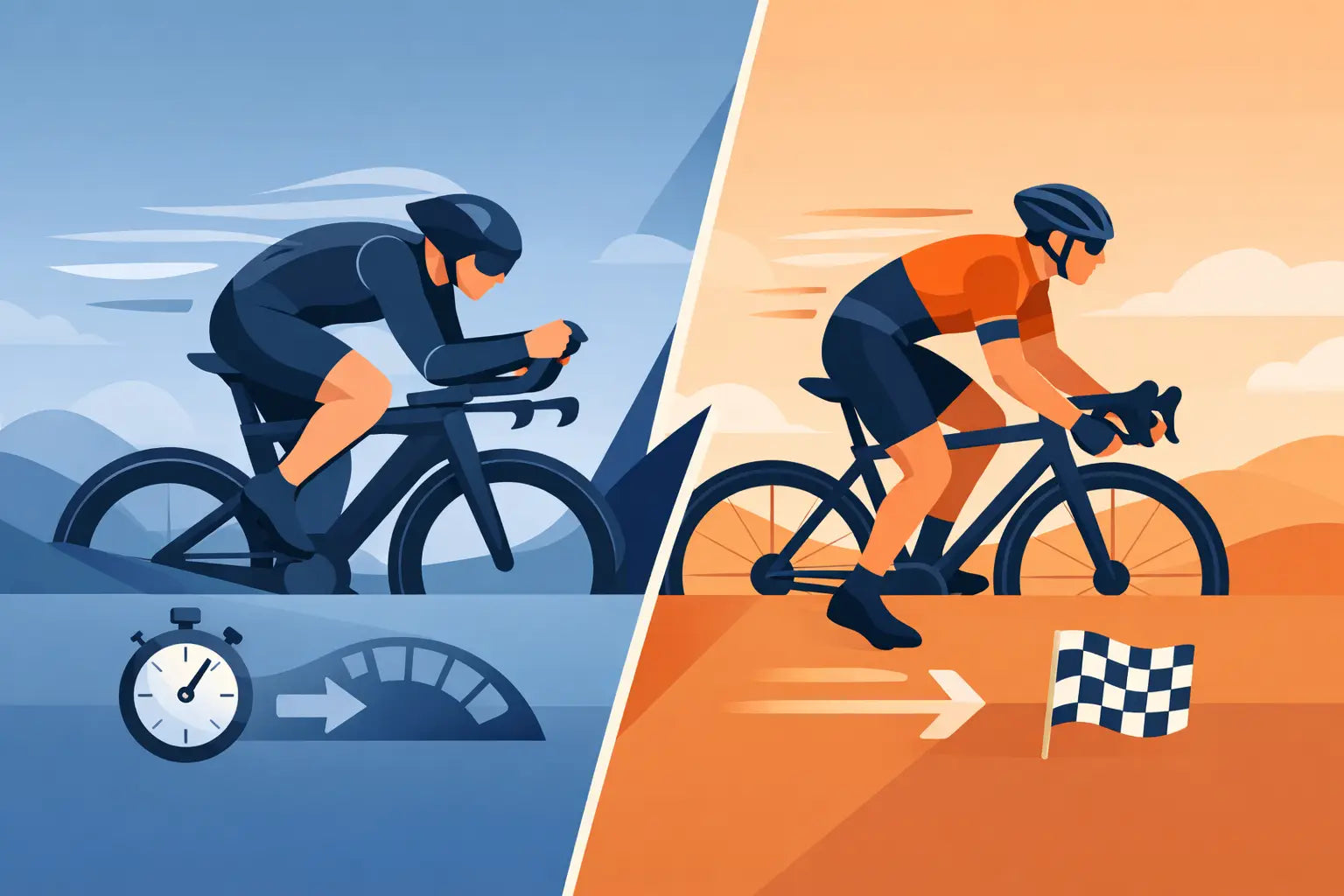
If you pin on a number regularly, the skinsuit vs two piece kit decision shows up sooner than most riders expect. It is not just about style. It is about aerodynamics, comfort over race duration, access to pockets, heat management, and how specific your fit needs to be when speed starts to matter.
For some riders, a skinsuit is the obvious race-day choice. For others, a jersey and bib short combo delivers better all-around performance because it is easier to manage, easier to fit, and more versatile across different ride formats. The right answer depends on what you race, how you ride, and how much you want your kit optimized for one job.
Skinsuit vs two piece kit: what changes on the bike?
The core difference is simple. A skinsuit combines the upper and lower into one integrated garment. A two piece kit separates the jersey from the bib shorts. That sounds minor until you are riding at race speed.
A well-designed skinsuit reduces disruption across the waist, limits fabric movement, and creates a cleaner profile in the wind. Less bunching means less drag. That is why skinsuits are common in time trials, criteriums, road races, and triathlon. When every watt counts, the one-piece construction can offer a measurable advantage.
A two piece kit gives you more flexibility. You can mix jersey and bib sizes, adjust layers more easily, and use rear pockets in a familiar way. For long training rides, changing weather, and everyday use, that matters. Comfort is not only about fabric feel. It is also about being able to manage your kit over several hours without fighting it.
When a skinsuit is the better performance choice
A skinsuit is built for speed first. That does not mean it sacrifices comfort, but its design priorities are clear. The closer fit, more stable sleeve and leg positioning, and reduced turbulence around the torso all support efficiency at higher speeds.
In short events, that advantage becomes more meaningful. Criteriums are a good example. Speeds stay high, accelerations are frequent, and small aerodynamic gains can add up over the course of the race. A skinsuit also stays visually cleaner under pressure. There is no jersey hem shifting around or pockets sagging as the race unfolds.
For road racing, the case is a little more nuanced. If the event is aggressive, relatively short, or highly competitive, a skinsuit makes sense. If the course is technical and the pace is on from the start, the aerodynamic benefit is useful. If your race includes a support car and you do not need to carry much, the pocket trade-off is less of an issue.
Triathlon is another obvious fit. The one-piece format works well when the kit needs to stay secure through multiple disciplines. Stability matters, and excess movement costs energy.
That said, a skinsuit only performs as intended when the fit is right. Too loose, and the aerodynamic benefit drops fast. Too tight, and range of motion, comfort, and even breathing can suffer. Precision matters more with a one-piece garment because the torso length, shoulder tension, and leg compression all interact at once.
When a two piece kit makes more sense
A two piece kit remains the standard for a reason. It is adaptable, practical, and easier for most riders to live in for long hours.
The biggest advantage is fit flexibility. Not every rider has the same proportions on top and bottom. Some need a medium jersey and large bib shorts. Others need more torso room but a tighter lower fit. A two piece setup lets riders fine-tune sizing instead of forcing everything into a single pattern.
That becomes even more important for clubs and teams. When outfitting a wide range of body types, a two piece kit is often easier to distribute successfully. Riders get a better chance of landing in the right size combination, which usually means they are more comfortable and more likely to perform well in the kit.
Then there is practicality. Rear pockets are still hard to beat for day-to-day riding. If you are carrying nutrition, a vest, arm warmers, or a phone on a long ride, a traditional jersey setup is more convenient. It is also easier to regulate in changing conditions. Unzipping on a climb, layering for an early start, or swapping components based on weather is simply more straightforward.
For endurance riding, gravel training, and general road use, a two piece kit often wins because the performance equation is broader than raw aerodynamics. Comfort over four or five hours matters. Access matters. Simplicity matters.
Aerodynamics are real, but they are not the whole story
It is easy to overstate the gap in a skinsuit vs two piece kit comparison. A skinsuit is usually faster in controlled conditions, especially at higher sustained speeds. But not every rider will feel that difference the same way.
If your position is inconsistent, your jersey already fits close, or your event includes repeated changes in pace and terrain, the real-world margin may be smaller than expected. The gains are still there, but they are part of a larger system that includes your body position, fabric choice, panel construction, and how stable the kit stays when you move.
This is where premium construction matters. Race-focused apparel is not just about making something tight. It is about patterning, seam placement, fabric recovery, sleeve finish, chamois support, and compression balance. A poor skinsuit can be slower and less comfortable than a well-made two piece kit. A well-engineered two piece can perform exceptionally close to a skinsuit while offering more versatility.
Comfort, fit, and race duration
The longer the ride, the more comfort starts to shape the decision. In a one-hour race, you can tolerate a very locked-in fit if it helps you stay efficient. In a five-hour event, small pressure points become real problems.
A skinsuit can be extremely comfortable when it fits properly. Because it stays in place, there is often less fabric shift and fewer distractions once you are riding. Many riders like the stable feel. Others find the one-piece construction less forgiving, especially off the bike or during longer stops.
A two piece kit is generally easier to manage before, during, and after the ride. It also makes nature breaks less complicated, which may not sound like a performance feature until you are deep into a long event. For many riders, practical comfort is still comfort.
Heat is another factor. Some skinsuits are built with highly breathable upper fabrics and perform well in hot conditions, but the overall fit is still more compressed. A two piece kit can feel easier to vent and adjust, particularly on long climbs or all-day summer rides.
What teams and clubs should consider
For teams, the decision is not only about rider preference. It is also about usage. If the goal is to outfit a race squad for short-format competition, skinsuits deserve serious consideration. They look cohesive, feel purpose-built, and support a faster setup for the riders who need every advantage.
If the same team also needs apparel for training, fondo events, travel, and general club riding, a two piece kit covers more ground. It is easier to reorder, easier to size across a broad roster, and more likely to be worn often.
Many organizations land on a blended setup. They use skinsuits for race-day applications and two piece kits for everything else. That approach keeps the apparel program practical while still giving competitive riders access to event-specific gear. For teams that need customization, repeatability, and consistent quality, working with an experienced manufacturer makes that process much smoother.
So, which should you choose?
Choose a skinsuit if your priority is racing fast, especially in short to mid-length events where aerodynamics and garment stability matter most. It is the more specialized option, and when the fit is dialed, it is hard to beat for pure race intent.
Choose a two piece kit if you want versatility, easier sizing, better storage, and comfort across a wider range of rides. It is the more adaptable choice and, for many cyclists, the one that delivers the best overall value because it works in more situations.
If you race seriously, the answer may not be either-or. A two piece kit for training and longer days, plus a dedicated skinsuit for events, is often the smartest setup. That gives you precision where it matters and flexibility where you need it.
At CCN Sport, that is how we look at performance apparel - not as a one-size-fits-all category, but as equipment built for a specific purpose. Choose the kit that matches the demands of your ride, and it will do more than look fast. It will help you ride with fewer compromises.

Share:
9 Custom Race Jersey Design Examples
How to Size a Skinsuit for Race Fit