

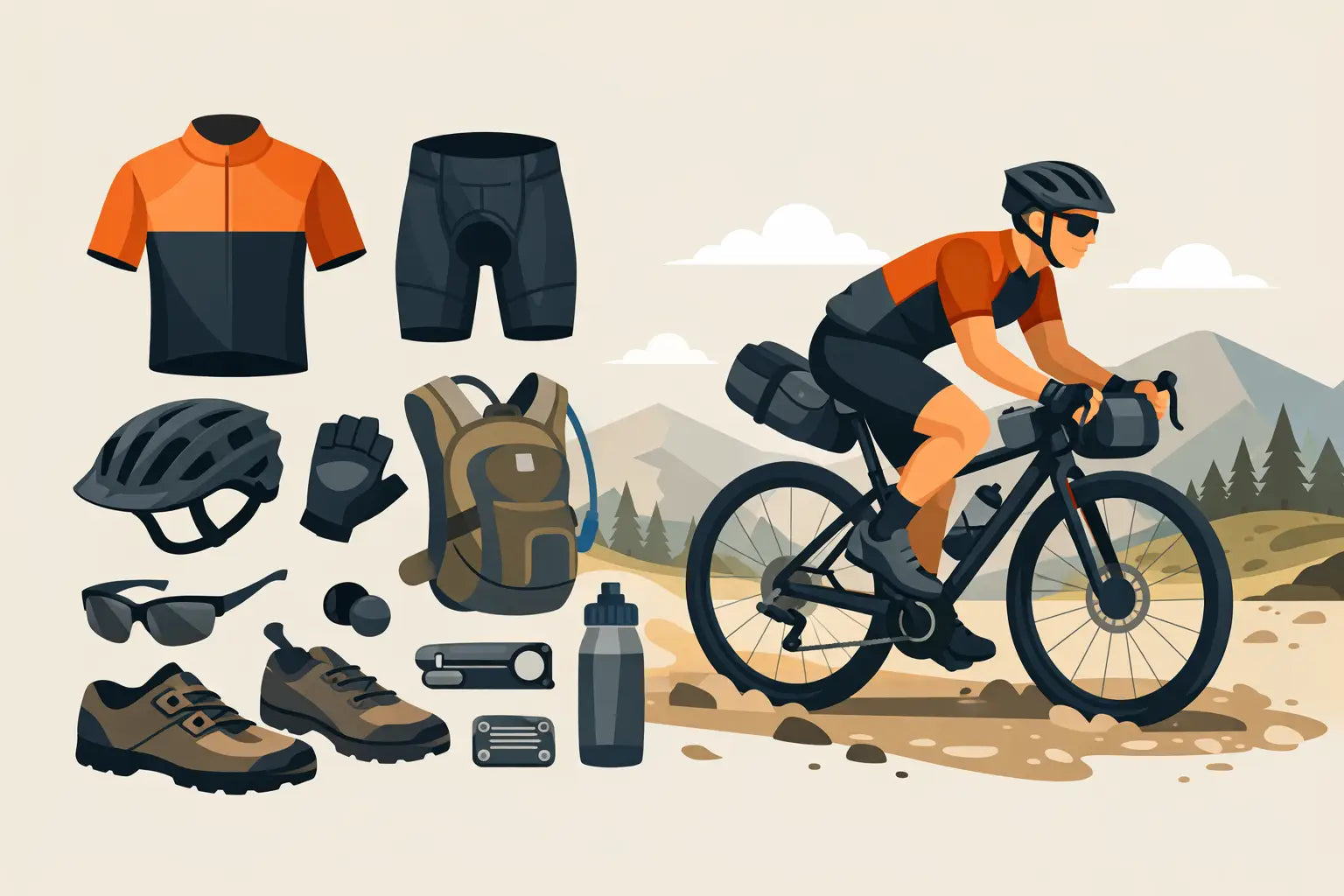
Gravel rides rarely stay predictable for long. A route that starts on smooth hardpack can turn into loose rock, washboard, wind, and a two-hour stretch without resupply. That is why gravel cycling apparel essentials are not just about looking the part. They are about managing temperature, reducing fatigue, protecting contact points, and staying comfortable when the ride gets longer and rougher than planned.
Road kit alone can work for some gravel days, especially on faster routes with mild weather. But gravel places different demands on apparel. The terrain is less consistent, speeds change more often, and riders spend more time adapting to shifting conditions. The best kit is built around that reality - stable fit, durable fabrics, practical storage, and comfort that holds up when the surface does not.
What gravel cycling apparel essentials need to do
At a performance level, gravel clothing has one job: help you keep riding efficiently when conditions stop being tidy. That starts with fit. Apparel that is too loose can flap, hold sweat, and shift under movement. Apparel that is too aggressive in its cut may feel fast for an hour, then restrictive over a five-hour mixed-surface ride.
The sweet spot is close-fitting, supportive, and mobile. Fabrics should breathe well under effort but still offer enough structure to resist abrasion from dust, repeated movement, and occasional trail-side contact. On gravel, comfort is not a soft metric. It directly affects pacing, bike handling, and how well you can stay focused late in the ride.
Start with the jersey
A good gravel jersey should handle more than airflow. It needs enough stability to stay in place over rough surfaces, enough breathability to manage heat on climbs, and enough pocket security to keep essentials from bouncing out when the terrain gets choppy.
Lightweight road jerseys can work in hot conditions, but some riders find ultra-thin fabrics less stable on rougher terrain, especially when pockets are loaded. A slightly more structured jersey often performs better for gravel because it balances ventilation with support. Look for a fit that is aerodynamic without feeling race-only, with sleeves that stay planted and rear pockets that do not sag once you add food, layers, or tools.
If your gravel rides trend technical or remote, pocket access matters more than many riders expect. A jersey that carries cleanly can reduce the need to overstuff a frame bag. That said, there is always a trade-off. More carrying capacity can add weight and bulk, so the right choice depends on whether your rides are fast and local or long and self-supported.
Bib shorts are the real priority
Among all gravel cycling apparel essentials, bib shorts usually make the biggest difference. Rough surfaces magnify every weakness in fit, chamois design, and fabric recovery. What feels acceptable on smooth pavement can become a problem fast once the bike starts vibrating across washboard or broken gravel.
The best gravel bib shorts use compressive fabrics that support the legs without feeling restrictive. That support helps reduce muscle fatigue, especially on long rides with constant micro-vibrations from the road surface. Bib straps should lie flat, hold position, and disappear once you are riding. If the upper is too tight, you will feel it in breathing and posture. If it is too relaxed, the short can shift where it matters most.
Chamois choice is equally important. Gravel riding often means longer seated efforts over uneven terrain, so the pad needs to manage pressure without creating excess bulk. A pad that is too minimal may not offer enough support after several hours. One that is too thick can feel unstable and hold heat. There is no universal answer here. Rider position, saddle choice, and route style all change what works best.
Cargo bib shorts are worth considering for gravel. Extra leg or lower-back pockets can be useful for nutrition, a phone, or packable layers. For some riders, that added storage is a clear advantage. For others, standard bib shorts paired with a stable jersey are cleaner and faster. It depends on ride length and how much equipment you want on-body versus on-bike.
Base layers make a bigger difference than most riders think
On gravel, effort levels swing constantly. You may be grinding up a climb at threshold, then descending into wind with sweat still on your skin. That is where a quality base layer earns its place.
A good base layer helps move moisture away from the body, regulates temperature, and improves the performance of your outer layers. In summer, a lightweight mesh option can help you stay drier and more controlled under heat. In cool or variable weather, a slightly more insulating base layer can smooth out temperature changes without adding much bulk.
Skipping the base layer might seem fine when the forecast looks simple. But gravel weather often stops being simple once elevation, wind exposure, or ride duration enters the picture. Built for performance means building a system, not relying on one piece of kit to do everything.
Outer layers should be packable and purposeful
Gravel riders often start early, finish late, and cover terrain where weather shifts fast. A packable vest, lightweight wind shell, or rain layer can turn a difficult ride into a manageable one.
The key is choosing layers with a clear job. A vest is excellent for cool starts, long descents, and windy open sections. A lightweight shell adds more protection but can trap heat if breathability is poor. Rain jackets are essential in wet conditions, yet the lightest options may trade long-term durability for packability.
That trade-off matters on gravel because clothing is often stuffed into pockets, bags, and jersey compartments multiple times during a ride. A layer that packs small but cannot handle repeated use may not be the right choice for frequent riders. Durable, race-tested construction pays off here.
Don’t overlook fit at the contact points
Apparel performance often comes down to the places where the body notices friction first. Sleeve grippers that pinch, leg bands that creep, seams that rub, and bib straps that twist can all become bigger issues on rough surfaces.
That is why precision fit matters more than trend-driven styling. Clean paneling, stable hems, and supportive compression are not cosmetic details. They help keep the rider settled on the bike. Over a long gravel event or backcountry training ride, small irritations become real performance losses.
This also applies to gender-specific fit. Men’s and women’s patterns should be engineered around riding posture and pressure distribution, not simply scaled versions of the same shape. Riders who spend long hours on mixed surfaces feel the difference quickly.
Weather changes what counts as essential
Not every gravel ride calls for the same setup. In hot and dry conditions, the priority is cooling, moisture transfer, and sun protection. That usually means a breathable jersey, supportive bib shorts, and a light base layer that helps manage sweat.
In shoulder-season riding, versatility becomes more important than minimalism. Arm warmers, knee warmers, a vest, and slightly heavier fabrics can outperform a single bulky layer because they let you fine-tune your system as the day changes.
In cold weather, insulation matters, but so does mobility. Too much bulk can limit movement and create overheating on climbs. For many riders, the better answer is layered technical apparel that traps warmth while still allowing excess heat to escape.
For teams and clubs, consistency matters too
Gravel is no longer a fringe category. Clubs, event teams, and privateer-style programs are showing up with specific demands around durability, storage, and all-day comfort. That makes apparel selection about more than one rider’s preference. It becomes a question of consistent fit, dependable production, and kit that performs across a wider range of body types and ride styles.
For organized groups, the best partner is one that understands performance apparel at the manufacturing level and can deliver reliable quality without making customization a slow, complicated process. That is part of why riders and teams look for brands with proven technical construction and direct production experience, like CCN Sport.
Choose apparel for the ride you actually do
There is no single gravel uniform that works for everyone. A rider doing fast Midwest farm-road loops may want a closer, road-inspired setup with just enough added storage. Someone riding remote mountain gravel for six hours may prioritize cargo capacity, more protective outer layers, and a slightly more forgiving fabric package.
The common thread is function. Gravel apparel should help you stay efficient, comfortable, and prepared when the surface gets rough and the ride stretches beyond the original plan. If a piece looks good but shifts under load, overheats on climbs, or loses support after a few hours, it is not essential. If it disappears while doing its job, it probably is.
The best gravel kit does not ask for attention once the ride starts. It lets you focus on pacing, line choice, and the next section of road ahead.

Share:
Custom Triathlon Suits for Teams That Perform
Mountain Bike Jersey vs Road Jersey