

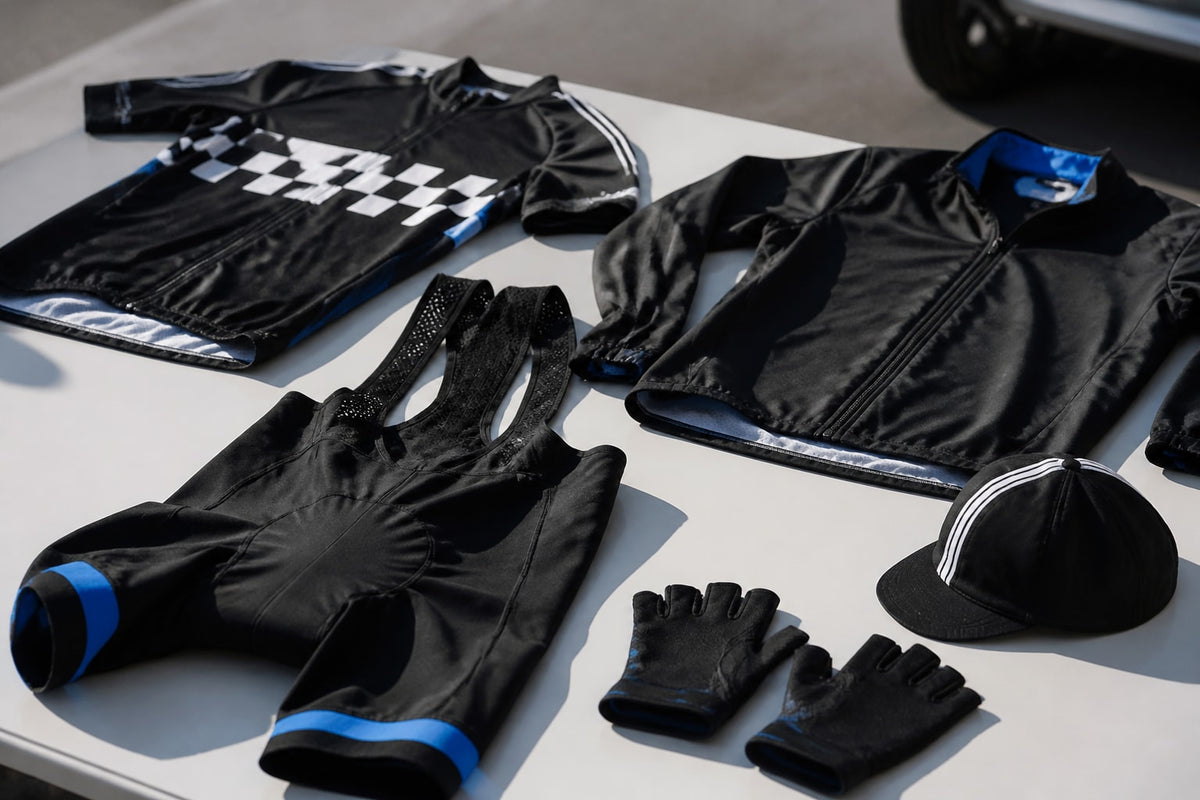
Cycling clothing is built around a short list of core pieces: bib shorts, a jersey, a base layer, a weather shell, gloves and a cap, each made to manage sweat, wind and friction over long hours. For clubs and teams, the goal is to own the right pieces in a consistent, matching design, so every rider is comfortable and the squad is easy to identify in a bunch. This guide lists the types worth owning, with named examples where the market offers them.
Cycling teams and clubs have an extra layer of planning. A kit has to work for a 25°C criterium and a 5°C spring classic, and it has to look identical across dozens of riders. The sections below cover what each garment does, what to look for, and where custom production fits.
1. Bib shorts: the foundation of cycling clothing
Bib shorts are the single most important piece of cycling clothing, because the chamois, the straps and the leg grippers decide whether a ride is comfortable after three hours. Bibs replace a waistband with shoulder straps, so nothing digs into the abdomen when a rider is tucked on the drops. The leg grippers should hold the hem in place without leaving a pressure line on the thigh, and the straps should stay flat across the shoulders without pulling when the rider reaches for a bottle. Fit is personal, so a bib that suits one rider's saddle and hip width may not suit another's, and a short test ride before committing a full squad to one model is sensible.
MAAP Team Bib EVO is an all-around bib short suited to road training and racing. Specs and a price are not shown in the research available, so check the maker's page for chamois and fabric details. When reading those details, compare chamois thickness against the length of the rides you do most, since a pad built for four-hour rides can feel bulky on a short criterium.
Verdict: Choose a bib first, and spend more on it than on any other garment.
2. Value-focused bibs for high-mileage training
A second pair of bibs matters because wearing a clean pair each ride is a basic hygiene and comfort habit, and a rotation spreads wear across more garments. Riders covering high weekly mileage can wear through a single bib quickly, since repeated washing and long hours in the saddle gradually break down the chamois and the stretch of the fabric. Keeping the race-day bib fresh for events and sending a dedicated training pair through the weekly grind keeps both in better condition. Squads buying for a full roster can use a lower-cost training bib to free budget for race kit elsewhere.
The Black Bibs Ultimate is a bib short that can serve as a training pair when the race-day bib is reserved for events. Specs and pricing are not shown in the available results. Before buying several pairs, confirm the sizing against your main bib, because cuts differ between brands and a mismatched rotation can feel inconsistent from one ride to the next.
Verdict: A sensible rotation bib for riders with a full squad to equip.
3. Road jerseys for everyday riding
A road jersey is a fitted, breathable top with rear pockets, a zip and a cut that stays in place in the riding position. A good jersey has a longer rear hem so it does not ride up on the drops, and a snug but not restrictive collar that sits flat against the neck. Pockets should hold a phone, food and a spare layer without sagging or bouncing at speed. Fabric and ventilation matter most in warm conditions. POC recommends lightweight, highly breathable jerseys with mesh panels above 22°C (72°F) to aid airflow, and says a jersey and bib shorts are typically sufficient for many riders at 15–22°C (59–72°F).
Attaquer All Day Jersey is a jersey that can suit endurance work where pocket access and all-day comfort count. Specs and a price are not shown in the research available. On a long day out, a relaxed endurance cut can be easier to live with than a race-tight fit, particularly when you carry layers and food in the rear pockets for hours.
Verdict: The jersey is the garment riders notice least when it is right, and the most when it is wrong.
For a deeper look at cut and fabric, see CCN Sport's guide to the road cycling jersey.
4. Base layers for moisture control
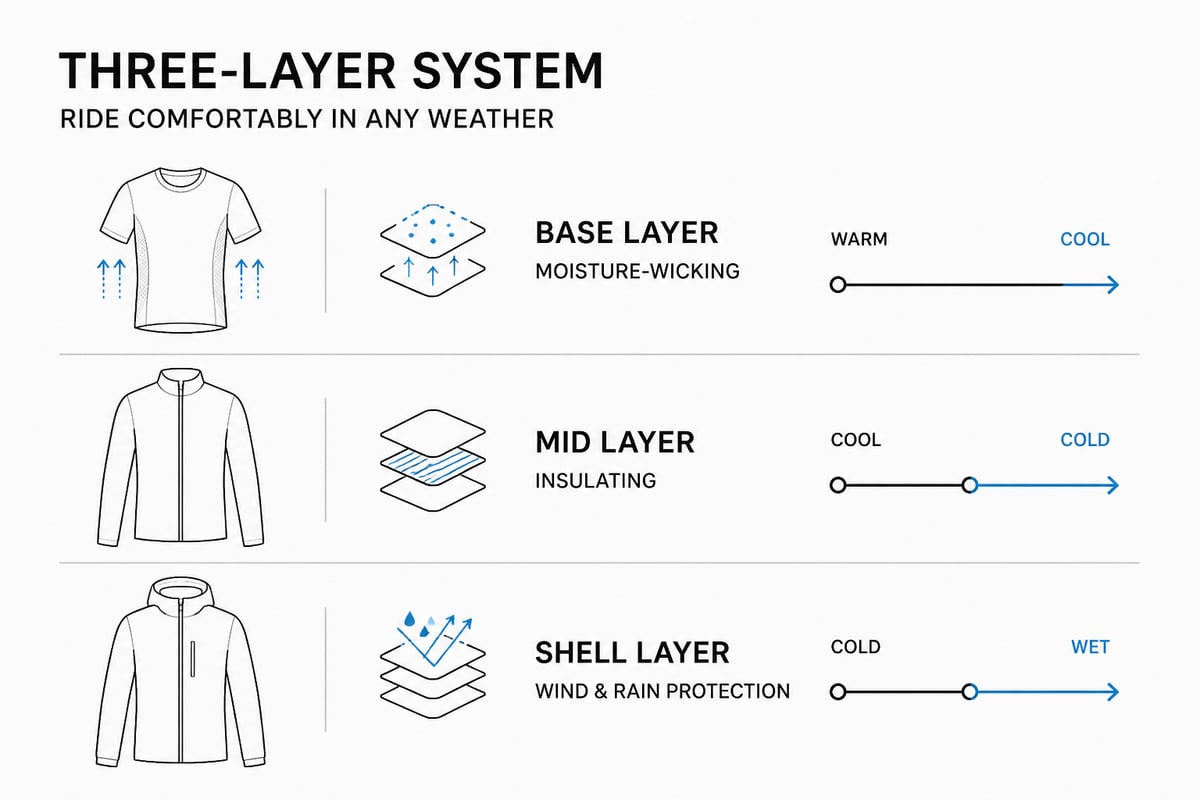
A base layer sits against the skin and moves sweat away from it so it can evaporate. A damp fabric left against the skin cools the body quickly once a rider slows on a climb summit or stops at a café, so the layer's job is to keep the skin drier than the jersey above it. Synthetic mesh dries fast and suits hot, hard riding, while merino blends hold less odor and stay more comfortable across a long, variable day. Cycling Weekly's temperature guide suggests a mesh base layer and short-sleeve jersey for warm conditions, noting that a wicking base layer moves moisture away from skin to help it evaporate.
- What to look for: a seamless or flat-seam knit, a close fit and a mesh or merino-blend fabric.
- Where it fits: under the jersey year-round, with a thermal version added when temperatures drop.
- Specific named product: none is listed in the research, so choose on fabric and fit.
Owning a light mesh version for summer and a heavier thermal one for cold mornings covers most of the year, and the close fit matters because a loose layer bunches under the jersey and stops wicking.
Verdict: The cheapest upgrade to comfort, and one every rider should own in at least two weights.
5. Weather shells and rain jackets
A shell is a thin outer layer that blocks wind and rain while letting sweat vapor out. POC describes a three-layer system built from a moisture-managing base layer, an insulating mid-layer, and a shell that blocks wind and rain while allowing sweat vapor to escape. The shell is the layer that lets a rider stay out when conditions turn, but a jacket that traps heat will leave the rider soaked from the inside, so breathability matters as much as waterproofing. A close cut with a longer rear hem and a high collar keeps spray off the lower back and neck.
Rapha Gore-Tex Rain Jacket is a dedicated rain layer for wet-weather riding. The research available does not list its specs or price. A jacket meant for pocket storage should pack small enough to ride in a jersey pocket, since a shell left at home does nothing when a shower arrives forty kilometers from the start.
Verdict: A packable shell belongs in every jersey pocket from autumn through spring.
A broader look at layering across seasons is available in Cycling News' layering guide, which covers summer kit, transitional clothing, winter jackets, tights, gloves and footwear.
6. Custom team race kit from CCN Sport
For a squad, the most useful form of cycling clothing is a matching kit produced in one run, so jerseys, bibs and skinsuits share the same fabric, print and fit. Matching production helps keep colors consistent across every garment. Custom Cycling Apparel from CCN Sport covers this work for cycling teams, clubs and national programs.
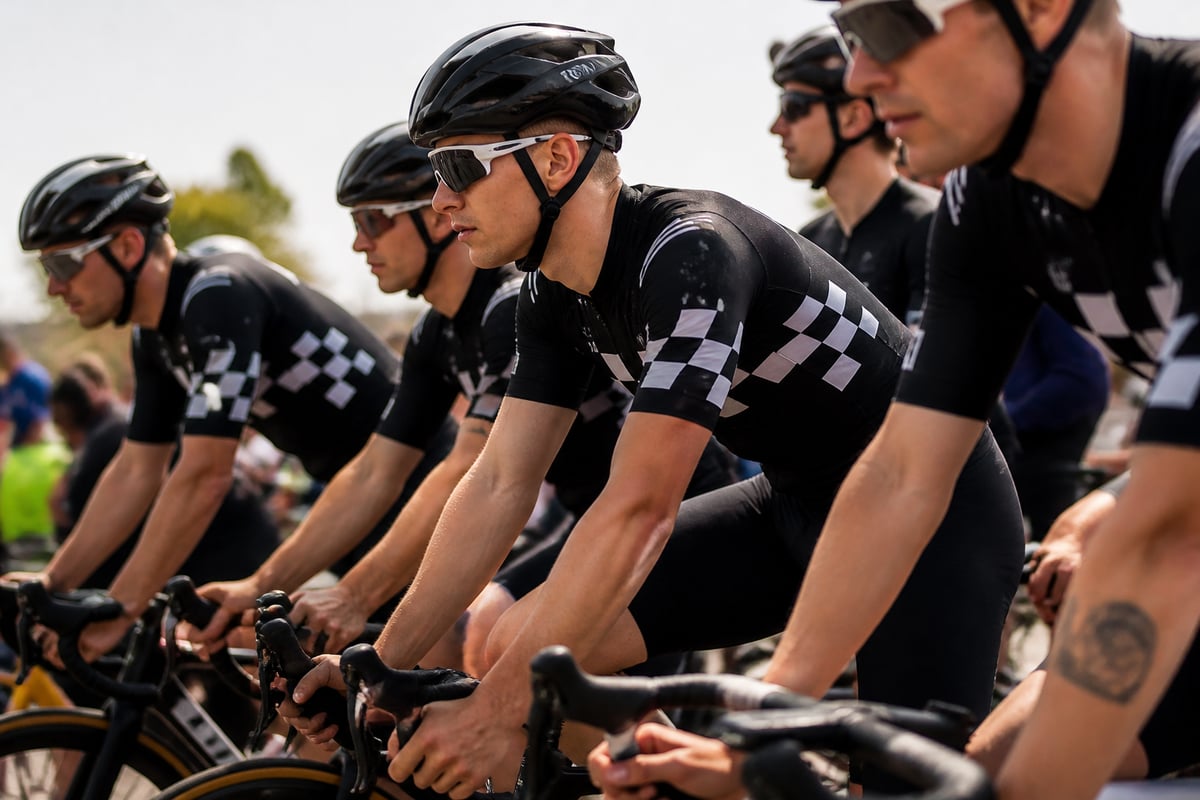
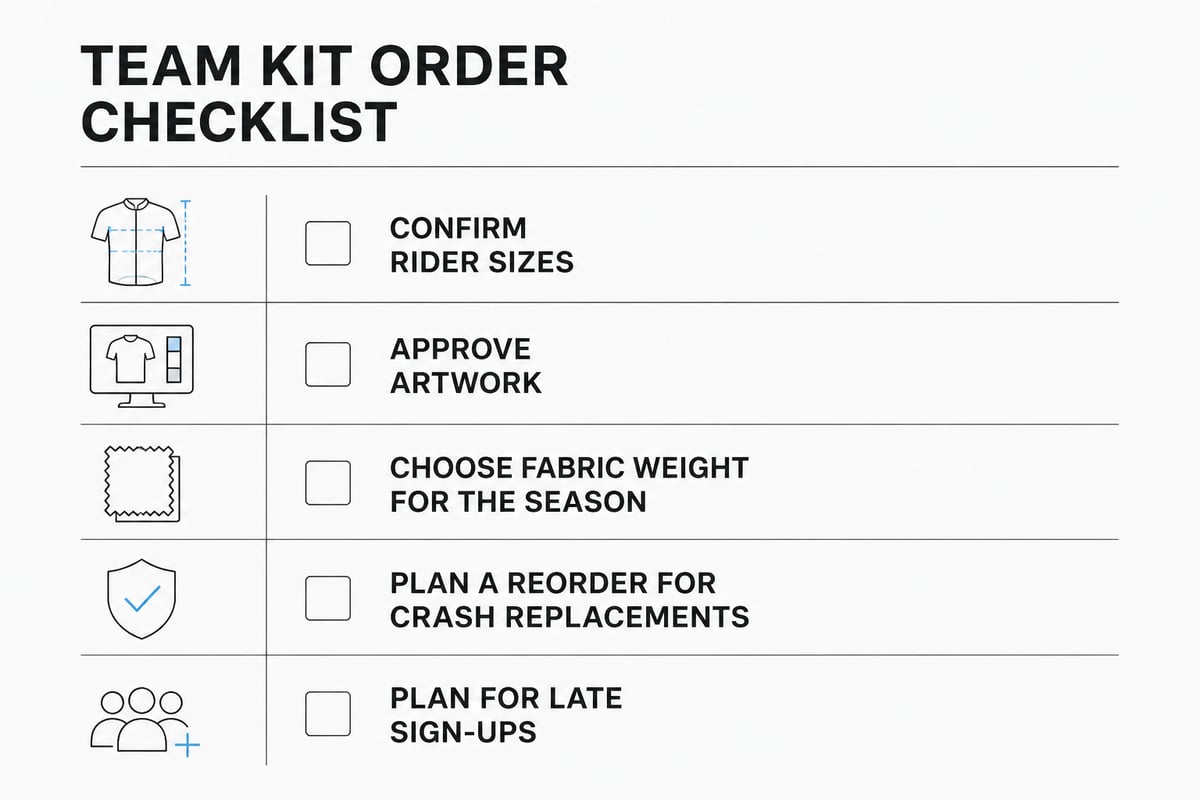
CCN Sport produces in its own factories in Shenzhen, China and Dasmarinas, Philippines, using sublimation printing and a design team that builds each kit to an aerodynamic, comfort and style brief. Sublimation prints the design into the fabric rather than on top of it, so graphics do not crack or peel with washing. Minimum orders start at 5 main pieces, pricing is factory-direct, and the company states a limited lifetime warranty. Crash reorders and size reorders are offered at a discount to retail price, which helps when a rider goes down or a late sign-up needs a garment to match the rest. Confirm sizing and artwork before approving production, ideally after a fit check across the whole roster. For process details, contact CCN Sport or read its custom cycling clothing manufacturer overview.
- Approx. price: quoted per order, so request a quote.
- Best suited to: squads that need matching kits made to order, from a local club to a continental team.
Verdict: A practical route when consistency across every rider matters.
7. Factor Racing Team Kit
The Factor Racing Team Kit is a team-style jersey line with a race-tuned fit, lightweight breathable fabric and the Factor Racing look, available through CCN Sport's Factor Racing collection. A race-tuned fit sits closer to the body than an endurance cut, which reduces flapping fabric at speed and keeps the jersey stable in a tucked position. The lightweight, breathable fabric pairs well with the warm-weather guidance above, where mesh and airflow matter most for hard efforts. Riders who prefer a relaxed cut should check the sizing first, since a race fit can feel tight through the chest and shoulders.
- Key traits: race-tuned fit and lightweight, breathable fabric.
- Best suited to: squads that want a ready-made pro-team aesthetic on a race fit.
- Price: see the collection page for current pricing.
Because it comes ready-made, it suits a club that wants a polished team look without a custom design cycle.
Verdict: A useful reference for how a team jersey can fit and look.
Comparison of the cycling clothing types
| Item | Type | Best for |
|---|---|---|
| MAAP Team Bib EVO | Bib shorts | Riders seeking a top-rated all-around bib |
| The Black Bibs Ultimate | Bib shorts | Riders prioritizing value |
| Attaquer All Day Jersey | Jersey | Long-distance riders |
| Rapha Gore-Tex Rain Jacket | Rain shell | Riders needing a rain layer |
| CCN Sport Custom Cycling Apparel | Custom team kit | Teams needing matching kits made to order |
| Factor Racing Team Kit | Team jersey | Race-fit pro team styling |
Accessories that complete the kit
A few small items finish a set of cycling clothing and are easy to order in team colors. Gloves protect the palms in a crash and cut vibration over long rides, and a cap keeps sun, sweat and light rain off the face under a helmet. CCN Sport offers Swift aero cycling gloves and a Factor cycling cap that can pair with a team kit.
For riders who also commute by electric bike, a site such as Starly Bikes offers premium elektrische fietsen for daily rides and weekend tours.
How to match cycling clothing to temperature
Match the number of layers to the conditions, and keep a shell and arm warmers in a pocket for changes. A simple guide:
- Above 22°C (72°F): mesh base layer, a lightweight mesh-paneled jersey and bib shorts, per POC's guidance.
- 15–22°C (59–72°F): jersey and bib shorts, typically enough for many riders, per POC.
- Below 15°C: add a thermal base layer, then a mid-layer or long-sleeve jersey.
- Wet or windy: carry a shell that blocks wind and rain while letting sweat vapor out.
Teams planning a full wardrobe can also review cycling clothing essentials.
Planning a team wardrobe
A team wardrobe works best when each garment is chosen for a job and ordered together. Start with bibs and jerseys in matching fabric, then add a shell, base layers, gloves and a cap in team colors. Confirm sizes with a fit check before approving production, and plan a reserve for crash replacements and late sign-ups.
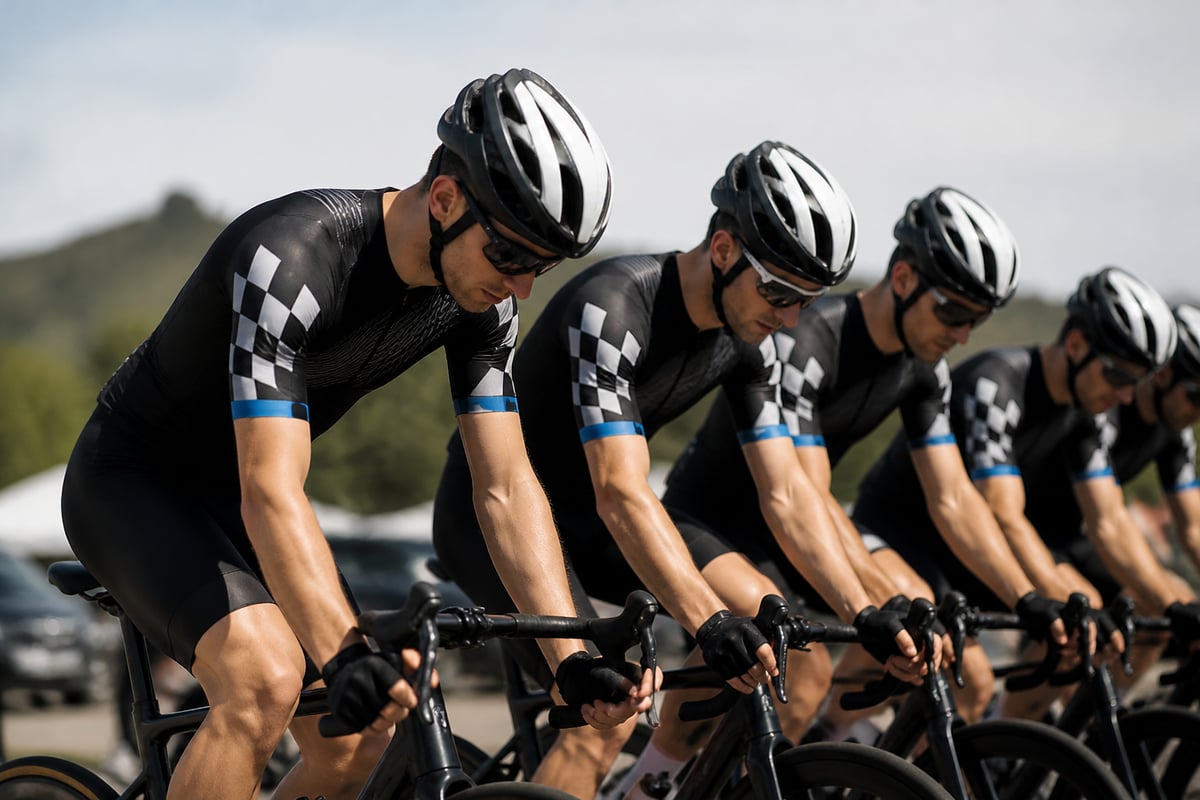
Start by listing each rider's size and the garments your season needs, then use that list to request pricing. At CCN Sport, custom products are made with precision and care in facilities in China and the Philippines, blending traditional craftsmanship with modern technologies to deliver premium cycling apparel built to perform and last. Our sublimation process produces vibrant, durable designs, with a skilled team handling every step from stitching to finishing, and the same attention goes into a Factor Racing Team Kit as into a one-off design. When you are ready to put your squad in matching kit, start your custom kit with CCN Sport.

Share:
Cycling Rainwear That Performs When Weather Turns
Cycling Attire Guide: What to Wear for Every Ride