A missed delivery before race weekend is not just an inconvenience. It can leave new riders without kits, create sizing problems across the roster, and put a team manager in the position of chasing answers instead of preparing to ride. That is why the custom apparel manufacturer versus broker decision matters well before artwork is approved. The right production partner affects how your kit fits, performs, arrives, and holds up through a full season.
For cycling clubs, race teams, schools, events, and growing brands, the decision is not simply about finding the lowest quote. It is about deciding how close you want to be to the people and processes responsible for turning a design file into race-ready apparel.
What separates a manufacturer from a broker?
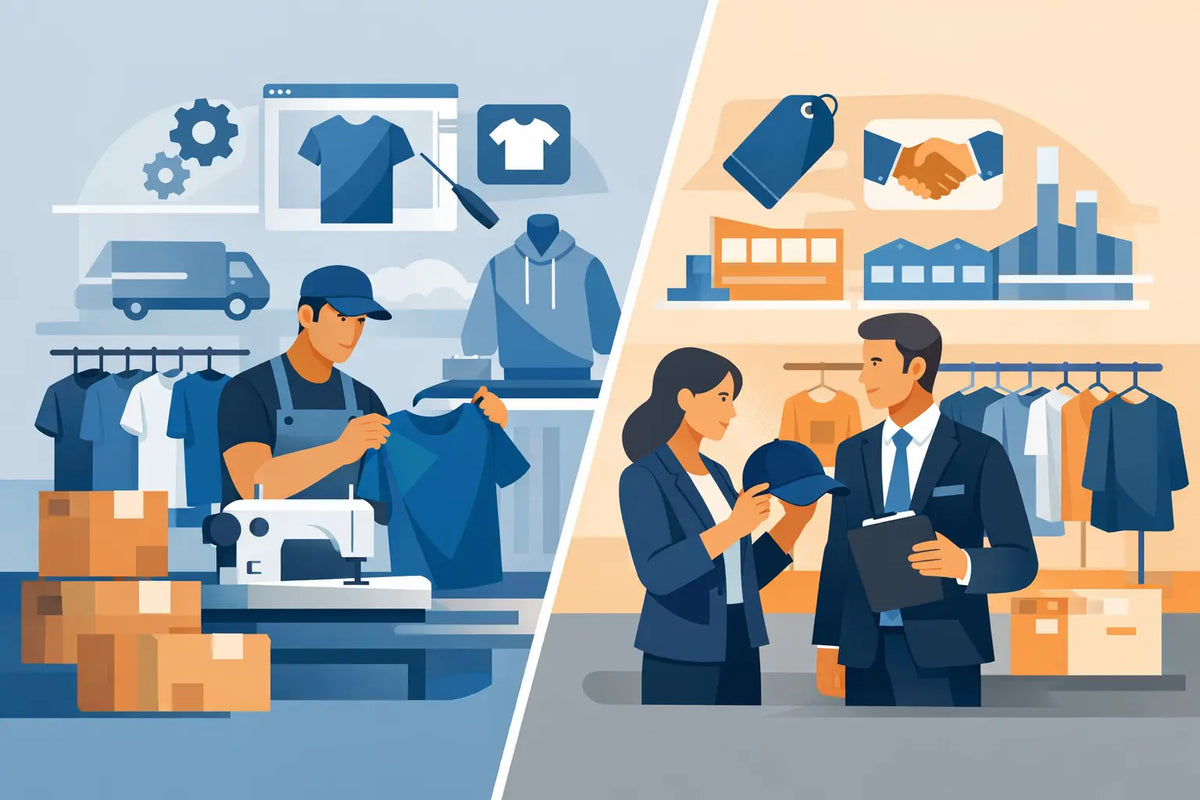
A custom apparel manufacturer produces the garments. Its team controls, or directly manages, the critical steps behind your order: pattern development, fabric selection, printing, cutting, sewing, quality control, and production scheduling. When you speak with a true manufacturer, you are closer to the source of the technical decisions that determine garment performance.
A broker, sometimes called a distributor, sales agency, or apparel reseller, typically manages the customer relationship while placing production with a third-party factory. A good broker can simplify vendor selection and may offer helpful design guidance, merchandising support, or access to several product categories. But the broker is usually not the production floor. Questions, revisions, and production updates may move through another layer before reaching the people making the kit.
Neither model is automatically right or wrong. The better choice depends on your order complexity, timeline, need for product expertise, and appetite for direct control. For performance cycling apparel, however, those details carry more weight than they would for a basic event T-shirt.
Custom apparel manufacturer versus broker: the performance difference
A cycling jersey can look correct in a digital mockup and still fall short on the road. Sleeve tension, panel placement, pocket stability, zipper quality, fabric stretch, chamois construction, and leg-gripper pressure all affect the ride. A manufacturer with technical cycling experience can connect your design requirements to the construction choices behind them.
That direct connection matters when a team needs a race fit rather than a relaxed club cut, a heavier winter jersey rather than a standard long-sleeve top, or bib shorts built for long training days. The conversation is more precise because the people advising on the order understand how fabric, pattern, and assembly work together.
With a broker, product information may still be accurate, especially when the broker represents established factories. The trade-off is speed and depth of access. If you have a question about a revised inseam, a fabric substitution, or how a logo will cross a curved panel, the answer may need to travel from you to the broker, then to the factory, and back again. That can be manageable for a straightforward order. It becomes more consequential when the kit is highly customized or time-sensitive.
Fit is a production issue, not a size-chart issue
Teams often focus on size charts after the design is finished. In practice, fit begins much earlier. It starts with the garment pattern, intended riding position, stretch recovery of the fabric, and the way each panel is assembled.
A factory-direct partner can explain why one jersey platform suits racing and another suits endurance riding. It can also help a team create a sizing process that reduces exchanges and last-minute surprises. This is particularly valuable for mixed groups that include new riders, experienced racers, men, and women who need purpose-built cuts rather than a one-pattern compromise.
Cost: look past the unit price
A broker may add a margin to cover sourcing, coordination, customer service, and project management. That is not inherently a bad cost. If the broker makes a complex purchasing process easier for your organization, the service may be worth it.
Still, a factory-direct manufacturer can often offer stronger value by reducing the layers between the buyer and production. The advantage is not just a lower per-piece price. It can also mean clearer minimums, better flexibility when combining products, and fewer markups on technical upgrades.
The lowest quote deserves scrutiny. Ask what is included in the price: design support, individual names, custom colors, premium fabrics, chamois options, setup fees, shipping, and replacement terms. A cheap jersey paired with bib shorts that lose compression quickly is not a value purchase. Neither is an order that arrives too late to be useful.
For a club building a long-term kit program, cost should be measured across the season. Durable construction, consistent reorders, and a product line riders actually want to wear can reduce the friction and waste of replacing poor-performing apparel.
Lead times and communication under pressure
Production timelines are shaped by more than a factory's stated turnaround. Artwork approval, fabric availability, production capacity, quality checks, freight, customs, and holiday schedules can all move a delivery date. The key question is not whether delays are possible. They are. The question is who owns the information when a variable changes.
A manufacturer can usually provide a clearer view of where an order sits in the production process because it has direct visibility into scheduling. When a design revision is needed, the approval can move to the relevant production team without an extra handoff. That does not guarantee an instant change, but it supports faster, more accountable communication.
Brokers can be effective coordinators, but service quality varies widely. Before committing, ask how production updates are obtained, who confirms final artwork, and who has authority to resolve a quality concern. Vague answers are a warning sign, especially when your team has a fixed event date.
When a broker can be the practical choice
A broker may be a sensible option when your organization needs far more than cycling apparel. A large corporate event, for example, may require shirts, hats, bags, signage, and promotional products from multiple suppliers. One point of contact can simplify that purchase.
A broker can also be useful if your team already has a trusted relationship with someone who understands your organization and has proven reliable over several orders. Trust, responsiveness, and a history of accurate deliveries matter.
The model is less ideal when you need detailed product customization, low minimums, frequent reorders, or technical guidance from people who understand performance garments. Cycling kits are specialized equipment. Treating them like generic branded merchandise often leads to compromises riders notice on the bike.
How to choose the right production partner
Start by defining the job your kit needs to do. Is this a one-time event jersey, a club collection with seasonal reorders, an elite race kit, or a retail-ready apparel line? The answer should shape the supplier conversation.
Then evaluate each partner on the details that affect real riding and real ordering. Ask whether they own production or outsource it, which garment components they control, and how they manage quality checks. Request clear information about fabric options, construction, fit platforms, minimum order quantities, and reorder consistency.
You should also ask how the ordering experience works for your riders. A team store, individual ordering windows, size guidance, and dependable payment handling can remove significant work from a volunteer kit manager. A strong partner does not simply print a logo. It makes the entire kit program easier to run.
Finally, look for evidence of cycling-specific expertise. A supplier should be able to discuss chamois choice, aerodynamic paneling, moisture management, storage pockets, and the difference between training apparel and race apparel without relying on vague promises. CCN Sport operates with this factory-direct approach because technical detail and production control are central to a kit that performs under pressure.
The questions worth asking before you place an order
Before approving artwork, get direct answers to a few practical questions. Who is manufacturing the garments? What happens if a sample or final product does not match the approved specification? Can the supplier support small follow-up orders? How are women’s-specific fits, youth sizes, and individual rider names handled? What is the realistic delivery window, including freight?
Also ask to see the exact product platform you are buying. Product names alone do not tell you enough. A clear description of fabric weight, fit profile, pad type, zipper, gripper, and pocket design gives your riders a better expectation of what will arrive.
The best custom kit partner makes these answers easy to obtain. That is a good sign that the same clarity will be there when your team needs a revision, reorder, or delivery update.
Your riders will feel the difference between apparel chosen as a promotional item and apparel built as cycling equipment. Choose the partner that gives your team confidence in every stage of the process, then give the kit enough attention to earn its place on the start line.

Share:
Team Kit Reorder Planning Guide for Cycling Clubs
What Makes Cycling Chamois Comfortable on Long Rides?