

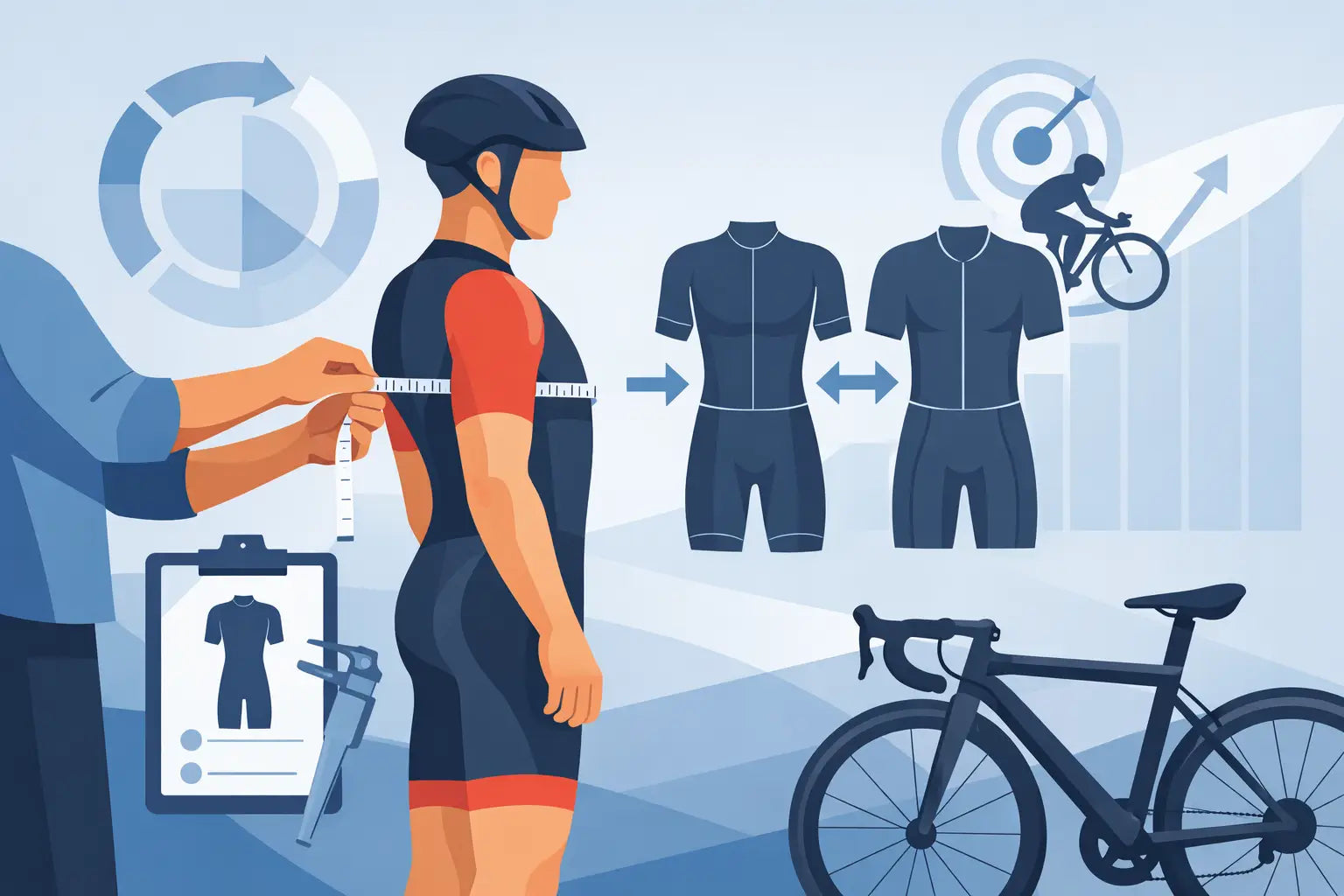
A skinsuit that feels fast on the bike can feel questionable in the fitting room. That is normal. If you are wondering how to size a skinsuit, the key is understanding that race apparel is built to fit in motion, not standing upright under bright lights.
A proper skinsuit should feel close, supportive, and aerodynamic without restricting breathing or changing your position on the bike. Too loose, and you lose the performance benefit. Too tight, and you create pressure points, strain the seams, and end up fighting the garment instead of focusing on the ride. Getting the size right means balancing compression, mobility, and your actual use case.
How to size a skinsuit starts with purpose
Before you look at measurements, decide what the skinsuit is for. A time trial skinsuit, a road race skinsuit, and a triathlon suit may all look similar at a glance, but they are not meant to fit exactly the same way.
A pure race-day skinsuit is usually cut closer to the body. It is built to reduce drag, stay stable at speed, and avoid excess fabric around the shoulders, chest, and thighs. That means the fit may feel tighter than your standard jersey and bibs. If you are buying for hard efforts, short events, or aggressive riding, a second-skin fit is usually correct.
If the skinsuit is for longer training sessions, club racing, gravel events, or all-day riding, you may want a little more forgiveness through the torso or sleeves. Not baggy, just realistic. Comfort still matters when the ride stretches past the point where pure aerodynamics is the only priority.
This is the first trade-off to understand. The fastest fit is not always the most forgiving fit. The most comfortable fit in the parking lot is not always the best fit at race speed.
The measurements that matter most
When riders guess their size based only on their usual jersey size, they often miss the mark. Skinsuits combine upper and lower body fit into one pattern, so proportions matter more than labels.
Start with height and weight, since those usually give the broadest sizing direction. Then pay close attention to chest, waist, and hip measurements. For many riders, torso length is the deciding factor. A rider with a long torso may need to size differently from someone with the same chest and waist but a shorter upper body.
Shoulder width and thigh circumference can also affect the final fit, especially in aerodynamic race cuts. Broad-shouldered riders may feel excessive pull across the upper chest if they size too aggressively. Riders with more developed quads may find the leg grippers overly restrictive if the suit is technically wearable but not proportioned well for them.
Measure with a flexible tape and keep it honest. Do not suck in your waist or round your shoulders forward to chase a smaller size. A skinsuit should be precise, not imaginary.
What a correct skinsuit fit should feel like
A well-sized skinsuit should feel snug across the entire body, with consistent compression and no major areas of loose fabric. You should notice light tension when standing tall, especially through the shoulders and torso. Once you bend into a riding position, that tension should ease and the suit should settle into place.
That last point matters. Many riders try on a skinsuit while standing straight and decide it is too short or too tight before they ever get into cycling posture. Because skinsuits are built around an on-bike position, the fit often makes more sense once your hips are hinged, your arms are forward, and your back is angled like it would be on the bike.
The sleeves should lie flat without wrinkling or cutting harshly into the arm. The leg bands should stay secure without bunching or pinching. Around the midsection, the suit should feel supported but not restrictive. You should be able to breathe deeply and move your shoulders without feeling like the zipper is under constant stress.
If the chamois shifts when you move, the suit is probably too large. If the zipper bows, the seams feel overworked, or the fabric becomes overly sheer when worn, it is likely too small.
Common sizing mistakes riders make
The most common mistake is choosing a skinsuit the same way you choose a casual jersey. A skinsuit is not supposed to have extra room. Riders who size up too quickly often end up with loose material at the lower back, around the sleeves, or behind the thighs. That excess fabric catches air and defeats the purpose of the garment.
The second mistake is sizing down just because compression feels fast. Compression can support performance, but only when the pattern still matches your body. If the suit pulls the chamois out of position, limits shoulder mobility, or creates numb pressure at the leg grippers, the fit is too aggressive.
Another common issue is ignoring body shape. Two riders can be the same height and weight and still need different sizes based on torso length, shoulder width, or lower body development. This is especially relevant for team orders, where using only broad size assumptions can create inconsistent fit across the roster.
How to size a skinsuit if you are between sizes
If you fall between sizes, the right choice depends on how you ride and how the specific suit is designed to perform.
If your priority is racing, speed, and a locked-in aerodynamic fit, the smaller of the two sizes may be right, provided you still have full breathing capacity and normal range of motion on the bike. A race-cut skinsuit should feel assertive, not easy.
If your event duration is longer, your body proportions are pushing one area of the suit to its limit, or you simply want more comfort through the torso, the larger size is often the smarter call. This is especially true for riders with longer torsos or broader shoulders, where vertical tension can become the real issue even if the chest and waist numbers suggest a tighter size.
If you are buying for a team, it is better to think in terms of intended fit rather than forcing everyone into one interpretation of race sizing. Some riders want maximum compression. Others need a stable but more forgiving fit to perform well over longer distances. Precision matters more than pride.
Men’s and women’s skinsuit sizing is not interchangeable
This should be obvious, but it still causes fit problems. Men’s and women’s skinsuits are not just resized versions of the same pattern. They are shaped differently through the chest, waist, hips, inseam, and chamois placement.
A rider can sometimes force the wrong cut to zip up, but that does not mean it fits correctly. The result is usually poor support, uneven compression, and discomfort that shows up quickly once the ride starts. If the goal is speed, comfort, and reliability, start with the right gender-specific pattern and size from there.
Try it on like a cyclist, not like a shopper
When you test the fit, do more than stand in front of a mirror. Zip the suit fully, bend into riding position, reach forward as if your hands are on the bars, and stay there for a minute. That simple check will tell you more than any static try-on.
Pay attention to where the fabric settles. You want smooth contact across the shoulders, lower back, and thighs. The chamois should sit where it belongs without needing adjustment. The front of the suit should not feel like it is pulling downward, and the back panels should not feel overstretched.
If you have access to your bike or a trainer, even better. A short test in position makes sizing decisions much clearer. This is one reason performance brands like CCN Sport focus heavily on patterning and fit consistency. In race apparel, small sizing errors become obvious very quickly once power goes down.
When a skinsuit feels tight but is actually right
A new skinsuit can feel tighter than expected, especially if you are used to standard jersey-and-bib combinations. That does not automatically mean the size is wrong.
If the compression is even, the zipper closes cleanly, your breathing is unrestricted, and the suit feels better once you are in riding posture, you are probably in the right range. Performance fit often feels more secure than comfortable at first touch. The key is whether that close fit works with your body, not against it.
On the other hand, pain, seam strain, restricted breathing, or obvious pulling at the shoulders are not signs of a proper race fit. Those are signs to reassess.
A good skinsuit should disappear once the ride starts. You should notice the support, the stability, and the clean fit through the wind, but not a constant reminder that you are wearing something too small. Size for the position you ride in, the effort you plan to give, and the fit that stays fast without becoming a distraction.

Share:
Skinsuit vs Two Piece Kit: Which Is Faster?
Team Store vs Bulk Ordering for Cycling Kits