

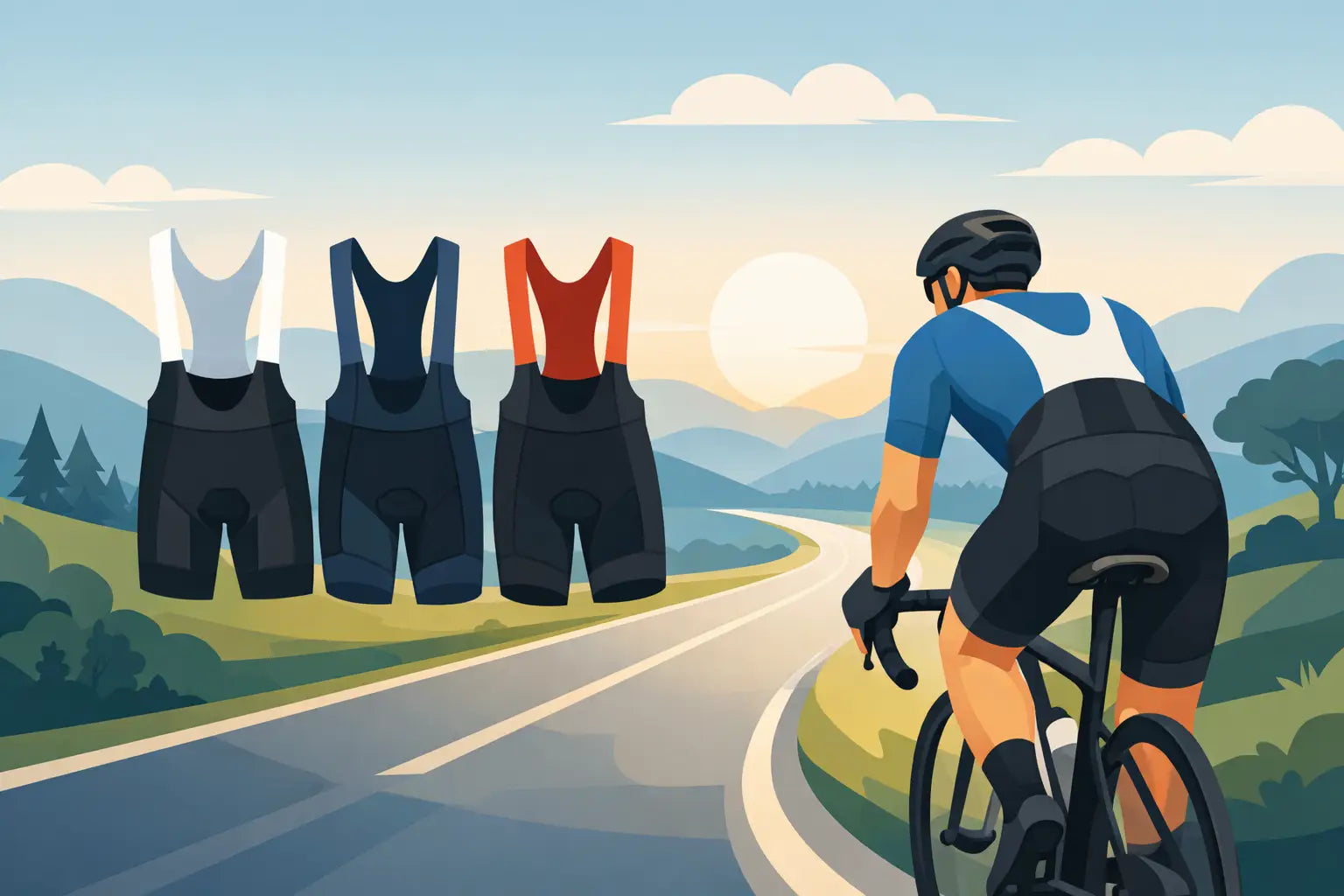
Five hours into a ride is when bib shorts stop being a style choice and start becoming equipment. If you are looking for the best bib shorts for long rides, the right pair should disappear on the bike - no hot spots, no shifting chamois, no straps digging in, and no leg grippers that turn restrictive once the temperature climbs.
That matters whether you are training for fondos, racing road, building weekend endurance, or spending all day on mixed surfaces. Long-ride comfort is not one feature. It is the result of fit, pad shape, compression, panel layout, fabric recovery, and how well the shorts stay stable after hours in the saddle.
What makes the best bib shorts for long rides
A strong long-distance bib short balances support and freedom. Too soft, and the chamois compresses early and loses protection. Too dense, and it can feel bulky or create pressure where you do not want it. The best setups use a pad engineered for sustained saddle contact, with targeted density that supports the sit bones while keeping the front profile low enough for an aggressive riding position.
Fit is just as important as the pad itself. A premium chamois placed in the wrong position will still fail after two or three hours. Bib shorts built for endurance should hold the pad close to the body without bunching when you stand, accelerate, or rotate through the hips. This is where patterning matters. Well-cut multi-panel construction keeps the short stable under load and reduces friction at the inner thigh and groin.
Compression should feel controlled, not restrictive. Many riders assume more compression always means more performance, but for long rides it depends on body type, intensity, and temperature. Moderate support through the quads can reduce movement and improve that locked-in feeling, while overly tight fabrics can create pressure behind the knee or at the leg opening by hour four.
Chamois quality matters more than marketing
If you compare bib shorts across price points, the chamois is usually where the biggest real-world difference shows up. Thickness alone is not the answer. What you want is shape, density, and stability.
For endurance riding, a pad should support your contact points in the position you actually ride. A rider with a low front end and rotated pelvis will not need the same profile as someone riding more upright. That is why some bib shorts feel excellent on the trainer but disappointing outdoors, or vice versa. The pad may be technically high quality, yet wrong for your saddle, posture, or pedaling mechanics.
Look closely at transition zones as well. A good endurance chamois has smooth edges and a gradual change in foam thickness so it does not create pressure ridges. Breathability matters here too. On long summer rides, moisture management is part of comfort. A pad that traps heat often feels worse before it actually feels painful.
Fit decides whether a bib short works after mile 60
The best bib shorts for long rides should feel supportive the moment you pull them on, but not overly tight when you settle into riding position. Many riders judge fit standing up, which is only half the story. Bibs are designed to work on the bike. Straps, torso length, and leg openings often relax into place once you are bent over the bars.
Torso fit is one of the most overlooked factors. If the straps are too short, they pull the pad too far forward and create pressure through the shoulders. If they are too long, the short can sag once the fabric warms up and stretches slightly during the ride. Riders with longer torsos, broader shoulders, or bigger height jumps between standard sizes should pay close attention here.
Leg length is another trade-off. Longer legs can improve stability and reduce movement, especially for riders who want more compression through the quads. Shorter cuts may feel cooler and less restrictive in hot weather. Neither is automatically better. The right answer depends on your build, your preferred coverage, and how much support you want late in the ride.
Fabric and panel construction separate average from race-ready
Long-distance bib shorts need fabrics that recover well, manage sweat, and stay opaque under strain. Soft hand feel is nice, but long-ride performance is really about stability. If the fabric loses shape after repeated wash cycles or starts to migrate on the legs, comfort drops fast.
High-quality bib shorts usually combine compressive main panels with more breathable mesh in the upper. That lets the short support the working muscles while keeping the bib section light and secure. Laser-cut leg openings or wide integrated grippers can also improve comfort because they spread tension more evenly than narrow elastic bands.
Seam placement is another detail worth paying attention to. Poorly placed seams may not bother you during the first hour, but repetitive motion exposes every mistake. Flatlock stitching, fewer high-friction junctions, and thoughtful panel transitions all help reduce irritation over long mileage.
Features worth paying for, and features that are mostly noise
Not every premium detail is hype. Some features genuinely improve long-ride performance.
A well-designed strap system is worth it, especially for hot conditions and all-day riding. Lightweight elastic straps with good stretch hold the shorts in place without feeling heavy across the chest. For women, strap layout and bathroom-break convenience can be a major quality-of-life difference on endurance rides.
A truly refined chamois is also worth paying for. This is usually the clearest dividing line between entry-level bibs and bibs meant for serious mileage. Better foam architecture, better shaping, and better interface fabrics usually translate into better consistency over time.
By contrast, not every claim around aerodynamics or extreme compression should drive your decision if your priority is comfort over six hours. Aero textures and race-focused cuts can be valuable, but only if they do not compromise saddle stability or all-day usability. The fastest bib short on paper is not the best option if you spend the last third of the ride constantly adjusting it.
How to choose the best bib shorts for your riding style
Road riders doing long solo training or fondos usually benefit from bibs with balanced compression, a high-stability chamois, and minimal seam friction. This is the classic endurance setup - efficient, supportive, and built to disappear on the bike.
Gravel riders may want slightly more forgiving fabrics and a pad that stays comfortable with more movement in and out of the saddle. Surface vibration adds fatigue, so stability becomes even more important. Durability also matters more when your rides include dust, repeated wash cycles, and mixed terrain.
Racers and fast club riders often want a closer, more compressive fit, but the same long-ride rules still apply. If you are spending four to five hours riding hard, your bib shorts still need to manage moisture, keep the pad planted, and avoid pressure buildup.
Team buyers have another layer to consider: consistency. If you are outfitting a club, development squad, or event group, the best choice is not just a premium short. It is a platform with reliable sizing, proven durability, and manufacturing control. That is one reason factory-direct partners like CCN Sport appeal to teams that need race-tested performance without the delays and complexity that often come with outsourced production.
Common mistakes riders make when buying bib shorts
One of the biggest mistakes is choosing based on a short test ride. A bib short can feel great for 90 minutes and still fail on a real endurance day. Long-ride comfort usually shows up later, when heat, sweat, and repeated movement expose weak fit, poor pad placement, or leg grippers that do not hold evenly.
Another mistake is sizing down for extra compression. Unless the pattern is designed for that, it often creates more problems than benefits. The chamois can shift out of its intended position, the straps can pull too hard, and the leg openings can become restrictive.
It is also easy to overfocus on one feature. Riders sometimes shop only by chamois thickness, brand prestige, or price tier. The better approach is to judge the entire system - pad, fit, fabric, strap tension, and how the short matches your riding position.
What to expect from a high-performance long-ride bib short
A good pair should feel secure from the first miles and stay consistent deep into the ride. You should not be thinking about the pad every 20 minutes. You should not feel the need to tug at the legs or roll your shoulders to relieve strap tension. And after repeated use, the short should still recover its shape and deliver the same support it did when new.
That is the real benchmark. The best bib shorts for long rides are not the flashiest pair in your drawer. They are the pair you trust for the ride you have been planning all week.
Choose the bib short that matches your position, your mileage, and the kind of discomfort you are actually trying to prevent. When the fit is right, comfort stops being a distraction and starts becoming part of your speed.

Share:
Why Factory Direct Cycling Apparel Wins
How Should a Cycling Jersey Fit?