

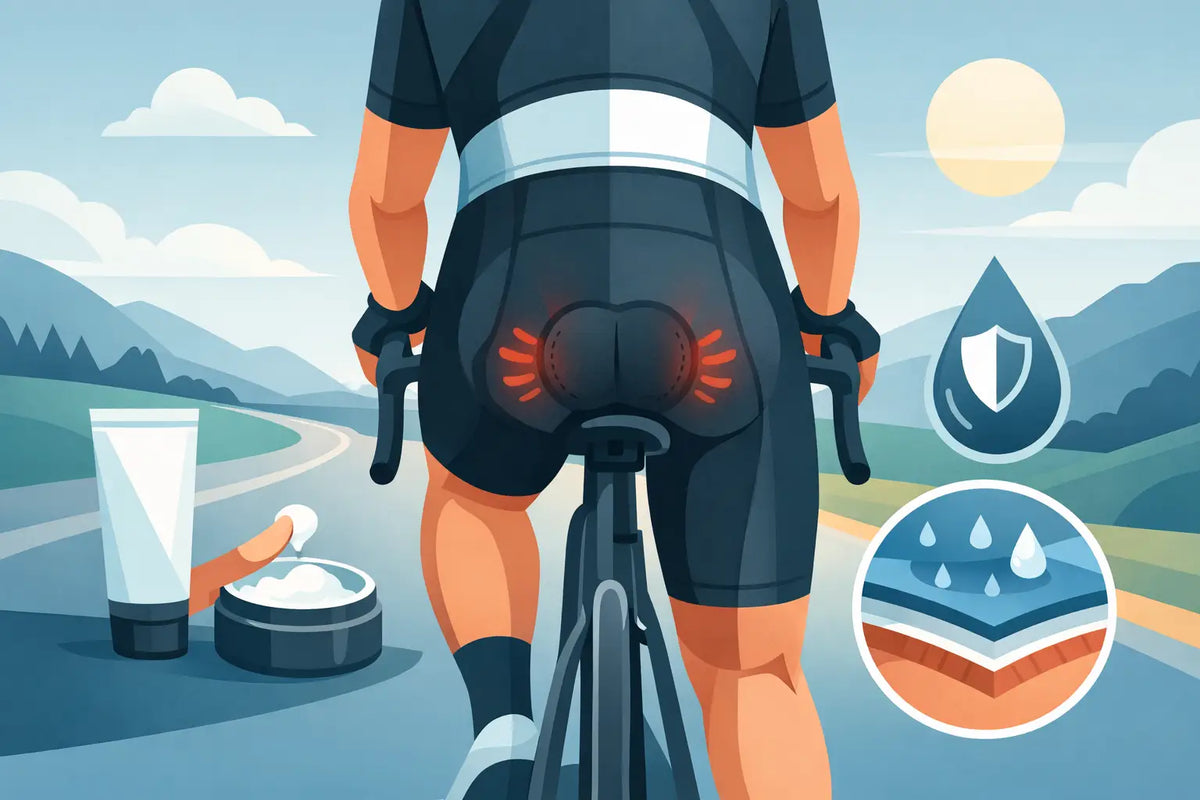
A hot spot that starts as a mild annoyance at mile 20 can become the reason you stand through every pedal stroke on the ride home. To prevent cycling bib chafing, treat it as a system problem - one involving fit, fabric, saddle position, skin condition, and what happens after the ride. More miles do not have to mean more irritation.
Start With Bib Shorts That Fit Under Load
The right bib short should feel supportive when you are bent over the bars, not merely comfortable when standing in front of a mirror. A chamois is designed to work in the riding position. If the short shifts, wrinkles, or creates pressure points once you settle onto the saddle, friction builds with every pedal stroke.
A bib that is too large is a common culprit. Loose material can bunch at the inner thigh or move across the skin as you pedal. A bib that is too small can create a different problem: excessive compression pulls seams and fabric into areas where they should lie flat. The goal is close, stable contact without restricted breathing, pinching straps, or deep leg-gripper marks that remain long after the ride.
Pay attention to where the chamois sits. It should cover the contact area naturally, without needing to pull the short forward or back once you are riding. If you constantly reposition the pad, the issue may be sizing, cut, or saddle setup rather than a lack of chamois cream.
For teams, consistency matters. A quality custom kit program should account for a range of rider body types, because one pattern will not feel identical on every athlete. CCN Sport builds performance apparel around stable, race-ready fit so riders can focus on power and position instead of adjusting their shorts.
Choose a Chamois for Your Riding Style
More padding is not automatically more comfort. A thick pad can hold heat and moisture on a hot day, while a thin pad may feel inadequate for a rider who spends six hours in the saddle. Density, placement, breathability, and the shape of the pad matter more than thickness alone.
Road riders who spend long periods in a forward, aggressive position usually benefit from targeted support under the sit bones and relief through the center. Gravel riders may need a chamois that manages vibration without becoming bulky during frequent changes in position. Mountain bikers often value freedom of movement and quick-drying fabric, while triathletes need a lower-profile pad that performs on the bike without becoming uncomfortable during the run.
The fabric covering the chamois is equally important. Look for a smooth surface that reduces skin drag and manages moisture. Rough, worn, or degraded material can create friction even if the pad still appears intact. Bib shorts are performance equipment, not a forever purchase. When the chamois loses resilience or the fabric no longer recovers its shape, it is time to replace the short.
Never Wear Underwear Under Bib Shorts
Underwear adds an extra layer, extra seams, and extra fabric movement. That is exactly what you do not want in a high-friction area. Cycling bibs are designed to be worn directly against clean, dry skin, with the chamois acting as the interface between your body and saddle.
This rule applies whether you are heading out for an easy club ride or pinning on a number for a race. Cotton underwear is especially problematic because it holds sweat. Even technical underwear can shift independently from the bib, creating rubbing that the chamois was designed to eliminate.
If modesty is a concern when changing before or after a ride, use a towel or change in a private space. Once you are on the bike, the cleanest setup is skin, bib short, and saddle.
Use Chamois Cream With a Purpose
Chamois cream reduces friction and can help protect skin during long, hot, wet, or high-volume riding blocks. It is not mandatory for every rider or every one-hour session, but it is a useful tool when conditions increase the risk of irritation.
Apply it to the skin where you experience rubbing, rather than coating the entire chamois without a plan. Common areas include the inner thighs, sit-bone contact points, and creases where the leg meets the pelvis. Start with a moderate amount. Too little may not last, but excessive cream can make you feel slippery and can attract grit on dusty gravel routes.
Use a product that agrees with your skin. If a cream causes burning, redness, or a rash, stop using it. Fragrance, preservatives, and certain cooling ingredients can irritate sensitive skin. For multi-day events or training camps, carry a small container and reapply only when necessary after changing into clean shorts.
Keep Bibs and Skin Clean
Sweat itself is not the only issue. Salt, bacteria, body oils, and residue left in a chamois can turn minor rubbing into inflamed skin. Wash bib shorts after every ride, especially after heat, rain, indoor training, or long-distance events. Turning them inside out helps expose the chamois to water and detergent.
Use a mild detergent and avoid fabric softener. Softener can leave a coating that affects moisture transfer and fabric performance. Rinse thoroughly, then air dry away from direct high heat. A dryer can shorten the life of elastic fibers and compromise the fit that keeps the chamois in place.
Start each ride with clean skin and clean bibs. Shower soon after finishing, then change out of your cycling kit rather than sitting around in it while you eat, drive home, or scroll through ride photos. This simple habit is one of the most effective ways to prevent irritation from becoming a more serious skin issue.
Check the Saddle Before Blaming the Bib
Even premium bib shorts cannot compensate for a saddle that is the wrong width, poorly positioned, or worn out. Chafing often comes from excessive side-to-side movement on the saddle. If you rock your hips to reach the bottom of the pedal stroke, the saddle may be too high. If you slide forward constantly, the nose angle, setback, or reach may need attention.
Saddle tilt deserves a careful approach. A nose that points too far upward can create pressure and rubbing at the front of the pelvis. A nose tilted too far downward can make you slide forward, forcing your arms and inner thighs to stabilize your body. Small adjustments matter. Change one variable at a time, then test it over several rides.
Saddle width should support your sit bones in your normal riding position. A saddle that is too narrow concentrates pressure and may cause you to seek relief by shifting repeatedly. One that is too wide can rub the inner thighs. The best choice depends on your anatomy, flexibility, posture, and discipline, not on what works for the rider beside you.
Manage Heat, Rain, and Long-Distance Friction
Chafing risk rises when skin stays wet. On hot rides, sweat can saturate the chamois. In rain, road spray can do the same. Indoor sessions add another challenge because sweat accumulates without the airflow of outdoor riding.
For humid days, choose bib shorts with breathable, quick-drying fabrics and avoid overdressing. On the trainer, use strong airflow, a clean towel, and a fresh pair of bibs if the session runs long. For rain events, change out of wet kit immediately afterward. Do not let damp fabric remain against already irritated skin.
Long rides also require movement discipline. Stand periodically, change hand positions, and shift slightly on sustained climbs or flat sections when appropriate. These small changes reduce constant loading in one spot without disrupting your pedal stroke. They are especially useful when fatigue makes your position less stable late in the day.
Do Not Ride Through Broken Skin
A small hot spot is feedback. Address it early by checking your shorts, saddle, hygiene routine, and cream choice. Riding through raw or broken skin can turn a manageable problem into a painful infection risk and force unwanted time off the bike.
If redness, swelling, lumps, drainage, fever, or pain persists, stop riding and speak with a healthcare professional. Saddle sores are not a toughness test. Serious riders protect training consistency, and that includes recovering before irritation becomes a larger issue.
The best setup feels almost invisible: a clean, secure bib; a chamois matched to the ride; stable contact with the saddle; and skin that is cared for before and after the miles. Get those details right, and your attention stays where it belongs - on the pace, the terrain, and the riders around you.

Share:
Custom Bib Shorts Review: What Riders Should Test
Custom Cycling Skinsuits Design for Race Speed