

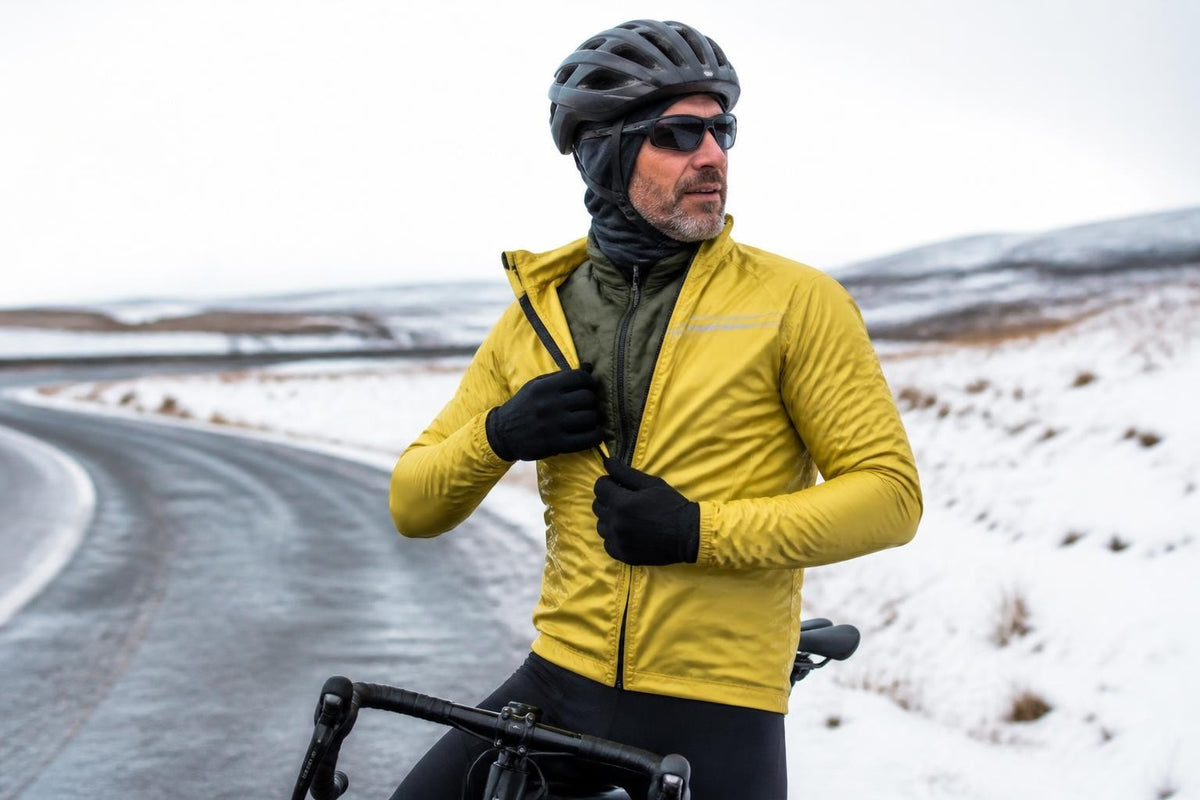
When temperatures drop and winter conditions settle in, many cyclists face a critical decision: hang up the bike until spring or invest in proper winter bike wear that keeps rides comfortable and safe. The right cold-weather cycling apparel transforms harsh winter months from an off-season into an opportunity to build base fitness, enjoy quiet roads, and experience the unique beauty of winter riding. Understanding how to dress for cold-weather cycling requires knowledge of layering principles, fabric technologies, and the specific demands that cycling places on winter clothing systems.
Understanding the Layering System for Winter Cycling
The foundation of effective winter bike wear begins with the three-layer system that manages body heat, moisture, and environmental protection. Each layer serves a distinct purpose, and success depends on selecting the right combination for conditions and intensity.
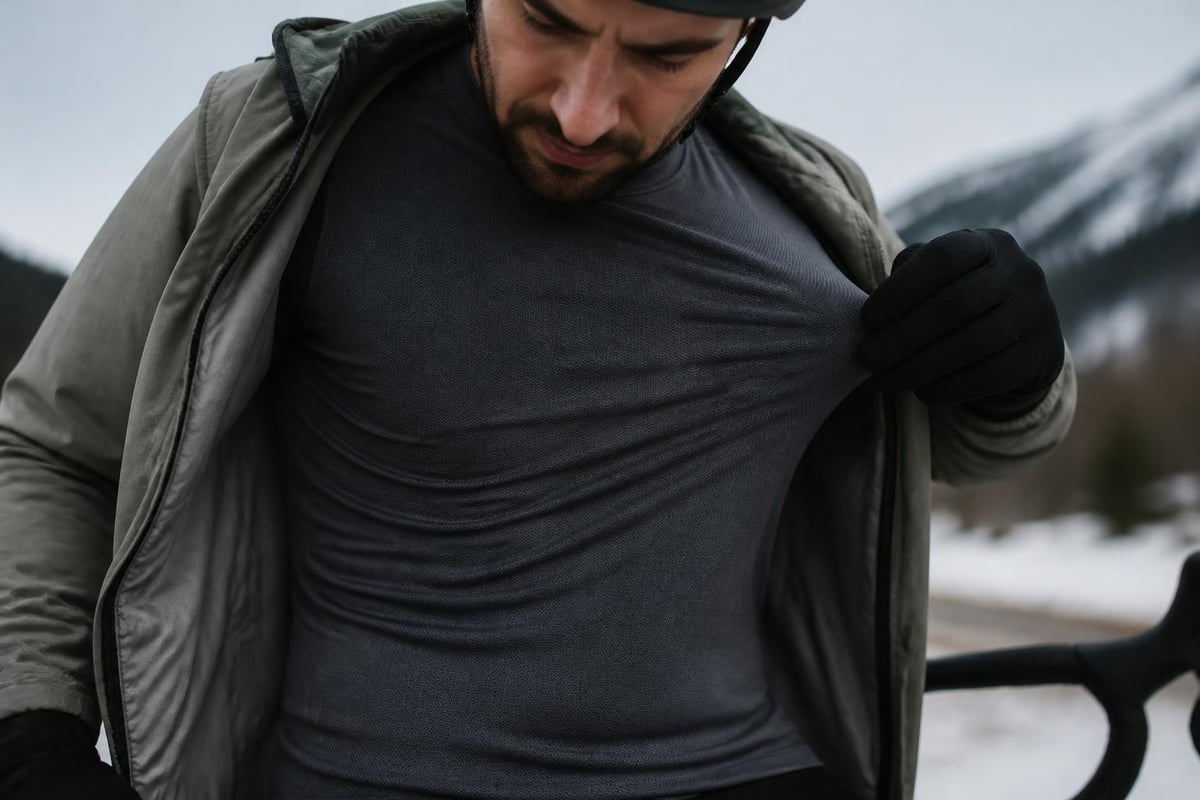
Base Layer: Moisture Management Foundation
The base layer sits directly against your skin and handles the critical job of moving perspiration away from your body. During winter rides, wet skin accelerates heat loss dramatically, making moisture management your first line of defense against the cold.
Key base layer characteristics include:
- Fabric composition that wicks moisture efficiently (merino wool, synthetic blends, or technical polyester)
- Close fit without compression that restricts circulation
- Seamless or flatlock construction to prevent chafing during long rides
- Extended length in the torso and arms to prevent gaps when in riding position
Research from The Woolmark Company demonstrates that merino wool offers superior thermoregulatory advantages for stop-and-go activities like cycling, naturally managing odor and comfort across varying intensities. Synthetic options dry faster but may retain odors over multiple rides.
Insulating Mid-Layer: Heat Retention
The mid-layer traps warm air close to your body while allowing moisture vapor to escape. Winter bike wear mid-layers differ from general winter clothing because they must accommodate the bent-forward riding position and high output of cycling.
| Mid-Layer Type | Best Temperature Range | Key Advantage | Consideration |
|---|---|---|---|
| Merino wool jersey | 35-50°F | Natural breathability | Slower drying |
| Fleece jacket | 25-40°F | Excellent warmth-to-weight | Can be bulky |
| Synthetic insulated | 15-35°F | Packable, water-resistant | Less breathable |
| Softshell | 30-45°F | Wind resistance, stretch | Limited insulation |
The ideal mid-layer provides warmth without bulk, features cycling-specific cuts with dropped rear hems, and includes ventilation options like chest zippers for temperature regulation during climbs.
Outer Shell: Environmental Protection
Your outer layer shields you from wind, precipitation, and road spray while allowing internal moisture to escape. Modern shell technologies manage the delicate balance between waterproofing and breathability through membrane construction.
Quality winter bike wear shells incorporate:
- Windproof front panels protecting your chest and thighs from cutting wind
- Breathable back panels allowing heat and moisture to escape
- Waterproof or water-resistant treatment appropriate to your climate
- Reflective elements for visibility during short winter days
- Extended rear coverage to protect from wheel spray
Protecting Extremities in Cold Conditions
While core temperature management follows the three-layer principle, extremities require specialized winter bike wear solutions. Hands, feet, and head lose heat rapidly and suffer first when protection fails.
Hand Protection Strategies
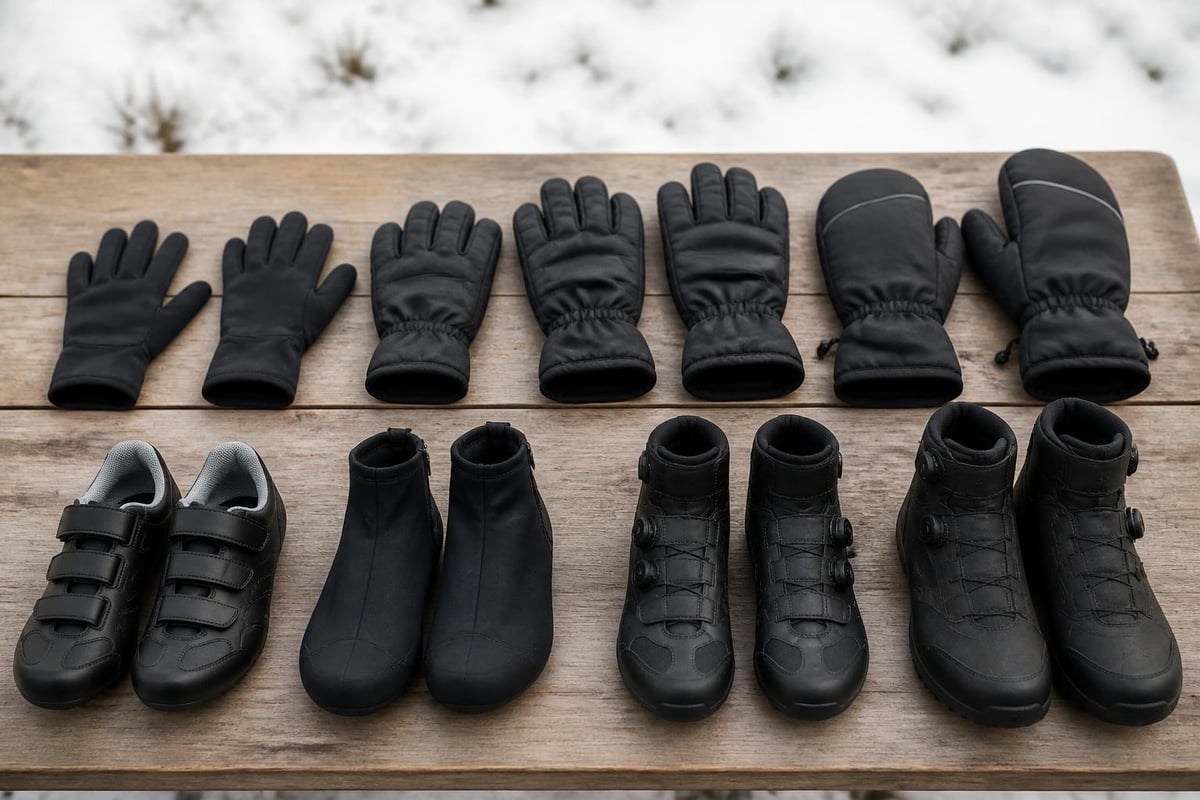
Winter cycling gloves must balance warmth, dexterity for brake and shifter operation, and weather protection. Cycling UK recommends a progression approach based on temperature.
Temperature-based glove selection:
- Above 45°F: Full-finger lightweight gloves
- 35-45°F: Insulated full-finger gloves
- 25-35°F: Winter cycling gloves with windproof shells
- Below 25°F: Lobster-claw gloves or pogies (handlebar mitts)
For rides below freezing, consider the two-glove system: a thin liner glove beneath an insulated shell that can be removed briefly for mechanical adjustments without exposing bare skin.
Foot Warmth and Protection
Cold feet end winter rides faster than almost any other discomfort. Winter bike wear for feet requires a systematic approach addressing insulation, wind protection, and moisture management.
The challenge with cycling footwear stems from restricted blood flow in the riding position and the ventilation built into summer cycling shoes. Solutions include:
- Neoprene shoe covers providing windproof and waterproof protection
- Winter-specific cycling shoes with insulation and sealed uppers
- Wool cycling socks offering warmth even when damp
- Toe warmers (chemical heat packs) for extreme cold
Understanding the difference between regular and cycling-specific socks helps riders select appropriate foot insulation that doesn't restrict circulation or create pressure points in cycling shoes.
Head, Neck, and Face Coverage
Heat loss through the head remains significant, and winter bike wear must address this vulnerability while accommodating helmet fit and managing moisture from exertion.
| Head Protection Option | Temperature Range | Coverage | Helmet Compatibility |
|---|---|---|---|
| Thermal headband | 40-50°F | Ears only | Excellent |
| Skull cap | 30-45°F | Full head, thin | Excellent |
| Balaclava | 15-35°F | Head, neck, face | Good (size helmet up) |
| Winter cycling cap | 25-40°F | Head, ears | Excellent |
Neck protection through buffs, neck gaiters, or integrated balaclava designs prevents cold air from entering through jacket collars during high-speed descents.
Fabric Technologies and Material Selection
Modern winter bike wear leverages advanced fabric technologies that weren't available even five years ago. Understanding these materials helps riders make informed purchasing decisions.
Technical Fabric Categories
Moisture-wicking synthetics like polyester and polypropylene move sweat away from skin through capillary action and surface area manipulation. These fabrics dry quickly and maintain insulation when damp, making them ideal for high-intensity winter riding.
Natural fibers, particularly merino wool, offer temperature regulation across a broader range than synthetics. Wool's crimped fiber structure traps air for insulation while its natural antibacterial properties control odor during multi-hour rides or consecutive days without washing.
Membrane technologies in shells create microscopic pores that allow water vapor molecules to escape while blocking larger water droplets from entering. This breathable waterproofing proves essential for winter bike wear, where internal moisture generation can be as problematic as external precipitation.
Fit and Construction Considerations
Winter bike wear must fit differently than summer cycling apparel. The cycling-specific cut accommodates the forward-leaning position with:
- Dropped rear hems covering the lower back
- Extended sleeves reaching past wrists in riding position
- Articulated knees and elbows reducing fabric bunching
- Elastic or silicone grippers preventing ride-up
Recent research on layered clothing during cold endurance training demonstrates that proper fit significantly impacts both perceived comfort and actual performance in winter conditions. Garments that bunch, restrict movement, or create gaps compromise the layering system's effectiveness.
Temperature-Based Dressing Guidelines
While individual cold tolerance varies significantly, general temperature guidelines provide starting points for winter bike wear selection. Wind chill, precipitation, and ride intensity all modify these recommendations.
Moderate Cold (35-50°F)
Configuration:
- Short-sleeve or lightweight long-sleeve base layer
- Light insulating jersey or vest
- Wind vest or lightweight shell (as needed)
- Full-finger gloves
- Thermal leg warmers or knee warmers
- Standard cycling cap under helmet
This temperature range sees the greatest variability in rider comfort. Morning rides may require full coverage that becomes excessive as temperatures rise and exertion increases.
Cold (20-35°F)
Configuration:
- Long-sleeve thermal base layer
- Insulated mid-layer jersey
- Windproof, water-resistant jacket
- Winter cycling tights or thermal bib tights
- Insulated winter gloves
- Wool cycling socks with shoe covers
- Thermal cap or balaclava
According to practical layering guidance from Bicycling magazine, this range demands full winter bike wear systems with attention to sealing gaps at wrists, ankles, and neck.
Extreme Cold (Below 20°F)
Configuration:
- Heavy-weight base layer top and bottom
- Two mid-layers or single heavy insulated layer
- Windproof shell jacket and pants
- Lobster-claw gloves or pogies
- Winter cycling boots or heavy covers with toe warmers
- Full balaclava
- Goggles or glasses to protect eyes
Rides in extreme cold require special consideration for safety. Occupational guidance on cold exposure from the European Agency provides perspective on cold stress and appropriate protection durations.
Advanced Considerations for Winter Riding
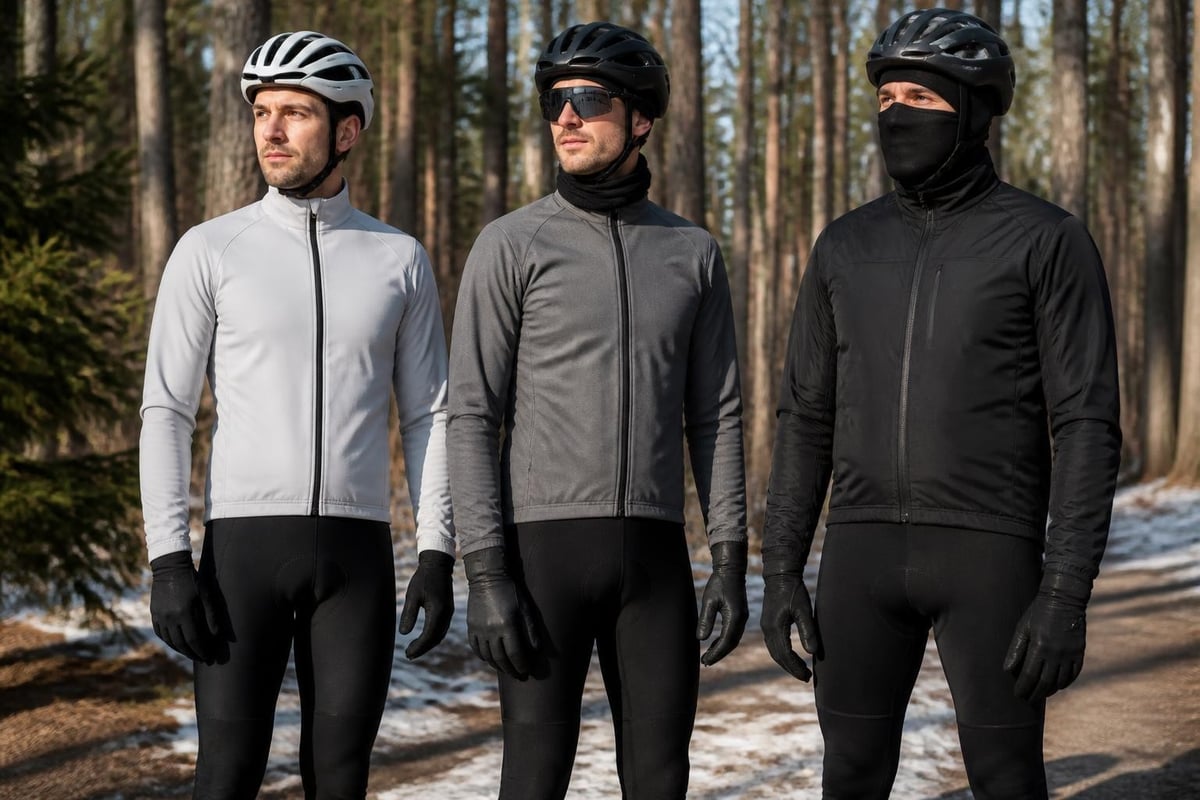
Beyond basic layering, experienced winter cyclists optimize their winter bike wear through strategic choices about visibility, adjustability, and ride-specific customization.
Visibility and Safety Features
Winter riding often occurs during dawn, dusk, or dark conditions due to shortened daylight hours. Effective winter bike wear incorporates reflective elements and bright colors without compromising technical performance.
Strategic placement of reflective materials includes:
- Chest and back panels visible to traffic from multiple angles
- Sleeve and leg bands creating motion-catching visibility
- Heel and cuff details highlighting pedaling movement
- 360-degree coverage ensuring visibility from all approaches
High-visibility colors like fluorescent yellow, orange, or pink increase daytime conspicuity, particularly against winter's muted landscape colors.
Ventilation and Temperature Regulation
The challenge of winter bike wear lies in accommodating the dramatic temperature swings between flat sections, climbs, descents, and stops. Static clothing suitable for standing in cold weather quickly becomes oppressive during hard efforts.
Effective ventilation features:
- Chest zippers allowing rapid heat dump
- Pit zips under arms for airflow without full jacket opening
- Back vents releasing heat while maintaining front wind protection
- Adjustable cuffs and collars controlling airflow at extremities
Learning to actively manage these features transforms rigid winter bike wear into a dynamic system responding to changing conditions and effort levels.
Custom Solutions for Teams and Clubs
Many cycling teams and clubs invest in custom winter bike wear that maintains team identity while providing technical cold-weather protection. At CCN Sport, our custom products combine advanced sublimation processes with cycling-specific patterns to create winter apparel that performs in harsh conditions while displaying vibrant, durable team designs.
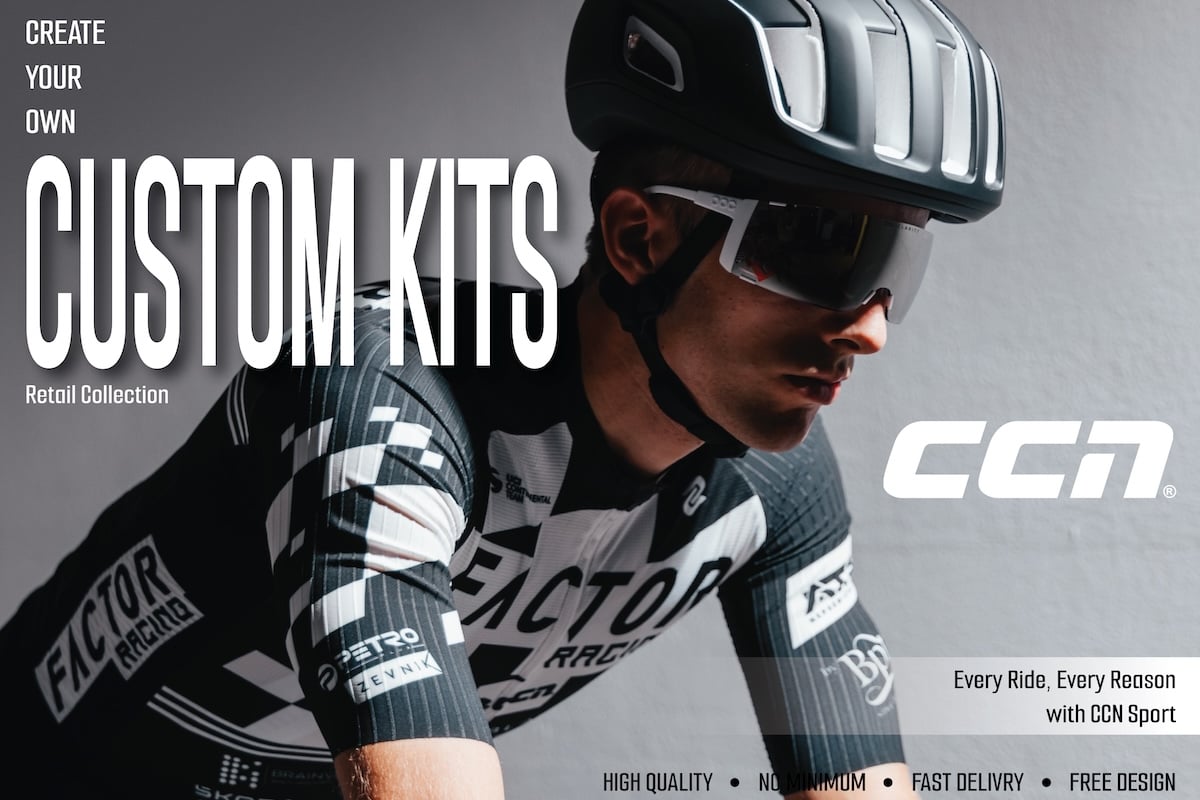
Working with experienced manufacturers ensures winter bike wear meets the unique demands of cold-weather cycling. The men's and women's cycling kit guide offers additional insights into selecting appropriate cycling apparel for different riding conditions and preferences.
Standards and Testing for Cold-Weather Apparel
Professional winter bike wear undergoes standardized testing to verify insulation, wind resistance, and waterproofing claims. Understanding these standards helps riders evaluate product performance objectively.
European protective clothing standards including EN 14058 and ISO 11079 define test methods for thermal insulation, air permeability, and water vapor resistance. While cycling apparel rarely carries formal certification to these occupational standards, manufacturers often reference similar test protocols.
Key performance metrics include:
| Metric | Measurement | Significance for Cyclists |
|---|---|---|
| CLO value | Thermal insulation | Higher values = warmer garments |
| Water column | mm H₂O pressure | Waterproofing capacity (10,000mm+ for cycling) |
| MVTR | g/m²/24hr | Breathability (moisture vapor transmission rate) |
| Air permeability | mm/s | Wind resistance (lower = more windproof) |
These objective measurements complement subjective rider reviews when selecting winter bike wear, particularly for riders new to cold-weather cycling who lack experience-based intuition.
Maintenance and Care for Winter Cycling Apparel
Proper care extends the lifespan and performance of winter bike wear, protecting the investment in technical cold-weather gear. Different materials and technologies require specific maintenance approaches.
Washing and Drying Protocols
General guidelines for winter cycling apparel:
- Wash after every 2-3 rides to prevent salt and sweat buildup
- Use technical sports wash designed for synthetic fabrics
- Avoid fabric softeners that clog wicking fibers
- Close all zippers and turn garments inside out
- Wash in cold water on gentle cycles
- Air dry or tumble dry low (check manufacturer specifications)
Waterproof/breathable shells require periodic reactivation of DWR (durable water repellent) coatings through either heat (tumble dryer) or spray-on treatments when water no longer beads on the surface.
Storage Between Seasons
Proper storage prevents deterioration during off-season months:
- Clean all items thoroughly before storage
- Store in cool, dry locations away from direct sunlight
- Avoid compression storage that damages insulation
- Keep away from petroleum products and solvents
- Inspect zippers, seams, and closures before next season
Quality winter bike wear represents a significant investment that, with proper care, provides years of reliable cold-weather protection.
Building a Winter Cycling Wardrobe Strategically
Rather than purchasing complete winter bike wear systems at once, strategic acquisition spreads costs while building versatility across conditions. Prioritizing purchases based on your specific climate and riding goals maximizes value.
Essential First Purchases
Priority items for new winter cyclists:
- Thermal base layer set (top and bottom)
- Winter cycling tights or bib tights
- Insulated gloves
- Shoe covers
- Thermal cap or headband
These foundational pieces combine with existing cycling apparel to extend riding into shoulder seasons and moderate winter conditions.
Building Depth for Varied Conditions
As commitment to winter riding grows, additional pieces provide options for different intensities and temperatures:
- Multiple base layer weights (light, medium, heavy)
- Vest for versatile core insulation
- Waterproof shell jacket
- Multiple glove options across temperature ranges
- Winter-specific cycling shoes
- Additional thermal caps and neck protection
This layered approach to wardrobe building prevents both the overwhelming initial cost and the gap-filled kit that lacks critical pieces for specific conditions.
Adapting Winter Bike Wear for Different Cycling Disciplines
Road cycling, mountain biking, gravel riding, and commuting each place unique demands on winter bike wear. Understanding these distinctions optimizes comfort and performance across disciplines.
Road Cycling Considerations
Road riders prioritize aerodynamics and sustained high speeds that increase wind chill effects. Winter bike wear for road cycling emphasizes:
- Close-fitting garments reducing drag
- Maximum wind protection on front-facing surfaces
- Strategic ventilation for sustained efforts
- Extended coverage during long descents
The combination of high speed and limited shelter from terrain makes windproofing critical for road-specific winter bike wear.
Mountain Biking Requirements
Off-road winter riding involves varied intensities, frequent stops, and exposure to mud, snow, and debris. Mountain bike winter apparel emphasizes:
- Durability to resist abrasion and tearing
- Relaxed fit accommodating body armor
- Full-coverage protection from trail debris
- Easy temperature adjustment for technical sections
Mountain bikers often prefer slightly warmer winter bike wear configurations than road riders at the same temperature due to lower sustained speeds and higher variability in effort.
Commuting and Urban Cycling
Commuters face the unique challenge of arriving at destinations without changing facilities. Winter bike wear for commuting balances:
- Professional appearance under business attire
- Quick removal and compact storage
- Visibility for urban traffic conditions
- Weather protection for predictable routes
Many commuters invest in commute-specific winter bike wear separate from recreational riding apparel, prioritizing convenience and versatility over maximum performance.
Mastering winter bike wear transforms cold months from an obstacle into an opportunity for consistent training, uncrowded roads, and the unique satisfaction of all-season cycling. By understanding layering principles, selecting appropriate fabrics, and building a strategic wardrobe, cyclists of all levels can ride comfortably and safely throughout winter. Whether you're equipping yourself, your team, or your cycling club, the right cold-weather apparel makes all the difference. CCN Sport combines over 20 years of manufacturing expertise with advanced sublimation technology to create custom winter cycling apparel that performs in the harshest conditions while maintaining vibrant, durable designs that represent your vision with precision and pride.

Share:
Best Rain Cycling Jackets for Fast, Wet Rides