

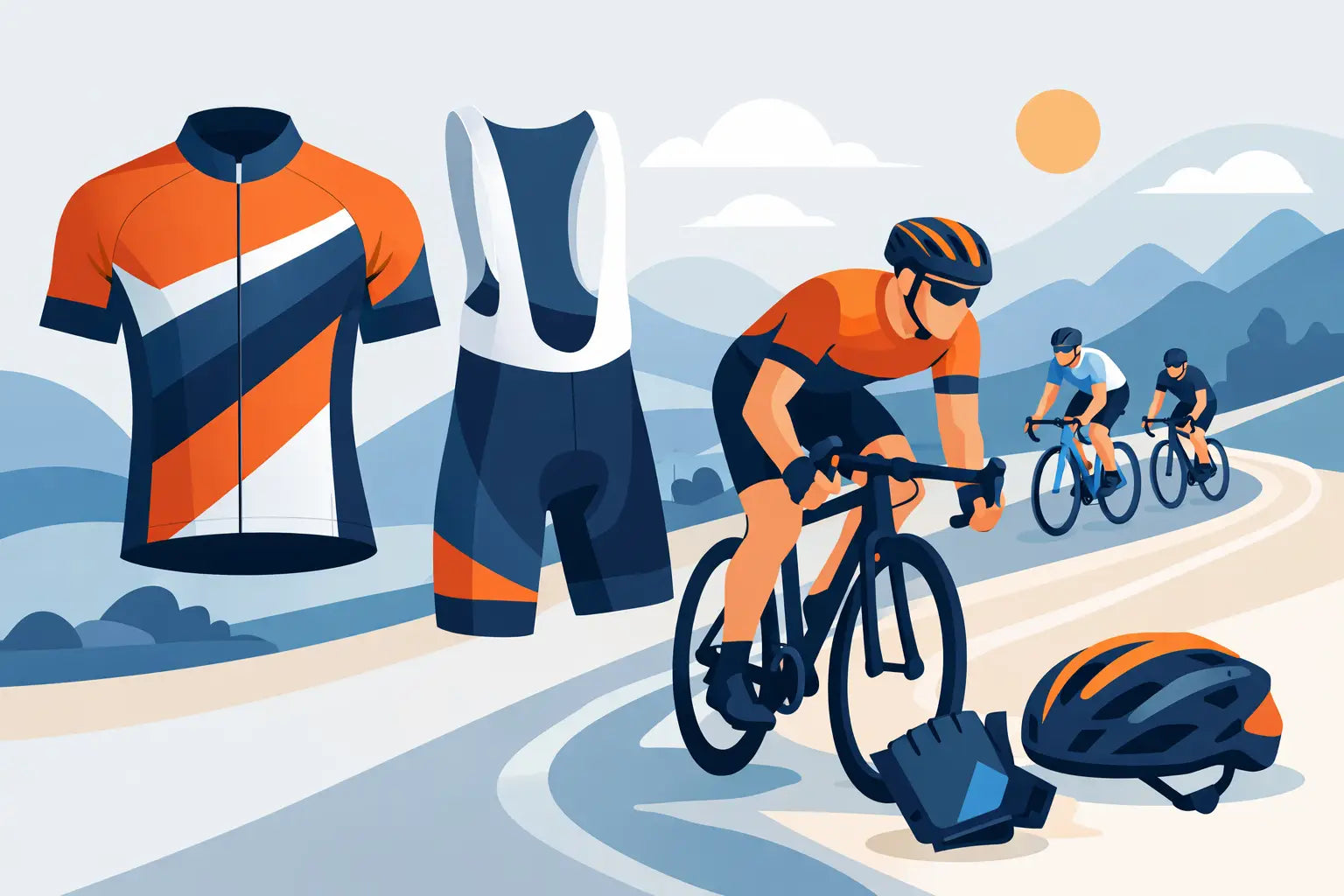
A club kit gets judged long before the first pedal stroke. Riders notice the fit in the shoulders, the leg gripper tension after two hours, the way a jersey sits in the drops, and whether the colors still look sharp mid-season. That is why custom apparel for cycling clubs is not just a branding decision. It is a performance decision, an operations decision, and for many teams, a credibility decision too.
For club managers, captains, and apparel coordinators, the challenge is usually bigger than picking a good-looking design. You need gear that works across different rider types, different event goals, and different weather conditions. You also need a process that does not turn team ordering into a second job.
What cycling clubs actually need from a custom kit
A strong club kit has to do three things at once. It needs to represent the team well, perform under real riding conditions, and be practical to reorder. If one of those pieces is missing, the whole project starts to feel expensive fast.
On the road, riders care about technical details. A jersey can look clean in a mockup and still miss the mark if the fabric traps heat on long climbs or flaps in the wind during hard group efforts. Bib shorts can feel fine in a fitting room and still become a problem once the ride stretches past three hours. Clubs that race, train seriously, or spend big weekends in the saddle need apparel built around movement, pressure points, and temperature management.
Off the bike, club buyers care about consistency. New members need access to the same design. Returning riders want to reorder without surprises. Team leaders need confidence that sizing, production, and delivery will stay predictable. That matters just as much as the initial launch.
Why custom apparel for cycling clubs should be performance-first
There is a difference between promotional apparel and cycling apparel. Promotional gear puts the logo first. Performance kit puts the rider first and gives the branding a better platform because the garment actually works.
That shows up in the cut. A race-oriented jersey should feel stable in an aggressive riding position, not loose when the rider bends at the waist. Bib straps should stay supportive without creating pressure through the shoulders. Chamois selection matters even more. A casual social club and a race-focused team may want very different pad density and ride-duration support.
Fabric choice changes the experience as well. Lightweight summer materials can be ideal for hot climates and high-output riding, but they may not hold the same structure or insulation that a shoulder-season kit needs. Some clubs want one all-around solution. Others are better served by separate options for summer, cool weather, and event-specific use. The right answer depends on where and how the group rides.
Aerodynamics also matter, even for riders who are not lining up for elite races every weekend. A more refined fit reduces excess fabric movement, improves comfort, and gives the entire team a cleaner look on the bike. That can make a noticeable difference in fast club rides, fondos, and local competition.
The best custom kit projects start with the riding profile
The easiest way to make a poor apparel decision is to start with graphics before you define the use case. A club that focuses on endurance road miles has different priorities than a junior development team, a gravel community, or a triathlon squad.
If the core group spends most of its time in hard pacelines and local races, lean toward more compressive fits, aerodynamic fabrics, and bib shorts designed for repeated high-intensity use. If the club is broader and includes fitness riders, weekend enthusiasts, and mixed-experience members, a slightly more forgiving fit range may increase satisfaction without sacrificing a professional look.
This is where experienced manufacturing support matters. A supplier should be able to match garment categories to real riding demands instead of pushing one template for every team. The more specific the recommendation, the better the outcome tends to be.
Fit is where clubs win or lose rider confidence
Poor fit creates instant resistance inside a team order. Riders hesitate to commit. Coordinators spend extra time answering sizing questions. Reorders become frustrating. Good fit solves a surprising amount of that friction.
For clubs, the ideal sizing approach balances precision with inclusivity. Not every rider on the roster has the same body type, and not every rider wants the same second-skin sensation. Offering fit options or clearly defined cuts can make the difference between a kit members wear constantly and one they save for occasional appearances.
The key is clarity. Riders need to know whether a jersey is race-tight, club-fit, or somewhere in between. They need measurements they can trust. They also need confidence that the fit profile will remain stable from one order window to the next.
For performance-minded teams, this is one reason factory-direct production can be such an advantage. When the design, manufacturing, and quality control are handled in-house, there is often better visibility into consistency, timeline control, and product behavior across repeat orders.
Design matters, but not the way some clubs think
A strong design should be distinctive at speed, easy to recognize in a bunch, and clean enough to hold up over time. Clubs sometimes overbuild graphics because they want every sponsor, sub-group, and idea represented in one jersey. The result can look busy and date quickly.
The better approach is disciplined design. Clear color blocking, readable sponsor placement, and smart contrast usually outperform overly complicated layouts. Riders want to look fast. They also want to wear the jersey proudly outside race day.
Practical design decisions matter too. Light colors can look sharp in hot weather but may be less forgiving in poor conditions. Dark panels can help with visual structure and durability in high-contact areas. Certain print effects may look impressive digitally but translate differently once stretched over technical fabrics. An experienced custom partner should guide those decisions early.
Ordering has to be built for clubs, not just individuals
This is where many custom programs break down. The apparel itself may be good, but the ordering process creates unnecessary work for the team organizer. Clubs need a system that supports multiple riders, multiple sizes, occasional roster changes, and repeat access throughout the season.
Some teams only need one bulk preseason order. Others need rolling orders for new members and replacement pieces. There is no single model that fits everyone. What matters is flexibility.
Low minimums can be a major advantage, especially for smaller clubs, regional teams, and developing programs that do not want to overcommit inventory. Team-specific ordering tools can also reduce admin time and improve accuracy. When riders can order from a defined kit setup with approved designs and product options, mistakes tend to drop and the process feels more professional.
That operational side is easy to underestimate until a club has lived through missed deadlines, inconsistent restocks, or long delays before key events. Reliable fulfillment is not glamorous, but it is one of the biggest factors in whether a club kit program succeeds.
Durability is part of value
A lower upfront price is not always lower cost. If bib shorts lose shape early, stitching fails, or prints fade after repeated washing, the club ends up paying in replacements and rider frustration.
Durability in cycling apparel comes from material quality, construction standards, and how well the garment was designed for its actual workload. Race-focused clubs put a lot of stress on kit through frequent washing, long hours, and hard efforts. Recreational clubs may be less intense, but they still want apparel that looks professional month after month.
That is why serious buyers look beyond the mockup. Ask how the apparel is built, how the fabrics were selected, and how quality is controlled. A polished visual means very little if the garment does not hold up in use.
Choosing a custom partner for the long term
The best supplier for custom apparel for cycling clubs is not just a printer with a catalog. It is a performance partner that understands fit, technical garment construction, production discipline, and the real pace of club operations.
That means asking practical questions. Can they support both competitive and everyday riders? Can they produce race-ready apparel with reliable consistency? Can they handle reorders without turning every new request into a fresh project? Can they help the club grow without forcing huge minimums or slowing down delivery?
For many teams, that is the appeal of working with a brand like CCN Sport. The combination of in-house production, technical product depth, and factory-direct control aligns well with what clubs actually need - speed, customization, consistency, and gear built to perform.
A club kit should make riders feel like they belong the moment they zip it up. If the fit is right, the fabric works, and the ordering process stays under control, the apparel does more than carry a logo. It helps the team ride like a team.

Share:
How to Choose Cycling Bib Shorts Right
Why Do Cyclists Wear Bib Shorts?