

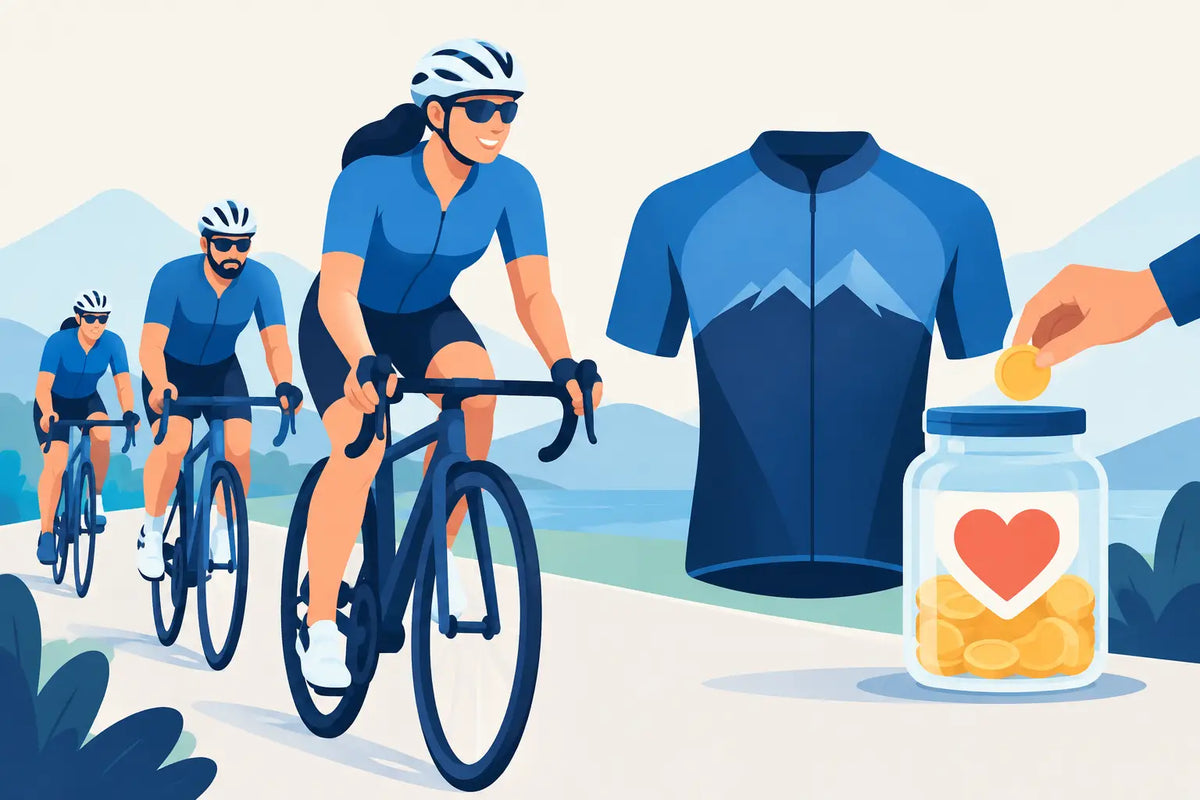
A strong club kit fundraising example starts with a simple truth: riders will support a fundraiser when the product improves their time on the bike. A well-designed jersey and bib short package is not a token purchase. It is race-day equipment, a club identity, and a visible reason for members to recruit others into the program.
For cycling clubs, custom apparel can fund junior development, race entries, trail work, event operations, or a season-long team budget. The key is to build the campaign around honest numbers, reliable kit quality, and a delivery plan members can trust.
A club kit fundraising example with real numbers
Imagine a 60-member road and gravel club raising money for its junior race program. The club needs $1,800 to cover entry fees, mechanic support, and travel assistance for the season. Rather than ask for general donations, it launches a limited club kit order with a clear fundraising target.
The committee estimates that 48 active members will buy a jersey and bib short package. The package sells for $190, while the club's production cost is $150 per package. That creates a $40 contribution per rider before campaign costs.
At 48 packages, the numbers look like this:
- Package sales: 48 x $190 = $9,120
- Kit production cost: 48 x $150 = $7,200
- Gross fundraising margin: $1,920
- Estimated card-processing fees: $274
- Artwork samples and campaign costs: $180
- Net funds raised: approximately $1,466
The final total is approximately $1,875. The club meets its goal, riders receive performance apparel they will use, and supporters have a practical way to contribute without committing to a full kit.
This is the model worth repeating: sell a product with real riding value, show members exactly where the margin goes, and keep the target specific enough to feel achievable.
Start with the goal, not the garment
A custom kit can raise money, but it should not become a vague markup exercise. Before selecting fabrics, colors, or products, define what the campaign funds. “Support the team” is less persuasive than “Fund 12 junior race entries and travel support for the spring series.”
A defined goal also helps determine the right sales volume and price. If the club needs $1,000, a small jersey-only campaign may be enough. If it needs $5,000 for a trailer, coaching program, or major event, a single kit order may not carry the full load. In that case, use apparel as one part of a broader fundraising plan rather than overpricing every item.
Members notice when kit pricing feels disconnected from product quality. They are more likely to buy when the price reflects a technical jersey, supportive bib shorts, dependable zippers, and a fit built for hours in the saddle, with a clearly explained contribution added on top.
Choose products riders genuinely need
The best fundraising collection is usually focused. Offer the core pieces your members replace regularly: a short-sleeve jersey, bib shorts, and perhaps a lightweight vest or long-sleeve layer for variable conditions. A jersey-only supporter option gives non-riders and casual riders an accessible way to join in.
Avoid launching with too many choices unless the club has a strong history of organized kit orders. Ten garment options, three fits, and multiple color variations can slow decisions and create order errors. A concise range is easier to explain, easier to size, and more likely to reach minimum quantities efficiently.
Product selection should match how the club rides. A criterium team may prioritize an aerodynamic race jersey and compression bib short. A gravel club may favor durable fabrics, useful pocket space, and layers that work across changing weather. The fundraising value is stronger when the kit is built for the miles members actually ride.
Set a price that feels fair
There are two workable pricing approaches. The first is a fixed fundraising margin, where every jersey or package contributes the same stated amount. The second is a tiered approach, where core club members pay standard campaign pricing while supporters can make an additional voluntary contribution at checkout.
For most clubs, a fixed and transparent margin is easier to manage. State the numbers plainly: “Each package contributes $35 to the junior program.” That message respects members as buyers and supporters. It also prevents confusion when riders compare prices from one order window to another.
Keep unavoidable costs in the calculation. Payment processing, artwork revisions, fit samples, shipping, taxes where applicable, and replacement inventory can reduce the final result. If the fundraiser depends on a precise outcome, build in a modest buffer rather than promising every dollar of the visible margin.
There is a trade-off. A higher margin raises more per item but can reduce participation. A lower margin may bring in more orders, especially if members view the kit as a strong value. Review past club orders if available. A club with high participation may succeed on a smaller contribution per garment, while a smaller race team may need a higher contribution and a wider supporter campaign.
Make the campaign easy to trust
A fundraising order needs the same operational discipline as a race weekend. Publish the order opening and closing dates, size-chart access, expected production window, and distribution plan before the store goes live. Riders can accept a lead time when it is communicated accurately. They are far less patient with uncertainty.
Fit support matters just as much. Encourage members to check measurements rather than guessing from another brand's sizing. If possible, arrange a try-on session with samples, especially for bib shorts and race-fit jerseys. Fewer sizing mistakes mean fewer disappointed members and less pressure on club volunteers after delivery.
The campaign message should answer three questions in a few lines: what the purchase funds, what riders receive, and when they will receive it. Use action photography, a clean kit mockup, and the fundraising target to make the project feel real. Technical details help too. Riders want to know whether the jersey is breathable, whether the bib pad suits longer rides, and whether the garment is designed for training, racing, or both.
Give supporters a place in the project
Not every person who cares about the club needs another pair of bib shorts. A supporter jersey, casual technical tee, cap, or vest can widen the campaign without diluting the core kit. The best supporter products still feel connected to the riding program, using the same visual identity and a practical design people will wear.
Local businesses can also participate, but sponsorship placement deserves restraint. A kit overloaded with logos can look dated and reduce the appeal for members who want a clean, professional design. If sponsors are involved, establish logo placement, color rules, and contribution terms before artwork begins. Consistency protects the club image and avoids late-stage revisions.
Measure more than the final total
When the order closes, record participation rate, average order value, net funds raised, and which products sold fastest. These figures make the next campaign more accurate. If jerseys outsold packages three to one, consider a jersey-led model next season. If almost every rider bought bib shorts, protect that product in the next collection and consider a multi-item incentive.
Also ask members one direct question after delivery: would you order this kit again at this price? Their answer reveals whether the fundraiser balanced value, performance, and contribution effectively. A campaign that raises slightly less but earns repeat participation can outperform a one-time high-margin push over several seasons.
CCN Sport works with clubs that need this balance: race-ready custom apparel, flexible ordering, and production reliability that keeps the focus on riding rather than chasing garments.
The next time your club needs to raise funds, give members more than a request. Give them a kit they will reach for on training mornings, wear on the start line, and recognize as proof that their miles support something bigger.

Share:
Aerodynamic Cycling Jersey: Performance & Design Guide
Winter Bike Clothes: Essential Guide for Cold-Weather Riding