

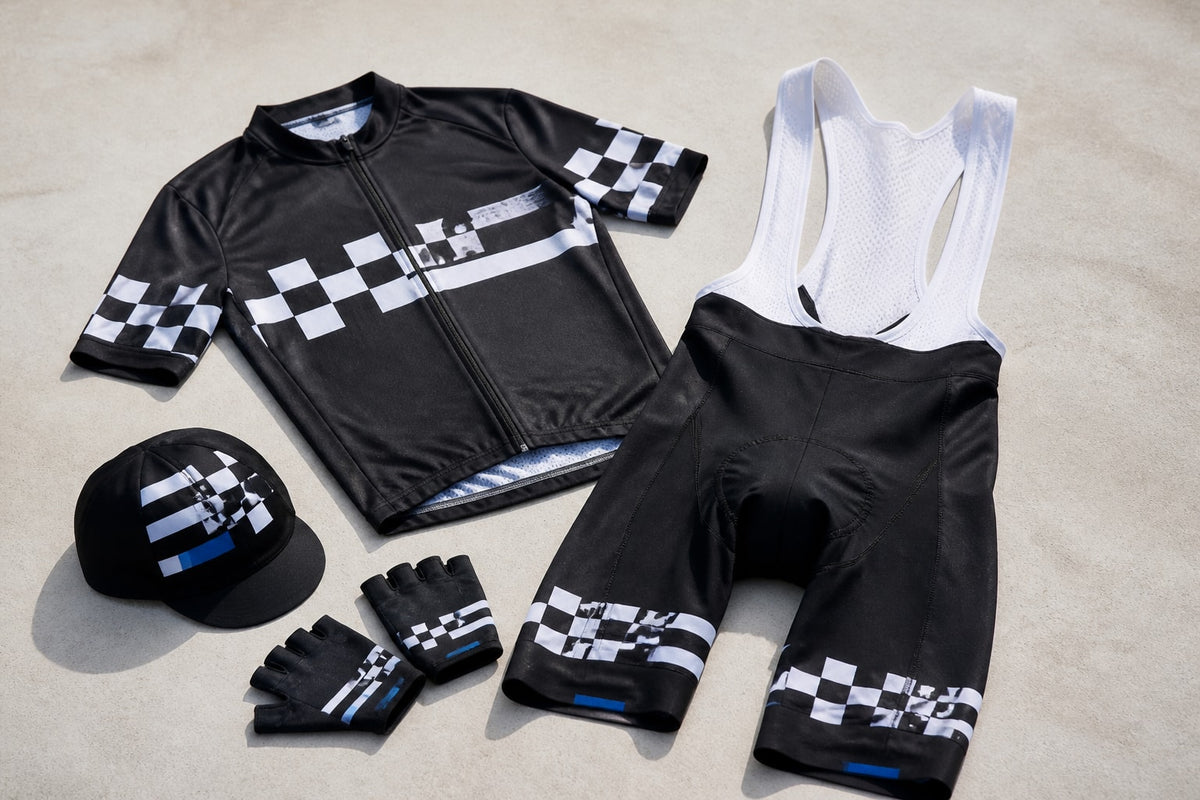
Apparel cycling covers the jerseys, bib shorts, gloves, caps, outerwear and accessories you wear on the bike, and the kit that lasts is the kit built from stable fabrics, a quality chamois, reinforced seams and a fit matched to your riding position. Choosing well means judging construction and materials rather than price tags or logos. For clubs and racing teams ordering matching kit, durability also depends on how the print is applied and how the garments are cared for.
This guide takes you from the basics of each garment to confident buying decisions, including how to size, how to specify team orders and how to keep your kit performing for years.
What Does Cycling Apparel Include?
Cycling apparel is a system of garments, each with a specific job, and a complete kit includes six core pieces:
- Jersey: Wicks moisture, carries food in rear pockets and holds a close fit at speed.
- Bib shorts: Provide the chamois pad and compression without a waistband that digs in.
- Gloves: Cushion the palms and protect hands in a fall.
- Cap and socks: Manage sweat and add small comfort gains that accumulate over long rides.
- Outerwear: Vests, arm warmers, jackets and rain shells for changing conditions.
- Skin suits: One-piece race garments for time trials, criterium racing and triathlon.
Each piece should work with the others. A jersey that rides up over the bib shorts or sleeves that bunch under a jacket will cost you comfort long before any fabric wears out. If you are still weighing the difference between waist-style shorts and bibs, this breakdown of bib shorts vs cycling shorts covers the practical trade-offs.
Why Fit Matters More Than Any Feature
A correct fit is the single biggest factor in how long cycling kit lasts, because garments that are too loose flap and abrade, while garments that are too tight stress seams and fabric at the stretch points.
Cycling garments are cut for a tucked, forward riding position. A jersey that looks short and snug when you stand will sit correctly when you are on the hoods or drops. Hong Kong's Transport Department also warns against loose clothing that could catch in a wheel or chain, which is a safety argument for a close cut on top of the comfort and aerodynamic ones.
Check these points when you try on or specify a garment:
- The jersey hem should stay put on the hips without riding up when you reach forward.
- Bib straps should sit flat on the shoulders without pulling the pad out of position.
- Leg grippers should hold without cutting into the thigh.
- Sleeves should end where your arm warmers or gloves begin, with no gap.
For a deeper walkthrough of measurements and body-shape adjustments, the cycling apparel sizing guide is a useful companion. Team managers with a mixed roster should pay particular attention to sizing, since a single wrong size can mean a rider who cannot use the kit at all.
Which Fabrics Hold Up Best?
The fabrics that last longest are tightly knit, stable synthetics that pull sweat away from the skin, resist pilling and keep their stretch after repeated washing.
Many performance jerseys and shorts blend polyester with elastane. Polyester dries quickly and resists stretching out, while elastane provides recovery so garments snap back after each ride. Lower-grade blends tend to lose that recovery first, which shows up as sagging shorts and a jersey that no longer holds its shape.
Look for these qualities in a fabric:
- Moisture transfer: The fabric moves sweat to the outer surface rather than holding it against the skin.
- Breathability: Mesh panels or open knits at the back and sides release heat on climbs.
- Abrasion resistance: Panels that contact the saddle and the ground in a crash should be more robust.
- UV protection: A tighter weave blocks more sun on long summer days.
NSW's guidance advises choosing clothing with airflow and carrying weatherproof layers for rain, which maps neatly to a light base kit plus a packable shell. For a closer look at what each material does, see this overview of cycling apparel fabrics.
How Do You Judge Chamois and Construction Quality?
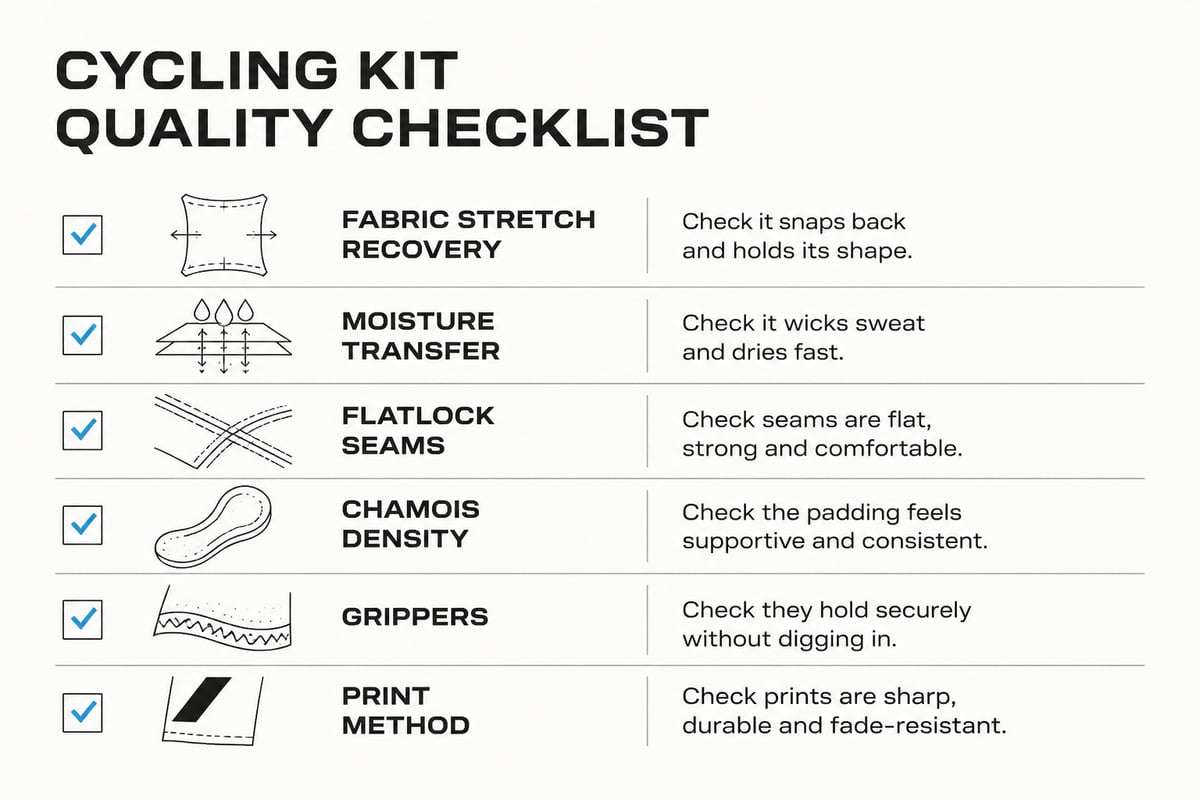
You judge construction by inspecting the chamois pad, the seams and the finishing, because these are the first places cheap kit fails.
The chamois is the pad in your shorts, and it should match your riding. Short, fast efforts suit a thinner, lighter pad, while long endurance days call for denser multi-layer foam. A pad that is too thick can bunch and chafe on short rides, and one that is too thin can collapse on long ones.
On the seams, flatlock stitching sits smooth against the skin and avoids the pressure points that raised seams create. Inspect the stitching at the leg openings, the shoulder straps and the zipper base, since those take the most strain. Look also for neat bar-tack reinforcement at the pocket edges of a jersey, where the weight of food and bottles pulls constantly.
Finishing details are quick checks that tell you a lot:
- The zipper runs smoothly and has a garage or guard at the top to protect your chin.
- Pocket openings are elasticated so contents stay put over rough roads.
- Silicone grippers are evenly printed and not a thin, cracking strip.
- Reflective trims are stitched or bonded, not loosely glued.
Why Does the Print Method Affect Durability?
The print method decides whether your design survives hundreds of washes, and sublimation is the standard for cycling kit because the dye becomes part of the fabric instead of sitting on top of it.
In sublimation, ink is turned into gas under heat and bonds with polyester fibers. The result is a design that does not crack, peel or fade the way surface prints can, and it keeps the fabric's stretch and breathability intact. Screen-printed or heat-applied graphics add a layer on top of the garment, which can stiffen the fabric and wear away at flex points. This comparison of sublimated versus screen-printed cycling kits explains the differences in detail.
For teams, this matters twice over. A sponsor logo that cracks after a season reflects poorly on everyone named on the jersey, and a color that fades unevenly across a roster makes a matched kit look mismatched. Full-coverage sublimation also lets designers run graphics across seams and panels without compromise, which is how modern team kits get their clean, continuous look.
What About Visibility and Weather Protection?
Visibility and weather protection are functional requirements, not style choices, and good apparel cycling kit builds both in through color, reflective details and a layering plan.
Official guidance is consistent here. Alberta recommends brightly coloured or reflective clothing to improve visibility, along with weather-appropriate clothing to stay warm and dry. NSW recommends bright clothing during the day and a reflective vest at night. For training riders who spend early mornings and evenings on open roads, build high-visibility panels and reflective piping into the design from the start. This piece on high-visibility cycling apparel shows how those details work in practice.
A simple layering approach covers most conditions:
| Condition | Core layers | Add if needed |
|---|---|---|
| Hot weather | Light jersey, bib shorts | Cap, sun sleeves |
| Mild weather | Jersey, bib shorts | Arm warmers, vest |
| Cool weather | Long-sleeve jersey, bib tights or knee warmers | Wind vest, thermal gloves |
| Cold or wet | Thermal base, winter jacket, bib tights | Overshoes, rain shell |
Heat deserves equal attention. Light colors, open weaves and UV-blocking fabrics matter on long summer rides, and this guide to cycling apparel for hot climates goes deeper. For cold-season layering, see winter cycling apparel layers.
How Should Clubs and Teams Order Matching Kit?
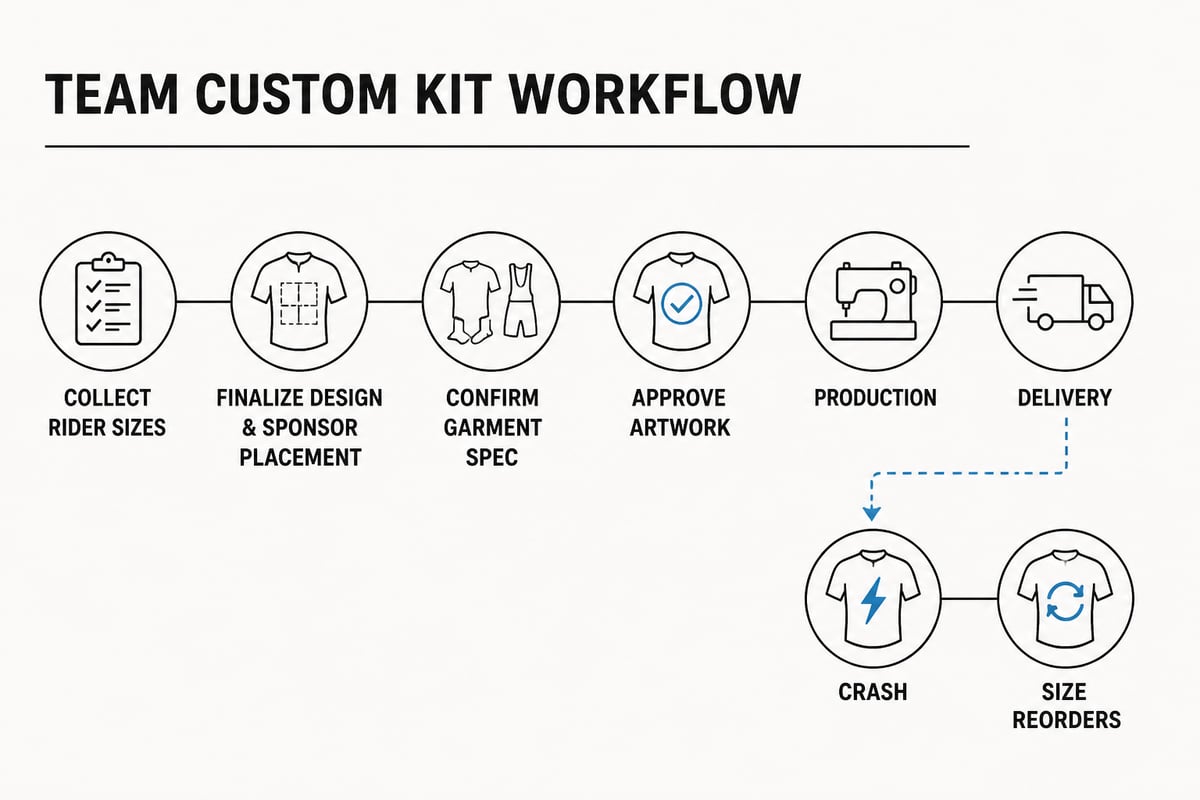
Clubs and teams get the best result by locking down the design, the size list and the garment spec early, because custom orders are made to order.
A made-to-order process rewards preparation. Gather a clear size chart from every rider before you finalize the order, and decide in advance which garments are non-negotiable: race jersey, bib shorts, skin suit, gloves, cap. Confirm sponsor logos, placement and color matching with your sponsors before artwork is signed off, since changes after production start are costly.
A sensible team order checklist looks like this:
- Confirm the roster, with a realistic allowance for new riders and size changes.
- Collect measurements and have each rider try a sample size where possible.
- Agree on a design with sponsor placements and brand colors.
- Decide on garment tiers, such as a race-spec jersey for events and a training jersey for daily rides.
- Plan reorders for crashes, growth and new members.
CCN Sport builds custom kit for teams of all sizes, with low minimum order quantities starting at 5 main pieces, an in-house design team and factory-direct pricing from its own facilities in Shenzhen, China and Dasmarinas, Philippines. Its crash reorder program offers reorders at 30% less than retail price for replacing damaged garments, and a size reorder program offers the same 30% saving for riders who need a different size. Those programs are worth planning around, since a crash mid-season is one of the most common reasons teams need extra kit.
What Does a Race-Ready Team Jersey Look Like?
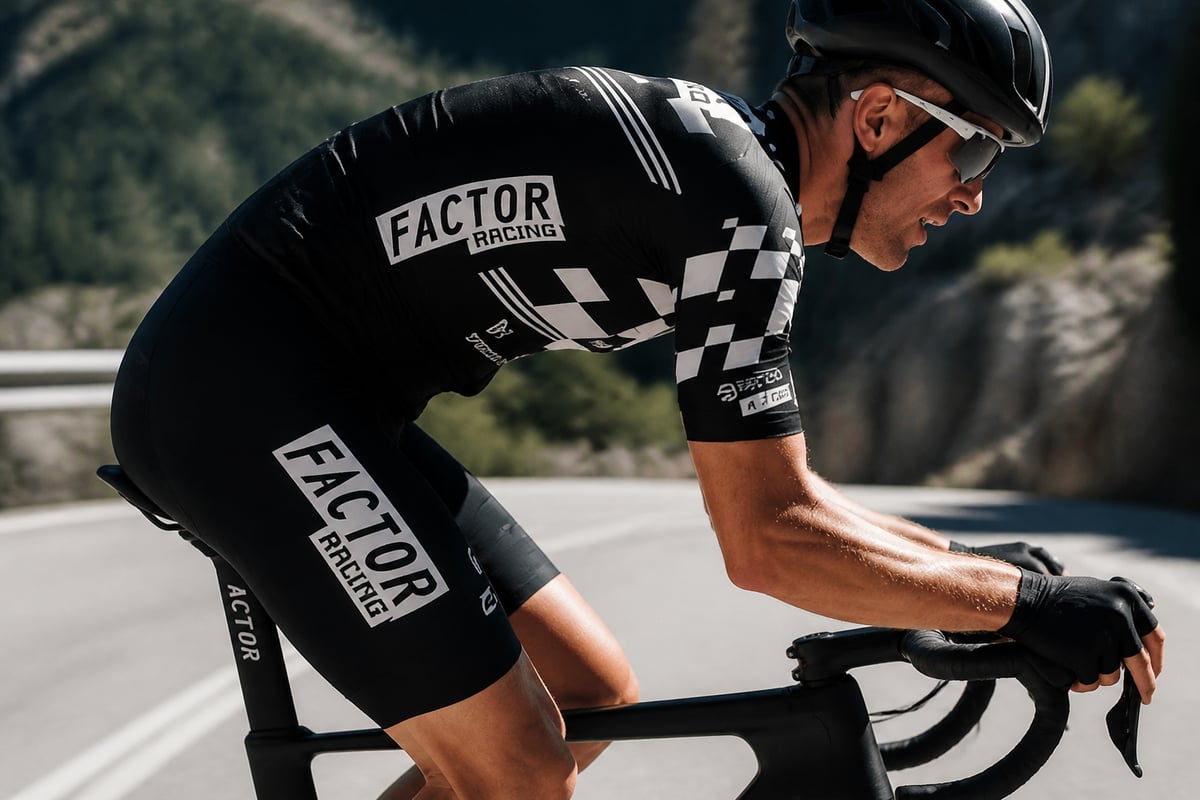
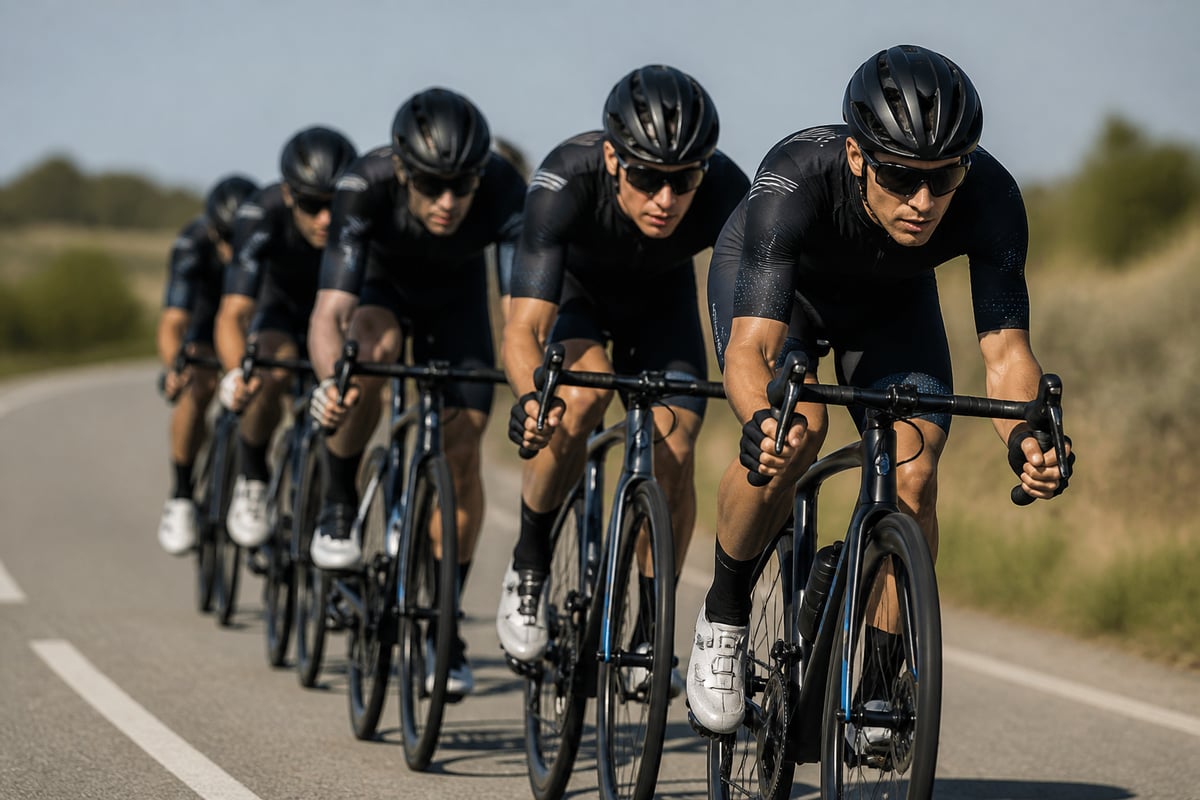
A race-ready team jersey combines a close, tuned fit, lightweight breathable fabric and a design that reads clearly from a distance, and the Factor Racing team kit is a good example of that formula.
The Factor Racing Team Kit pairs a race-tuned cut with breathable lightweight fabric and the distinctive Factor Racing look, which shows how a strong visual identity can sit alongside genuine performance construction.
For riders choosing between custom and off-the-shelf options, this comparison of custom vs stock cycling apparel lays out when each makes sense. Competitive riders building a race wardrobe can also look at best cycling apparel for racing.
How Do You Care for Cycling Apparel So It Lasts?
Washing after every ride in cold water, skipping fabric softener and air drying are the three habits that protect cycling kit most.
Aero Tech Designs' care guide recommends washing bib shorts and chamois shorts after every ride, using cold water on a gentle cycle and avoiding fabric softener. Softener coats the fibers and clogs the moisture-wicking channels that make technical fabric work. The same guide advises hanging garments to dry and avoiding high heat, which can weaken stretch fabrics and grippers.
A short care routine:
- Turn garments inside out and close zippers and Velcro before washing.
- Use a sport-specific or mild detergent, and skip bleach.
- Wash gloves and caps in a mesh bag to protect their shape.
- Rotate between at least two pairs of bib shorts so each has time to recover.
- Store kit flat or hung, away from direct sun, which fades dyes over time.
Rotation is the quiet durability tip. Elastic fibers recover between uses, so two pairs worn on alternate days last longer than one pair worn daily, even though the total wear is the same.
What Should You Check Before You Buy?
Before buying, confirm the fabric composition, the chamois spec, the seam construction, the print method and the warranty, since these five points predict how well a garment will age.
Use this pre-purchase checklist:
- Fabric: Is it a stable polyester and elastane blend with good stretch recovery?
- Chamois: Is the density suited to your ride length?
- Seams: Are they flatlocked, with reinforced stress points?
- Print: Is the design sublimated rather than applied on top?
- Support: Is there a warranty and a clear way to reorder damaged or resized pieces?
CCN Sport backs its apparel with a limited lifetime warranty and has produced kit since 2005, with more than a dozen pro teams, national programs and elite clubs relying on its gear every season. Accessories matter to the full kit too: Swift aero cycling gloves and a cycling cap round out a matched set.
Where Can You Find Useful Resources Beyond the Kit?
Riders and team managers often have practical needs outside the wardrobe, and a few specialist sites can help with them.
For golfers on your team who want their clubs kept in shape between rides, The Golf Studio offers re-gripping, re-shafting and club repair services. For anyone maintaining a support vehicle for races and training camps, StageX-Performance provides custom chiptuning file services. And for those handling tile or stone work at a clubhouse or training facility, Avangard makes long-lasting diamond discs and cups for cutting and drilling porcelain stoneware.
Start by measuring your riders and sketching the design brief you want, including colors, sponsor placements and the garments each rider needs. Then bring that brief to a manufacturer that controls its own production, so the fabric, print and stitching are all held to one standard. CCN Sport makes custom kit in its own factories, and if you like the race-tuned look described above, the Factor Racing Team Kit shows what a finished team jersey can be. When you are ready to put your own design into production, start your custom kit with CCN Sport and work with a team that has built cycling apparel for two decades.

Share:
Skinsuit Versus Trisuit: Which Race Kit Fits?