

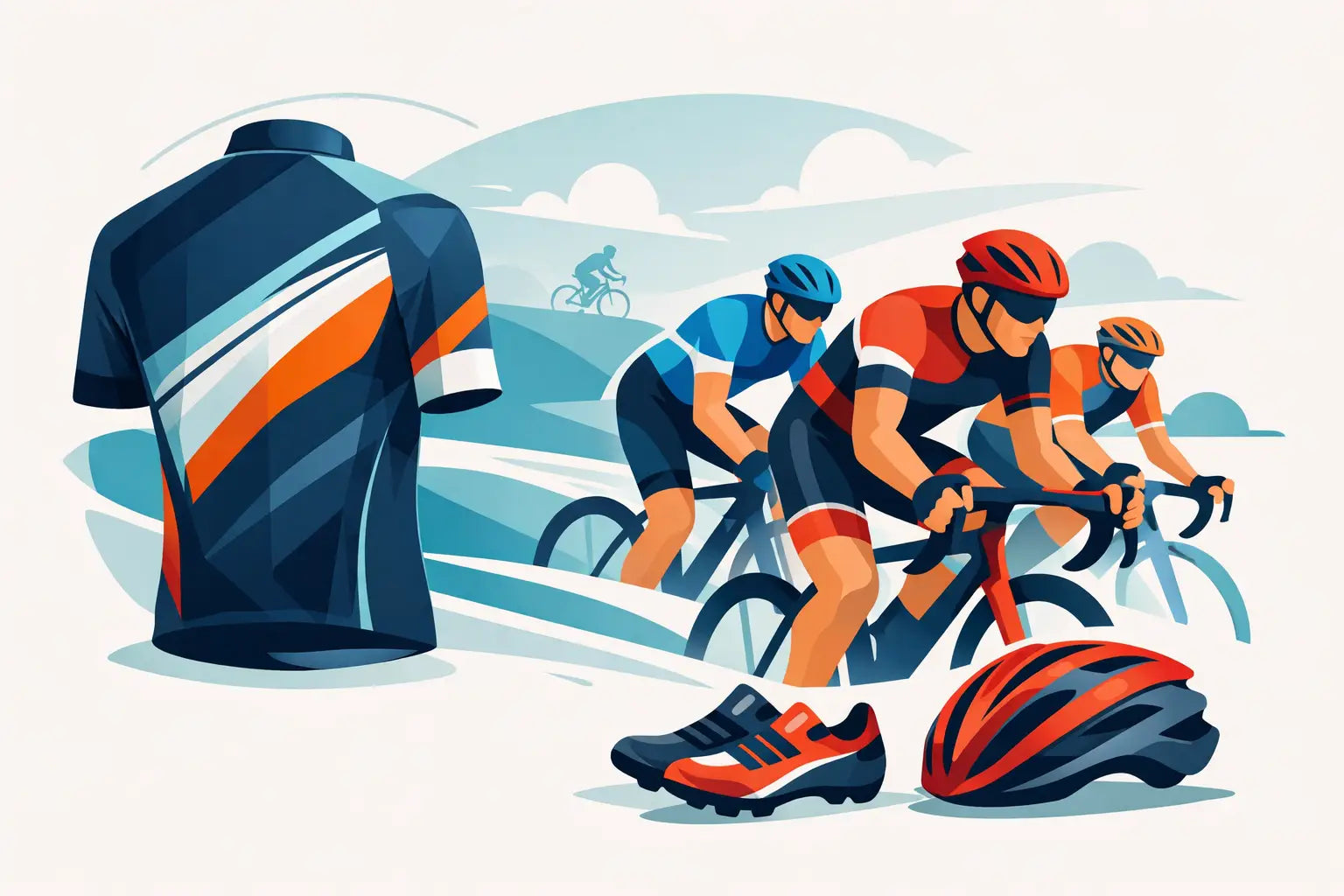
A fast group ride tells you a lot before anyone says a word. You see who came prepared, who is managing heat well, and which teams look organized from the first mile. That is one of the clearest answers to why use custom teamwear - it is not just about appearance. In cycling, the right kit affects comfort, identity, performance, and how smoothly a team operates on race day and beyond.
For clubs, race teams, gravel crews, and triathlon squads, custom apparel solves several problems at once. It gives riders a consistent fit and a unified look, but it also creates a system. Ordering becomes simpler. Replacements are easier. Sponsors get proper visibility. Riders know they are wearing gear built for the demands of the sport rather than generic apparel with a logo added later.
Why use custom teamwear instead of off-the-shelf kit?
Off-the-shelf kit can work for solo riders, especially when the goal is simply getting dressed for a weekend ride. Team environments are different. Once you are managing multiple riders, disciplines, body types, and event schedules, standard retail gear starts to show its limits.
Custom teamwear is built around how a team actually rides. That includes the fit profile, fabric selection, pocket layout, weather needs, and design requirements. A race-focused road squad may want aerodynamic sleeves, compressive bib shorts, and a close second-skin cut. A club with mixed experience levels may prioritize comfort, durability, and a more forgiving fit range. A triathlon program may need apparel that performs across swim, bike, and run transitions. Those are not small details. They shape how useful the kit is after the first order arrives.
There is also the issue of consistency. Buying random retail pieces season after season often leads to mismatched colors, different pad constructions, and uneven performance across the group. Custom production gives teams a repeatable standard. That matters when riders train together, travel together, and represent the same program.
Performance matters more than branding
The biggest reason riders stick with quality custom kit is simple - it performs.
Cycling is unforgiving when apparel is wrong. A jersey that flaps in the wind wastes energy. Bib shorts with a poor chamois become a problem long before the ride is over. Seams placed in the wrong area can rub for hours. Fabrics that hold heat or moisture too long can make a hard ride feel harder.
Well-made custom teamwear is designed as technical equipment. The best versions use discipline-specific patterning, performance fabrics, and a fit that stays stable when the rider is in position. That means less distraction, better temperature control, and more comfort during long training blocks or hard racing.
This is where trade-offs matter. Not every team needs the most aggressive race cut. Some groups ride centuries, fondos, or charity events where all-day comfort is the priority. Others want pure speed. Custom programs allow teams to choose the level of performance that fits their riders rather than forcing everyone into the same retail solution.
Fit is a team advantage
Fit is one of the most overlooked answers to why use custom teamwear. Riders often focus on design first because it is visible. Fit is what they remember five hours later.
A proper fit improves comfort, but it also improves function. Jerseys stay in place. Pockets remain usable. Bib straps sit correctly. Leg grippers hold without excessive pressure. Riders spend less time adjusting clothing and more time focusing on pacing, positioning, and effort.
For teams with a wide range of sizes, custom programs also reduce compromise. Instead of asking every rider to make a retail size work, teams can access broader size runs and cuts designed for real riding posture. That is especially important when outfitting a mixed roster of men and women, junior development athletes, or riders moving between training and race kits.
Identity is not cosmetic
Matching kit does more than make a team look sharp in photos. It creates recognition, accountability, and cohesion.
In racing, visual identity has value. Riders can spot teammates quickly in a pack. Support staff can identify athletes from a distance. Sponsors gain clear exposure. For clubs and community-based teams, custom teamwear builds a stronger sense of belonging. New members feel included faster. Existing members feel more invested. A team starts to look and act like a team.
That effect carries beyond race day. Group rides become more organized. Event appearances look more professional. Social content is cleaner and more consistent. If a team is building partnerships, fundraising support, or local credibility, presentation matters.
None of that means style outweighs function. It means the best teamwear does both. The design should reflect the group, but the apparel still has to perform under pressure.
Why use custom teamwear for team logistics?
Anyone who has managed apparel for a club knows the real challenge is rarely the jersey itself. It is the process around it.
Sizing riders, collecting payments, handling late additions, reordering popular pieces, and keeping product options organized can eat up time quickly. Custom teamwear programs exist to make that easier. When the supplier has a clear ordering system and dependable production flow, team managers spend less time chasing details and more time running the team.
This is one area where manufacturing control matters. A provider with in-house production can often offer better consistency, quicker adjustments, and more reliable turnaround than a brand relying heavily on third-party outsourcing. That does not mean every project is instant - custom apparel still requires planning - but it usually means fewer surprises and better communication when timelines matter.
For growing teams, low minimums can also make a real difference. They allow a club to start with a manageable order, bring in new riders later, or test product categories without overcommitting. That flexibility is especially useful for new programs, seasonal squads, and organizations balancing budget with quality.
Sponsorship and professionalism
If your team works with sponsors, custom apparel is one of the most practical assets you can offer in return.
A sponsor logo only has value if it is placed well, printed cleanly, and seen consistently in training, racing, and media. Generic kit with afterthought decoration rarely delivers that. Purpose-built custom teamwear integrates sponsor branding into the garment from the start, so the final result looks professional rather than improvised.
That professional standard influences how a team is perceived. Riders feel more prepared. Sponsors feel better represented. Event organizers, partners, and competitors see a team that takes itself seriously.
For ambitious clubs and development programs, that perception matters. It can help support recruitment, fundraising, and long-term growth. Good kit will not replace results, but it can reinforce the structure behind them.
Durability affects value
Price always enters the conversation, and it should. Teams need to manage budgets carefully. But the cheapest option is often expensive in the long run.
If jerseys lose shape, bib shorts wear prematurely, or colors fade after a short period, teams end up replacing gear sooner and dealing with unhappy riders. Better custom teamwear tends to hold its fit, fabric performance, and visual consistency longer. That improves value across a season and often across multiple reorder cycles.
This is where factory-direct production can be a meaningful advantage. When a brand controls design, manufacturing, and quality standards more closely, teams often get stronger value than they would from a layered supply chain with extra markup and less oversight. For clubs that need race-tested gear without inflated pricing, that balance matters.
CCN Sport has built its custom program around exactly that need - pro-level performance, flexible customization, and dependable team delivery for riders who care how their kit performs when the pace lifts.
When custom teamwear makes the most sense
Not every group needs a huge custom range immediately. For a small casual ride group, matching accessories or a limited jersey order may be enough. For an established racing club, it usually makes sense to build out a complete system with jerseys, bibs, outerwear, and event-specific pieces.
The right custom setup depends on how often the team rides, what conditions it rides in, and how important visual identity is to its goals. A weekly club spin has different needs than a stage race team or triathlon squad. The point is not to order everything at once. The point is to choose apparel that matches the actual demands of the riders wearing it.
That is the clearest answer to why use custom teamwear. It gives teams gear that works harder - on the bike, in the pack, and behind the scenes. When the fit is right, the performance is proven, and the ordering process is built for teams, custom kit stops being a nice extra. It becomes part of how a team rides, presents itself, and keeps moving forward.

Share:
Team Ordering Platforms Comparison for Clubs
How to Choose Cycling Bib Shorts Right