

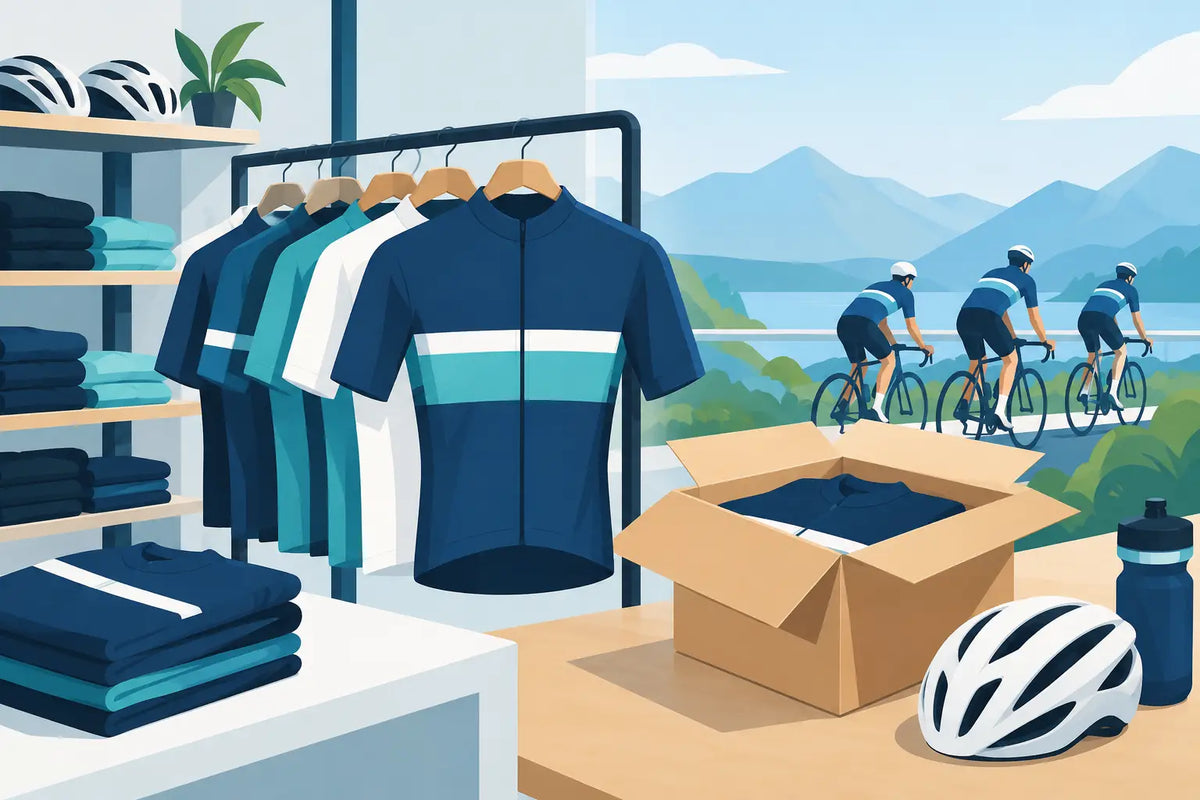
A new rider joins two weeks before the season opener. A returning racer needs another bib short after a crash. A sponsor logo changes before the next event. Without a clear ordering system, those simple requests turn into emails, spreadsheets, missed deadlines, and inconsistent kit. Team stores give cycling clubs a controlled place to order the right apparel, in the right design, at the right time.
For a club manager, coach, or team buyer, the value is not just convenience. A well-built store protects the team identity, reduces ordering errors, and gives every rider a more reliable path to race-ready clothing. For riders, it removes guesswork. They can select approved garments, confirm their size, and place an order without chasing down a volunteer coordinator.
Why Team Stores Matter for Cycling Clubs
Cycling apparel is not a one-size-fits-all purchase. Riders have different disciplines, fit preferences, weather needs, and training schedules. One athlete may need a lightweight race jersey and premium bib shorts for criterium season. Another may be looking for insulated tights, a thermal jersey, and a vest for cold-weather base miles. A triathlete may need a race-cut suit built for long efforts and fast transitions.
A team store organizes those choices around one approved collection. Instead of circulating outdated order forms or asking riders to send payment to a team manager, the club can present its current kit in one place. The rider sees the approved colors, logos, garment options, and sizing information. The manager sees fewer exceptions and less administrative work.
That control matters when a team rides together. Matching apparel is more than a clean start-line look. It creates visibility for sponsors, reinforces club identity, and helps riders recognize one another in a crowded event. In road racing, gravel events, charity rides, and training camps, a consistent kit makes the group look prepared because it is prepared.
The Best Team Stores Reduce Friction, Not Choice
A store should make ordering easier without limiting riders to gear that does not suit their needs. The strongest approach is a focused range of proven garments, with enough depth to cover the conditions and disciplines the team actually rides.
For many road clubs, that means a short-sleeve jersey, bib shorts, a sleeveless base layer, vest, arm warmers, and a long-sleeve option. Teams that train through winter may add thermal bib tights, insulated jackets, gloves, and shoe covers. A mixed-discipline club may need mountain bike jerseys, baggy shorts, gravel layers, or triathlon apparel alongside its road collection.
The trade-off is straightforward. Too few options can force riders into kit that does not match their riding. Too many options can make the store harder to navigate and dilute the team look. Start with the pieces riders will use most, then add specialty garments when there is clear demand.
Fit is equally important. A race fit is built to sit close to the body, manage airflow, and stay stable at speed. It may be the right choice for competitive riders, but it will not suit every club member. Including clear fit guidance and offering both performance-oriented and more relaxed options, where available, helps riders buy with confidence. The goal is not to make every rider wear the same cut. It is to make sure every rider can wear the same colors in apparel that performs properly.
Building a Team Store That Riders Will Use
Before a store opens, the team needs a clean apparel plan. Confirm the current logos, sponsor requirements, colors, and design placement first. Small changes made after artwork approval can create delays, added costs, and mismatched inventory across the group.
Next, define the collection around real riding conditions. Look at the race calendar, climate, and rider mix. A Florida-based team will build differently from a club that trains through Northeast winters. A junior development program may prioritize durable daily training pieces and accessible price points. A race-focused squad may put more emphasis on aerodynamic jerseys, compression bib shorts, and skinsuits.
Sizing support deserves the same attention as design. Custom cycling apparel performs best when riders choose the correct size for their body and preferred fit. Provide accurate size charts, fit notes, and a process for riders who are between sizes. If your program allows it, sample sizing can reduce costly mistakes, particularly when ordering premium bib shorts or tightly fitted race jerseys.
A useful store also needs a defined ordering window. Open windows work well for preseason launches, club refreshes, and sponsor-driven changes because they consolidate demand into a manageable production run. They give teams a clear deadline and help riders plan purchases before key events.
Always-open stores serve a different purpose. They are valuable for replenishment, new-member onboarding, replacement items, and programs with rolling enrollment. They can be especially effective for larger clubs or organizations with riders joining throughout the year. The right model depends on your team size, production schedule, and how often the design changes.
What Riders Expect From a Better Ordering Experience
Riders do not need more admin. They need confidence that the item they order will fit, perform, and arrive in time for the rides that matter. A clear team store should show each garment's intended use, available sizes, and practical product details.
For jerseys, riders may want to know whether the fabric is lightweight for hot-weather racing, whether the pockets stay stable under load, and whether the zipper and collar are designed for long days in the saddle. For bib shorts, the priorities are usually chamois comfort, leg gripper security, compression, breathability, and durability through repeated washing. Those details influence whether a rider wears a kit once or reaches for it every weekend.
Good product selection also recognizes that a cycling kit works as a system. A fast jersey cannot compensate for bib shorts that shift during a hard effort. A winter jacket needs to layer cleanly over a base layer without restricting movement. A vest should pack down easily while still cutting wind on long descents. When a team collection is planned around how riders actually train and race, every piece earns its place.
Keep the Brand Standard Without Creating More Work
Team managers often carry the burden of protecting logos, managing approvals, collecting orders, and answering repeat questions. The right store structure removes much of that pressure. Riders order approved products directly, while the team retains control over the collection and visual standard.
That is particularly valuable when sponsors are involved. Sponsor marks need correct placement, scale, and color treatment across every garment. A single approved design system helps prevent old logos, unofficial color variations, and unapproved apparel from appearing at events. It also makes future updates easier. When a new sponsor joins, the team can update the collection with purpose instead of relying on individual riders to interpret a PDF or an old jersey.
Factory-direct production adds another advantage. When design, manufacturing, and team ordering are managed closely, there are fewer handoffs between the club and the people making the kit. CCN Sport uses this model to give teams more control over customization, low-minimum ordering options, and performance-focused apparel built for the demands of the road.
Still, no store can solve poor planning. Teams should communicate deadlines early, explain expected production timing, and avoid opening a major order window too close to a championship, travel event, or season launch. Apparel is a performance purchase, not an emergency purchase. Give riders enough time to choose, size, and order correctly.
Team Stores Work Best as Part of the Season Plan
The most effective teams treat apparel ordering as part of their annual calendar. A preseason launch gives returning riders time to replace worn gear and new riders time to arrive prepared. A midseason replenishment window handles demand created by racing, travel, and changing weather. A late-season window can support holiday gifting, winter layers, or next year's sponsor transition.
Communication should be simple and specific. Tell riders what is available, who the store is for, when it closes, and which items are recommended for upcoming conditions or events. If there is a priority item, such as a required race jersey, make that clear. If certain products are optional, say so. Precision prevents frustration.
A team store is at its best when it disappears into the background. Riders find what they need, order with confidence, and show up in apparel that fits their bodies, their conditions, and their ambitions. That leaves the team free to focus on the part that matters most: riding stronger together.

Share:
Women's Biking Guide: Gear, Bikes and Fit
Cycling Shorts for Ladies: Top Picks for Every Ride