

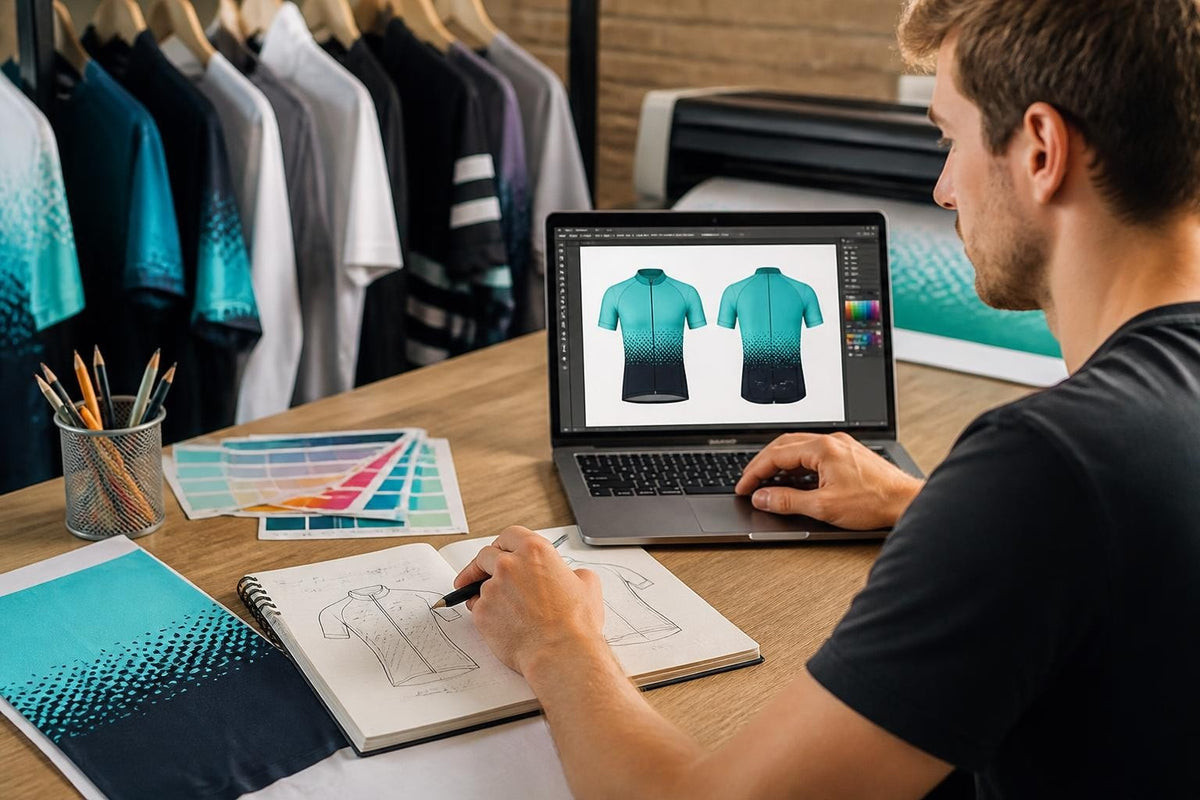
Creating a standout cycling jersey custom design requires more than aesthetic appeal. In 2026, riders and teams demand apparel that combines visual identity with measurable performance benefits, regulatory compliance, and manufacturing excellence. Whether you're outfitting a professional racing squad, building a club identity, or launching a cycling brand, understanding the technical and creative dimensions of custom jersey design separates amateur attempts from professional results. The intersection of fabric technology, color science, and design principles creates opportunities for jerseys that perform as well as they look.
Understanding the Cycling Jersey Custom Design Landscape
The cycling apparel industry has evolved dramatically over the past decade. Advanced sublimation printing now enables photorealistic graphics, gradient transitions, and unlimited color palettes without adding weight or compromising breathability. This technological leap has democratized design, allowing smaller teams and clubs to achieve the same visual sophistication previously reserved for WorldTour squads.
Modern cycling jersey custom design encompasses several critical dimensions:
- Performance fabric selection based on climate, discipline, and rider preference
- Graphic design principles that balance aesthetics with aerodynamics
- Color management systems ensuring digital designs translate accurately to fabric
- Regulatory compliance for UCI events and sanctioned competitions
- Manufacturing processes that determine durability and visual longevity
The rise of direct-to-consumer custom apparel has created new expectations. Riders now understand fabric weights, denier counts, and sublimation quality markers. They compare color vibrancy, seam construction, and gripper performance across manufacturers. This educated customer base demands transparency about materials, processes, and quality standards.
Market Trends Shaping Custom Design in 2026
Several converging trends influence how teams and brands approach cycling jersey custom design. Sustainability concerns drive increased demand for recycled polyester and eco-certified fabrics. OEKO-TEX STANDARD 100 certification has become a baseline expectation for premium apparel, verifying that textiles meet strict limits for harmful substances.
Aerodynamic optimization extends beyond bike position to include fabric texture and graphic placement. Research demonstrates that clothing fabric choices significantly impact cycling performance, influencing thermoregulation and drag coefficients. Forward-thinking designers now consider how graphic elements interact with airflow, avoiding patterns that disrupt laminar flow across the body.
Design Fundamentals for High-Performance Jerseys
Successful cycling jersey custom design balances three competing priorities: visual impact, regulatory compliance, and functional performance. Each element requires careful consideration during the concept phase.
Color Theory and Visual Hierarchy
Color selection drives recognition and emotional response. Professional cycling jersey custom design employs color theory strategically:
| Design Principle | Application | Performance Impact |
|---|---|---|
| Contrast ratios | Logo visibility at distance | Brand recognition in peloton |
| Color temperature | Warm vs. cool palette selection | Perceived speed and energy |
| Saturation levels | Vibrant vs. muted tones | Attention capture and memorability |
| Pattern density | Graphic complexity | Aerodynamic texture considerations |
High-contrast combinations improve visibility in variable lighting conditions and ensure sponsor logos remain legible during broadcasts. Teams competing in criteriums or road races often prioritize bold color blocking, while gran fondo participants may favor sophisticated gradients and detailed graphics.
Color management workflows for digital textile printing have become essential for maintaining consistency between approved designs and finished products. ICC color profiling eliminates the guesswork from sublimation, ensuring Pantone specifications translate accurately to polyester fabric.
Graphic Placement and Regulatory Guidelines
For teams participating in sanctioned events, UCI visual and technical guidelines dictate specific requirements for logo zones, measurement tolerances, and allowed graphics. These regulations ensure fair sponsor visibility while maintaining aesthetic standards across professional cycling.
Understanding these constraints early in the cycling jersey custom design process prevents costly revisions. Logo placement zones specify maximum dimensions and prohibited areas, while color restrictions protect the integrity of championship jerseys and leader classifications.
Non-competitive teams enjoy greater creative freedom but should still consider practical placement factors:
- Shoulder and upper chest areas receive maximum visibility during riding position
- Side panels offer opportunities for secondary sponsors without visual clutter
- Sleeve designs create dynamic effects during pedaling motion
- Lower back pockets provide functional branding real estate
Fabric Technology and Material Selection
The foundation of any cycling jersey custom design lies in fabric selection. Modern performance textiles offer specialized characteristics tailored to specific disciplines and conditions.
Polyester Variants and Blend Ratios
100% polyester remains the industry standard for sublimation-printed cycling jerseys due to superior dye absorption and moisture management. However, specific polyester constructions deliver distinct performance profiles:
- Micro-mesh fabrics (120-140 GSM) maximize breathability for warm-weather racing
- Mid-weight knits (160-180 GSM) balance ventilation with compression
- Brushed-back constructions (200+ GSM) trap warmth for cooler conditions
- Textured surfaces enhance aerodynamics through boundary layer manipulation
Some manufacturers blend polyester with elastane (typically 10-15%) to improve stretch recovery and body conformance. This approach enhances comfort during extended rides but requires careful consideration during sublimation, as elastane doesn't accept dye and appears as white fibers in finished fabric.
Comparing Print Technologies for Durability
While several textile printing methods exist, dye sublimation dominates professional cycling jersey custom design for compelling reasons. Research comparing color accuracy and print durability across printing methods demonstrates sublimation's superiority in wash-fastness and color permanence.
The sublimation process chemically bonds dye molecules to polyester fibers rather than applying surface coatings. This molecular integration prevents cracking, peeling, or fading even after hundreds of wash cycles. Graphics maintain full vibrancy and detail regardless of stretching or abrasion.
Alternative methods like screen printing or direct-to-garment printing create surface layers that degrade with use. They also add weight and compromise breathability by occluding fabric pores. For performance cycling apparel, these tradeoffs prove unacceptable.
The Design Development Process
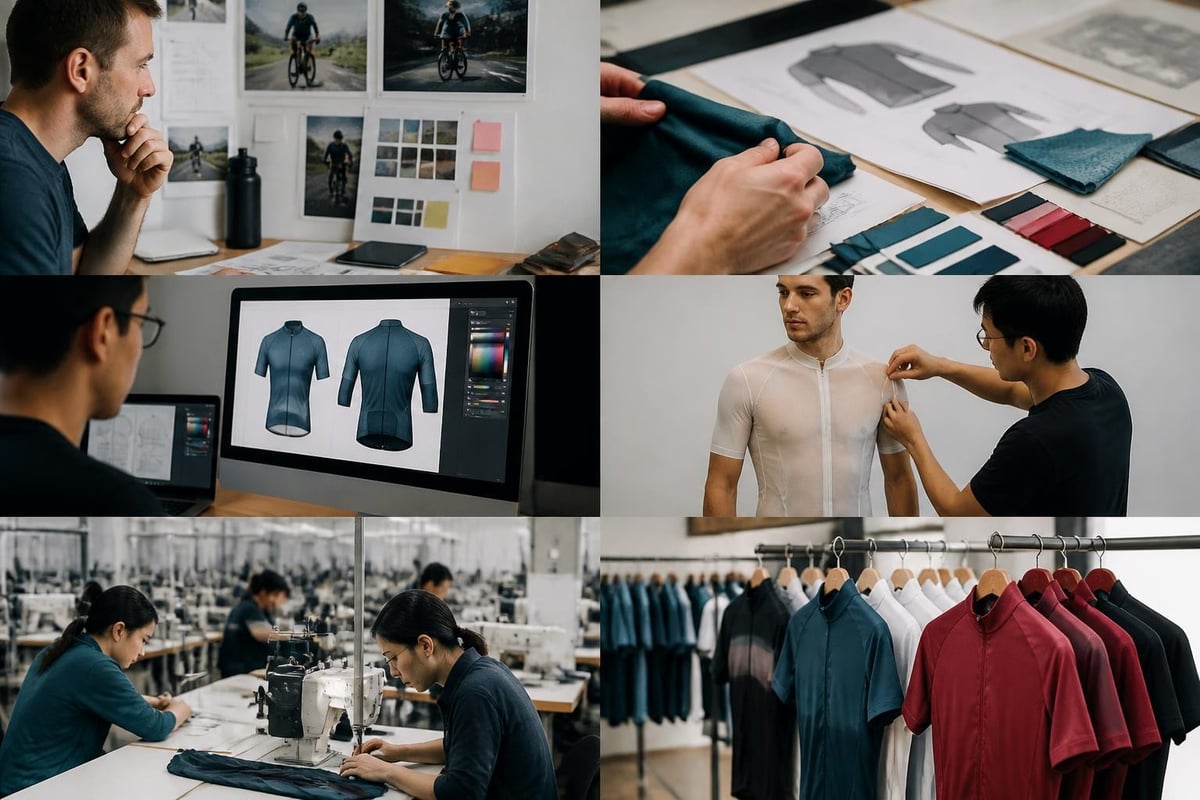
Transforming concepts into finished cycling jerseys requires systematic progression through defined stages. Professional cycling jersey custom design follows proven workflows that minimize revisions and ensure accuracy.
From Concept Sketches to Technical Specifications
Initial design exploration begins with understanding brand identity, target audience, and performance requirements. Mood boards and concept sketches establish visual direction before committing to detailed technical work.
Digital design tools enable rapid iteration and client collaboration. Vector-based graphics ensure scalability across different jersey sizes without quality loss. Designers create technical flats showing exact measurements, panel constructions, and zipper specifications.
- Discovery phase - Brand guidelines, competition requirements, inspiration references
- Concept development - Multiple design directions exploring color and graphic approaches
- Design refinement - Selected concept polished with accurate sponsor logos and details
- Technical specification - Print-ready files with color profiles and construction notes
- Prototype sampling - Physical samples validating design translation and fit
Throughout this process, cycling jersey custom design teams maintain constant communication with manufacturing partners. Fabric availability, minimum order quantities, and production timelines influence design decisions. Experienced designers anticipate manufacturing constraints early, building solutions into initial concepts.
Color Proofing and Quality Assurance
The gap between screen colors and printed fabric represents a persistent challenge. Digital displays use additive RGB color while sublimation employs subtractive CMYK processes. This fundamental difference creates inevitable discrepancies.
Physical color swatches and calibrated proofing systems bridge this gap. Manufacturers provide fabric samples printed with standard color palettes, allowing designers to specify accurate color targets. Advanced facilities employ spectrophotometers to measure and document color accuracy numerically.
Quality assurance extends beyond color matching to include:
- Seam integrity testing for strength and durability
- Fabric weight verification against specifications
- Gripper performance assessment for leg and waist retention
- Zipper operation under tension and repeated use
- Colorfastness ratings after accelerated wash testing
Manufacturing Excellence and Production Quality
The technical sophistication of cycling jersey custom design demands equally sophisticated manufacturing capabilities. Production quality determines whether designs achieve their performance potential.
At CCN Sport, precision manufacturing transforms design concepts into premium cycling apparel. With facilities in China and the Philippines, the company combines traditional craftsmanship with modern sublimation technology. A skilled team of over 250 members brings expertise to every production stage, from cutting and stitching to quality inspection and finishing.
The Sublimation Production Workflow
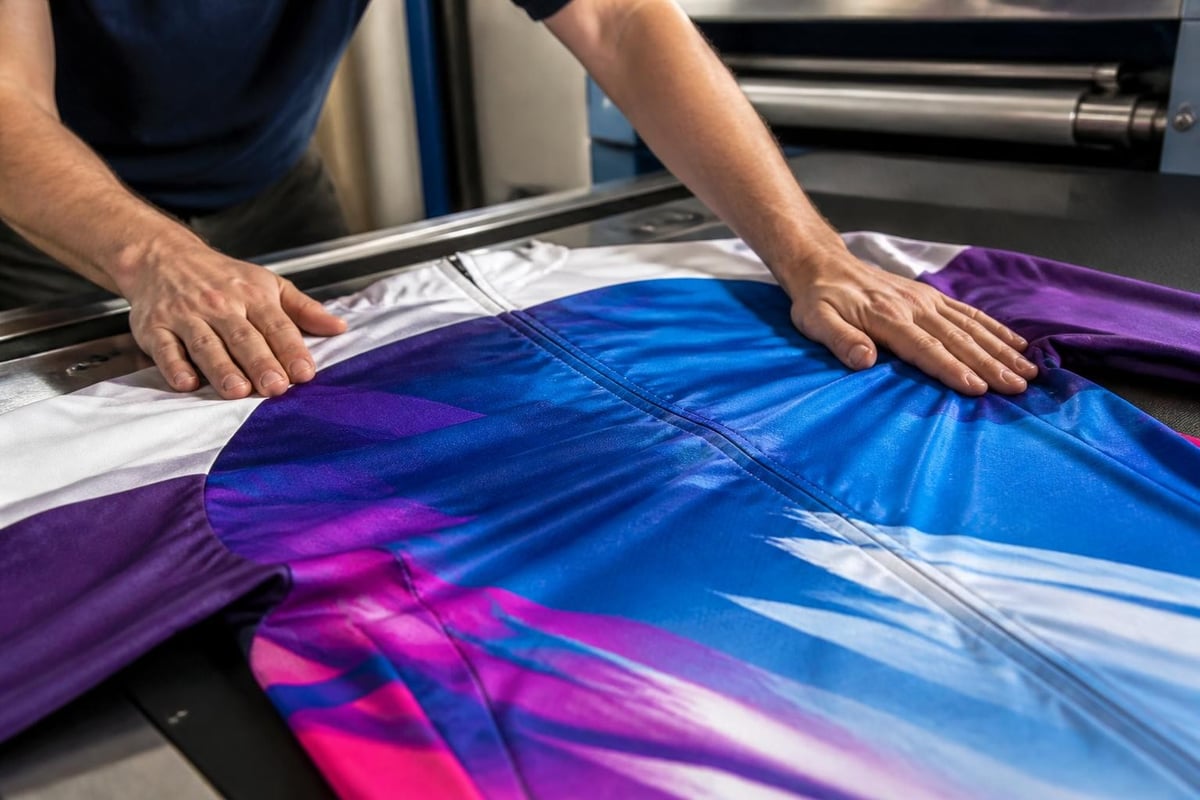
Professional sublimation facilities maintain strict environmental controls. Temperature and humidity affect dye transfer efficiency, making climate control essential for consistent results. The process unfolds in carefully orchestrated stages:
| Production Stage | Key Control Points | Quality Outcomes |
|---|---|---|
| Pre-treatment | Fabric inspection, tension adjustment | Uniform dye absorption |
| Printing | Color calibration, resolution verification | Accurate color reproduction |
| Transfer | Time, temperature, pressure monitoring | Complete dye migration |
| Cooling | Controlled temperature reduction | Color stability and sharpness |
| Inspection | Color matching, defect identification | Zero-defect delivery |
Heat press parameters vary based on fabric weight and composition. Thicker fabrics require longer dwell times and higher pressures to ensure complete dye penetration. Experienced technicians adjust settings based on real-time results, maintaining quality across production runs.
Construction Techniques for Performance Apparel
Beyond printing quality, garment construction determines comfort, durability, and performance. Modern cycling jersey custom design incorporates specialized techniques:
- Flat-lock seaming reduces chafing and improves aerodynamics
- Laser-cut raw edges eliminate hem bulk on sleeves and waist
- Bonded zipper tapes prevent snagging and reduce weight
- Silicone gripper dots provide retention without compression bands
- Ergonomic panel mapping follows body contours for pre-shaped fit
Premium manufacturers source components from specialized suppliers. YKK zippers offer superior durability and smooth operation compared to generic alternatives. Italian-made gripper elastic maintains elasticity longer than economy options. These material choices directly impact long-term satisfaction and performance.
Understanding how cycling aerodynamics relates to fit and speed helps designers optimize panel placement and seam orientation. Minimizing fabric wrinkles and excess material reduces drag while maintaining comfort and mobility.
Practical Applications Across Cycling Disciplines
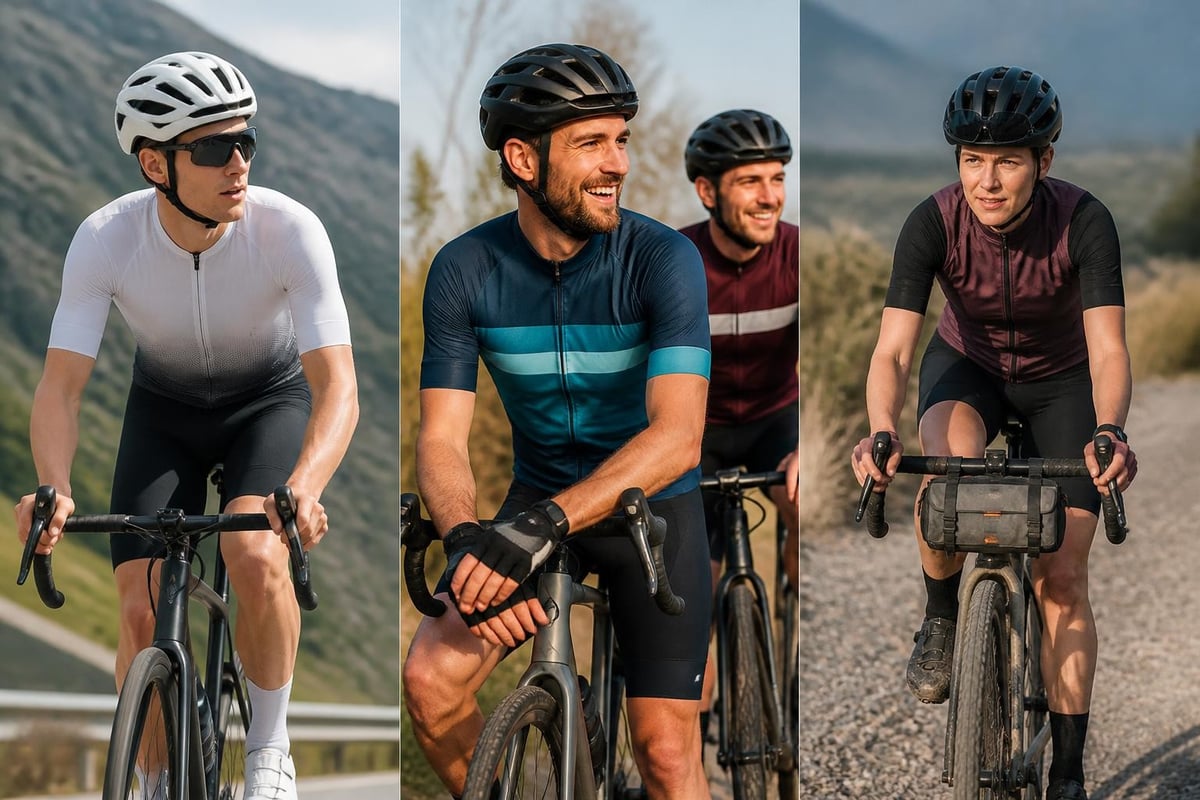
Different cycling disciplines impose unique requirements on cycling jersey custom design. Successful designers adapt their approach based on intended use.
Road Racing and Competitive Teams
UCI-sanctioned competition demands strict adherence to regulatory guidelines while maximizing sponsor visibility and team identity. Road racing jerseys prioritize:
- Lightweight fabrics (120-140 GSM) for optimal power-to-weight ratios
- Aerodynamic fits with minimal excess fabric
- Three rear pockets sized for race nutrition and tools
- High-visibility colors for safety in peloton positioning
Teams often develop multiple jersey variants for different roles and conditions. Leader jerseys distinguish team captains, while training jerseys provide everyday alternatives to preserve race-day kit. Time trial specialists may request aero-specific cuts with extended sleeves and different fabric textures.
Club and Recreational Cycling
Amateur clubs and cycling groups represent the largest segment of custom jersey buyers. These customers value comfort and distinctive design over marginal performance gains.
Club cycling jersey custom design emphasizes:
- Mid-weight fabrics (160-180 GSM) balancing comfort and performance
- Relaxed fits accommodating varied body types
- Bold graphics and club logos for group identity
- Cost-effective production through standardized sizing
Many clubs order annually, creating opportunities for evolving design themes while maintaining brand consistency. Successful designs incorporate elements that remain constant (primary colors, logo placement) while varying secondary graphics and accent colors each season.
Gravel and Ultra-Endurance Events
The explosive growth of gravel cycling creates demand for jerseys optimized for mixed-surface riding and self-supported adventures. These applications require enhanced durability and expanded storage:
- Reinforced fabrics resisting trail debris and crashes
- Additional pockets for tools, food, and navigation devices
- Reflective elements for visibility during dawn/dusk riding
- Casual aesthetics blending performance with style
Gravel-specific cycling jersey custom design often incorporates earth tones and muted palettes, distinguishing these kits from road racing's bold colors. The aesthetic reflects the adventurous, exploratory nature of gravel culture.
Advanced Design Considerations
Experienced designers leverage sophisticated techniques to elevate cycling jersey custom design beyond basic competence.
Typography and Logo Integration
Font selection communicates brand personality while ensuring legibility across viewing distances. Sans-serif typefaces generally outperform ornate scripts in cycling applications, maintaining clarity when viewed from behind or during rapid movement.
Logo adaptation requires balancing brand guidelines with practical constraints. Complex logos with fine details may need simplification for small-scale applications like chest placement. Conversely, back panels accommodate elaborate graphics that serve as moving billboards.
Designers create hierarchical systems prioritizing information:
- Primary sponsor (largest, most prominent placement)
- Team name or brand (high-visibility location)
- Secondary sponsors (strategic but subordinate sizing)
- Technical partners (smaller, discrete placement)
This hierarchy ensures critical elements receive appropriate emphasis while preventing visual chaos. Overcrowded designs dilute every message, reducing overall impact.
Seasonal Adaptations and Collection Planning
Forward-thinking teams develop coordinated collections rather than isolated jerseys. Complete kits including bibs, vests, arm warmers, and accessories create cohesive visual identity across conditions.
Spring/summer designs typically feature:
- Bright, saturated colors reflecting seasonal energy
- Lightweight construction for warm-weather performance
- Short-sleeve and sleeveless options
- Minimal coverage for maximum ventilation
Fall/winter collections shift toward:
- Deeper, richer color palettes
- Long-sleeve jerseys and thermal options
- Brushed-back fabrics for insulation
- Reflective elements for shorter daylight hours
Coordinating these collections during initial cycling jersey custom design ensures visual continuity. Accent colors, graphic motifs, and typography remain consistent while seasonal adaptations address functional requirements.
Sustainability and Material Innovation
Environmental consciousness increasingly influences purchasing decisions. Brands differentiating through sustainability commitments attract environmentally aware customers willing to invest in premium apparel.
Recycled polyester fabrics offer performance identical to virgin materials while reducing environmental impact. Post-consumer PET bottles transform into high-performance cycling textiles through mechanical or chemical recycling processes. These fabrics accept sublimation dye identically to virgin polyester, enabling cycling jersey custom design without compromise.
Transparency in sourcing and manufacturing builds trust. Communicating certifications, environmental initiatives, and ethical labor practices resonates with values-driven buyers. These narratives complement technical specifications, creating complete brand stories.
Navigating the Custom Production Journey
Successfully executing cycling jersey custom design requires understanding the end-to-end production timeline and potential challenges.
Timeline Planning and Order Minimums
Most manufacturers require 4-8 weeks from approved artwork to delivery, varying based on order complexity and production schedules. Rush orders may incur premium pricing while extending timelines allows cost optimization.
Minimum order quantities typically range from 10-50 pieces depending on manufacturer and customization level. Fully custom designs with unique fabrics and constructions command higher minimums than designs using standard templates with graphic variations.
Smart planning coordinates design approval with team roster finalization. Last-minute rider additions or size changes complicate production and may require separate manufacturing runs. Collecting accurate size data upfront prevents costly amendments.
Budget Optimization Strategies
Cycling jersey custom design costs vary dramatically based on specifications:
Economy tier ($40-60 per jersey):
- Standard fit patterns and fabric options
- Limited color matching and proofing
- Basic construction techniques
- Higher minimum order quantities
Premium tier ($80-120+ per jersey):
- Fully customized patterns and premium fabrics
- Precise color matching and physical proofs
- Advanced construction and components
- Lower minimums and faster production
Understanding these tiers allows realistic budgeting. Clubs and amateur teams often find excellent value in mid-tier offerings balancing quality and affordability. Professional teams justify premium investment through enhanced performance and durability.
Volume discounts reward larger orders. Teams ordering complete kits (jerseys, bibs, vests, accessories) typically receive better per-piece pricing than purchasing items separately. Planning comprehensive orders maximizes value.
Technical Specifications That Matter
Detailed specifications prevent miscommunication and ensure finished products meet expectations. Comprehensive cycling jersey custom design briefs include:
Measurement and Sizing Documentation
Size charts with specific measurements eliminate ambiguity. Rather than generic S/M/L/XL designations, professional specifications provide:
- Chest circumference at widest point
- Torso length from base of neck to hem
- Sleeve length from shoulder seam to cuff
- Waist circumference at gripper band
These measurements accommodate manufacturing tolerances (typically ±1-2cm) while ensuring consistency. Some teams request custom grading for non-standard body proportions, adjusting chest-to-waist ratios or sleeve lengths independently.
Print File Requirements
Print-ready artwork requires specific technical preparation:
- Vector formats (AI, EPS, PDF) for scalable graphics
- 300 DPI minimum resolution for raster elements
- CMYK color mode with specified Pantone references
- Outlined fonts preventing substitution errors
- Bleed allowances for edge-to-edge graphics
Experienced designers provide technical flats showing exact graphic placement on pattern pieces. These documents prevent misinterpretation during production, ensuring designers' intent translates accurately to finished jerseys.
Mastering cycling jersey custom design in 2026 means balancing creative vision with technical precision, regulatory requirements with performance optimization, and aesthetic impact with manufacturing reality. Whether you're building a professional team identity or creating distinctive club kit, success requires understanding fabric technology, color science, production workflows, and design principles. At CCN Sport, over 20 years of sublimation expertise and advanced manufacturing capabilities transform your vision into premium cycling apparel built to perform and last. Ready to create your custom cycling jersey? Let CCN Sport bring your design to life with precision, care, and uncompromising quality.

Share:
Cycling Kit Minimum Order Guide for Teams
Teamwear Personalization Trends for Faster Kits