

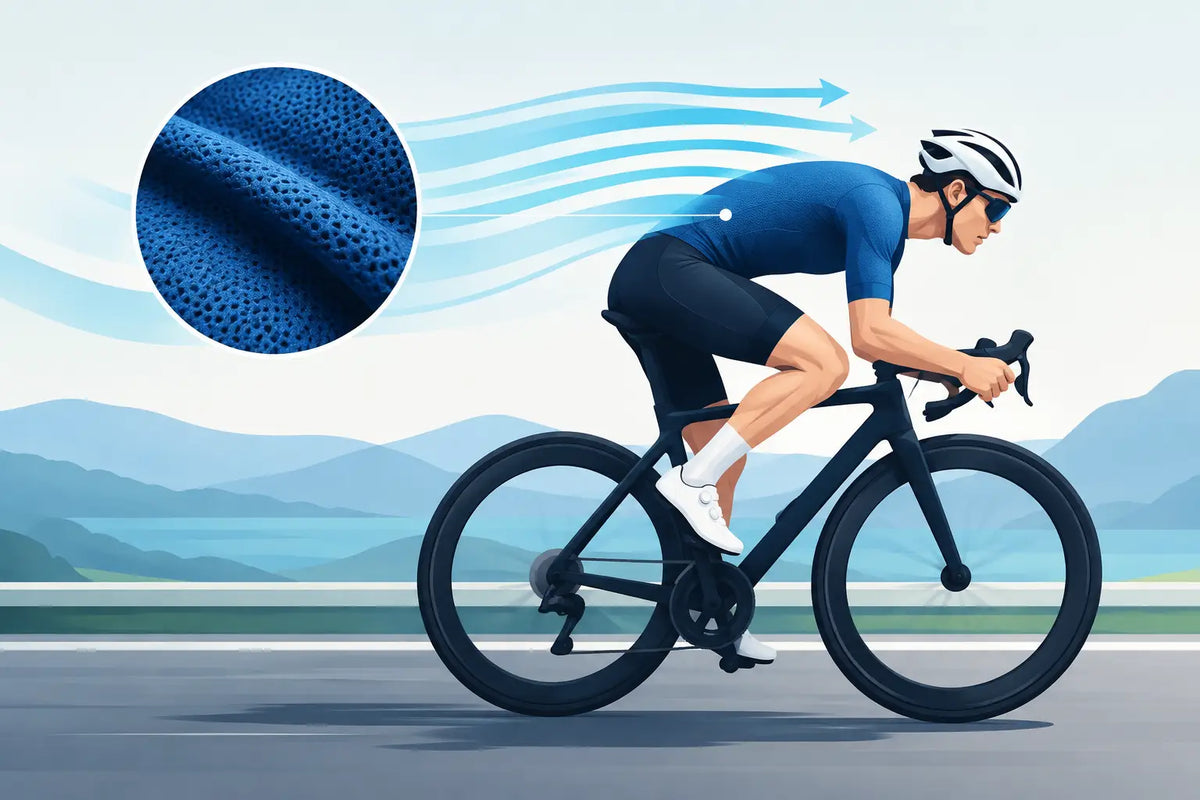
A jersey that feels fine in the parking lot can become a liability 40 miles into a hard ride. It can trap heat on a climb, flap into the wind on a descent, or leave salt-heavy moisture sitting against the skin. Cycling fabric innovation is the work of preventing those problems before they cost comfort, focus, or speed.
For riders, the result is more than a softer hand feel or a new texture. Better textile engineering changes how a kit manages air, sweat, compression, friction, and repeated use. For clubs and teams, it also determines whether a custom kit looks sharp and performs consistently through a long season of training, travel, racing, and washing.
Cycling Fabric Innovation Starts With the Ride
There is no single "best" cycling fabric. A criterium racer, gravel rider, triathlete, and winter commuter face different demands, even when they ride the same roads. The right solution starts with the intensity of the effort, the climate, the fit of the garment, and how long the rider will be in the saddle.
High-output road riding usually demands fast moisture transfer and low air resistance. The fabric must move perspiration away from the skin, spread it across a wider surface area, and allow it to evaporate without becoming saturated. That is why premium jerseys often use different materials across the chest, back, sleeves, and side panels rather than relying on one fabric throughout.
Gravel and mountain bike riders may put greater value on abrasion resistance, stretch, and storage stability. A lighter fabric is not automatically better if it snags easily or loses its shape under a loaded pocket. For winter riding, insulation must work alongside breathability. A thermal layer that holds too much moisture can make a rider colder the moment the pace drops.
This is where performance apparel becomes a system. Fiber choice matters, but knit structure, panel placement, finishing, and garment construction matter just as much.
Moisture Management Is About More Than Wicking
"Wicking" is often used as a catch-all term, but moisture management has several jobs. First, a fabric needs to pull sweat away from the skin. Next, it needs to distribute that moisture so it can evaporate efficiently. Finally, it must avoid feeling heavy, clammy, or restrictive once the effort rises.
Modern polyester-based performance fabrics remain central to cycling because they are light, durable, and naturally resistant to water absorption. Their real advantage comes from engineered yarns and knit patterns. Capillary channels within the yarn or fabric help move moisture outward, while open-knit zones increase airflow where riders generate the most heat.
Mesh back panels are a familiar example, but effective ventilation is more precise than adding mesh everywhere. An overly open fabric can compromise sun protection, pocket support, or aerodynamic stability. The best placement depends on body position and airflow. A rider spends hours with their torso angled forward, so the back, underarms, and side body need different solutions than the front of a jersey.
For hot, humid conditions, evaporation slows because the air already carries substantial moisture. In that environment, a highly breathable fabric still helps, but no jersey can defeat humidity entirely. Fit, zip ventilation, and ride pacing remain part of the equation.
Aerodynamics Lives in Fabric Texture and Fit
At speed, apparel is part of the rider's aerodynamic profile. Loose material creates turbulence. Seams, wrinkles, pocket load, and sleeve finish can all affect how air moves over the body. This is why a race-cut jersey is designed to work in a riding position, not while standing upright in front of a mirror.
Textured sleeve fabrics are one of the most visible examples of cycling fabric innovation. Depending on their structure and placement, ribbed or dimpled surfaces can help manage the boundary layer of air moving across the arms. The gains may be small in isolation, but racing is built on details that compound over distance.
The trade-off is that aero fabrics need the right fit to work. If a sleeve is too loose, the intended surface effect disappears. If it is too tight, it can restrict movement or create pressure points. Different body shapes also respond differently to the same pattern. That is why panel design, stretch recovery, and accurate sizing are performance features, not cosmetic details.
For teams, consistent fit across a full roster matters. A kit cannot be considered race-ready if one rider gets stable, supportive compression while another is left with bunching fabric and loose sleeves. Factory control over materials and construction helps make that consistency achievable at scale.
Supportive Bib Fabrics Reduce Distraction
Bib shorts place fabric under a unique combination of stress: constant pedal motion, saddle contact, sweat, stretch, and laundering. The ideal short fabric must provide compression without becoming restrictive, remain opaque under tension, and recover its shape after repeated rides.
High-quality bib fabrics typically combine durable synthetic fibers with elastane for four-way stretch. Compression is not simply about making a short feel tight. Proper compression supports the muscles, holds the chamois in position, and prevents excess material from moving against the skin. The outcome is a more stable pedal stroke and fewer distractions in the saddle.
Fabric weight is a balancing act. Lighter materials can feel cooler and more flexible, while denser knits often provide better coverage, longevity, and support. For long-distance riders, the most useful answer is usually a fabric that maintains its structure late in the ride, not one that only feels impressive on the first try-on.
Leg grippers deserve the same scrutiny. Silicone details can hold a cuff in place, but the fabric around the gripper must distribute pressure evenly. A poorly designed cuff can pinch, roll, or leave the short creeping upward as the ride progresses.
Durability Is a Performance Standard
A kit that performs for five rides and fades by midseason is not technical apparel. Color retention, stitch stability, abrasion resistance, and elastic recovery all determine the real value of a garment.
Sublimated graphics are particularly relevant for custom cycling apparel. When color is integrated into the fabric rather than sitting as a heavy surface layer, the design remains breathable and flexible. It also gives teams the freedom to create a distinct identity without adding unnecessary weight or stiffness to the jersey.
Still, durability requires practical care. Heat is hard on elastane and adhesives, while rough surfaces can damage fine knit structures. Washing gear promptly, turning garments inside out, using mild detergent, and air drying will extend the useful life of performance fabrics. That is not just maintenance advice. It protects the fit and function riders paid for.
What Teams Should Ask About Cycling Fabric Innovation
When selecting a custom kit, teams should look past broad claims such as "premium fabric." The better questions are specific: Which panels are designed for ventilation? Where is compression used? How does the fabric recover after washing? Is the cut intended for racing, training, or a more relaxed club fit?
It also helps to consider where and how the kit will be used. A summer event kit for Florida needs a different balance than a spring training kit for the Pacific Northwest. A race team may prioritize aerodynamic sleeves and a close cut, while a large charity ride may need versatile comfort across a wider range of rider experience and body types.
CCN Sport approaches this through in-house production, where fabric selection, panel engineering, print quality, and fit development can be aligned from the first design approval through final delivery. That matters when a club needs professional presentation without giving up the practical performance riders expect.
The Next Standard Is Smarter, Not Just Lighter
The future of cycling apparel will not be defined by the thinnest fabric alone. Riders need materials that respond to real conditions: heat when the road tilts up, wind when the pace rises, friction when the miles accumulate, and repeated use across an entire season.
Choose kit fabric with your hardest riding conditions in mind. When breathability, support, aerodynamics, and durability are engineered to work together, the clothing fades into the background - exactly where race-ready gear belongs.

Share:
Men's Cycling T Shirts: Performance & Style Guide 2026
Padded Bike Riding Pants: Comfort & Performance Guide