

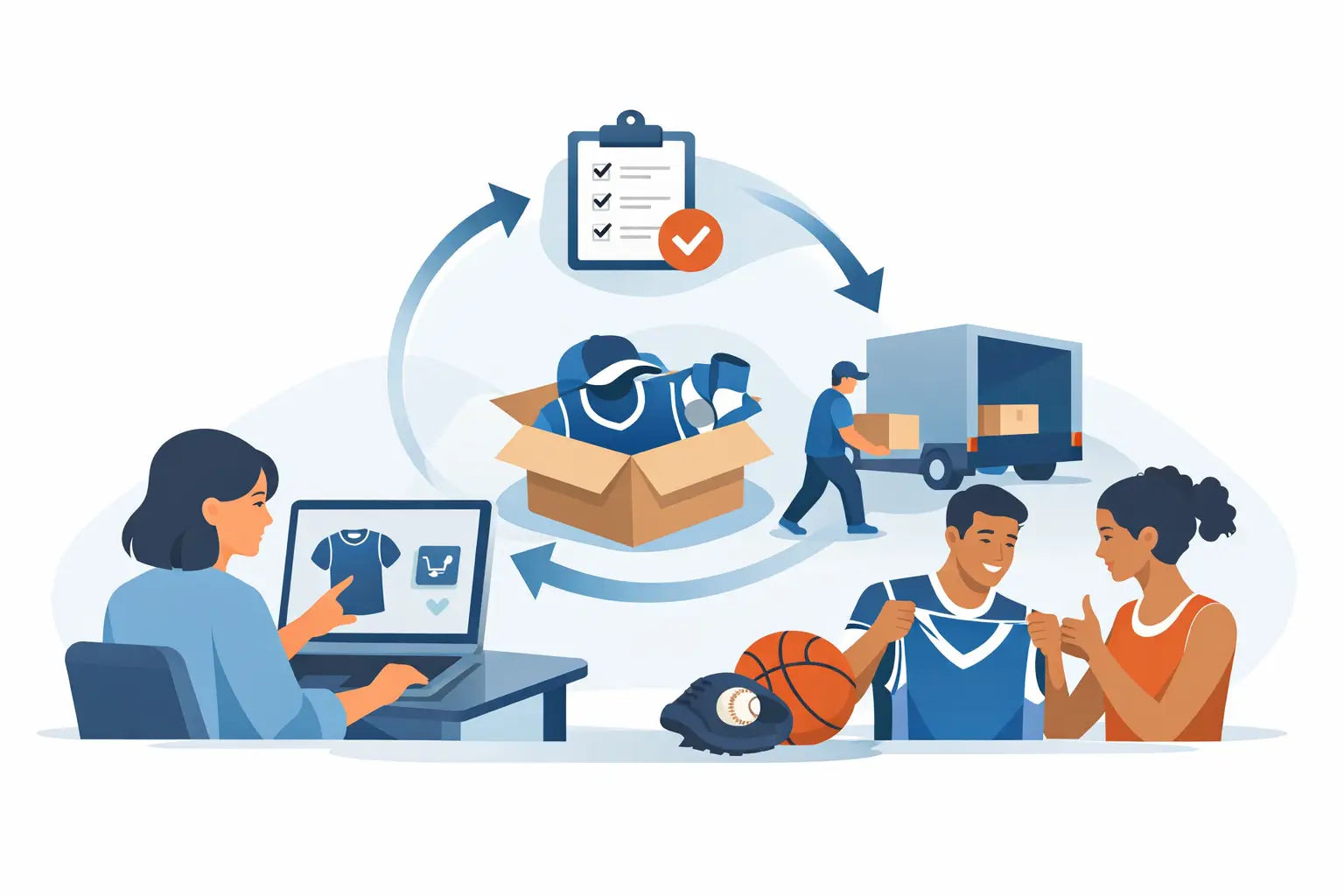
A rider joins mid-season. Two juniors move up a size. Your best-selling thermal vest sells out before the fall calendar starts. That is where the team apparel reorder process either keeps your program moving or creates avoidable drag. For clubs, race teams, and event programs, reorders are not an admin detail. They are part of performance, presentation, and planning.
When the reorder process is loose, problems stack up fast. Athletes miss key pieces, sizing gets inconsistent, and managers end up chasing names, quantities, and payment details instead of focusing on the season. When the process is built correctly, reorders become predictable. Riders get the gear they need, brand standards stay intact, and timelines stay under control.
Why the team apparel reorder process matters
Most teams spend more energy on the first order than on what comes next. That makes sense at the start. You are dialing in artwork, selecting products, confirming fit, and getting everyone aligned. But over the life of a team, reorders usually create more operational friction than the launch order.
That is because reorders happen under pressure. New members come in after the main order closes. Existing riders need replacements after crashes, wear, or changing fit. Seasonal products become urgent when weather shifts. If there is no clear team apparel reorder process, every follow-up order turns into a one-off project.
For competitive teams, the cost is not just inconvenience. Riders train and race better when their kit fits correctly, performs in the right conditions, and arrives on time. A missing speedsuit before a stage race or a delayed jacket ahead of winter training is not a small miss. It affects comfort, confidence, and team consistency.
Build the reorder process before you need it
The strongest reorder systems are set up during the initial custom kit launch, not after the first problem appears. Teams that plan ahead usually move faster later because the important decisions are already locked in.
That starts with product continuity. Your core items should be clearly defined from day one. Race jersey, bib shorts, vest, jacket, skinsuit, base layer - whatever matters to your program - should be documented with exact product names, fabric selections, and design versions. If those details live only in old email threads or one team manager's memory, reorders will slow down.
It also helps to define which products are always open for reorder and which are seasonal or limited to annual buy windows. Not every team needs every item available all year. A local club may only need rolling access to jerseys, bibs, and arm warmers. A larger race program may want year-round reorder access across summer and winter categories. The right setup depends on how active the team is and how much turnover you expect.
Keep sizing data clean
Sizing is where many reorder issues begin. A team manager may know a rider wore medium bibs last year, but that does not always mean medium is still right now. Fit changes with age, training load, body composition, and product updates.
A better team apparel reorder process keeps historical sizing visible without treating it as permanent truth. Previous orders are useful reference points, not automatic approvals. Riders should be able to confirm their size against the current garment cut before a reorder is finalized, especially for form-fit race pieces.
This matters even more when teams use multiple product tiers or fit profiles. A rider may be a medium in one jersey line and a large in another. If your reorder system simplifies that too much, returns and remakes become more likely. Precision up front is faster than correction later.
Use approval rules that match the team
Not every team should reorder the same way. A 20-person local club has different needs than a national development squad or a triathlon program with multiple race calendars. The process should reflect that.
Some teams work best with centralized approval. The manager collects demand, confirms quantities, and submits one controlled reorder. This gives the team tighter oversight on branding, budget, and timing. It is especially useful when sponsors require consistency or when a program subsidizes rider purchases.
Other teams benefit from rider-level access through a team store model. That works well when members pay individually and the team wants less admin overhead. The trade-off is that timelines and order minimums need to be communicated clearly. Flexibility is valuable, but only if the ordering rules are understood.
The smart approach is not to ask which model is best in general. It is to ask which model reduces friction for your specific roster.
Timing matters more than most teams think
Reorders often feel urgent because they are started too late. Teams tend to react to shortages only when riders begin asking for missing items. By then, a race block, travel date, or weather shift may already be close.
A stronger process uses planned checkpoints. Before spring racing, before peak summer events, and before cold-weather training, teams should review stock needs and likely size changes. That creates lead time for production and shipping without relying on emergency decisions.
This is especially important for growing clubs and junior programs. Those teams usually have the highest movement in roster count and sizing. Waiting until the week before a major event to solve apparel gaps is a hard way to manage what should be a routine operation.
The role of minimums and batching
Reorders are rarely just about one rider needing one jersey. Production works best when teams understand batching. Grouping demand into scheduled reorder windows is often more efficient than trying to process isolated requests every time they appear.
That does not mean every team should hold requests for months. It means there should be a realistic cadence. Monthly, bi-monthly, or event-based reorder windows usually work better than fully open-ended ordering. Riders know when to submit, managers know when to approve, and production can move with better predictability.
There is always a balance here. More frequent reorders give riders faster access. Fewer, larger reorders usually improve efficiency and help teams hit minimums more easily. The right answer depends on roster size, budget structure, and how essential each product is to the riding calendar.
Protect design consistency over time
One of the easiest ways for a team identity to drift is through unmanaged reorders. Logos get moved. Sponsor placements change slightly. Colors shift between files or production runs. A single reorder may still look acceptable on its own, but over a season the kit can start to feel inconsistent.
That is why the reorder process should rely on locked production files and version control. If sponsor changes are required, they should be handled intentionally, not mixed casually into routine replenishment. Teams with strong visual standards treat design continuity like equipment setup - details matter because they show up on the road.
For established programs, this is also a credibility issue. Riders, partners, and supporters notice when the team looks dialed in. Consistency communicates professionalism.
Communication should be simple, not casual
A reorder process does not need more messages. It needs fewer unclear ones. Teams lose time when requests come in through scattered channels with missing details. One rider texts a size, another sends an old screenshot, a third asks for "the same jersey as last time" without naming the product.
The fix is straightforward. Standardize what every reorder request must include: rider name, product, quantity, size, and deadline. If the team uses approval, define who gives final signoff. If the team uses rider-paid ordering, define when the store opens and closes.
Clear communication feels basic, but it has a direct effect on turnaround. The cleaner the information going in, the faster the order can move out.
What teams should look for in a reorder partner
A good reorder experience depends on more than garment quality. Teams need a partner that can support continuity, speed, and accuracy after the launch order is complete. That includes reliable production records, clear product mapping, and ordering systems that work for both managers and riders.
This is where factory-direct capability can make a real difference. When design, production, and team ordering support are aligned, there are fewer handoffs and fewer chances for information to get lost. For teams that reorder regularly, that operational control matters almost as much as the kit itself. It is one reason many clubs and race programs work with CCN Sport over the long term, not just for a single custom order.
The best reorder process feels efficient because it is built on repeatable structure. Riders know what to expect. Managers are not reinventing the workflow. And the team can stay focused on training, racing, and growth instead of chasing apparel details.
A strong kit program is not defined by the first delivery. It is defined by how well it holds up when the season changes, the roster shifts, and the next order needs to happen fast.

Share:
How to Start Team Apparel That Performs
How to Choose Race Skinsuits That Fit Fast