
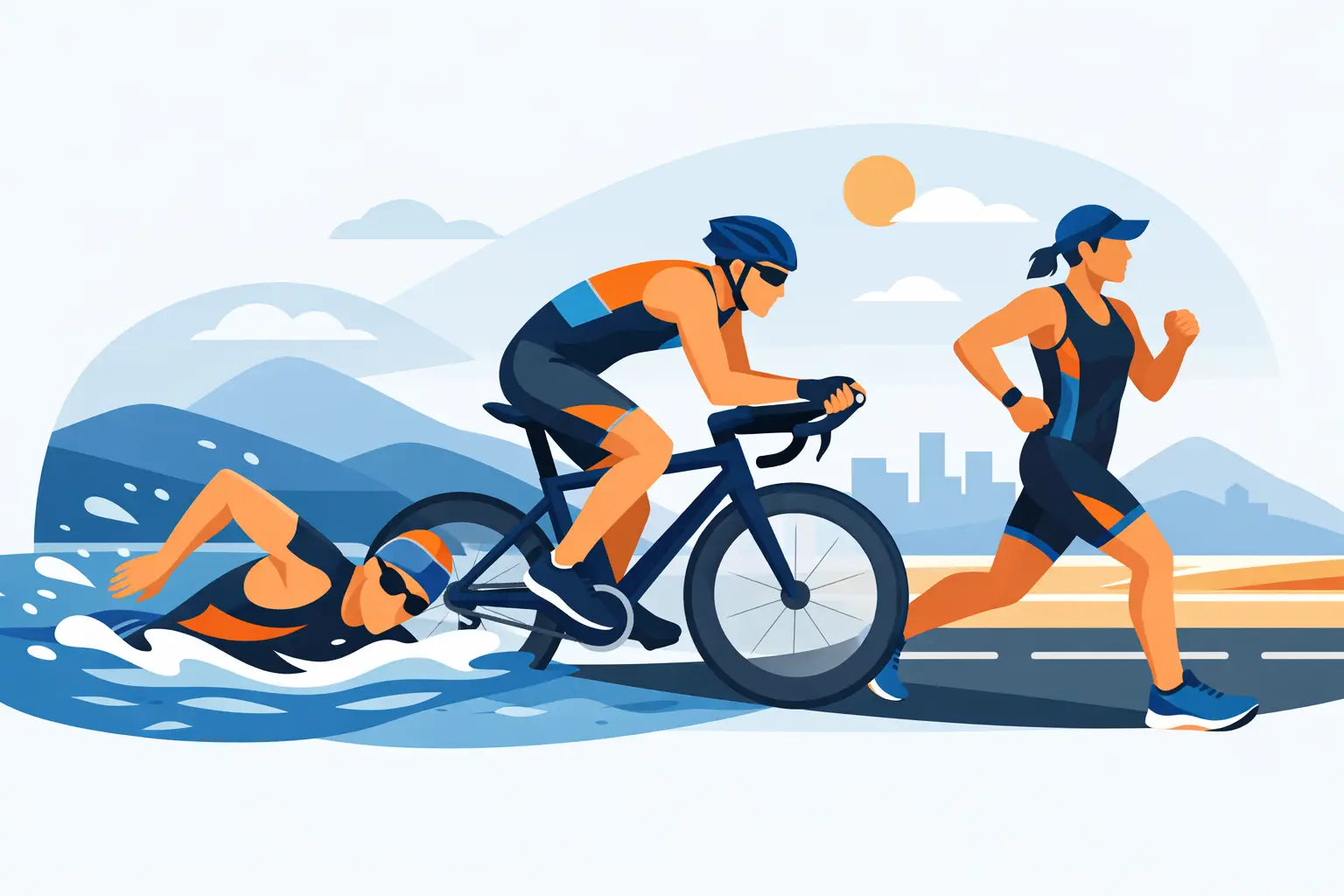
A triathlon team kit has to do more than look sharp in the team tent. It has to stay stable in the water, move freely on the bike, run without chafing, and still present a clean, unified identity from start line to finish chute. That is why custom triathlon team apparel is not just a branding decision. It is a performance decision.
For team managers, coaches, and athletes, the margin for error is small. A poor chamois can ruin the bike leg. A loose pocket can bounce on the run. Fabric that holds too much water can feel heavy before the race has even settled. When a team is ordering apparel for a full roster, those details matter even more because one weak point gets multiplied across every athlete wearing the kit.
What custom triathlon team apparel needs to do
Triathlon apparel has a harder job than standard cycling kit. It needs to support three disciplines without asking the athlete to compromise too much in any one of them. That makes design decisions more technical from the start.
Fit is usually the first priority. A tri suit should feel compressive but not restrictive. Too tight, and it can limit shoulder movement in the swim or create pressure points on the run. Too loose, and it loses aerodynamic value on the bike while increasing drag in and out of the water. The best result is a race-focused fit that stays close to the body, holds shape under effort, and remains comfortable deep into the event.
Fabric selection is just as important. Teams often focus on graphics first, but the fabric package will determine how the suit performs in heat, humidity, and long-course racing. Lightweight textiles that dry quickly and manage heat well are critical. Breathability matters on the run, while surface smoothness and compression matter on the bike. There is always a balance. The lightest fabric may feel great in hot conditions but offer less long-term durability if the team races and trains heavily in the same kit.
Chamois construction is another area where it depends on the team’s race calendar. Sprint and Olympic-distance athletes may prefer a lower-profile pad that stays out of the way on the run. Long-course athletes usually need more support on the bike, but too much bulk can create friction later in the race. A good custom program should account for that instead of forcing every athlete into the same solution.
Designing a team kit that works on race day
A strong triathlon kit starts with performance, then builds the visual identity around it. Teams sometimes reverse that process and end up with a suit that photographs well but performs like a compromise.
Panel layout matters more than many buyers realize. Good patterning supports movement across the shoulders and hips while keeping tension where it helps most. On a tri suit, that means clean mobility in the swim, stable support in the riding position, and minimal irritation over repetitive run stride. A well-developed pattern can make a technical fabric perform better. A poor one can waste it.
Sleeve length is one of the clearest examples of performance meeting preference. Longer sleeves can improve aerodynamics and provide extra sun coverage, but some athletes still prefer a more open feel depending on climate and race distance. Front zipper length, collar height, leg gripper construction, and pocket placement all have the same effect. Small choices change how the suit feels at speed and under fatigue.
Graphics should be handled with the same discipline. Team colors, sponsor placement, and rider names all matter, but not at the expense of readability or panel function. A great custom design uses the full shape of the garment well. Logos stay visible in the aero position. Colors stay consistent across fabric types. Print placement supports the garment instead of fighting the seams.
Why ordering for a team is different from ordering for one athlete
Buying one tri suit is simple. Outfitting a team is not. Now the challenge includes size runs, athlete preferences, budget control, reorder planning, and delivery timing around the race season.
This is where manufacturing capability starts to matter as much as product design. Teams need consistency from one order to the next. They need sizing that is predictable across men’s and women’s cuts. They need the option to serve a small development squad, a growing club, or a larger race program without being boxed in by unrealistic minimums.
Factory-direct production gives teams an advantage here. It shortens communication, reduces guesswork, and makes it easier to control quality because the same organization is handling development and production. It also gives more flexibility when a team needs to add athletes later or adjust quantities by size. For many clubs and triathlon programs, that matters more than chasing the lowest possible price.
A cheap kit can become expensive fast if the fit is inconsistent, the print fades, or the reorder process turns into a separate project every time a new athlete joins. Reliable fulfillment is part of performance apparel, even if it happens before race day.
Custom triathlon team apparel and athlete comfort
Comfort is often discussed like it is separate from speed. In racing, it is not. A tri suit that stays comfortable under load helps the athlete hold position, stay focused, and avoid the distractions that drain energy over time.
That starts with seam placement. Flat, well-positioned seams reduce rubbing through all three disciplines. It continues with fabric recovery. If the material bags out after repeated use, the athlete loses both comfort and support. It also depends on how the kit manages moisture. A suit that handles sweat and water efficiently will usually feel faster simply because it keeps the athlete more stable through changing conditions.
Heat management deserves special attention. Many teams race in warm weather, and a suit that traps heat can become a major liability. Breathable panels, race-appropriate compression, and smart zipper construction all help. There is no single perfect setup for every event, which is why experienced custom suppliers ask the right questions about race conditions, distances, and athlete expectations.
What teams should ask before placing an order
Before approving artwork or locking quantities, teams should pressure-test the program itself. Ask how fit is validated. Ask what tri-specific fabrics and chamois options are available. Ask how repeat orders are handled, and whether the supplier can support different athlete levels with the same visual identity across product categories.
It also helps to ask how the apparel is meant to be used. Some teams want a pure race-day suit. Others need a broader system that includes training tops, warmers, outerwear, and podium apparel built around the same branding. The more organized that ecosystem is, the easier it becomes to outfit athletes properly across the season.
Lead time should be discussed early, not after design approval. Custom production always depends on the calendar, and teams that wait too long usually end up sacrificing options. If there is a national championship, a key qualifier, or a major club event on the schedule, the order timeline should be built backward from that date.
The right kit builds confidence
Athletes notice when a suit feels finished. The fit is dialed. The graphics are clean. The fabric feels race-ready. Transitions are smoother because nothing is distracting. The team looks unified, but more importantly, each athlete feels prepared.
That is the standard custom triathlon team apparel should meet. It should deliver speed where speed matters, comfort where fatigue shows up, and durability that holds through a full season of racing and travel. For teams that want pro-level results without unnecessary friction, working with an experienced factory-direct partner such as CCN Sport makes that process more precise from first concept to final delivery.
The best team kit does not ask athletes to think about it once the race starts. It simply does its job, so they can do theirs.

Share:
Custom vs Stock Cycling Apparel Explained
Best Women's Cycling Bibs for Real Performance