

A jersey that looks fast on the hanger can still feel wrong 20 miles into a ride. Sleeves creep up, pockets sag, the chest pulls when you reach for the bars, or the fabric bunches at the zipper. That is why knowing how to size cycling jerseys matters. Fit is not just about appearance. It directly affects comfort, aerodynamics, storage stability, and how efficiently your kit performs on the bike.
Cycling jerseys are built differently from casual tops, and that is where many sizing mistakes start. A performance jersey is designed around a riding position, not an upright stance. The front panel is often shorter, the back is longer, and the sleeves are shaped to sit correctly when your arms are extended. If you judge the fit like a T-shirt, you can easily choose the wrong size.
How to size cycling jerseys for the right fit
Start with the purpose of the jersey. A race jersey should fit close to the body with very little excess fabric. A club ride or endurance jersey can be slightly more forgiving, especially if comfort and all-day mobility matter more than pure aerodynamics. Neither approach is automatically better. The right size depends on how you ride, how aggressively you position yourself on the bike, and what you plan to wear underneath.
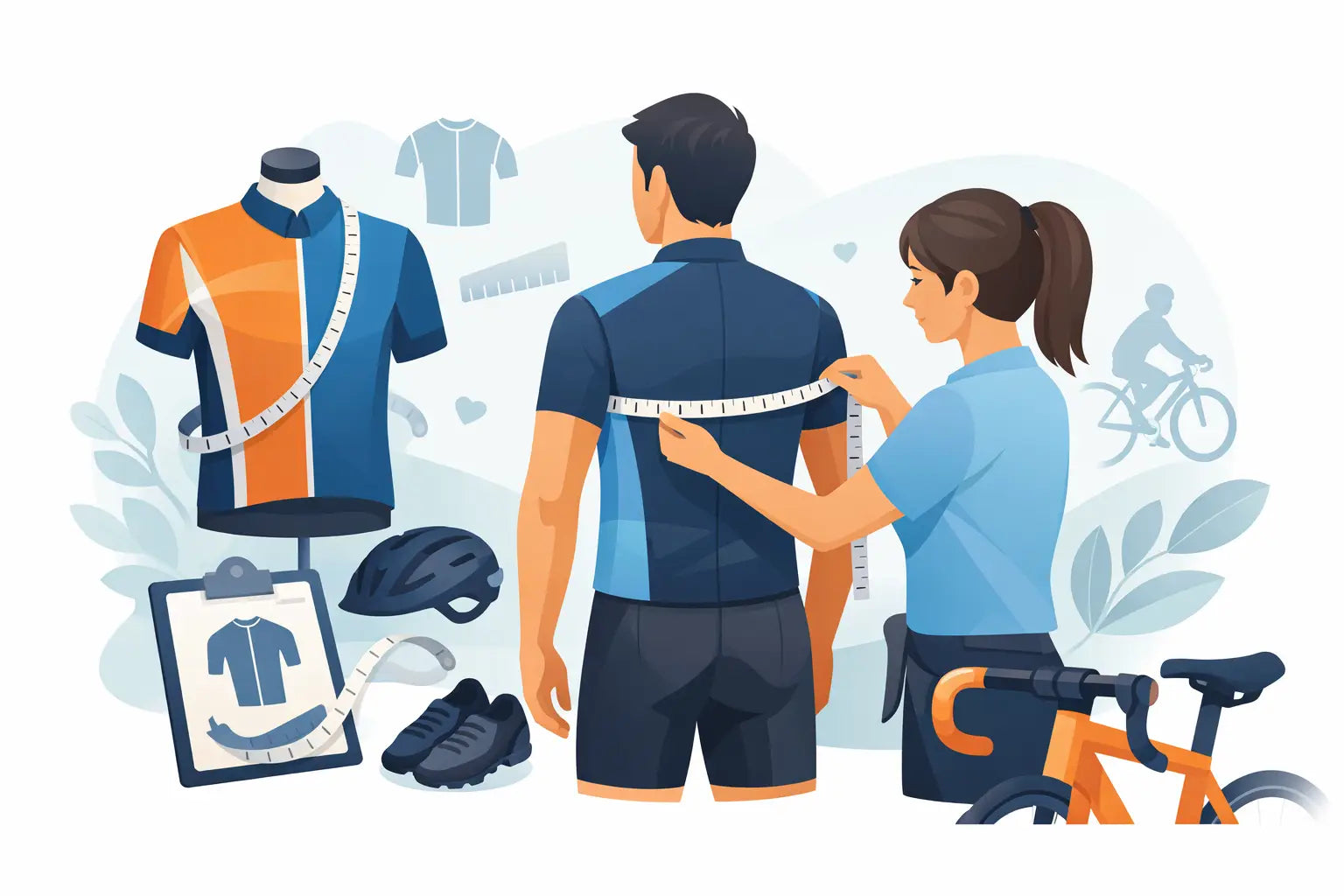
The most useful measurements are chest, waist, and sometimes hip, depending on the cut. For most riders, chest is the primary number. Use a soft tape measure around the fullest part of the chest, keeping it level and snug but not tight. Measure your natural waist as well, because many cycling jerseys taper significantly through the midsection. If your chest puts you in one size and your waist in another, that is a sign to look closely at the jersey's intended fit profile rather than simply sizing down or up automatically.
Height and weight can help, but they are secondary. Two riders with the same height and weight can need very different jersey sizes based on shoulder width, torso length, and build. A size chart based only on body weight is useful as a reference point, not a final answer.
Fit type changes the size you need
Not every jersey labeled medium fits like every other medium. That is especially true in cycling apparel, where patterning is tied closely to performance goals.
Race fit is the closest cut. It is designed to reduce drag, stabilize pockets, and eliminate loose fabric at speed. If you choose a race-fit jersey in your measured size, expect it to feel snug standing up and much more natural once you are in riding position.
Club fit or sport fit usually gives you more room through the chest and waist. It is a better option for newer riders, endurance cyclists, commuters, or anyone who prefers less compression. If you move between the two categories without noticing the fit label, the same size can feel dramatically different.
That is why the smartest approach is not asking, "Am I a medium?" It is asking, "What size am I in this specific cut?"
What a properly sized cycling jersey should feel like
A good cycling jersey should feel close, stable, and supportive without limiting breathing or movement. The chest should sit flat without horizontal pulling across the zipper. The sleeves should stay in place without digging into the arms. The rear pockets should sit securely against the lower back rather than hanging away from the body before you even load them.
The hem matters too. A properly sized jersey should stay anchored when you shift positions, stand on climbs, or reach deep into the drops. If it rides up constantly, the size or cut may be off. If it feels loose around the stomach and lower back, it may not provide enough support once the pockets are filled.
One of the biggest checkpoints is the on-bike test. Standing in front of a mirror can be misleading because cycling jerseys are shaped for a forward posture. A jersey that seems short in the front while standing may fit exactly as intended on the bike. On the other hand, a jersey that looks comfortable upright may bunch badly once you settle into riding position.
Signs your jersey is too small
A jersey is too small if the zipper bows outward, the fabric becomes overly sheer when stretched, or breathing feels restricted even before the ride starts. You may also notice the sleeve grippers cutting sharply into the skin or the rear pockets pulling upward when empty.
Too-small jerseys can create hot spots and friction, especially on longer rides. They can also limit full shoulder movement, which becomes obvious when sprinting, climbing out of the saddle, or reaching for bottles. A tight race fit should feel compressive, not strained.
Signs your jersey is too large
A jersey is too large if fabric ripples in the wind, the sleeves flare, or the pockets bounce once they are loaded. Extra material around the chest and waist increases drag and can lead to rubbing over time.
An oversized jersey also tends to shift more when you ride. That movement can turn a technically strong garment into a distracting one. For competitive riders, that is a performance issue. For recreational riders, it is often a comfort issue first.
Common mistakes when sizing cycling jerseys
The most common mistake is buying based on casual clothing size. A road jersey is not meant to fit like a hoodie or gym shirt, and many riders size up too far because the first try-on feels unfamiliar.
The second mistake is ignoring layering. If you ride mostly in warm weather with only a base layer or no base layer, your jersey can fit closer. If you expect to wear a thermal base layer underneath in shoulder seasons, that needs to be factored into the size decision.
The third mistake is not accounting for riding discipline. Road riders often want a tighter, more aerodynamic fit. Gravel and endurance riders may prioritize pocket capacity and long-hour comfort. Mountain bike riders usually choose a looser silhouette altogether. The same rider may honestly need different jersey fits for different uses.
Another mistake is assuming every fabric behaves the same way. Lightweight summer jerseys often stretch differently from heavily textured aero fabrics or insulated pieces. A highly compressive fabric can feel tighter in the same labeled size, while a softer knit may feel more forgiving.
Sizing for men, women, and team orders
Men's and women's jerseys are not just scaled versions of each other. Women's cuts typically account for different shaping through the chest, waist, and hip. If a rider falls between categories due to preference or body proportions, the best choice is the one that matches fit needs on the bike, not the one that seems closest in casual apparel.
For clubs and custom team orders, sizing gets even more important because consistency affects the whole group. A team kit should look unified, but it also has to perform for a wide range of body types. That is why it helps to collect accurate chest and waist measurements from every rider rather than relying on self-reported T-shirt sizes. Precision up front reduces exchanges, delays, and fit complaints later.
Brands with deep manufacturing experience tend to build more consistent grading across sizes, which matters when outfitting both elite racers and everyday club riders. That consistency is one reason riders and teams pay close attention to fit standards rather than buying on guesswork.
A practical way to choose your size
If you want the simplest path, begin with your chest measurement and compare it to the chart for the exact jersey model. Then adjust based on fit goal. If you want a true race fit and your measurement lands cleanly in one size, start there. If you are between sizes, think about your priorities. Choose the smaller option for a close, aerodynamic feel if the fabric has enough stretch and you are comfortable with a compressive fit. Choose the larger option if you want more freedom through the torso or expect to layer underneath.
After that, check sleeve length, torso length, and pocket position once the jersey is on. Zip it fully. Get into riding posture. Reach forward. Simulate loaded pockets if needed. The right jersey should disappear once you are in position.
CCN Sport builds apparel around that standard - fit that works at speed, stays stable under load, and feels right where it matters most: on the bike, not just in the fitting room.
A well-sized jersey does more than look clean. It lets you focus on the ride, hold your position longer, and trust your kit every time the pace picks up.

Share:
Team Store Ordering Guide for Cycling Clubs
Low Minimum Custom Cycling Kits That Perform