

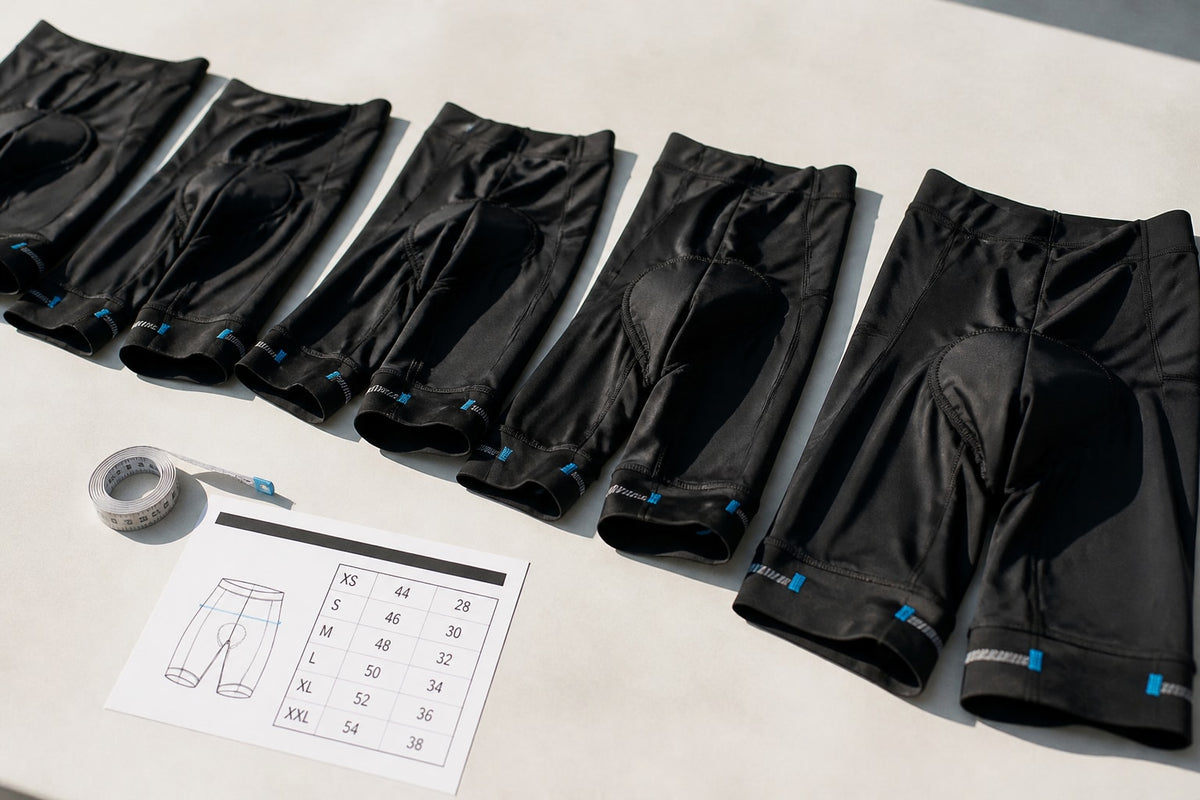
Cycling shorts on sale are worth buying when the fit, chamois and fabric match how and how far you ride, and not when the discount is the only thing that appeals. A pair that bags at the thigh or digs in at the waist costs more in discomfort than any markdown saves. This guide covers sizing, padding, construction, style and care, then explains why clubs and teams often step outside the sale rack entirely.
Why Cycling Shorts on Sale Are Not Always a Bargain
A sale price only counts as value if the garment fits the rider and survives a full season of washing and riding. Discounted stock is frequently end-of-line, which means limited sizes, discontinued colors and sometimes an older chamois design.
That does not make sale shorts a poor choice. It means the evaluation should start with the specification, not the price tag. A pair marked down 40% that rides well for three seasons is a better purchase than a full-price pair that rubs after an hour.
For a club or team, there is a second consideration. Buying off a sale rack rarely produces matching kit. Different batches, dye lots and cuts show up on the road, and a squad of ten riders in ten slightly different blacks does not look like a squad. If uniformity matters, the economics change, and that point is covered later in this article.
How to Get the Fit Right Before You Buy
The right fit is snug without being restrictive: the fabric lies flat against the skin, the leg grippers hold without digging in, and nothing moves when you pedal. CNN Underscored notes that shorts should fit snugly without restricting circulation or movement, and that fabric should not wrinkle or bag around the crotch and inner thighs.
Letter sizes vary widely between brands, so a medium in one catalog can behave like a large in another. TOUR Magazine points out that thigh and hip measurements are a more reliable basis for choosing a size than assuming the same letter size across brands, and that manufacturers' size charts can guide the selection.
A Quick Fit Check
Run through these points when you try a pair on, or when you compare charts online:
- Waist and bib straps: The waistband should sit flat without rolling. Bib straps should hold the shorts in place without pulling at the shoulders when you lean forward.
- Leg grippers: They should stay put at the mid-thigh without leaving deep marks after an hour.
- Chamois position: The pad should sit under your sit bones in the riding position, not far forward or back.
- Seams: Flat or bonded seams reduce chafing on long rides.
- Length: The inseam should keep the gripper clear of the knee joint when the leg is fully bent.
Measure Before You Order
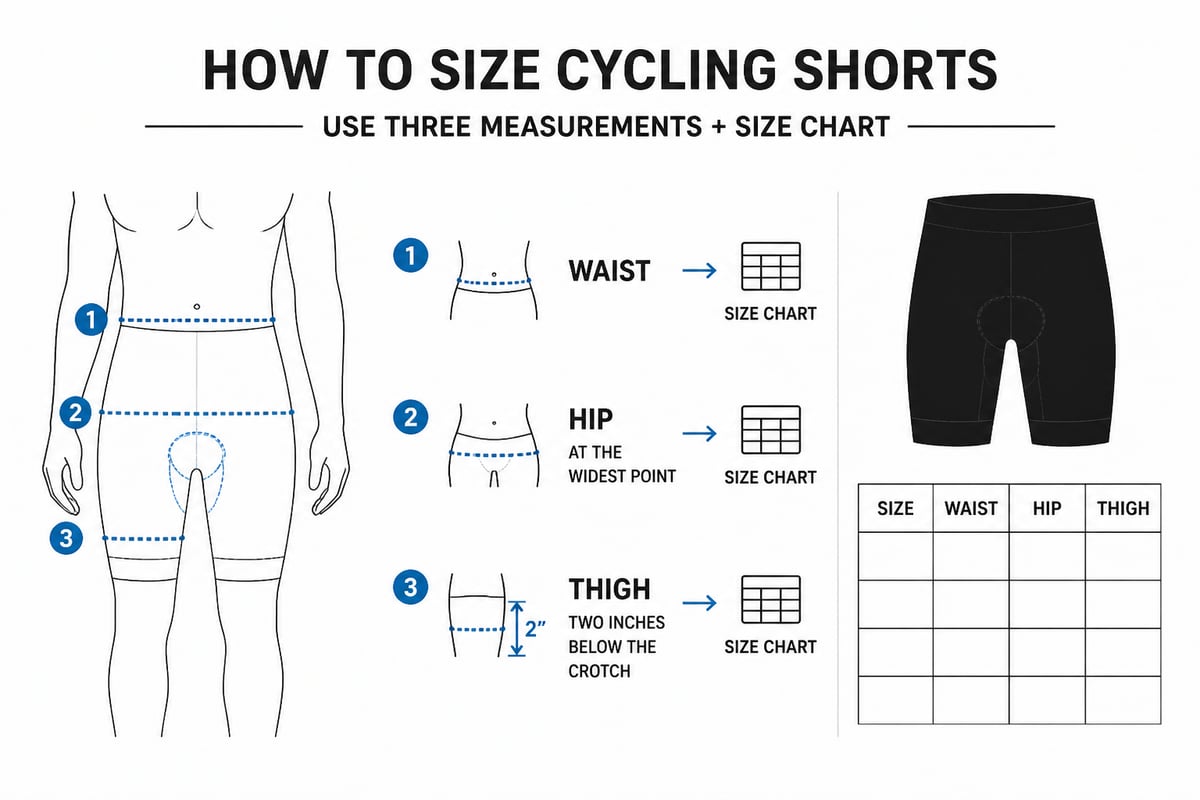
Take three measurements: waist, hip at the widest point, and thigh about two inches below the crotch. Compare each against the specific size chart for the garment, not against a pair you already own. If your numbers fall between sizes, rider position matters. A racer in a deep aero tuck usually prefers the snugger size, while a rider who spends hours upright may want a little more room.
Choosing the Chamois for Your Ride Length
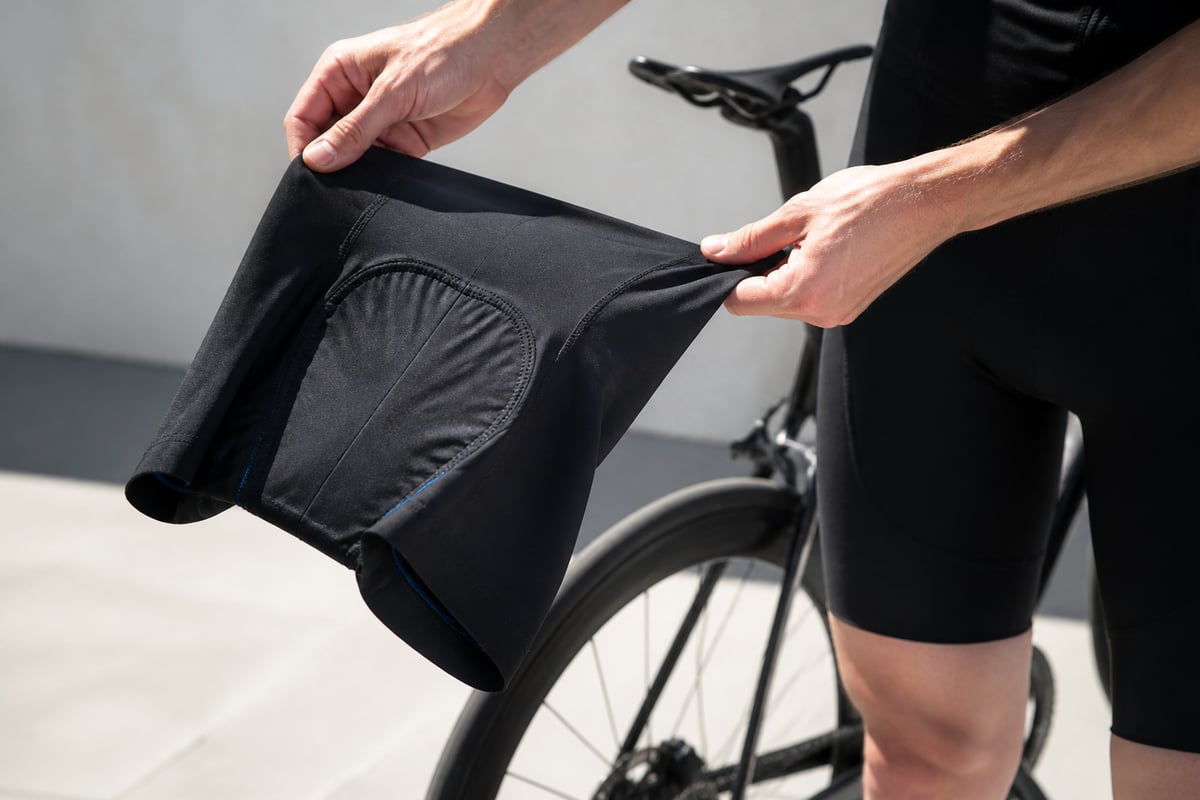
Match the padding to the longest ride you do regularly, because the chamois is the part of the short you will feel most. CNN Underscored advises that for rides longer than two hours, a more substantial chamois can help protect the sit bones, and that padding should suit both the rider and the ride length.
Thicker is not automatically better. A very dense pad on a short, intense criterium can feel bulky and hold heat. A thin pad on a six-hour road stage can leave you sore by the midpoint. Mavic's guide to cycling shorts covers how chamois positioning and ride duration influence the choice of padding, which is useful background if you are comparing several models.
Use this as a working guide:
- Under one hour: A light, low-profile pad is usually enough.
- One to three hours: Medium density with shaped zones for the sit bones.
- Over three hours: Multi-density padding with a defined channel, ideally tested by riders at that distance.
- Mixed riding: Choose for the longest ride you do each month and accept a little extra bulk on the short ones.
Sale shorts sometimes carry an older pad design. Check the product description for the pad's density zones and intended ride length rather than assuming a premium label guarantees a premium pad.
Bib Shorts or Waist Shorts
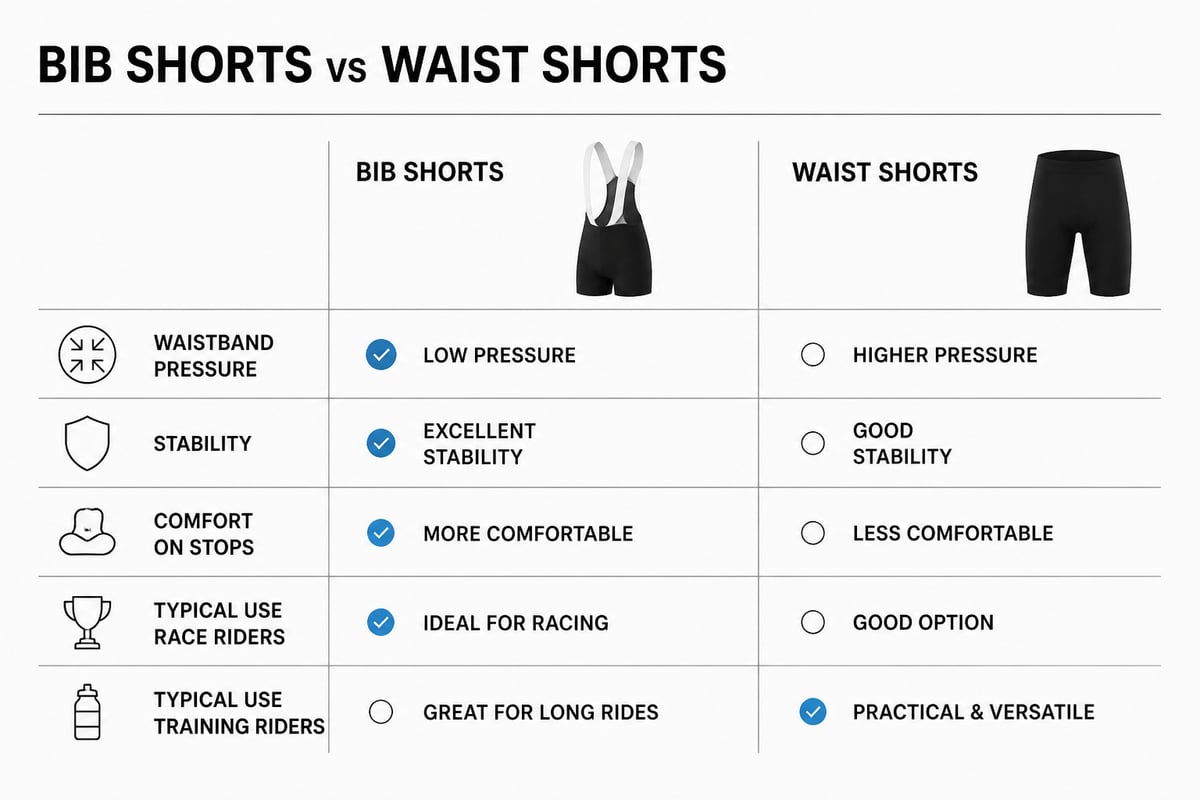
Bib shorts suit most performance riding because the straps remove the waistband, which can compress the abdomen in a bent-over position. Waist shorts remain popular for casual rides, easier bathroom stops and riders who simply prefer them.
Cyclingnews discusses how riding frequency, ride duration, terrain, weather, leg length and compression all affect bib-short selection. In practice, that means a rider who trains four days a week in cool, hilly conditions has different needs than someone who rides twice a month on flat roads.
If you are still deciding, CCN Sport's comparison of bib shorts vs cycling shorts lays out the trade-offs, and its guide on how to choose cycling bib shorts goes further into straps, pad and fabric.
| Feature | Bib shorts | Waist shorts |
|---|---|---|
| Waistband pressure | None | Can compress in a tuck |
| Stays in place | Very secure | Depends on the grippers and fit |
| Comfort stop | Slightly more fuss | Easier |
| Typical use | Training, racing, long rides | Short rides, mixed use |
What to Check on Cycling Shorts on Sale Before You Pay
Before buying cycling shorts on sale, confirm that the size you need is actually in stock, then inspect fabric, seams and the return policy. Limited stock is the most common reason a discount turns into a poor purchase, because riders settle for a size that is close but not right.
Work through this checklist:
- Size availability: If your size is the last one left, ask yourself whether you would still buy it at full price.
- Fabric weight: Lighter fabrics breathe better in summer, while heavier or brushed fabrics suit cool conditions. Match it to your season.
- Seam construction: Look for flat seams and consistent stitching along the inner thigh.
- Leg grippers: Silicone print or laser-cut elastic hold well. Loose elastic bands tend to ride up.
- Return policy: Sale items are often final. Confirm before checkout.
- Model age: An older model is fine if the chamois and fit still suit you, but check reviews from riders with a similar build.
For more on spotting genuine value in discounted kit, CCN Sport's pieces on cycling sale clothing and sale cycling cover timing and what to prioritize.
Why Clubs and Teams Often Skip the Sale Rack
Teams, clubs and national programs usually get better results from made-to-order kit than from a mix of discounted shorts, because matching color, cut and fit across every rider is difficult to achieve with off-the-shelf stock. Sale inventory is sold by size and color until it runs out, so a squad rarely finds the same short in enough sizes at once.
Custom production changes that. CCN Sport's custom cycling apparel is made in the company's own factories in Shenzhen, China and Dasmarinas, Philippines, with minimum orders starting at 5 main pieces. That low threshold means a small club or a development squad can order a matching run without committing to a large volume. Clubs can request a quote to plan the per-rider cost.
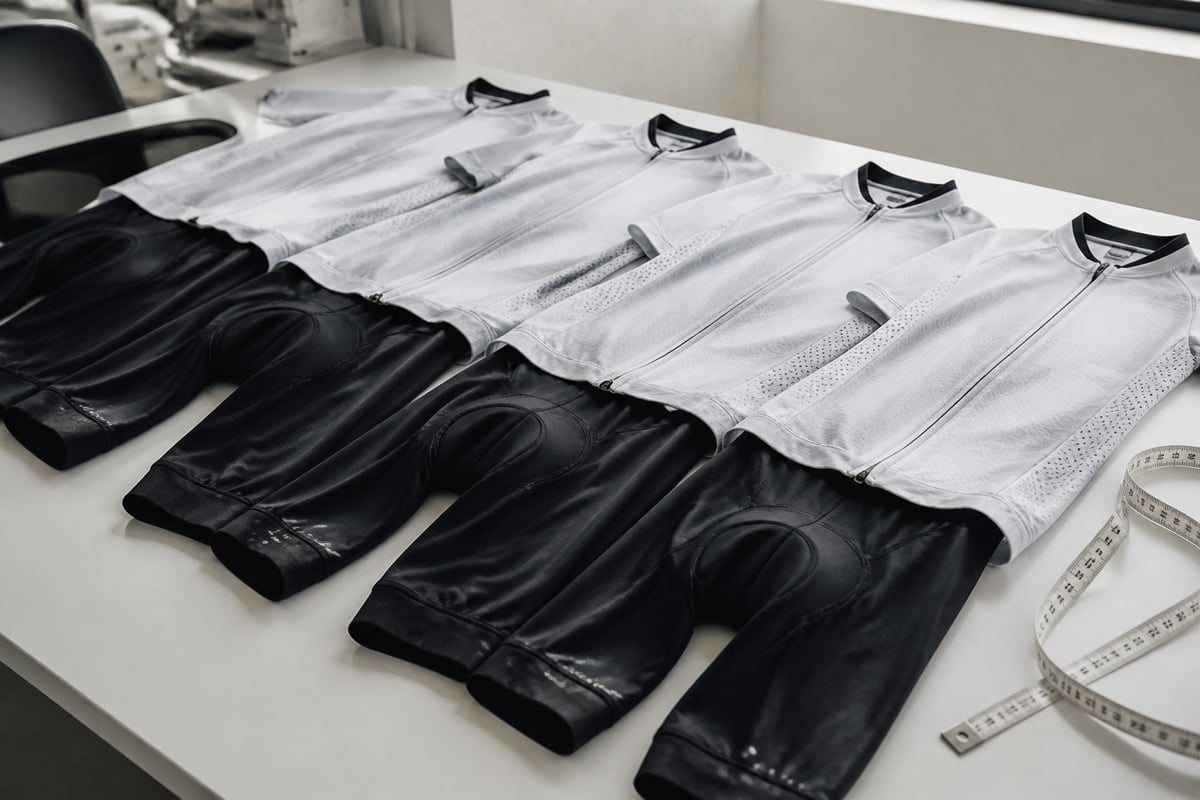
A few details matter specifically for teams:
- Consistent fit across the roster: Designs are built to an aerodynamic, comfort and style brief, with fit and fabrics suited to competitive riding.
- Precision digital printing: Sponsor logos and team graphics stay sharp through a season of washing.
- Reorder flexibility: Damaged pieces can be reordered at a discount after a crash, and riders whose size changes can take advantage of a reorder offer.
- Limited lifetime warranty: CCN Sport's products come with warranty cover, so check the terms for the specific product.
Custom orders are typically non-refundable, so confirm sizes carefully before committing. CCN Sport's size charts and product pages are the place to check measurements, and its contact page can answer questions about specific requirements.
How to Care for Your Shorts So They Last
Wash your shorts promptly after every ride and skip the fabric softener. BBB Cycling recommends washing cycling shorts immediately after each ride, turning them inside out for machine washing, and avoiding fabric softener because it can affect stretchability.
Add these habits and a good pair will last several seasons:
- Rinse or wash soon after riding. Sweat and bacteria break down chamois materials over time.
- Turn them inside out. This protects the pad surface and cleans the area that touches skin.
- Use a mild detergent at a low temperature. Hot water and harsh cleaners weaken elastic.
- Air dry. Tumble drying shortens the life of both the chamois and the leg grippers.
- Rotate pairs. Having two or three pairs in circulation reduces wear on each.
Quality fabric that is cared for properly keeps its compression and shape. That is as true for a discounted pair as for a custom one, and it is the cheapest way to extend any pair's life.
Comparing Options Without Overpaying
Compare shorts on cost per ride, not sticker price. A pair at $60 that lasts 150 rides costs less per ride than a $35 pair that fails after 50. When you evaluate sale shorts, estimate how often you ride and how long a pair realistically needs to last.
A simple comparison approach:
- Set your must-haves: Size, chamois suitability and bib or waist style.
- Remove anything that fails those: However cheap, it is not a deal.
- Compare the rest on fabric and construction: Seam quality and leg grippers show how the maker approached the garment.
- Check what repair or warranty cover exists: Cover on a made-to-order garment can outweigh a modest saving elsewhere.
For women's fits specifically, the cut and pad shape differ enough that a dedicated comparison helps, and CCN Sport's women's cycling bib shorts comparison is a useful starting point for team managers outfitting mixed squads.
Frequently Asked Questions
When is the best time to find cycling shorts on sale?
End-of-season clearances usually offer the deepest cuts, typically as new collections arrive. Autumn is a common window for summer-weight shorts and late winter for thermal versions. Stock is thinner at the end of a clearance, so sizes run out quickly.
Are padded shorts worn with underwear?
No. Cycling shorts are designed to be worn directly against the skin so the chamois can wick moisture and limit friction. Underwear adds seams and bunching that cause chafing.
How often should I replace my cycling shorts?
Replace them when the chamois compresses and no longer cushions, the elastic loses its hold, or the fabric thins. For regular riders, that typically means every few seasons, depending on mileage and washing habits.
Can a team order a small batch of matching shorts?
Yes. CCN Sport's minimum order quantities are low enough to suit small clubs and development squads. Check the product pages or contact the team for specifics on a particular design.
Before you buy any pair, measure your waist, hip and thigh and compare them against the manufacturer's size chart, then match the chamois to your longest regular ride. If your club or team needs matching kit rather than a collection of discounted odds and ends, CCN Sport can produce it from its own factories through its custom cycling apparel service, and you can start your custom kit by sending a quote request with your roster size and design brief.

Share:
Sublimated Versus Screenprinted Cycling Kits
Cycling in Winter: Gear, Safety and Bike Care Guide