

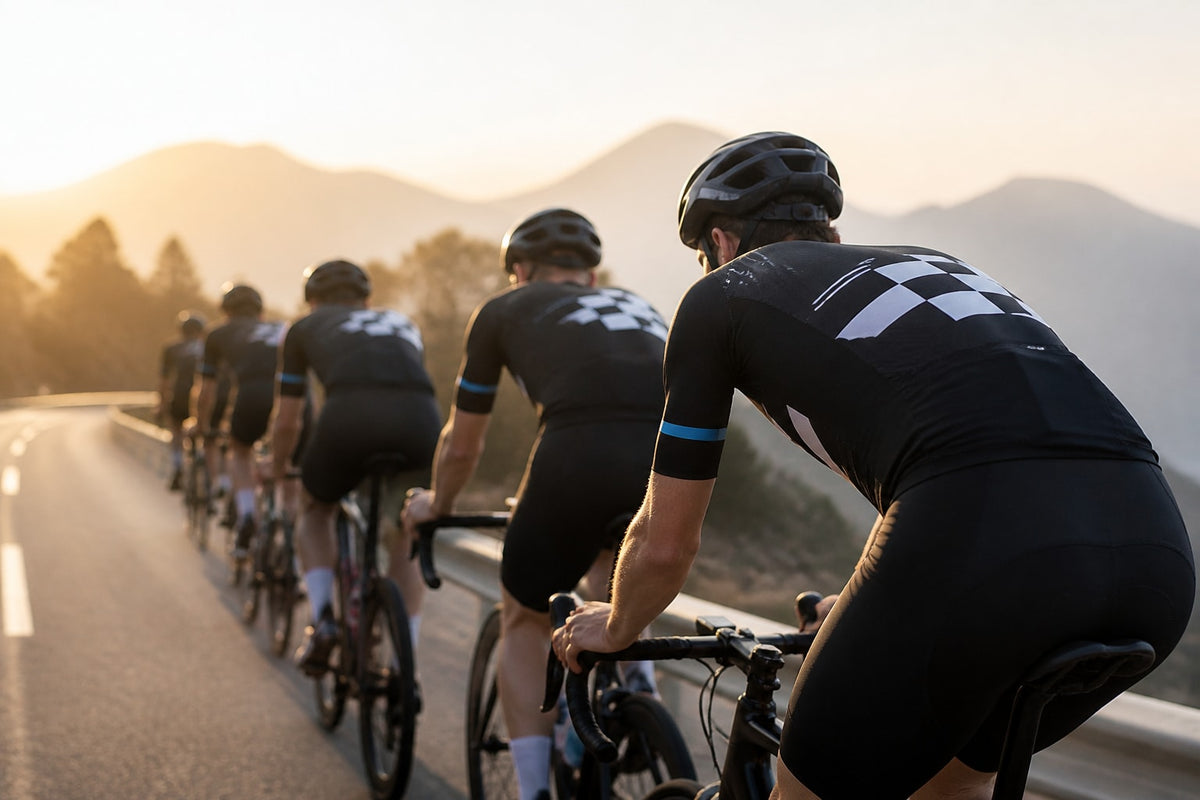
The right bike riding jerseys combine a close but comfortable fit, breathable fabric, rear pockets and a design that suits your riding conditions. For a club or team, the choice carries an extra layer: every rider needs a matching, well-fitted jersey that looks consistent in the bunch and performs the same way in every size.
This guide moves from the basics to confident decisions. It covers what a cycling jersey is, whether it makes a measurable difference, which features matter, how to match fabric to temperature, and how teams can order custom kits without costly mistakes.
What Is a Cycling Jersey, and What Do You Call It?
A cycling jersey is a technical shirt designed for riding, and most riders simply call it a "jersey" or a "kit top." Some people say "bike jersey" or "cycling shirt," and when it is paired with bib shorts the full outfit is known as a "kit."
Unlike a standard t-shirt, a jersey is cut for the riding position. The back panel is longer to cover the lower spine when you lean forward, the front is shorter to avoid bunching at the stomach, and the sleeves are shaped to stay in place on the arms. If you want a closer look at how a jersey differs from everyday casual tops, CCN Sport covers it in this comparison of jerseys and t-shirts.
Common jersey types include:
- Short-sleeve road jerseys: the default choice for most conditions, with a full-length front zipper.
- Long-sleeve jerseys: useful for cooler mornings and for sun coverage on long summer days.
- Aero or race-cut jerseys: a tighter fit with minimal flapping fabric, built for speed.
- Mountain bike jerseys: looser, often with a more durable fabric. CCN Sport explains the differences in its guide to men's mountain bike jerseys.
Do Cycling Jerseys Make a Difference?
Yes. A proper jersey improves comfort, temperature control and convenience over a regular shirt, and a race-cut version can reduce fabric flutter at speed.
The benefits are practical rather than magical:
- Moisture management. Technical fabrics move sweat away from the skin so it can evaporate, which helps you avoid the cold, clammy feeling of a soaked cotton shirt.
- A stable fit. A shirt that stays put does not ride up, flap or rub, which matters over several hours.
- Storage. Three rear pockets carry food, a phone, a wind layer and keys without a backpack.
- Visibility and identity. Bright colors improve visibility on the road, and a team design makes riders easy to identify in a group.
For a team or club, there is a fifth benefit: a consistent kit signals professionalism to sponsors, supporters and race organizers. It also makes it easier to spot your own riders in a large field.
Which Jersey Features Matter Most?
The features that matter most are fit, fabric, the zipper, the pockets and the finishing details, because these determine whether a jersey stays comfortable for hours.
Fit and Cut
Cycling fits generally fall into three categories: race fit, which is close to the body and minimizes drag; club fit, which is slightly more relaxed; and relaxed fit, which suits mountain biking or casual riding. Race fit looks best on a rider in the saddle but can feel snug off the bike. For a team that includes a range of body types, offering both a race and a club cut is worth considering.
Fabric
Look for lightweight knit fabrics with moisture-wicking properties. Mesh panels under the arms or across the back add airflow in hot weather. Heavier thermal fabrics suit winter, and lightweight, UV-resistant materials suit summer.
Zipper and Collar
A full-length zipper lets you vent on climbs. A low-profile zipper garage keeps metal from touching your chin. A soft, low collar prevents chafing when you look over your shoulder.
Pockets and Details
Three rear pockets are standard, and a fourth zippered pocket is useful for valuables. Silicone gripper elastic at the hem keeps the jersey from riding up, and reflective trim improves visibility at dawn and dusk.
How Should You Choose a Jersey for the Temperature?
Choose the jersey weight based on the temperature range you ride in, then add or remove layers instead of buying one jersey for every condition.
According to POC's temperature guide, a standard short- or long-sleeve jersey with bib shorts is typically enough at 15 to 22°C (59 to 72°F), while above 22°C (72°F), lightweight, breathable jerseys with mesh panels help airflow. For 10 to 15°C (50 to 59°F), the same guide suggests a short-sleeve jersey paired with removable arm warmers.
| Temperature | Suggested jersey setup |
|---|---|
| Above 22°C (72°F) | Lightweight, mesh-panel short-sleeve jersey |
| 15 to 22°C (59 to 72°F) | Standard short- or long-sleeve jersey |
| 10 to 15°C (50 to 59°F) | Short-sleeve jersey with arm warmers |
| Below 10°C (50°F) | Thermal long-sleeve jersey plus base layer |
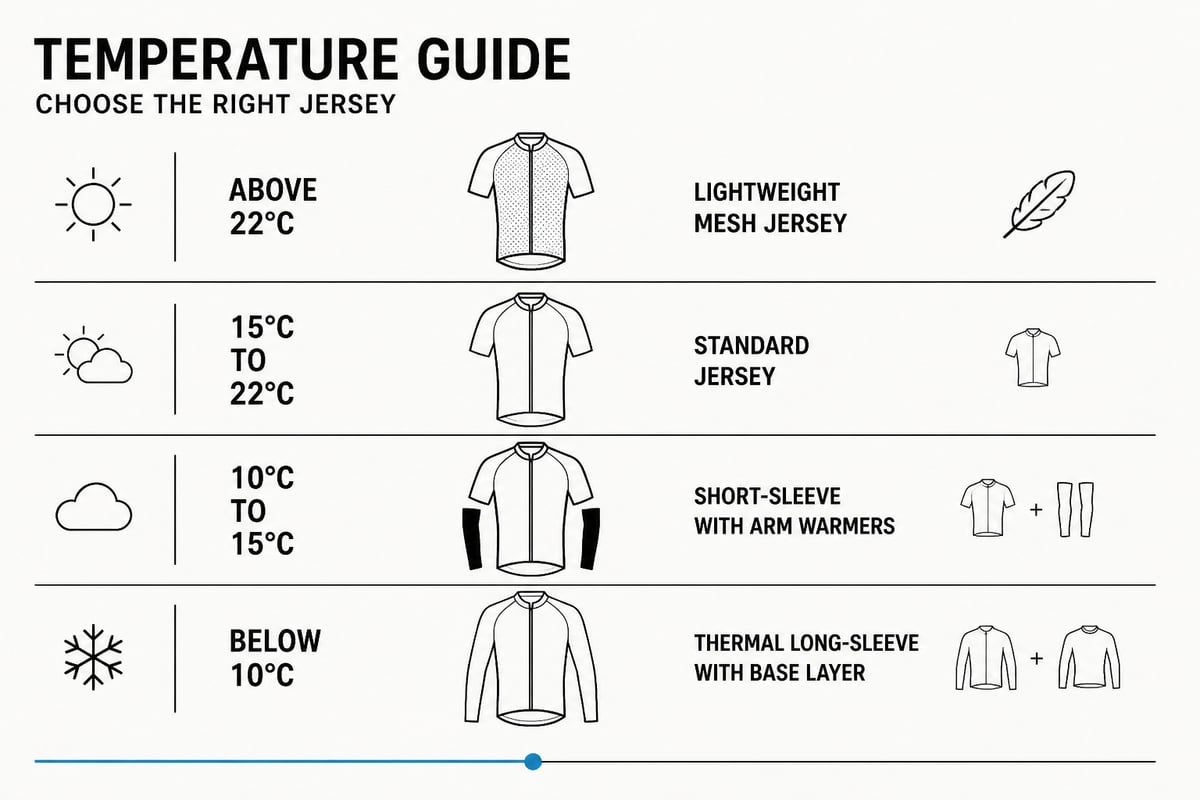
Layering gives you flexibility. Cycling UK notes that arm and leg warmers can be rolled up and carried in a jersey pocket, which makes them useful when temperatures change during a ride. CCN Sport covers the details of bike arm warmers and cold-weather options in its winter bike riding gear guide.
Men's, Women's and Unisex Fits: Why the Cut Matters
Women's jerseys are often cut differently from men's, so a team with mixed riders should consider offering both cuts instead of sizing everyone from one pattern.
A unisex cut often compromises fit for both groups, which can cause bunching or restricted movement. CCN Sport explains the construction differences in its article on the difference between male and female jerseys. Teams with mixed squads can browse the men's jersey collection and the women's jersey collection to compare cuts and construction.
Sizing matters most when ordering for a group. Collect measurements before placing an order, and plan for a spread of sizes that matches your actual riders instead of assuming a standard distribution.
What Makes a Premium Cycling Jersey?
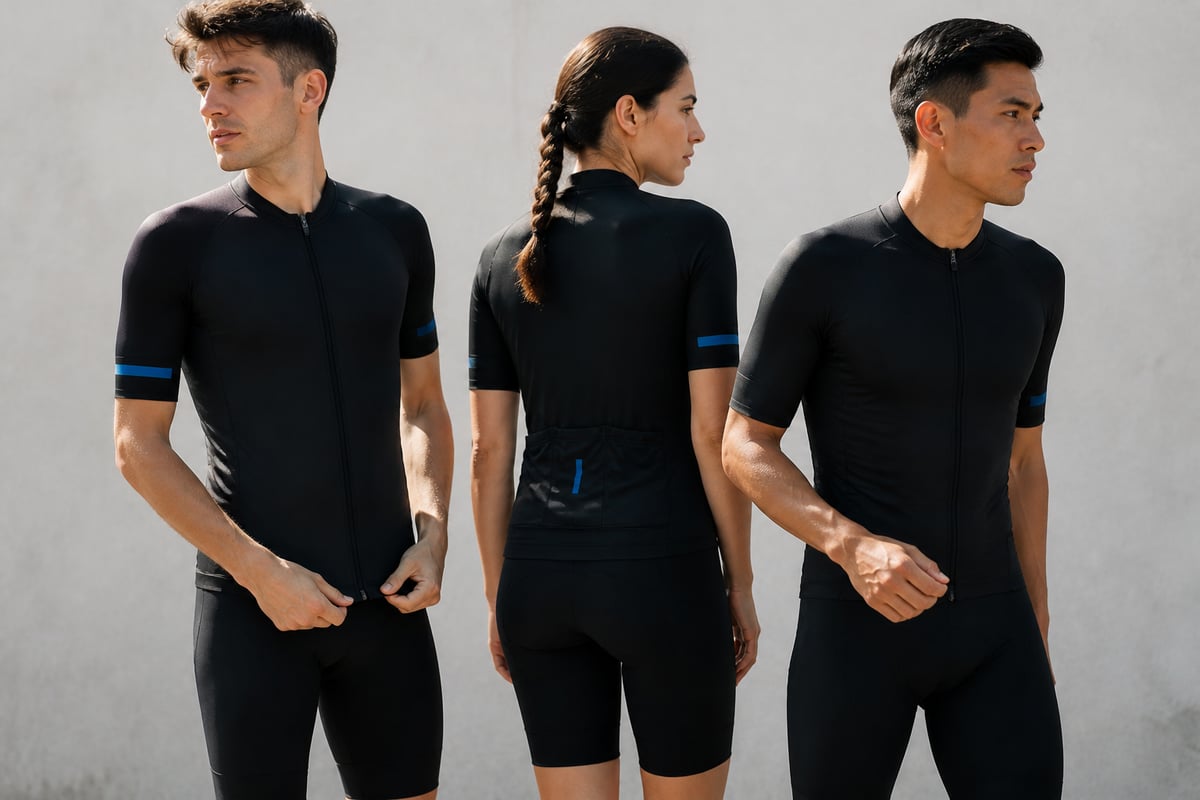
A premium cycling jersey combines advanced fabric, precise patterning, flatlock seams and durable printing, and the quality shows after dozens of washes more than on the first ride.
Check these points when judging quality:
- Seams: flat, soft seams that do not irritate skin over long distances.
- Fabric stretch and recovery: the jersey should return to shape after being stretched.
- Print quality: sublimated graphics are dyed into the fabric instead of sitting on top, so they resist cracking and fading.
- Zipper quality: smooth, durable, and free from snagging.
- Pocket construction: reinforced stitching that holds up when pockets are loaded.
For teams, a jersey made to a pro-level standard is worth the investment because it is worn for an entire season of training and racing. A good example of a race-ready design is the Factor Racing Team Kit, which pairs a race-tuned fit with lightweight, breathable fabric.
The Factor Racing Team Kit shows what a UCI-level design looks like when fit, fabric and branding are built together.
Where Can You Find Cycling Jerseys for Sale?
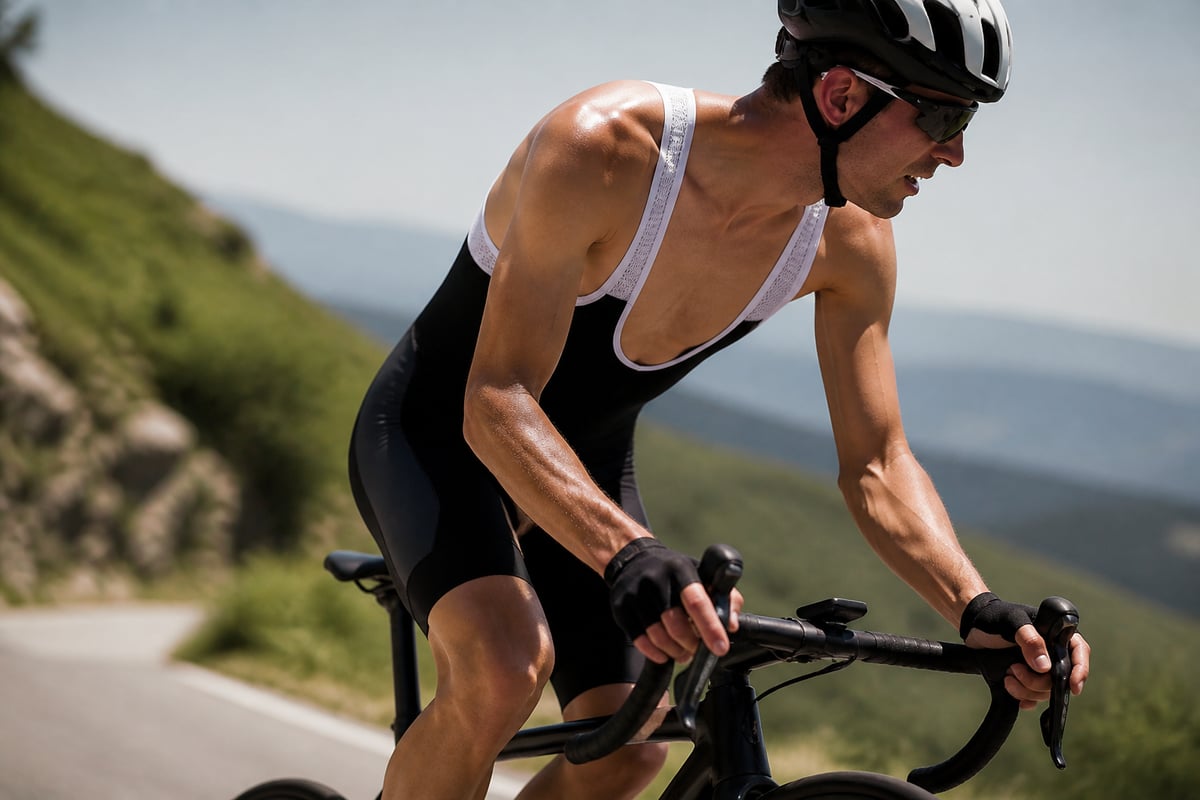
You can find cycling jerseys for sale through specialist cycling retailers, brand websites and factory-direct manufacturers, and the best source depends on whether you need one jersey or a full matching team order.
For individual riders, retail shops and online stores offer ready-made sizes. For clubs and teams, ordering direct from a manufacturer gives you control over design, sizing and quantity. Factory-direct production can also reduce the number of middlemen in pricing, which matters when outfitting a full squad.
CCN Sport produces custom and retail cycling apparel in its own factories in Shenzhen, China and Dasmarinas, Philippines, with minimum orders starting at 5 main pieces. To compare ready-made styles, look at the Nova Pro men's jerseys and the women's Nova Pro jerseys. For specific order requirements, turnaround and pricing, check the product pages or contact CCN Sport directly.
One note on policy: custom orders are made to order and are non-refundable, so confirm your designs, sizes and quantities carefully before you approve production.
How to Order Matching Custom Jerseys for a Team
Ordering matching custom jerseys for a team works best as a sequence: finalize the design, collect accurate sizes, confirm artwork, then approve production.
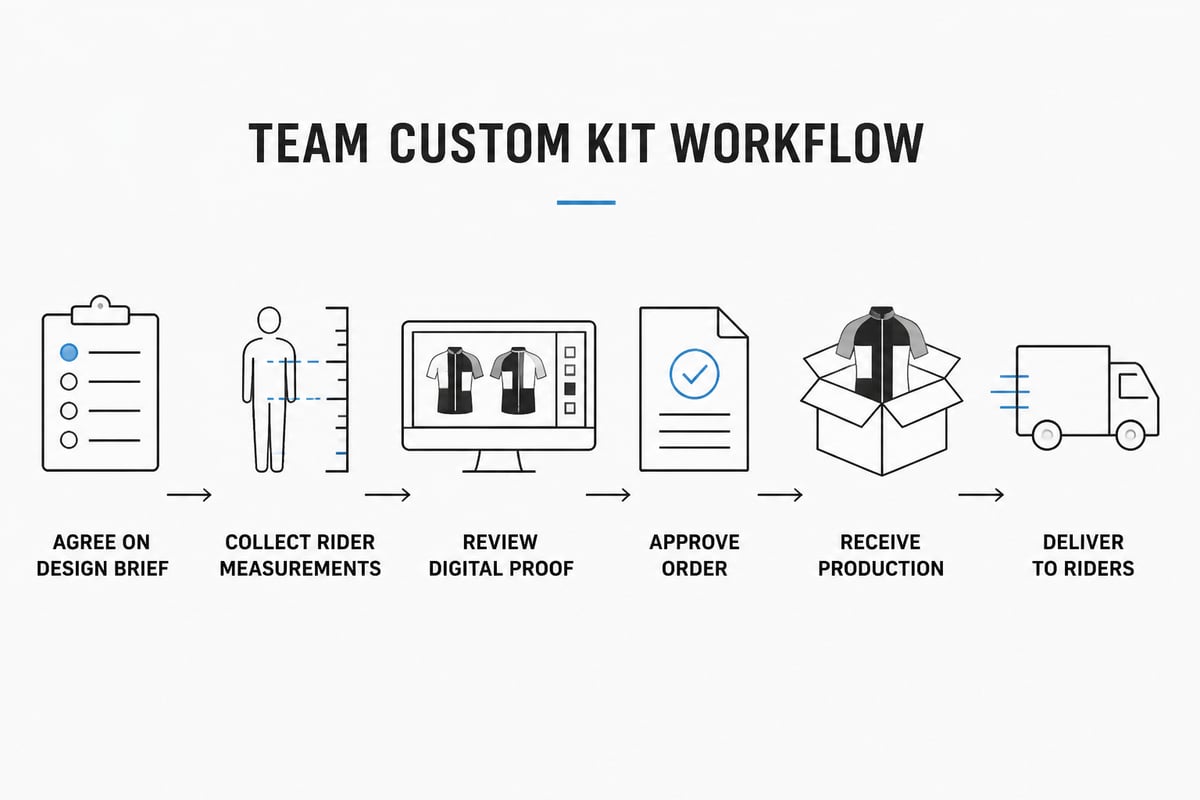
- Agree on the design brief. Decide on colors, sponsor logos, name or flag placement and any national or club identity elements before contacting a manufacturer.
- Collect rider measurements. Ask each rider for chest, waist and torso measurements and, where possible, have them try a sample size.
- Choose cut and fabric. Select a race or club fit and a fabric weight that suits your climate and race calendar.
- Review proofs carefully. Check spelling, logo placement and color against your brand files before signing off.
- Plan for reorders. Crashes, sponsor changes and new riders are normal over a season.
CCN Sport supports that last step with crash reorders and a size reorder program, both priced below retail. Its in-house team also builds custom kits to an aerodynamic, comfort and style brief, and many teams and clubs rely on CCN gear each season. For a sense of how teams use their kit in competition, see the 7-Eleven Roadbike PH kit collection.
Pairing jerseys with the right lower-body kit completes the setup.
How Do You Care for a Cycling Jersey?
Care for a cycling jersey by washing it gently, inside out, with zippers closed and no fabric softener, then air drying it.
BBB Cycling's apparel care instructions advise using detergent without fabric softener, closing zippers before washing and turning garments inside out. Softener coats technical fibers and reduces their ability to wick moisture, so skip it entirely.
A few more habits extend jersey life:
- Wash after every ride, since sweat and sunscreen degrade fabric over time.
- Use a cool or lukewarm cycle instead of hot water.
- Avoid tumble drying; heat can damage elastic and sublimated graphics.
- Store jerseys flat or folded instead of crushed in a bag.
Teams that travel to races can also protect their equipment in transit. Weather-resistant covers such as the Nova bike cover keep bikes clean between events, and if your team also supports a support vehicle fleet, a resource like OTR TIRE THAI offers wholesale tires for commercial and industrial vehicles.
FAQ
Are cycling jerseys worth buying for casual rides?
Yes, if you ride for longer periods. The pockets, wicking fabric and stable fit add comfort even at a relaxed pace, though casual riders may prefer a relaxed cut over a race fit.
How tight should a cycling jersey fit?
A road jersey should feel snug without restricting your breathing or shoulder movement, and it should not flap in the wind when you are in the riding position. If the fabric bunches at the stomach or the hem rides up, size up or try a different cut.
How many jerseys does a rider need?
Many riders find two or three in rotation useful so one is always clean. A club rider who trains year-round may want a lightweight summer jersey, a standard jersey and a long-sleeve or thermal option.
Start by gathering your riders' measurements and a clear design brief, since those two items shape every later decision. From there, CCN Sport can help turn that brief into a finished kit, with low minimums, factory-direct production and 20 years of custom cycling apparel experience behind it. If you want a race-ready reference point, look at the Factor Racing Team Kit, then start your custom kit with CCN Sport to bring your club's colors to the road.

Share:
Triathlon Squad Ordering Example for Race Teams
Bicycle Attire Guide: What to Wear for Every Ride