

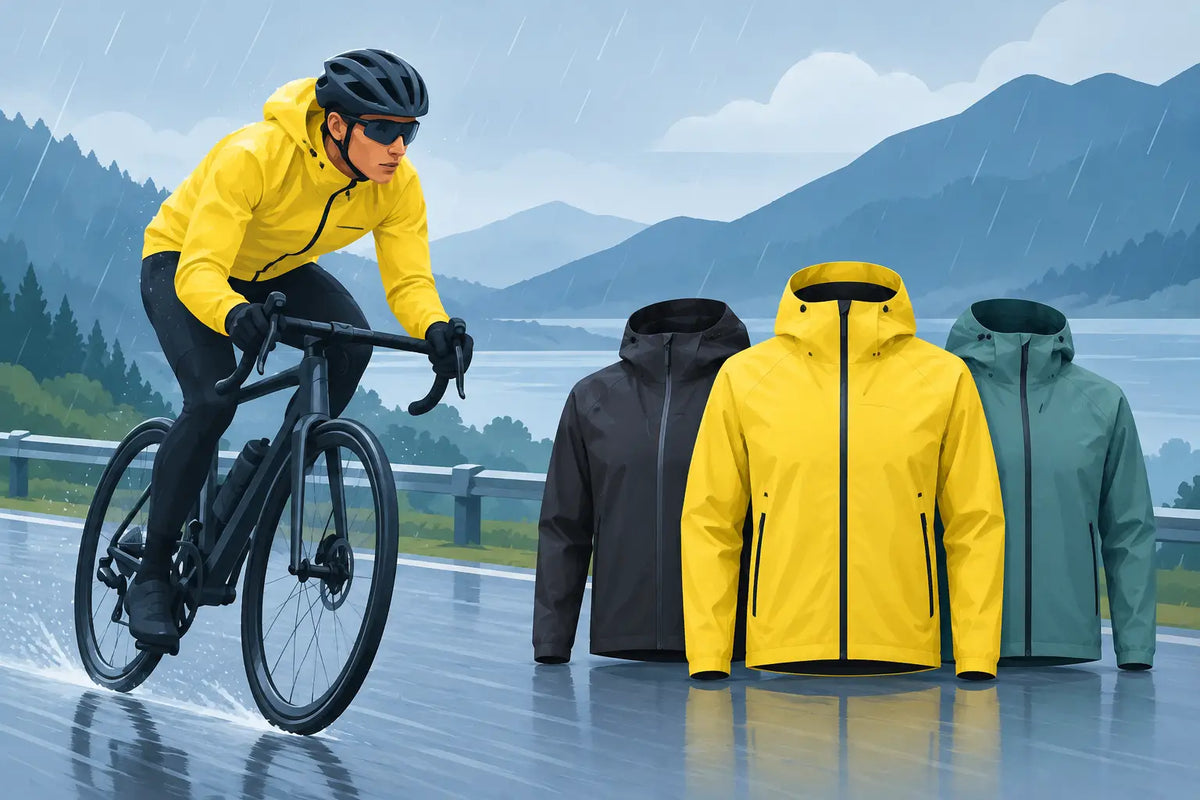
A hard rain on a fast descent exposes every weakness in a jacket. Water finds the zipper, sleeves creep above gloves, and trapped heat turns a useful shell into a personal sauna. The best rain cycling jackets solve those problems without adding the bulk, noise, or restricted fit that makes riders leave them in a pocket.
For road riders, racers, gravel riders, and committed club groups, the right jacket is not simply waterproof. It is a performance layer built to preserve body temperature, keep the wind off at speed, and work with a riding position rather than against it. The best choice depends on the conditions you actually ride in, how hard you ride, and whether the jacket needs to disappear into a jersey pocket when the weather clears.
What Makes the Best Rain Cycling Jackets Different
A cycling rain jacket has a harder job than a hiking shell. Your arms stay extended, your back is curved, and your body generates significant heat while your front meets cold air at speed. A jacket that looks waterproof on a hanger can still fail on the bike if its pattern, fabric, or closures are not designed for that position.
Start with weather protection, but do not stop there. A fully waterproof jacket uses a membrane or coated fabric with taped seams to block sustained rain. This is the right category for long wet rides, cold races, and days when the forecast is certain rather than questionable. The trade-off is breathability. Even premium waterproof fabrics can feel warm during high-output climbs, especially in humid conditions.
Water-resistant shells are lighter, more breathable, and often more packable. They work well for showers, wet roads, and windy conditions, but they will eventually soak through in persistent rain. For many riders, that is not a weakness. It is the right tool for short races, rolling terrain, and rides where a full storm shell would spend most of the day in a pocket.
The best rain cycling jackets balance protection with heat management. There is no single fabric or feature that wins for every ride.
Choose Protection for the Ride You Actually Do
For racing and high-intensity road rides
Fast riding produces heat quickly, so a close-fitting shell is usually the best choice. Look for a race-oriented cut with pre-shaped sleeves, a dropped rear hem, and minimal loose material at the chest and shoulders. Flapping fabric is distracting, less aerodynamic, and can accelerate wear around the zipper and collar.
A two-way zipper is especially valuable when the pace changes. Open the jacket from the bottom during a climb to release heat while keeping the collar closed against rain and wind. A protective zipper garage at the neck also matters more than it seems. It prevents a cold, abrasive zipper pull from rubbing the throat through hours of riding.
For race days with intermittent rain, a lightweight waterproof shell that packs into a jersey pocket is often the practical answer. It should go on quickly over a jersey, sit cleanly over bib straps, and remain stable when you are moving between the drops and hoods.
For endurance rides and cold rain
When the temperature falls, staying dry becomes part of staying strong. A more substantial waterproof jacket with fully taped seams, longer cuffs, and a higher collar can protect comfort over several hours. The ideal fit remains athletic, but there should be enough room for a base layer and thermal jersey without pulling tight across the shoulders.
Pay close attention to the rear hem. Road spray rises from the rear wheel, and an extended, grippy hem helps cover the lower back when you are bent over the bike. A storm flap or well-sealed zipper adds another useful barrier on exposed roads.
This type of jacket may not be the smallest option in your pocket. That is a reasonable trade-off when rain is steady, temperatures are low, and stopping to add layers is not an attractive option.
For gravel, commuting, and variable conditions
Gravel routes often move between shelter, open roads, climbs, and slower technical sections. Breathability and durability can carry more value here than pure aerodynamic fit. Look for a jacket that allows a little more movement through the upper back and shoulders, while still avoiding excessive fabric around the torso.
Mud and road spray make a darker color practical, but visibility should remain a priority. Reflective details on the rear, sleeves, and side panels help drivers and other riders identify your movement in flat light. Bright colors can also make a meaningful difference when the weather turns gray.
For riders building custom club apparel, rain jackets deserve the same attention as jerseys and bib shorts. Consistent fit, visible team colors, and well-placed graphics help a group look professional while delivering useful protection in difficult conditions. CCN Sport approaches performance apparel with that same race-ready focus, from individual layers to coordinated team kits.
Fit Is a Performance Feature
A rain jacket that is too large traps wind and shifts around the body. One that is too small restricts breathing, compresses the layers below, and can pull at the wrists when you reach the bars. Test fit in your riding position, not standing upright in front of a mirror.
The shoulders should move freely without the fabric binding across the upper back. Sleeves should reach the wrists with your hands on the hoods, ideally overlapping gloves or arm warmers to prevent a gap. The collar should seal comfortably around the neck without pressing into the throat when your head is lowered.
Check the length at the rear as well. A cycling-specific jacket should remain low enough to cover the jersey pockets and protect against wheel spray. At the front, it should not bunch excessively at the waist when you are pedaling.
Layering changes the equation. If you plan to use the jacket mainly over a short-sleeve jersey, a close race fit makes sense. If it is part of a cold-weather system over thermal layers, choose enough room to move without stretching the waterproof fabric. Sizing up indiscriminately is rarely the solution. A jacket designed with the correct pattern and stretch will perform better than a loose shell.
Details That Matter in Heavy Rain
Marketing claims can make every shell sound equally capable. The finishing details show where a jacket will perform when the ride gets difficult.
Fully taped seams are essential for sustained rain. Needle holes create thousands of potential entry points, so taped seams prevent water from reaching the inside of the garment. Critically taped seams can be adequate for brief showers, but full seam taping is the better choice for all-day wet-weather protection.
Cuffs deserve equal attention. Elasticized cuffs are simple and low-profile, while adjustable cuffs can seal more securely over gloves. The best option depends on glove style and whether you prioritize speed of changing layers or maximum storm protection.
A high-quality front zipper should operate easily with cold fingers and resist water entry. Waterproof zippers are useful, although zipper flaps can also work well when they are engineered to lie flat at speed. Avoid jackets with bulky hardware that creates pressure points at the chest.
Pocket access is another real-world consideration. Some minimalist shells have no rear pockets, relying on your jersey underneath. Others include a small waterproof pocket for keys or a phone. If you carry nutrition, a pump, or layers in jersey pockets, make sure the jacket allows access or has enough stretch to avoid making those pockets difficult to use.
Breathability Is More Than a Fabric Claim
A waterproof membrane can pass moisture vapor outward, but it cannot overcome poor layering or a jacket worn beyond its ideal temperature range. If you are climbing hard in mild rain, you may still get damp from sweat. That does not automatically mean the jacket has failed.
Manage heat before you overheat. Start a cool-weather ride with the zipper slightly open if conditions allow. Use a breathable base layer that moves moisture off the skin. On long climbs, vent early rather than waiting until you are soaked inside. When the road points down again, close the jacket before your body temperature drops.
Mechanical ventilation helps. Two-way zippers, vented back panels, and carefully positioned underarm vents can release heat without turning the jacket into a wind scoop. Each added opening introduces a possible route for water, so the design needs to match the intended use. A lightweight race shell may favor simple, clean construction. A winter endurance shell can justify more adjustable ventilation.
Care Keeps a Rain Jacket Working
Waterproof performance declines when dirt, road oil, sweat, and detergent residue clog the outer face fabric. A jacket may begin to wet out, appearing saturated on the outside even when the membrane beneath still blocks rain. Once the exterior holds water, breathability drops and the jacket feels colder.
Wash the jacket according to its care instructions using a technical cleaner when appropriate. Avoid fabric softener, which can damage water-repellent finishes. Air dry unless the garment instructions specify that low heat can reactivate the durable water-repellent treatment. When water no longer beads on the surface, a suitable reproofing treatment can restore the outer finish.
Dry the jacket completely before storing it. Leaving it crumpled in a pocket, saddlebag, or damp gear bin can create odor, compromise coatings over time, and make the next wet ride less pleasant.
Build a Smarter Wet-Weather System
The jacket is only one part of wet-weather comfort. Pair it with a base layer matched to the temperature, gloves that overlap the cuffs, and shoe covers when cold rain is expected. In warm rain, accept that you may get wet and focus on avoiding chills from wind exposure. In cold rain, prioritize sealing the gaps at the neck, wrists, waist, and ankles.
The right rain jacket gives you a better decision at the start line, on the club ride, and halfway through an exposed gravel route. Choose the protection level your conditions demand, make sure the fit works in motion, and treat it as a performance layer rather than emergency gear. Then rain becomes a condition to manage, not a reason to miss the ride.

Share:
Bike Shorts Cycling: Performance, Fit & Fabric Guide