

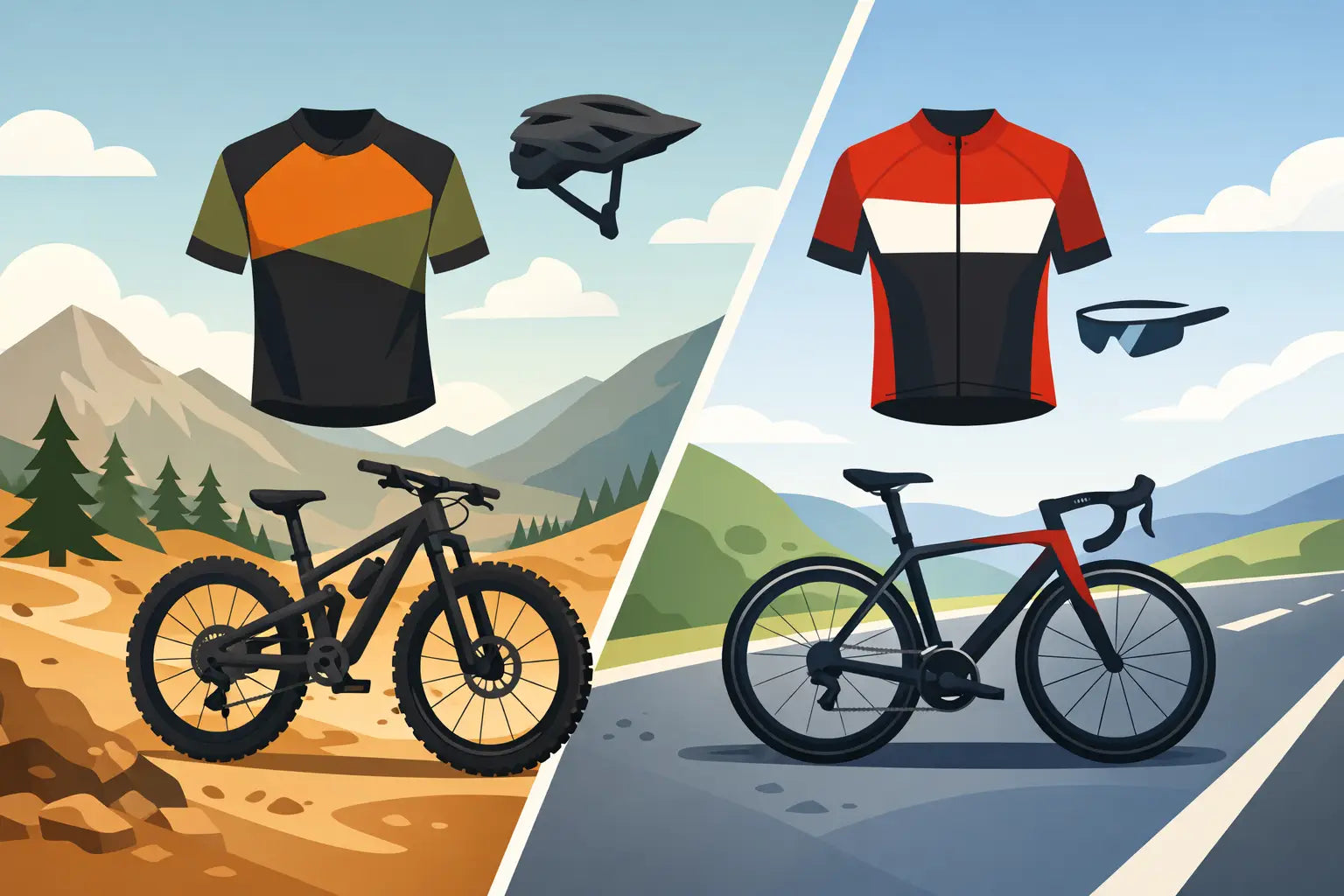
You feel the difference before the ride is even underway. Pull on a road jersey and it sits close, smooth, and ready for speed. Pull on a trail jersey and the fit opens up, the fabric feels tougher, and the priorities shift. That is the real starting point for the mountain bike jersey vs road jersey question - both are built for performance, but they are built for different kinds of performance.
A lot of riders cross between disciplines now. One weekend might be fast group miles on pavement, the next might be singletrack, gravel, or mixed terrain. That crossover makes the choice less obvious than it used to be. The right jersey depends on how you ride, what conditions you ride in, and how much you value aerodynamics, storage, durability, or freedom of movement.
Mountain bike jersey vs road jersey: the core difference
At the highest level, a road jersey is designed to reduce drag and support long hours in an aggressive riding position. A mountain bike jersey is designed to handle movement, abrasion, changing terrain, and often a more upright posture. Neither is automatically better. Each is optimized for its environment.
Road jerseys are usually more form-fitting because excess fabric costs efficiency. On the road, especially in a paceline, race, or spirited training ride, small aerodynamic gains matter. The fit is close through the torso and sleeves, the fabric is often lighter and more compressive, and the rear pocket layout is built around carrying nutrition and ride essentials without needing a pack.
Mountain bike jerseys take a different route. Riders need room to move over the bike, space for pads in some cases, and fabrics that can stand up to brush, dirt, and repeated washing. The fit is often looser, though performance-focused MTB jerseys can still be tailored and athletic. Storage may be minimal because many trail riders carry gear in a hip pack or hydration pack rather than jersey pockets.
Fit changes how the jersey performs
Fit is where most riders notice the biggest gap between categories. A road jersey is cut for the on-bike position. The front panel is shorter, the back is longer, and the sleeves are shaped to sit correctly when your hands are on the bars. When the fit is right, the jersey stays stable at speed and does not bunch excessively across the chest or shoulders.
That same cut can feel restrictive off-road, especially if you move around the bike a lot. Technical climbing, descending, and shifting body position through corners demands range of motion. A mountain bike jersey usually allows more room through the shoulders, chest, and waist. That can improve comfort on the trail, but it can also create drag and flap in the wind if you try to use it for high-speed road riding.
There is a trade-off here. A very loose MTB jersey can feel casual and comfortable, but too much extra material can snag on saddles, packs, or brush. A very tight road jersey can feel fast and precise, but if the terrain is rough or the posture is less aggressive, it may stop feeling efficient and start feeling limiting.
Why sleeve construction matters
Sleeves tell you a lot about intent. Road jersey sleeves are often longer, cleaner at the cuff, and built to stay flat against the skin. That improves airflow and gives a more race-ready feel. Mountain bike sleeves may be shorter or more relaxed, with a cut that prioritizes movement and durability over a locked-in aero shape.
If you wear elbow protection, that matters immediately. A mountain bike jersey is more likely to accommodate extra gear without distorting the fit.
Fabric and breathability are tuned for different stress
Both road and mountain bike jerseys use technical fabrics, but they do not always solve the same problem in the same way. Road riding creates consistent airflow and often sustained effort. That favors lightweight, moisture-managing materials that dry quickly and feel cool at speed. Many road jerseys use highly breathable knit panels and smooth fabrics that balance ventilation with aerodynamic efficiency.
Mountain biking often brings lower average speeds, more stop-start efforts, and more exposure to dirt, trees, and repeated abrasion. As a result, mountain bike jerseys may use slightly more durable fabrics, especially on high-contact areas. Some have a more mesh-like structure for cooling at low speeds, while others lean into tougher materials for enduro and all-mountain use.
Heat management depends on the ride. On a hot climb with little airflow, a lightweight MTB jersey can feel excellent. On a long paved descent or a fast road interval, a close-fitting road jersey may regulate better simply because it does not move around and catches less wind.
Pockets are a bigger deal than many riders expect
One of the clearest functional differences in mountain bike jersey vs road jersey design is storage. Traditional road jerseys usually feature three rear pockets, and often a zip pocket as well. For road riders, that setup is standard because it works. Food, arm warmers, a mini pump, phone, and tools can all be carried in a stable, accessible way.
Many mountain bike jerseys skip large rear pockets altogether. That is not a weakness. It reflects how trail riders carry equipment. Hydration packs and hip packs are common because they hold more water, tools, and layers without affecting jersey fit. On rough terrain, loaded rear pockets can bounce or feel awkward.
If you prefer to ride light and keep everything on the jersey, road design has a clear advantage. If you already use a pack, the simpler MTB approach often feels cleaner.
Protection and durability favor trail use
Trail riding is harder on apparel. Branches, crashes, mud, repeated rubbing from packs, and frequent washing all take a toll. Mountain bike jerseys are generally built with that reality in mind. Even lightweight trail jerseys tend to prioritize durability more than a pure road race jersey.
Road jerseys are not fragile by default, but they are usually optimized for low weight, close fit, and speed. That means they may not be the best choice if your riding includes overgrown singletrack, frequent shoulder checks with a hydration pack, or contact with pads and body armor.
For mixed-surface riders, this is where the decision gets more nuanced. Gravel and adventure riding often sit in the middle. You may want road-style pockets and fit, but with a bit more toughness and freedom through the shoulders. That is why many modern performance brands, including CCN Sport, build apparel around use case rather than old category lines alone.
Can you use one for both?
Yes, but the answer depends on what you are willing to compromise.
If most of your riding is road, a road jersey will usually feel better on road and still work for smooth gravel. It gives you storage, speed, and a more stable fit. But on technical trails, that same jersey may feel too delicate or too restrictive.
If most of your riding is mountain bike or casual mixed terrain, an MTB jersey can absolutely work for shorter road spins. It will be comfortable and functional. The downside is efficiency. At higher speeds, the looser fit becomes noticeable, especially in wind.
For riders who split time evenly, the best move is often not forcing one jersey to do everything. It is owning the right tool for each ride. That does not mean overcomplicating your kit drawer. It means recognizing that fit, storage, and fabric directly affect comfort and output.
How to choose the right jersey for your riding
Start with posture and pace. If your rides are fast, sustained, and performance-focused, choose a road jersey with a close fit and stable rear storage. If your rides involve technical terrain, body movement, and off-bike wearability, choose a mountain bike jersey with more freedom and durability.
Then look at how you carry gear. Riders who rely on jersey pockets for nutrition and tools should lean road. Riders who use a pack can be more flexible.
Finally, think about what annoys you most on the bike. If flapping fabric, pocket bounce, or bunching drives you crazy, a road jersey solves that well. If tight sleeves, restricted shoulders, or delicate fabric are your problem, an MTB jersey is likely the better call.
The best choice is the one that matches the ride
A jersey should support the effort, not distract from it. The road rider chasing efficiency needs a different solution than the trail rider managing impact, movement, and variable conditions. That is why mountain bike and road jerseys keep evolving in different directions.
Choose based on the demands of the ride, not the label alone. When your jersey matches your position, pace, and terrain, the whole system works better - comfort improves, storage makes sense, and performance feels more natural. That is when kit stops being something you think about and starts doing its job.

Share:
Gravel Cycling Apparel Essentials That Work
Cycling Base Layer for Hot Weather: Worth It?