

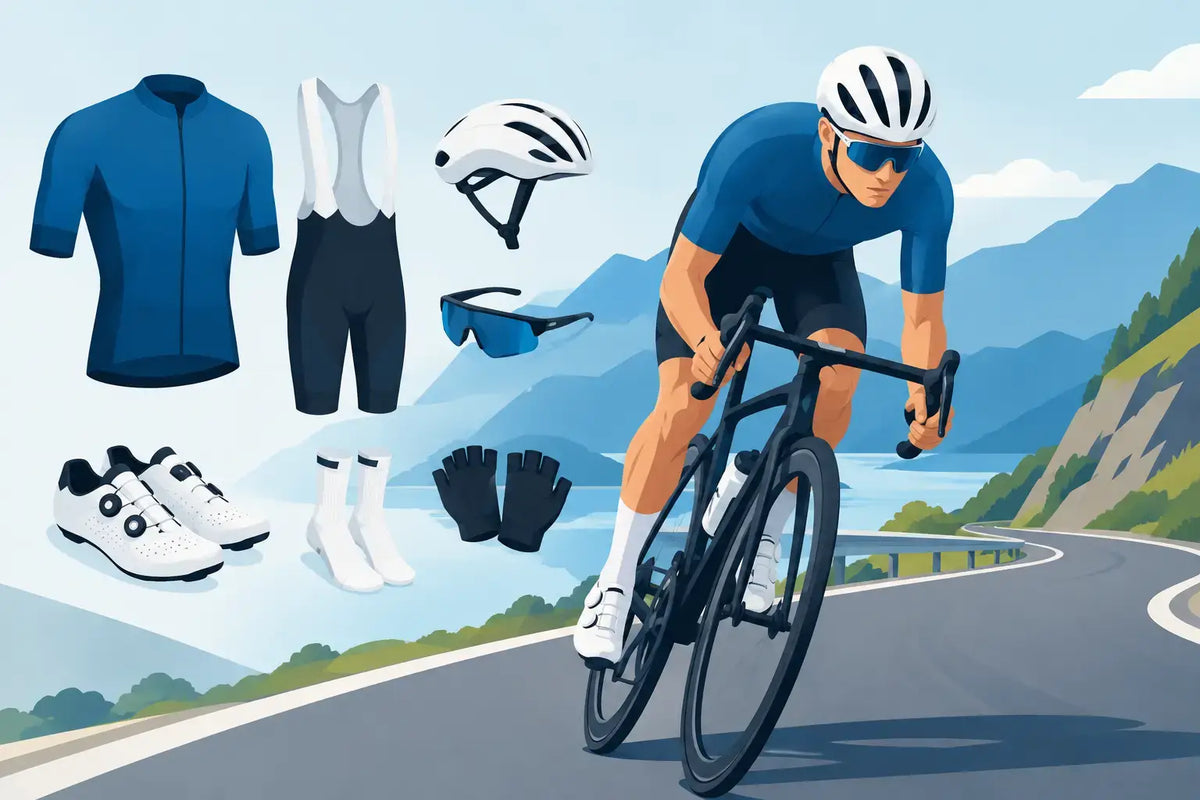
A race kit earns its place long before the start line. It has to stay stable during hard efforts, manage heat when the pace rises, carry what you need, and remain comfortable when the race runs longer than planned. This cycling racewear buyers guide focuses on the details that affect those outcomes: fit, fabric, construction, and the right garment choice for your discipline.
The most expensive option is not automatically the fastest or most comfortable. Racewear works when it matches your body position, riding conditions, and the demands of your event. A criterium rider, gravel racer, and long-course triathlete all need performance apparel, but they need it delivered in different ways.
Start With Race Fit, Not Your Casual Size
Racewear should feel close to the body without limiting breathing, shoulder movement, or pedaling. A performance jersey will sit tighter than a club-fit jersey because excess material catches air and can bunch at the waist. The correct fit is most visible in your riding position, not when you are standing in front of a mirror.
Try a jersey on in a bent-over posture. The front should remain comfortable across the chest, while the back should fully cover your lower back without pulling against the shoulders. Sleeves should stay in place when you reach for the bars. A silicone waist gripper helps prevent the jersey from riding upward, particularly during accelerations and repeated out-of-the-saddle efforts.
Bib shorts should feel supportive around the hips and thighs, with no loose fabric behind the knees or at the crotch. Compression is useful because it supports working muscles and keeps the chamois stable against the body. Too much compression, however, can create pressure points, restrict movement, and make a long race feel even longer.
Sizing charts are a starting point, not a finish line. Riders between sizes should consider their preferred fit, torso length, shoulder width, and event duration. A tighter size may suit short, high-intensity racing, while a slightly less aggressive fit can be the better decision for endurance events. For team orders, sample sizing is one of the most effective ways to reduce fit issues across a mixed group of riders.
Cycling Racewear Buyers Guide: Choose Fabrics by Conditions
Fabric selection is where racewear becomes purpose-built. The right material balances airflow, moisture transfer, coverage, durability, and aerodynamic efficiency. A lightweight fabric that feels excellent in dry summer heat may offer too little protection for a cold, wet spring road race.
Hot Weather and High Output
For summer racing, prioritize breathable jersey body fabrics with fast moisture transfer. The goal is to move sweat away from the skin and allow it to evaporate before it saturates the garment. Mesh side panels and lighter back panels can improve ventilation where riders generate the most heat.
Sleeve fabrics matter as well. Smooth, close-fitting sleeves reduce flutter in the wind and should retain their shape after repeated washes. Raw-cut sleeve ends can provide a cleaner, more aerodynamic transition at the arm, provided they remain secure without causing uncomfortable pressure.
Lighter is not always better. An ultra-thin jersey can become transparent, less durable, or overly clingy in heavy sweat. Look for racewear that uses lighter fabrics strategically while maintaining enough structure for reliable pocket support and a stable race fit.
Cool, Wet, and Variable Conditions
Cold-weather racewear needs to protect your core while still letting moisture escape. A thermal jersey works well for cool, dry conditions, especially when paired with a base layer that moves sweat away from the skin. For rain or wind, a vest or jacket with windproof front panels offers targeted protection without trapping excessive heat.
Water resistance and waterproofing are not the same thing. A water-resistant outer layer can handle road spray and intermittent rain while remaining more breathable. A fully waterproof jacket provides greater weather protection but may feel warmer during hard climbing or high-intensity racing. Match the protection level to the forecast, terrain, and effort rather than assuming more coverage is always better.
Bib Shorts: Put the Chamois First
A jersey can make a visual statement. Bib shorts decide how you feel at mile 80. The chamois, or seat pad, should be chosen for your expected time in the saddle, your riding position, and the type of surface you race on.
For road racing and criteriums, a low-profile, high-density chamois often provides the best balance of support and freedom of movement. It should stay stable through repeated changes in position, from seated threshold efforts to sprinting out of the saddle. For endurance road rides, gravel, and gran fondos, additional multi-density padding can reduce fatigue over long hours without creating bulky seams.
The chamois is only part of the system. Look for flatlock or minimal seams in high-friction areas, durable leg grippers that do not creep upward, and bib straps that distribute pressure evenly across the shoulders. Breathable mesh bib straps can make a significant difference in warm conditions, while insulated tights or thermal bib shorts are better suited to cold-weather training and racing.
Do not wear underwear beneath bib shorts. It adds seams, retains moisture, and creates friction exactly where you do not want it. Clean bibs after every ride, and replace worn shorts before stretched fabric or a compressed chamois compromises comfort.
Jerseys, Skinsuits, and Speed Suits
A race jersey and bib short combination remains the most versatile setup for road riders. It is practical, easy to layer, and offers separate sizing for riders whose upper and lower bodies do not match the same size. Rear pockets provide accessible storage for nutrition, tools, and race essentials.
A skinsuit is designed for riders who want a more integrated aerodynamic fit. By eliminating the gap between jersey and bibs, it reduces material movement and creates a cleaner profile in the wind. It is a strong option for criteriums, time trials, track events, and fast road racing where seconds matter. The trade-off is convenience: skinsuits are less flexible for layering and can be less practical for all-day events or riders who need frequent access during stops.
For triathlon, a tri suit should be built around swim, bike, and run requirements rather than adapted from a road skinsuit. It needs quick-drying fabric, a thinner bike-specific chamois that remains comfortable while running, and storage that does not interfere with movement. A garment that excels on the bike but chafes on the run is not race-ready.
Details That Separate Race-Ready Kit From Basic Apparel
Small construction choices create major differences over a race season. Quality zippers should operate smoothly under tension and sit flat against the chest. Three rear pockets should hold nutrition securely without sagging, while a zippered pocket can protect a key, card, or small essential.
Reflective details are useful for training in low-light conditions, even if they are not a primary race-day concern. A secure waistband, clean seam placement, and durable printed graphics matter just as much over time. Racewear is repeatedly exposed to sweat, sunscreen, washing, road grit, and friction from race numbers. It must retain fit and color through that cycle.
For custom team apparel, prioritize a supplier that controls production and understands technical garment construction. Color accuracy, consistent sizing, low minimums, and dependable lead times are not administrative details. They determine whether a club or program arrives at its target event in a kit that performs and looks unified. Factory-direct production can also give teams more control over design, revisions, and reorder consistency.
Build a Racewear System, Not a Single Outfit
Most serious riders benefit from a small, focused rotation rather than one premium kit used for every condition. A lightweight jersey and bib short set covers warm racing. Add a thermal jersey, vest, arm warmers, and a weather layer for changeable conditions. A skinsuit or speed suit can be reserved for priority events where aerodynamic efficiency is the clear priority.
Consider your laundry cycle, too. Owning at least two quality bib shorts prevents rushed washing and gives each chamois time to dry completely. For multi-day stage events, travel races, or heavy training blocks, additional rotation is practical rather than excessive.
The right racewear should disappear once the effort begins. Choose the fit that stays put, the fabrics that match your climate, and the construction that holds up under pressure. When your kit supports every attack, climb, sprint, and recovery pedal, you can keep your attention where it belongs: on the race ahead.

Share:
How to Wear Cycling Clothes: A Practical Guide
Bike Attire Essentials: What to Wear for Every Ride