

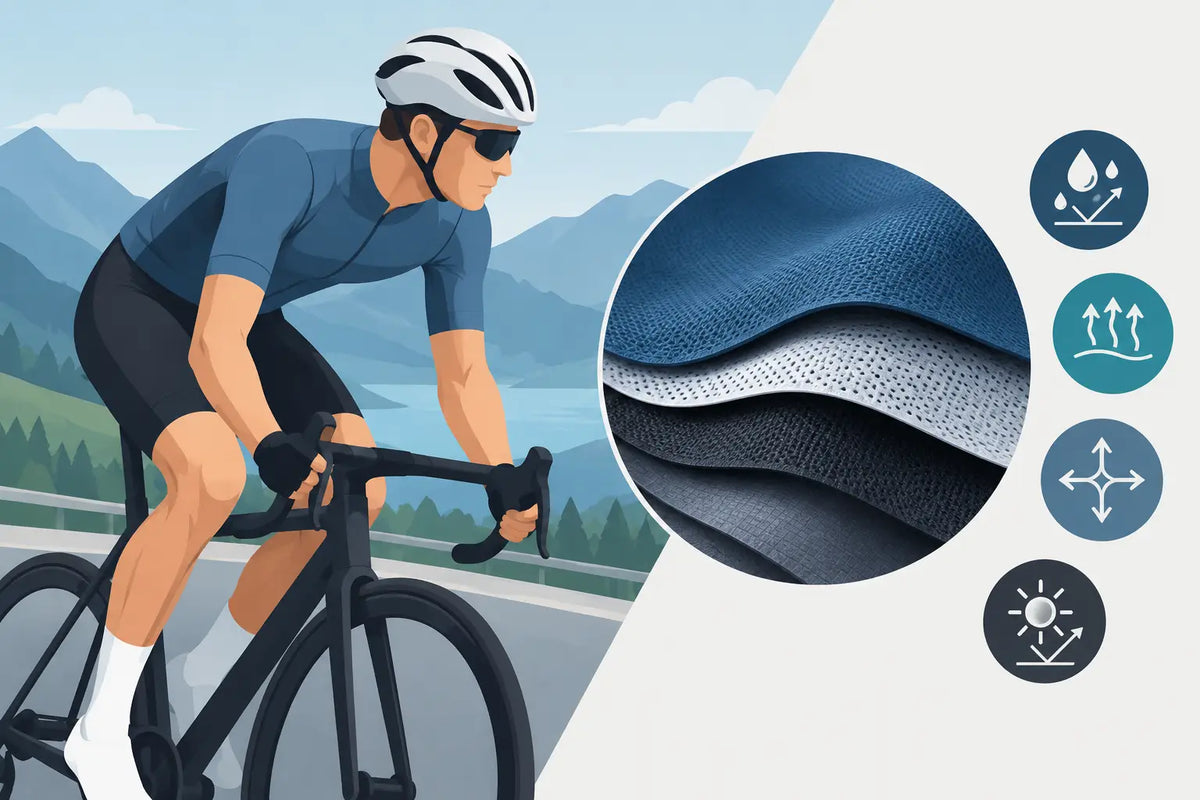
A jersey can look fast on the hanger and still feel wrong 30 miles into a hard ride. The difference often comes down to cycling apparel fabrics: how they move sweat, stretch through the pedal stroke, resist wind, and hold their shape after repeated washing. For riders and teams, fabric is not a background detail. It is the performance platform beneath the fit, graphics, and finish.
The right material depends on the job. A race jersey needs efficient moisture transfer and a close aerodynamic surface. Bib shorts need controlled compression, opacity, abrasion resistance, and recovery that lasts. A winter layer must retain warmth without becoming heavy once the pace rises. There is no single best fabric for every product or condition. There is only the right construction for the ride ahead.
Cycling Apparel Fabrics Are a Performance System
High-performance kit is rarely made from one fabric alone. A jersey may combine a smooth, low-drag front panel with more open, breathable material under the arms and across the back. Bib shorts may use a dense compression knit on the legs, breathable mesh bib straps, and a reinforced seat panel. Each zone handles a different demand.
That zoning matters because cyclists generate heat unevenly. The chest meets the wind, the back carries sweat, the shoulders work against the riding position, and the saddle area experiences constant friction. Using the same material everywhere is simpler, but it can compromise temperature control, support, or durability. Purpose-built paneling gives a garment a more precise response on the bike.
Fabric performance also depends on fit. Even the most technical moisture-managing knit cannot work as intended if a jersey hangs away from the body and traps sweat. Conversely, a compression fabric can feel restrictive if it is cut without enough stretch in the right direction. Material, pattern, stitching, and sizing must work together.
The Core Fibers Behind Technical Cycling Kit
Polyester: fast drying and dependable
Polyester is the foundation of much modern cycling apparel for good reason. It is lightweight, durable, colorfast, and naturally resistant to absorbing much water. Instead of holding sweat like cotton, polyester moves moisture across the fabric surface, where it can spread and evaporate more efficiently.
For jerseys, base layers, and many outer layers, this fast-drying behavior helps riders stay more comfortable as effort changes. A good polyester jersey does not eliminate sweat. It manages it, reducing the clammy feeling that can develop on a long climb or during a hard indoor session.
Not all polyester fabrics perform the same way. Yarn shape, knit density, fabric weight, and finishing all affect airflow and moisture movement. A lightweight open-knit summer jersey and a dense brushed winter jersey can both be polyester-based, yet feel completely different in use.
Elastane: stretch with control
Elastane, also called spandex, gives cycling garments their close, body-following fit. In bib shorts, it provides compression that supports the muscles, reduces fabric movement, and helps the short remain stable through thousands of pedal revolutions. In jerseys and skinsuits, it helps create a streamlined shape without limiting reach to the bars.
The trade-off is that more stretch is not automatically better. Excessive elastane can produce a soft, overly elastic feel that loses shape sooner, especially in high-friction areas. The goal is controlled recovery: fabric that stretches when you move, then returns to form without sagging at the leg gripper, pockets, or seat.
Polyamide: toughness where it counts
Polyamide, commonly known as nylon, is valued for abrasion resistance, strength, and a smooth hand feel. It is often used in premium bib short fabrics, especially where the garment needs to withstand saddle contact, repeated washing, and road grit. Polyamide blends can create a denser, more supportive surface than lighter jersey fabrics.
Because nylon can hold more moisture than polyester, fabric engineering matters. A well-designed polyamide blend can still manage sweat effectively while delivering the durability and compression riders expect from high-mileage bib shorts. For gravel, mountain biking, and frequent training, that resilience can be a major advantage.
Merino blends: comfort across changing conditions
Merino wool is less common in race-focused outer jerseys, but it has a strong place in base layers and cool-weather apparel. Fine merino fibers help regulate temperature, resist odor, and remain comfortable across a wide range of efforts. Blended with synthetic fibers, merino can gain faster drying, improved durability, and a more secure fit.
Its trade-off is simple: it usually dries more slowly than an all-synthetic layer and may not be the best choice for hot, high-humidity racing. But for variable spring rides, endurance events, travel, and cooler conditions, a merino blend can be an exceptionally versatile first layer.
Knit Construction Changes the Ride
Fiber content tells only part of the story. The way a fabric is knitted or woven determines how it breathes, stretches, and feels against the skin. A tightly knitted fabric creates a smoother surface and can improve coverage, compression, and wind resistance. A more open mesh structure increases airflow and is ideal for high-sweat zones.
Four-way stretch is particularly valuable in cycling because movement happens in more than one direction. Riders reach forward, rotate at the hips, and drive the legs continuously. A fabric that only stretches side to side may feel acceptable standing upright but pull across the shoulders or thighs in the riding position.
Surface texture can influence aerodynamics as well. Smooth fabrics are often used across leading edges where airflow first meets the rider, while strategically textured materials can manage airflow over certain areas. The effect depends on garment fit, rider position, speed, and panel placement. Aero fabric that wrinkles or flaps delivers none of its intended benefit.
Fabric weight should match the season and the effort. Lightweight summer materials prioritize airflow and rapid evaporation, but they may offer less protection on a fast descent. Heavier thermal fabrics trap more warm air, yet can overheat quickly during hard intervals. Strong kit design gives riders options rather than pretending one weight serves every temperature.
Moisture Management Is More Than Wicking
“Wicking” is often used as a catch-all term, but effective moisture management involves several steps. The fabric needs to pull perspiration from the skin, distribute it over a larger area, allow vapor to escape, and dry quickly enough to avoid saturation. Breathability is what lets heat and moisture move outward. Drying speed is what prevents the garment from staying wet once conditions change.
This is why a base layer can improve warm-weather comfort instead of adding unwanted heat. A very light, open-knit base layer can create a more consistent moisture-transfer layer between the skin and jersey. It is especially useful when humidity, high output, or a loaded jersey pocket causes sweat to accumulate against the body.
Finishes can help, but they are not a replacement for smart construction. Hydrophilic treatments may improve moisture spread, and water-repellent finishes can shed light rain and road spray. Over time, washing, abrasion, sunscreen, and body oils can affect those treatments. Care instructions matter if riders want the kit to perform ride after ride.
Fabrics for Bib Shorts Need Different Priorities
Bib shorts face the toughest combination of demands in cycling apparel. The leg fabric must be supportive without cutting in, opaque under stretch, stable at the hem, and resistant to saddle abrasion. It also has to work with the chamois rather than allowing it to shift during a long ride.
A high-quality compression knit supports the body with even pressure instead of relying on a tight waistband or aggressive leg gripper. It should feel secure when riding, not restrictive when breathing deeply or moving off the bike. The best test is not the mirror. It is whether the fabric remains comfortable and stable after several hours in the saddle.
Bib straps are a separate material decision. Lightweight mesh straps increase ventilation and reduce bulk over the shoulders, while more substantial straps can offer greater structure. The right choice depends on the intended use, climate, and fit profile. For race kit, low-bulk breathability is often the priority. For endurance riding, comfort under constant movement may carry more weight.
Choose Fabric by Ride, Not Marketing Label
For hot road rides and criterium racing, look for lightweight polyester blends, ventilated side panels, and close-fitting sleeves that stay in place at speed. For long endurance days, prioritize soft hand feel, reliable pocket support, and fabrics that remain comfortable after sweat, sun, and hours of movement.
For gravel and mountain biking, abrasion resistance and practical durability deserve more attention. The fastest fabric is not always the right fabric when branches, dust, and frequent movement on and off the bike are part of the day. For winter training, focus on a layer system: moisture-moving base layer, thermal jersey, and a protective outer shell when wind or rain demands it.
Teams should also consider how fabric supports their identity. Deep, saturated colors, sharp graphics, and consistent fit across a full roster require materials that print cleanly and retain their appearance. Factory-level control over fabric selection, panel design, and production makes a real difference when a club needs every rider to receive kit that performs as one.
At CCN Sport, race-ready apparel starts with that same principle: select the material for the job, then build the garment around how athletes actually ride. Before choosing your next jersey or custom team kit, think beyond the fabric name. Consider the conditions you train in, the position you ride, and the miles you expect the garment to cover. The right fabric should disappear into the ride, leaving you free to focus on the effort.

Share:
Gravel Bike Gear: Complete Setup Guide for 2026
Cycling Gear for Women: A Comprehensive 2026 Guide