

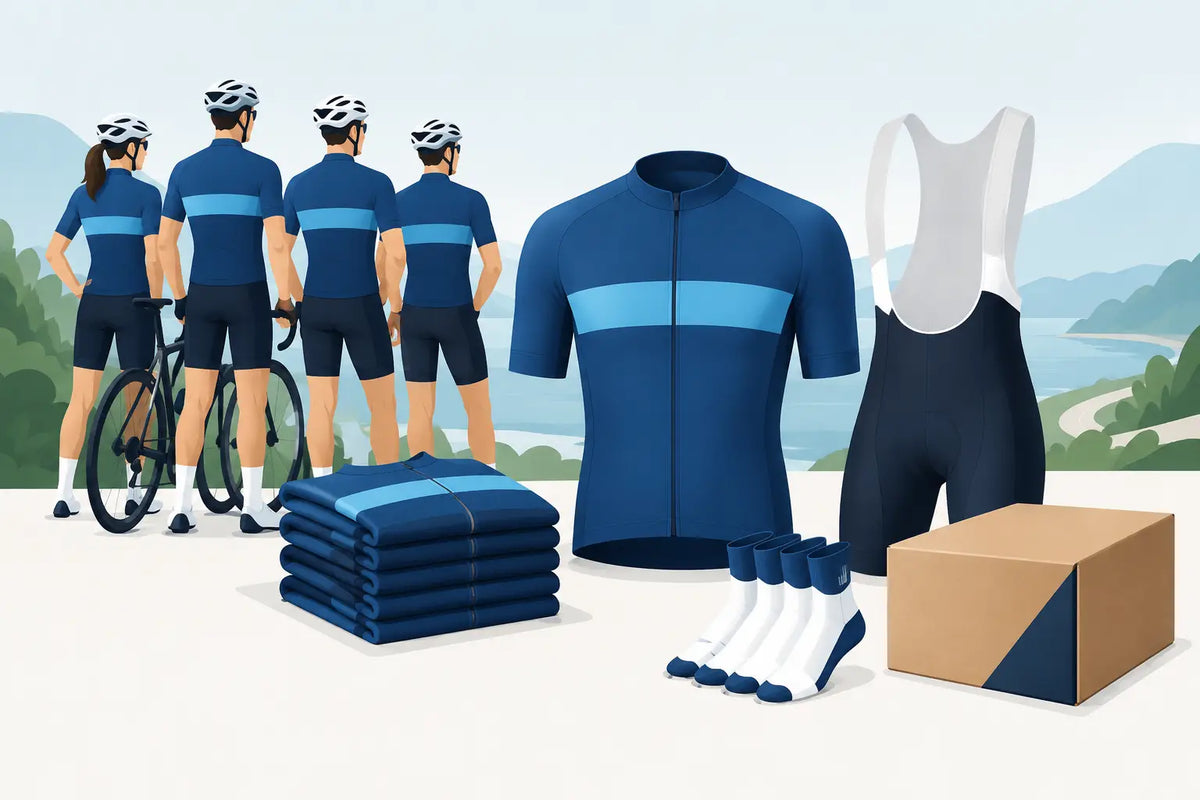
A custom kit order can fail long before the jerseys reach the start line. The usual issue is not artwork or color selection. It is ordering too much, ordering too little, or overlooking the way sizes, garment styles, and rider needs affect the final quantity. This cycling kit minimum order guide helps clubs, race teams, and event organizers make a confident call before production begins.
Minimums are not simply a supplier rule. They are tied to the production method, the number of designs being made, fabric preparation, pattern setup, and the work required to build each garment to a consistent standard. A low minimum gives smaller teams access to custom performance apparel. A larger order can create better cost efficiency, but only if every piece has a rider behind it.
Start With the Order You Actually Need
Before comparing minimum order quantities, define the purpose of the kit. A 12-rider racing squad, a 40-member club, and a charity ride with 300 participants should not approach the order the same way. Each group has a different need for inventory, price control, fit flexibility, and delivery timing.
For a core team kit, begin with committed riders rather than social media followers or general interest. Ask each rider to confirm their preferred garments, size, and payment status by a fixed deadline. This creates a reliable base quantity and keeps the order from being built on estimates.
Then allow for a sensible buffer. Teams often add a small number of extra jerseys and bib shorts for late additions, replacement needs, sponsors, or riders who change sizes. The right buffer depends on turnover. A stable masters team may need very little extra stock. A development program or fast-growing club may benefit from holding a few of its most common sizes.
Do not pad every size equally. Extra medium jerseys are usually more useful than extra XS or 3XL pieces, but your own size history should guide the decision. If this is your first order, collect measurements and use the supplier's fit guidance rather than guessing from standard streetwear sizing.
How Cycling Kit Minimum Orders Usually Work
A minimum order quantity can apply in several ways. It may apply to the total order, to each garment category, or to every unique design. This distinction matters when your team wants a full collection rather than one jersey.
A supplier may be able to produce a low minimum of custom jerseys, for example, while bib shorts, vests, jackets, and skinsuits each have their own production requirement. The same can be true when you create separate men's and women's versions, youth kits, or multiple colorways.
One Design Is More Efficient Than Several
Every distinct design adds setup and production complexity. A single club design in a broad size run is generally the most efficient format. If you create one version for racing, one for gravel, one for casual riders, and a different sponsor layout for each subgroup, the quantity is divided across multiple designs.
That does not mean variety is a bad decision. A race program may need a high-speed short-sleeve jersey and a separate thermal collection for cold-weather events. The trade-off is simple: more versions give riders more choice, while fewer versions make it easier to meet minimums and manage cost.
A strong solution is to build one primary visual identity, then apply it across compatible garments. Keep team colors, logos, and sponsor placement consistent while allowing the garment cut and fabric to change based on riding conditions. The kit looks unified without forcing every rider into the same product.
Size Mix Does Not Always Change the Minimum
Most teams need a wide range of sizes, and that is normal. In many custom programs, the total quantity matters more than requiring a minimum in every size. That lets a small team order the sizes its riders genuinely need instead of filling the order with unusable inventory.
Still, confirm this early. Ask whether the minimum applies per garment, per gender-specific fit, or per size. This is especially relevant for clubs with a balanced men's and women's roster or teams ordering both standard and race cuts.
Build a Kit Plan Before You Request Pricing
The fastest way to get accurate pricing and production guidance is to provide a complete brief. You do not need finished artwork to start, but you should know what you are trying to order.
Include the number of riders, expected garment quantities, preferred product level, and target delivery date. State whether the order is for road racing, club riding, gravel, mountain biking, triathlon, or a mix of disciplines. A race-ready jersey and bib short combination may be the priority for one team, while another needs thermal layers, wind vests, and durable trail apparel.
Also decide whether riders will place individual orders through a team store or whether one manager will collect all quantities and submit a single purchase order. A team store can simplify payment and size collection for larger groups. A consolidated order gives a manager tighter control over the final count. Neither option is automatically better. The right choice depends on how organized the group is and how much flexibility riders need.
CCN Sport's factory-direct approach is built for this reality: teams need technical apparel, clear production communication, and practical minimums without adding unnecessary middlemen to the process.
Choose Garments Based on Riding Conditions
Minimum order planning should never lead a team to choose the wrong product just to reach a number. A low-cost jersey that does not fit the climate, riding style, or athlete expectations creates waste after delivery.
For road and criterium teams, focus first on the garments worn most often: short-sleeve jerseys, bib shorts, and base layers. Riders training through changing seasons may also need a vest, long-sleeve jersey, or thermal jacket. For gravel groups, durability, useful storage, and all-day comfort often matter as much as aerodynamic compression. Triathlon teams should plan separately for tri suits or two-piece race apparel because their fit and function are different from a standard cycling kit.
Think about the order in phases if budget is limited. Start with the core race kit, then open a second order window for winter gear or optional accessories once the team has received and tested the first collection. This protects the budget while giving riders a consistent foundation.
Avoid the Most Common Ordering Mistakes
The first mistake is treating the minimum as the target. If the minimum is 10 pieces and 18 riders are committed, ordering only 10 to reduce the initial bill creates a problem immediately. Size shortages, rider disappointment, and a second small order can cost more than placing the correct order once.
The second is opening too many product choices. A catalog with every possible jersey, bib, jacket, and accessory can feel generous, but it fragments demand. Start with a focused team collection and add options only where enough riders have shown genuine interest.
The third is delaying size collection and artwork approval. Custom production has checkpoints. Riders need time to review fit information, team managers need time to consolidate orders, and artwork needs final approval before manufacturing can begin. A deadline that looks comfortable can become tight quickly when sponsor logos are late or half the roster has not submitted sizes.
Finally, avoid assuming that a sample fit tells the whole story. Different cuts serve different riders and disciplines. A close race fit can be ideal for competition and feel too restrictive for a casual club rider. Set expectations clearly so athletes select a garment cut that matches how they ride.
Questions to Ask Before Placing a Custom Kit Order
A productive supplier conversation should clarify more than the headline minimum. Ask whether the quantity is per item, per design, or per total order. Confirm whether men's and women's fits can be combined, what happens if a rider changes size after approval, and whether reorders can be made later using the same design.
Ask about lead time from final artwork approval, not from your first inquiry. That is the date that matters for a race calendar, team launch, or event registration window. You should also confirm garment specifications, decoration method, available fit options, and care guidance before riders commit.
For teams with sponsor obligations, get approval rules in writing. A logo placed incorrectly or a color rendered outside sponsor guidelines can cause expensive delays. Send clean logo files early and nominate one person to make final decisions. Too many decision-makers slow down the process and increase the risk of conflicting feedback.
Make the Minimum Work for Your Team
The best custom apparel order is not the largest one. It is the one that gives every rider the right performance kit, keeps inventory useful, and arrives when the season needs it. Start with confirmed demand, simplify the design structure, collect sizes early, and choose products that match your real riding conditions.
A well-planned minimum order does more than meet a production threshold. It puts your team on the road in apparel that fits, performs, and looks unified from the first group ride to the final race of the season.

Share:
MTB Clothing Mens: The Complete 2026 Gear Guide
Cycling Jersey Custom Design: Complete 2026 Guide