

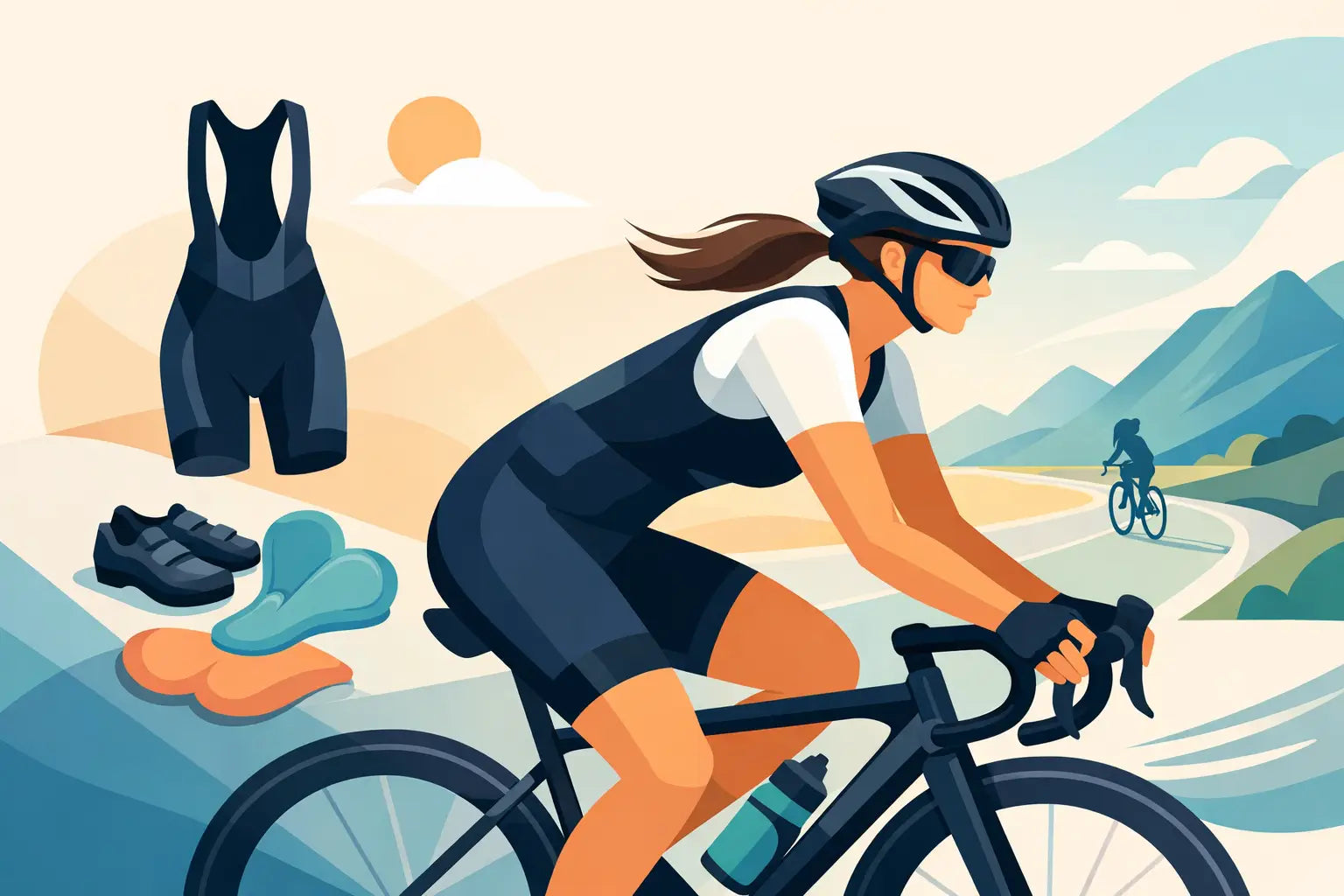
A good bib short disappears on the bike. A bad one reminds you every mile. If you're searching for the best women's cycling bibs, the real question is not which pair looks best on a product page. It is which pair holds its position, supports your effort, and stays comfortable when the ride gets long, hot, and hard.
That matters because women's bibs are not just men's bibs with shorter inseams and different colors. The best designs account for female anatomy, strap placement, compression needs, and chamois shape in a way that improves both comfort and performance. When those details are right, you pedal freely, stay stable in the saddle, and stop thinking about your kit.
What makes the best women's cycling bibs
Fit is the first separator. High-level bibs should feel compressive without restricting breathing or hip movement. The leg panels need to stay smooth under tension, with no bunching at the top of the pedal stroke and no pinching through the groin. If the fabric wrinkles when you're standing, that is not always a problem. What matters is how it settles once you're in riding position.
The chamois is the next non-negotiable. Better bibs use multi-density padding that supports pressure points without creating bulk. For women, shape is especially important. A chamois that is too wide can rub. One that is too narrow can leave soft tissue unsupported. The best women's cycling bibs balance support and freedom of movement, especially during longer seated efforts.
Strap construction is often overlooked until it fails. Straps should stabilize the short without pulling excessively on the shoulders or chest. The right setup keeps the bib in place while allowing full range of motion in an aggressive road position or a more upright gravel posture. For many riders, this is where premium bibs justify the price.
Fabric quality also changes the ride. Dense, technical materials tend to offer better compression, shape retention, and abrasion resistance. They also manage sweat more efficiently. Lighter fabrics can feel excellent in extreme heat, but they may trade away some durability or long-term support. There is no single perfect answer. It depends on where, how, and how often you ride.
Best women's cycling bibs by ride type
Not every bib is built for the same job. That is why broad "best overall" claims can be misleading.
For road racing and fast club rides, the priority is usually compression, stability, and a low-bulk chamois that stays planted during sustained efforts. A race bib should feel precise. You want clean paneling, minimal excess fabric, and straps that disappear once you're moving. If your riding is centered on pace lines, breakaway efforts, or weekly training blocks, a more performance-oriented cut makes sense.
For endurance road riding, gran fondos, and all-day base miles, comfort starts to outweigh pure compression. The best women's cycling bibs in this category still need support, but they usually benefit from a slightly more forgiving fit, a well-shaped endurance chamois, and leg grippers that hold steady without creating pressure hot spots after several hours.
For gravel and mixed-surface riding, durability becomes a bigger factor. You may want slightly more resilient fabrics, practical storage if the design includes it, and a bib that stays comfortable when terrain constantly shifts your position. Gravel bibs do not need to be bulky. They just need to be stable and adaptable.
For indoor training, heat management matters more than cargo options or weather protection. Many riders prefer lighter bibs with breathable uppers and a chamois that works well during longer seated intervals. Indoor riding can actually expose poor bib design quickly because there is less natural movement and airflow.
How to judge bib fit before and after your first ride
The first try-on tells you part of the story. The ride tells you the rest.
When you put bibs on, they should require a little effort. That is normal. The shorts should feel supportive through the quads and glutes, with the chamois sitting close to the body rather than floating. Straps should lie flat. If they dig in while standing, they may still be fine on the bike, but they should not feel aggressively tight.
On the first ride, pay attention to movement. Do the leg grippers stay in place without squeezing? Does the chamois stay centered? Are you shifting around to escape friction, or are you settling naturally into your position? The best women's cycling bibs create a stable platform. You should not need constant adjustment after the first few miles.
Saddle interaction is part of this as well. Bibs and saddles work as a system. A bib that feels perfect for one rider may feel wrong for another simply because pelvic shape, riding posture, and saddle profile are different. If a bib is close but not perfect, the issue may not be the bib alone.
Features worth paying for
Some details are marketing. Some genuinely improve performance.
A high-quality chamois is worth the investment, especially if you ride more than a few hours per week. Better foam construction, better top fabric, and cleaner integration into the short usually translate into better long-ride comfort. This is one area where cheap bibs tend to show their limits fast.
Well-engineered paneling matters too. More panels do not automatically mean better fit, but purposeful panel shaping can improve compression and reduce seam friction. The goal is a bib that follows the body's mechanics, not one that simply feels tight.
Raw-cut leg openings with effective integrated grip are often better than thick silicone-heavy bands. They spread pressure more evenly and create a cleaner fit under movement. That said, riders with very specific leg proportions may still prefer a more traditional gripper if it holds more consistently for them.
Mesh bib uppers and breathable straps are also worth it if you train in heat or ride indoors often. Moisture management affects comfort more than many riders expect. A bib that traps heat can feel heavy and distracting by the second hour.
Where riders get it wrong
The most common mistake is buying based on appearance alone. A flattering cut is a plus, but performance bibs are technical equipment first. Fabric support, chamois design, and stability on the bike matter more than a trendy strap shape or a seasonal print.
Another mistake is sizing up to avoid compression. That usually backfires. Bib shorts need close contact to work properly. If they are too loose, the chamois shifts, seams move, and friction increases. If you are between sizes, your choice should depend on the brand's fit profile and your riding style. Racers often prefer the more locked-in option. Riders focused on recreational endurance may want a slightly less aggressive fit, but not a baggy one.
It is also easy to overbuy. Not everyone needs a top-tier race bib with the firmest compression and most minimal pad. If your rides are mostly one to two hours, a balanced mid- to high-level bib may serve you better than the most aggressive model on the market. The best women's cycling bibs are the ones that match your actual riding, not your idealized version of it.
Best women's cycling bibs for teams and serious riders
If you ride with a club, race with a team, or manage kit for a group, bib selection becomes even more important. Consistency in fit, durability, and repeat ordering matters just as much as ride comfort. Riders need bibs they can trust on training days and race days, and organizers need confidence that reorders will match expectations.
That is where manufacturing depth matters. A brand with real production control can do more than offer a nice-looking bib. It can refine fit, maintain material standards, and support team programs with more precision. For competitive riders and organized groups, that reliability is not a small detail. It is part of performance.
CCN Sport has built its reputation around that race-tested, factory-direct approach, serving individual cyclists and teams that expect pro-level function without unnecessary markup. For riders who care about fit, speed, and long-term value, that model makes practical sense.
How many bibs you really need
If you ride three or more times a week, one pair is not enough. Bib shorts need proper washing and full drying between rides, and rotating pairs helps preserve fabric recovery and chamois life. For most dedicated riders, two to three quality bibs is a smarter setup than one premium pair worn constantly.
That approach also lets you match the ride. You might want a lighter bib for indoor sessions and hot weather, and a more supportive pair for long outdoor days. Different tools, different demands.
The best women's cycling bibs do not win because of hype. They win because they stay comfortable under pressure, fit correctly in motion, and hold up ride after ride. Choose the pair built for your position, your mileage, and your goals. When the fit is right, performance follows.

Share:
Custom Triathlon Team Apparel That Performs
Team Store Ordering Guide for Cycling Clubs