

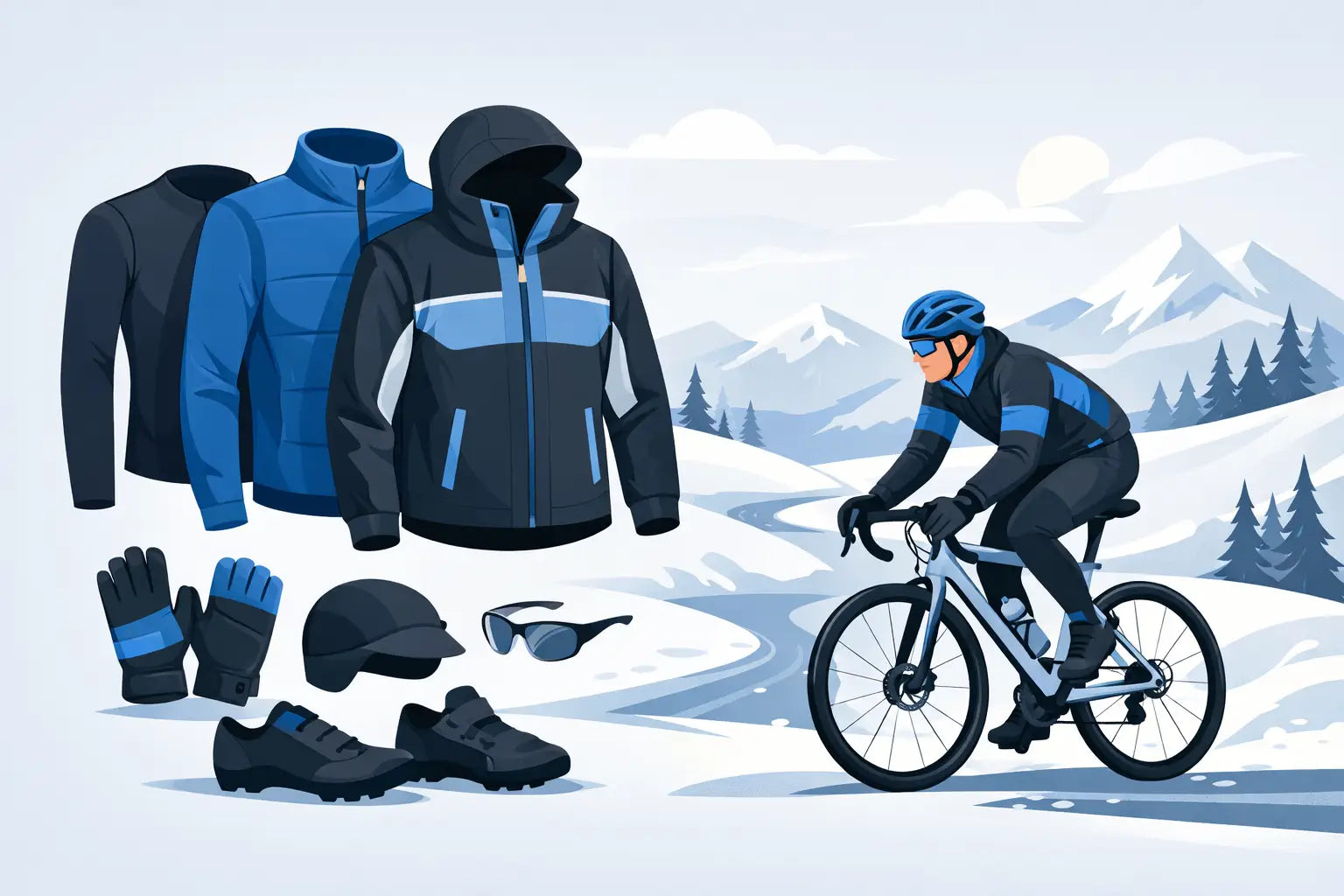
Cold weather exposes every weakness in a kit. Start too heavy and you overheat by the first climb. Start too light and the descent feels brutal. The best winter cycling apparel layers solve that problem by balancing warmth, moisture control, wind protection, and mobility so your body stays stable when conditions change.
That balance matters more than any single “warmest” piece. Winter riding is rarely just cold. It is cold at the start, damp in the shadows, windy on open roads, and intense once the pace rises. A good layering system works because each piece handles a specific job, and each one still performs when the ride gets harder.
What makes the best winter cycling apparel layers work
A winter kit should trap enough heat to protect you without blocking sweat from escaping. If moisture gets stuck inside the system, even premium gear starts to feel cold. That is why winter layering is less about piling on fabric and more about using the right fabrics in the right order.
The base layer manages moisture against the skin. The mid-layer adds insulation. The outer layer controls wind, road spray, and light rain. When those three layers are matched well, you get a kit that feels race-ready instead of bulky.
Fit also matters. Loose layers can bunch, flap, and create cold gaps at the waist, neck, and wrists. Overly tight layers can restrict breathing or compress insulating air out of the system. The sweet spot is close-fitting apparel that moves with your riding position and leaves room for circulation.
Start with the base layer
If the base layer fails, the rest of the system usually fails with it. In winter, this layer needs to pull sweat off the skin fast enough to keep you dry while still adding a light level of warmth.
For most riders, a long sleeve thermal base layer is the foundation. It should feel fitted, not restrictive, with enough stretch to sit flat under a jersey or jacket. Lightweight mesh fabrics work well in cool conditions where your intensity stays high. Brushed or heavier thermal fabrics make more sense for truly cold rides, especially if your pace is steadier.
There is a trade-off here. A warmer base layer feels great in the first 30 minutes, but if you run hot or ride hard, it can become too much once your body temperature rises. Riders doing fast group rides, intervals, or hilly routes often do better in a lighter base layer paired with a stronger outer shell. Riders on long endurance miles in low temperatures may prefer more insulation closer to the skin.
Neck coverage can be important too. A higher collar on the outer layer helps, but the base layer should still protect the upper chest without feeling damp or heavy.
The jersey or thermal mid-layer does the real insulation work
The mid-layer is where winter comfort usually gets won or lost. This is the layer that creates warmth while still allowing heat to move outward. In many conditions, a thermal long sleeve jersey is the most versatile choice because it insulates without adding the stiffness of a full jacket.
A brushed interior can add warmth without much bulk. Breathable back panels help keep the system from getting swampy when the pace lifts. Rear pocket access matters more than many riders expect, especially on long rides when you do not want to open and close multiple layers just to reach nutrition.
For dry, cold days, a thermal jersey plus a protective vest can outperform a heavy jacket. It gives your core wind protection while letting extra heat escape through the arms and back. For mixed conditions or lower temperatures, the jersey becomes the insulating layer under a softshell or winter jacket.
This is where experienced riders build flexibility into the system. One strong thermal jersey can cover a wide temperature range depending on what sits over it. That gives you more control than relying on one oversized winter jacket for every ride.
Your outer layer should block weather, not trap sweat
The outer layer is the shield. It needs to cut wind, manage light precipitation, and preserve your core temperature. But if it seals up too much, moisture builds fast. That is why the best winter cycling apparel layers always treat the shell as a control layer, not just a barrier.
Softshell jackets are often the best all-around winter option. They block wind where you need it most across the chest, shoulders, and sleeves while allowing better breathability than a fully waterproof shell. Many riders can use a softshell for most winter miles and only switch to a rain shell when conditions turn truly wet.
A rain jacket is different. It is essential in some situations, but it is usually not the best everyday winter piece. Fully waterproof fabrics protect against heavy rain and road spray, yet they often sacrifice some breathability. If you wear one for a hard training ride in cold but dry weather, you may end up wet from the inside instead of the outside.
That is the key decision. If your local winter is mainly windy and cold, prioritize windproof breathability. If it is wet and unpredictable, carry a shell and use it strategically. Conditions, not marketing labels, should decide your outer layer.
Don’t ignore your legs
Riders often focus on jackets and gloves first, then realize halfway through winter that cold legs drain energy too. Your lower body generates plenty of heat, but that does not mean standard bib shorts are enough once temperatures drop.
Thermal bib tights are usually the cleanest solution for sustained winter riding. They protect the knees, reduce wind exposure, and keep the fit stable across the entire lower body. Good tights should feel compressive and supportive without restricting the pedal stroke. A quality chamois matters just as much in winter as summer, especially on long base miles.
Some riders prefer bib shorts paired with leg warmers in shoulder-season conditions. That setup is more adaptable and works well when temperatures rise later in the ride. But once winter really settles in, full tights are often more efficient and more comfortable.
If conditions are wet, pay attention to spray zones. The front thighs and seat area take a beating from road water and slush. Water-resistant panels in those areas can make a noticeable difference in comfort.
The smallest layers often save the ride
Extremities are usually the first to suffer. Once your hands and feet get cold, performance drops quickly. Braking, shifting, and overall control all become less precise.
Gloves should match both temperature and ride intensity. Deep-winter gloves need insulation and wind protection, but too much bulk can reduce bar feel. For many riders, the best setup is owning more than one glove weight rather than trying to force one pair through every condition.
Overshoes are another high-value layer. Shoes are exposed to wind, road spray, and constant airflow, so even strong socks can only do so much on their own. A close-fitting thermal or water-resistant overshoe helps preserve heat and keeps your feet in a usable range longer.
A winter cap, headband, or skull cap under the helmet can also change the ride completely. You lose a lot of heat through the head and forehead, especially on descents. The same goes for a neck gaiter. It is a small piece, but it seals a major gap around the collar and can be adjusted as your temperature changes.
How to build the right system for your riding
The best setup depends on how and where you ride. A racer doing high-output intervals in 40-degree weather needs a different system than a gravel rider rolling steady for four hours in the low 30s.
For high-intensity efforts, start lighter than you think. A moisture-moving base layer, thermal jersey, and breathable wind-blocking shell often work better than a heavily insulated jacket. You should feel slightly cool for the first few minutes, not perfectly warm standing still.
For long endurance rides, bias toward stability. Add insulation through the torso, use full thermal tights, and protect the hands and feet early. It is easier to vent excess heat than recover once you are chilled deep into a ride.
For team and club riders, consistency matters too. Layering systems work best when the fit across each piece is designed to function together. That is one reason performance brands with deep apparel manufacturing experience, including CCN Sport, focus so heavily on patterning, fabric choice, and ride-position fit. Winter gear has to work as a system, not as disconnected pieces.
A common mistake: dressing for the parking lot
Most winter overdressing happens before the wheels start turning. Riders judge the temperature while standing still, then build a kit for inactivity instead of effort. Ten minutes into the ride, sweat starts building, vents open, and the whole system gets harder to manage.
Dress for the workload ahead. Think about temperature, wind, road moisture, route profile, and pace. A flat endurance ride and a hard hilly ride in the same temperature can call for very different layers.
The strongest winter kits are not the heaviest. They are the most adaptable, breathable, and precise. When each layer has a clear job and the fit supports movement, you stay warmer, drier, and faster in real conditions. Build your system with that standard, and winter miles stop feeling like survival training and start feeling productive again.

Share:
What Makes Cycling Jerseys Aerodynamic?
Gravel Cycling Kit Essentials That Matter