

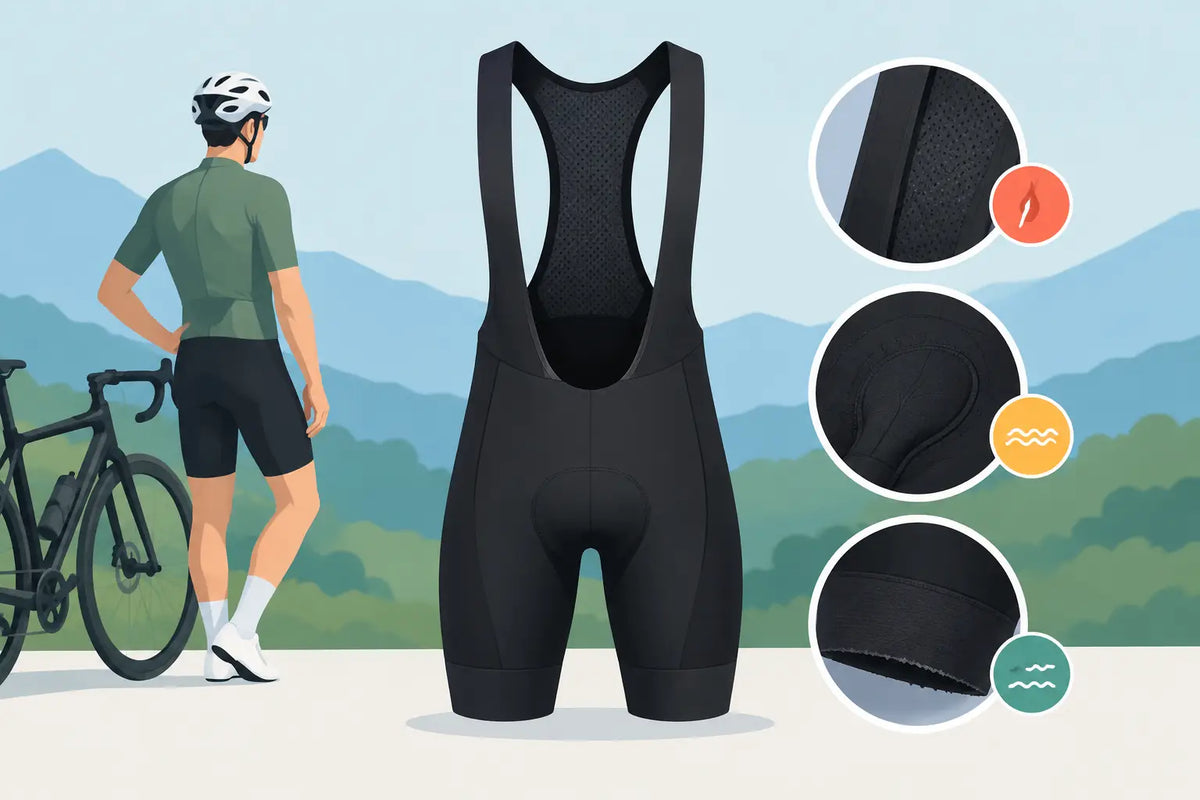
A favorite pair of bib shorts rarely fails all at once. First, the pad feels a little less supportive on a three-hour ride. Then the fabric loses its compression, the leg grippers start creeping upward, or a seam begins to show its age. So, how long do bib shorts last? For most regular riders, a quality pair delivers roughly 1 to 3 years of dependable use - but ride volume, fit, construction, washing habits, and storage can move that number significantly.
Mileage matters more than the calendar. A rider wearing the same bibs twice a week through a full season will reach the end of their useful life much sooner than someone saving them for weekend rides. The goal is not simply to keep bib shorts wearable. It is to keep them comfortable, supportive, and reliable when the ride gets long.
How Long Do Bib Shorts Last in Real Riding?
A well-made pair of bib shorts commonly lasts about 5,000 to 10,000 miles before riders notice meaningful performance decline. That range is broad because not all miles are equal. Indoor trainer sessions expose fabric and chamois foam to concentrated sweat, while gravel riding adds abrasion, dust, and more movement in the saddle. A wet commute, frequent racing, and repeated wash cycles all add wear.
For a rider logging 100 miles per week, that works out to roughly one to two seasons from a heavily used primary pair. A rider with several pairs in rotation may get three years or more from each one. High-quality fabrics, durable stitching, and a properly engineered chamois can extend service life, but no bib short is permanent. Foam compresses, elastic fibers fatigue, and technical textiles eventually lose their original recovery.
The best benchmark is ride comfort. If a pair still looks clean but creates pressure points, bunches at the hips, or no longer stays stable on the saddle, it has aged out of performance duty.
What Wears Out First?
The chamois is usually the first component riders feel wearing out, even when the outer fabric still appears in good condition. A new pad has structure: it supports the sit bones, manages vibration, and distributes pressure across the contact area. Over time, repeated compression reduces that resilience. The pad may feel thinner, firmer in the wrong places, or less stable during long seated efforts.
Fabric comes next. Premium bib shorts use high-stretch, high-recovery textiles to provide light muscle support and keep the chamois correctly positioned. As elastane loses recovery, the shorts can become baggy through the seat and thighs. That is more than a cosmetic problem. A shifting short allows the pad to move, increasing the risk of chafing.
Leg grippers and bib straps also deserve attention. Grippers that roll, pinch, or slide up the leg compromise fit. Straps that feel loose may let the chamois sag, while straps that have become twisted or brittle can fail unexpectedly. Finally, inspect the seams in high-friction areas, especially around the seat panel, inner thigh, and the transition between the chamois and short.
Signs It Is Time to Replace Bib Shorts
A small repair does not always mean retirement. A loose thread away from a load-bearing seam can be trimmed carefully. But certain issues are clear signals that the shorts no longer deliver the performance they were designed for.
Replace or reserve a pair for short indoor sessions when the chamois has permanently flattened, the fabric has become see-through when stretched, or the shorts no longer stay in place while pedaling. Persistent saddle discomfort that disappears when you switch to another pair is also useful evidence. Before blaming your saddle setup, test your newest or best-fitting bibs on the same route.
Chafing is another major sign. If you have not changed saddle position, riding posture, detergent, or skin-care routine, but irritation begins with one familiar pair, the pad may be moving or the fabric may have lost its smooth, supportive fit. Do not keep forcing long rides in worn bibs. Minor friction can become a skin problem that interrupts training for days.
A crash changes the equation. Even a minor slide can damage the outer layer or weaken a seam without creating a large visible hole. If abrasion reaches the structural fabric in the seat or hip area, replace the shorts for road use. A failure under load is not worth the risk.
Why Fit Determines Lifespan
The right bib short lasts longer because it is under less unnecessary stress. Shorts that are too small overstretch the fabric and seams every time you ride. The chamois can become overly tensioned, and leg grippers may dig into the thigh. Shorts that are too large allow more movement, creating friction and accelerating wear at the saddle contact points.
Fit should feel close and secure in a riding position, not restrictive. The straps should lie flat, the leg panels should remain smooth, and the chamois should sit against the body without folding. A good fit keeps the pad exactly where it needs to be during hard efforts, climbs, and long hours in the saddle.
This is especially relevant for teams ordering custom kit. Consistent sizing, a tested sample process, and an appropriate race or club fit help riders get the full life from their apparel. At CCN Sport, that fit-first approach is central to building kit that stays comfortable through real training blocks and race days.
Washing Habits That Extend Bib Short Life
The fastest way to shorten a bib short's lifespan is to leave it damp and sweaty in a gym bag, then wash it with heavy detergent and high heat. Sweat contains salt and body oils that degrade fibers over time. Heat is equally tough on elastic materials, grippers, and chamois bonding.
Wash bib shorts soon after every ride, ideally turned inside out. Use cool water, a mild sport-specific or low-residue detergent, and a gentle cycle. Skip fabric softener and bleach. Fabric softeners can leave a coating that reduces moisture transfer and affects the stretch fibers riders depend on for fit.
Air-dry the shorts away from direct heat. A dryer may feel convenient, but repeated high heat is one of the most common reasons elastic fabric loses recovery early. Do not hang bibs by their straps for long periods, either. Lay them flat or drape them over a drying rack so the weight is distributed.
For riders training frequently, owning multiple pairs is a practical durability strategy. Rotating three pairs instead of wearing one pair for every session reduces wash frequency and gives fibers time to fully dry and recover between rides. It also means you have a dependable option ready when your primary pair reaches the end of its useful life.
Different Riding Styles, Different Wear Rates
Road riders may get the longest lifespan from their bibs because their pedaling position and surface conditions are relatively consistent. Even then, high-mileage training, repeated climbing, and hot-weather sweat can wear down a chamois quickly.
Gravel and mountain bike riders often see faster abrasion on the seat and inner thighs. More time out of the saddle, rougher surfaces, dirt, and occasional contact with the ground create a tougher environment for fabric. Choosing shorts with durable panels and a stable, supportive pad matters more than chasing the lowest possible weight.
Triathletes face a different trade-off. A tri short is designed for efficient swimming, cycling, and running, so its pad is typically thinner than a dedicated road bib chamois. That does not mean it has failed when it feels less cushioned than a road short. It means the garment is performing a different job. Use the right short for the discipline and your expected time in the saddle.
Get More Value From Every Pair
Treat bib shorts as performance equipment, not disposable basics. Keep a simple rotation, wash them correctly, and inspect them before a major event or long training weekend. If you are uncertain, compare an older pair against a newer one during the same type of ride. The difference in support, stability, and post-ride comfort is often obvious.
When a trusted pair begins asking more from your body than it gives back, retire it without hesitation. Fresh bib shorts will not replace good bike fit or training, but they can restore the stable, low-friction contact that lets you focus on the road, the effort, and the riders around you.

Share:
Gravel Shirt: The Essential Guide for Adventure Cyclists
Aero Bike Jersey: Performance, Fit, and Technology