

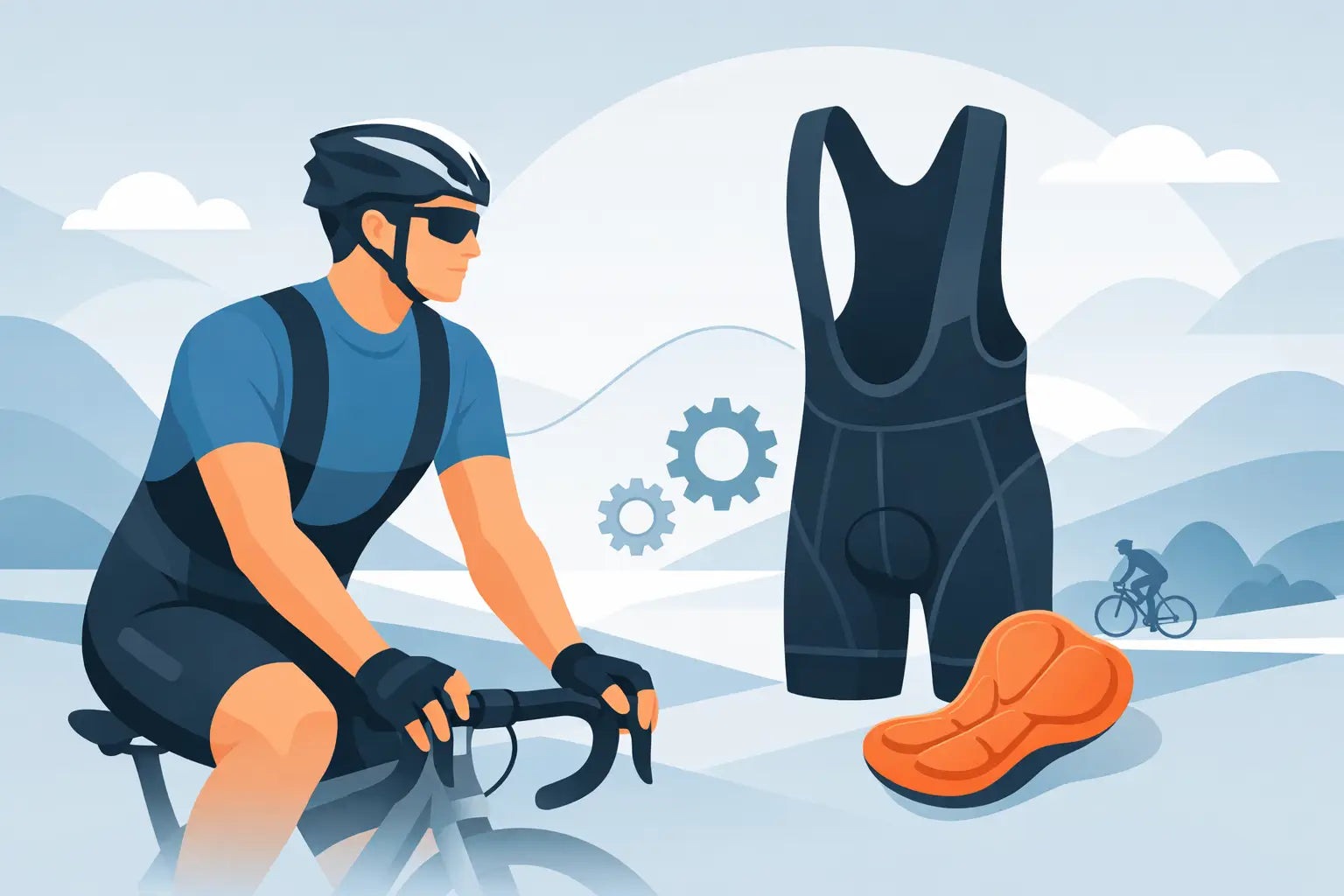
The first time you pull on bib shorts, they can feel a little overbuilt for a bike ride. Shoulder straps, compressive panels, a pad where regular shorts have none - it does not look casual, and it is not meant to. If you have ever wondered why do cyclists wear bib shorts, the short answer is simple: they stay in place better, support the body more effectively, and make long hours in the saddle far more comfortable.
That answer matters whether you are racing, training, riding with a club, or just trying to finish a weekend century without constantly adjusting your kit. Bib shorts are one of the clearest examples of cycling apparel being built around function first. They are not about tradition for tradition's sake. They are about reducing friction, improving fit, and helping riders perform without distraction.
Why do cyclists wear bib shorts instead of regular shorts?
Regular athletic shorts are designed for movement in a standing position. Cycling happens in a bent, forward-rotated posture, with repetitive leg motion and constant saddle contact. That changes everything about how a garment needs to fit.
Bib shorts solve a problem that waist shorts cannot fully solve. A waistband has to be tight enough to keep shorts from slipping down, but not so tight that it digs into the stomach when a rider is bent over the bars. On short rides, that trade-off may be manageable. On longer rides, it usually is not.
The bib upper replaces that waistband pressure with shoulder-supported stability. Instead of squeezing the midsection, the shorts are suspended from the shoulders and held evenly against the body. That gives riders a more secure fit with less bunching, less slipping, and less pressure at the waist.
For riders who spend serious time on the bike, this is not a small upgrade. It changes how the entire lower half of the kit behaves during pedaling.
The real performance benefits of bib shorts
The biggest benefit is stability. When shorts move, the chamois moves. When the chamois moves, friction increases. And when friction increases over an hour, two hours, or five hours, comfort drops fast.
A well-designed bib short keeps the chamois locked in position against the rider's body. That reduces rubbing and helps the pad do its job where it needs to. It also keeps the leg panels from creeping up or shifting around under load.
There is also a fit advantage that matters in race and training settings. Bib shorts are typically built with more anatomical paneling, compressive fabrics, and a closer on-bike cut than casual cycling shorts. That supports the muscles, improves fabric management at high cadence, and helps create a cleaner silhouette on the bike.
Aerodynamics play a role too, although comfort usually comes first. A short that stays flat against the body creates less drag than one that wrinkles, sags, or flaps. For racers and fast club riders, those details add up. For everyone else, the benefit is still real: a stable kit feels better and performs more predictably.
The chamois works better in bib shorts
The pad, or chamois, is the center of cycling short design. Its job is not to create a couch-like seat. It is there to manage pressure, reduce friction, and support the rider in a fixed pedaling position.
Bib shorts help the chamois work as intended because they hold it close to the skin. That close contact matters. If the pad shifts independently from the rider, hot spots are more likely to develop. If it stays planted, the interface between body, pad, and saddle becomes more consistent.
This is one reason experienced riders tend to prefer bibs almost immediately after switching. The improvement is not theoretical. It is something you feel during the ride, especially once the road gets rough, the pace increases, or the hours stack up.
Comfort is the biggest reason cyclists switch
For many riders, the question is not really why do cyclists wear bib shorts. It is why they keep wearing them once they try them. The answer is comfort under real riding conditions.
Without a tight waistband, breathing can feel less restricted, especially in an aggressive riding position. The upper body can stay relaxed while the lower half of the kit remains secure. On long climbs, hard efforts, and hot days, that freedom around the stomach can make a noticeable difference.
Bib shorts also tend to create a smoother transition under a jersey. There is less bunching at the waist and less chance of skin exposure when you are stretched out on the bike. That cleaner fit helps with comfort, temperature regulation, and overall ride feel.
If you ride short distances at an easy pace, these gains may seem marginal. If you ride often, train hard, or spend multiple hours in the saddle, they become hard to ignore.
Less adjustment during the ride
One overlooked advantage of bib shorts is how little attention they demand once they are on. Riders are not constantly pulling the waistband up, repositioning the legs, or dealing with a pad that has drifted out of place.
That matters because comfort on the bike is cumulative. Small annoyances become big issues when repeated over thousands of pedal strokes. Gear that disappears during the ride is usually gear that is doing its job.
Are bib shorts only for serious or competitive cyclists?
No, but they are most appreciated by riders who spend enough time on the bike to notice fit problems.
A beginner doing short recreational rides can absolutely ride in waist shorts or liners and be fine. Not every cyclist needs high-compression bibs for a neighborhood spin. But as ride duration increases, most riders start valuing the same things: consistent support, reduced chafing, and a fit that stays stable from the first mile to the last.
That is why bib shorts show up across road riding, gravel, mountain biking, and triathlon. The riding style may change, but the demands on the body remain similar. Repetitive motion, saddle contact, sweat, and varying terrain all test apparel quickly.
The exact bib short that works best depends on the discipline. A road racer may want maximum compression and an aerodynamic cut. A gravel rider may prioritize all-day support and durable fabrics. A club rider may want a balanced fit that performs on weekend group rides and weekday training sessions. The format changes, but the reason stays consistent: better comfort and better control.
The trade-offs are real
Bib shorts are not perfect for every situation. They take a little more effort to put on and take off. Bathroom breaks are less convenient, although many modern designs have improved strap and upper construction to make this easier. In very hot conditions, some riders may notice the extra upper material, though breathable mesh bib uppers have reduced that issue significantly.
Cost can also be a factor. Bib shorts are usually more technical than standard cycling shorts, with more pattern pieces, more advanced fabrics, and more development around fit and chamois integration. Better construction tends to cost more.
Still, this is one area where riders often notice the difference between entry-level and well-engineered kit. Cheap bibs can create their own problems through poor pad placement, weak straps, or inadequate fabric recovery. A strong bib short should feel supportive without feeling restrictive, and stable without creating pressure points.
What to look for in a quality bib short
Fit comes first. If the bib short does not sit correctly on your body, the rest of the features matter less. The straps should feel supportive but not overly tight. The leg grippers should hold position without pinching. Most importantly, the chamois should sit exactly where it needs to when you are in your riding position.
Fabric choice matters just as much. High-quality compressive textiles help stabilize the muscles, recover shape over time, and maintain a close fit through repeated use. Breathability is critical, especially for long rides and warm-weather training.
Construction details separate average bibs from race-ready ones. Flatlock or minimized seams can help reduce irritation. A well-shaped upper keeps tension balanced through the torso. Thoughtful panel placement can improve mobility while preserving compression and support.
For teams and clubs, consistency is another factor. Riders need kit that fits predictably across different body types and holds up through hard training, racing, and repeated washing. That is where manufacturing experience matters. Brands that build apparel with a performance-first approach, like CCN Sport, understand that bib shorts are not just another item in the kit. They are one of the most critical contact points between rider and bike.
Why bib shorts have become the standard
Cyclists wear bib shorts because they solve the problems that matter most on the bike. They hold the chamois in place, remove waistband pressure, reduce friction, support movement, and improve comfort over distance. For many riders, they also create a more precise, race-ready fit that feels faster and more secure.
That does not mean every bib short is automatically better than every pair of cycling shorts. Fit, materials, and construction still decide the outcome. But the reason bib shorts have become the standard is straightforward: when the design is done right, they help riders stay focused on the effort instead of managing the gear.
If your current shorts are sliding, bunching, or distracting you mid-ride, that is usually your answer. The best cycling apparel should disappear once the ride starts, leaving you with one less thing to think about and more confidence every time the pace picks up.

Share:
Custom Apparel for Cycling Clubs That Performs
Race Day Cycling Kit Checklist That Works