

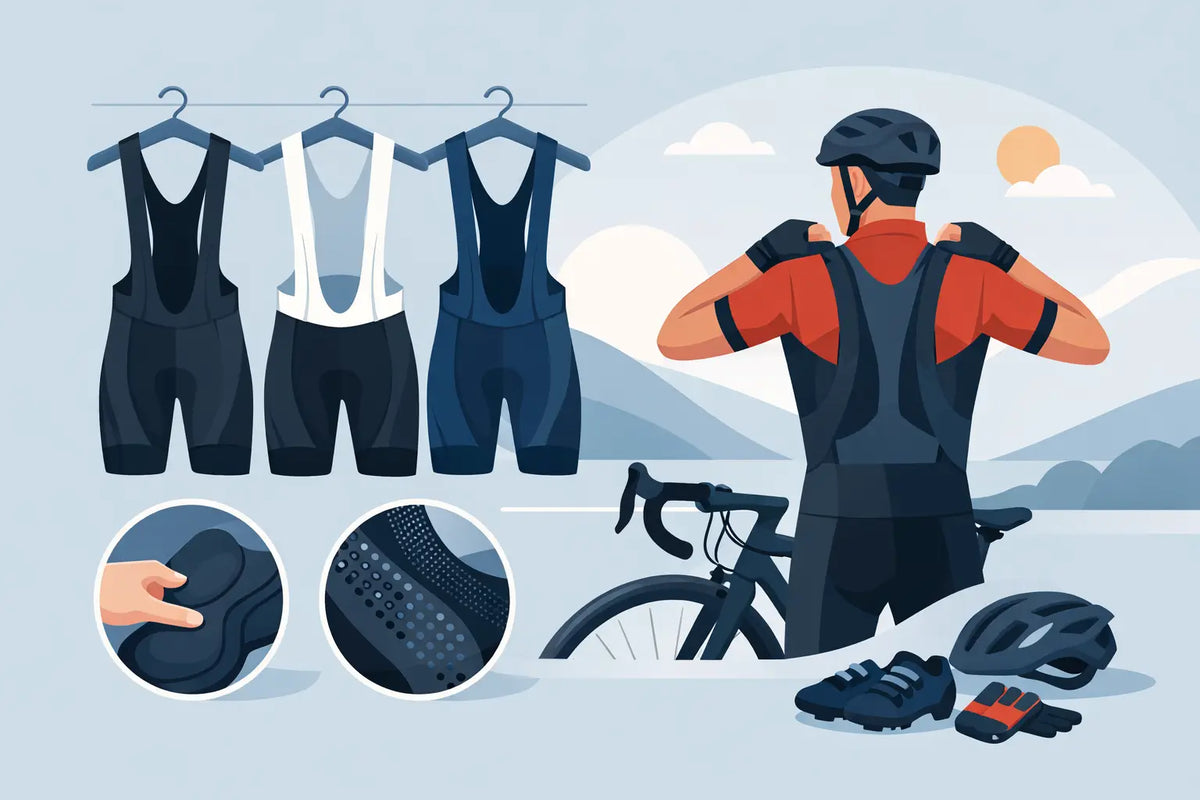
A bib short can have an excellent chamois and premium compression fabric, then still lose the ride at the shoulders. Straps that pull, twist, trap heat, or leave pressure marks turn a focused effort into a constant distraction. Knowing how to choose cycling bib straps means looking beyond whether they simply hold your shorts up. The right pair keeps the chamois stable, spreads pressure evenly, and disappears once you are rolling.
For race days, long club rides, gravel events, and daily training, straps are a key part of the fit system. They influence how the short sits against the body, how comfortable stops feel, and whether the bib remains composed after hours in the saddle.
What Cycling Bib Straps Are Designed to Do
Bib straps replace the restrictive waistband of traditional cycling shorts. They hold the short panel in position over the hips and keep the chamois aligned as you pedal, stand, and move around the bike. That stable support is why many riders prefer bib shorts for longer rides and hard efforts.
Good straps should provide light, consistent tension from front to back. They should not carry the entire load through a narrow point on the shoulders. Instead, they work with the leg grippers, body panels, and chamois construction to create a secure, race-ready fit.
The distinction matters because a strap that feels snug when standing can feel completely different in an aggressive riding position. A quality design accounts for the rider's natural reach to the bars and the compression of the short itself.
How to Choose Cycling Bib Straps by Fit
Start with overall bib-short sizing, not the straps in isolation. If the torso is too short for your body, the straps will pull upward no matter how soft or wide they are. If the bib is oversized, the straps may feel comfortable at first but allow the chamois to shift when your cadence rises.
Try the bib on in a riding stance. Bend at the hips, reach your arms forward, and squat or lift one knee at a time. The straps should lie flat against the chest and shoulders without cutting in. Across the lower back, there should be enough tension to prevent sagging but not so much that the fabric feels stretched to its limit.
A few signs of a poor fit are easy to spot. Straps that bow away from the chest, bunch near the collarbone, or twist at the shoulder usually indicate the wrong size or an unsuitable strap layout. Deep red marks after a short try-on are another warning. Minor impressions can be normal with performance compression, but numbness, pinching, or a persistent pull is not.
Torso length deserves special attention. Two riders at the same height can need different strap lengths because their proportions differ. Riders with longer torsos often benefit from more elastic recovery and a slightly longer strap path. Shorter-torso riders generally need straps that stay flat without excess material gathering at the chest.
Strap Width, Shape, and Pressure Distribution
Width changes the feel of a bib more than many riders expect. Narrow straps can feel minimal and can work well on race-focused pieces, particularly when the material has excellent stretch and recovery. Their trade-off is a more concentrated pressure point if the sizing or torso length is not right.
Wider straps spread load across a larger area of the shoulder. They are often a strong choice for endurance riding, gravel, and riders who have experienced shoulder pressure from narrow elastic straps. A wider design can also sit more securely beneath a jersey, provided it is cut cleanly and does not fold at the edge.
Shape matters as much as width. Contoured straps follow the shoulder line and are less likely to migrate toward the neck. A well-designed Y-back or crossed-back configuration can stabilize the rear panel while keeping the front open and breathable. Neither layout is automatically better. The best option is the one that remains flat on your body in your normal riding position.
Look closely at where straps join the bib short. Smooth, low-profile transitions reduce bulk at the chest and back. Heavy seams or stiff binding may feel acceptable in a fitting room but become noticeable after three hours over rough pavement.
Choose Materials for the Conditions You Ride
Most high-performance bib straps use lightweight stretch mesh, elastic knit fabric, or a blend designed for breathability and shape retention. The goal is controlled stretch: enough give to move freely, enough recovery to keep the short stable after repeated wear and washing.
For hot weather and high-output riding, open mesh straps help release heat and dry quickly after sweat. This can be especially valuable under a close-fitting jersey, where trapped moisture can make a ride feel warmer than the temperature suggests. The trade-off is that very open mesh may feel less substantial, so the construction must still provide dependable support.
For cool-weather use, a slightly denser strap material can add comfort and coverage, but it should never become bulky beneath base layers. If you regularly layer for winter training, test whether the straps remain comfortable over or under your preferred base layer. The answer depends on the bib's cut and your layering system.
Also consider durability. Straps are repeatedly stretched when dressing, washed after hard rides, and exposed to sunscreen, sweat, and friction. Quality elastic recovery helps prevent the loose, tired fit that lets a bib creep downward over time. Follow the care label, avoid high dryer heat, and do not store bibs stretched over hangers.
Don’t Overlook Bathroom Break Practicality
For many women riders, strap access is a deciding factor. Traditional bib straps can require removing a jersey and base layer during a stop, which is inconvenient on a long ride and unnecessarily difficult in cold or wet conditions. Drop-tail, quick-release, or other easy-access constructions make stops faster without giving up bib-short stability.
The best system should be simple enough to use when tired, wearing gloves, or managing layers. Test the mechanism before committing to it for an event. Closures should sit smoothly against the body and stay secure through pedaling, climbing, and repeated movement.
Men should also consider access and layering, particularly for endurance events or winter riding. A strap layout with a clean front and minimal overlap can make a practical difference when a jersey, vest, or jacket is involved.
Match Strap Construction to Your Riding Discipline
Road racers and criterium riders usually prioritize a close, aerodynamic profile. Low-bulk straps with a precise fit help keep the upper body clean under a race jersey, while stable tension supports an aggressive position.
Endurance road riders often benefit from broader, softer straps and highly breathable fabrics. Over six or more hours, even small pressure points can become significant. Gravel riders should look for the same long-distance comfort, with particular attention to chamois stability over rough surfaces. The straps need to keep the short anchored when the terrain is constantly moving beneath you.
For mountain biking, the right choice depends on whether you wear bibs alone or under baggy overshorts. Breathable, flat straps prevent unnecessary heat buildup and reduce rubbing under additional layers. Triathletes may prefer straps that support a stable, low-profile fit from the bike through transitions, without restrictive seams across the chest.
What Teams Should Consider When Selecting Bib Straps
For a custom club or team kit, strap selection is a performance and consistency decision. A team includes different body types, riding positions, and priorities, so a proven strap construction is usually more valuable than an overly specialized feature that only suits a small segment of riders.
Choose a bib platform with dependable sizing, durable stretch recovery, and a chamois that matches the team’s typical ride duration. Then evaluate the straps in real riding positions across a size run. A clean shoulder fit on one rider does not guarantee the same result for every athlete.
CCN Sport builds its bib short systems around this complete fit equation: compression, chamois support, panel placement, and straps working together for race-ready comfort. For custom teams, that integration helps create a kit athletes want to wear for training as well as competition.
Make the Final Decision on the Bike
Do not choose bib straps based only on softness when you first pull them on. Soft fabric is welcome, but stability, recovery, breathability, and correct torso fit determine how the bib performs after the first hard hour.
Wear the bib in your normal riding position, assess pressure at the shoulders and chest, and consider the conditions and distances you actually ride. The right straps will not demand your attention. They will keep the chamois exactly where it belongs, let you breathe freely, and leave you focused on the wheel ahead.

Share:
How to Pick Cycling Base Layers for Every Ride
Men and Women Cycling Kit Guide for Better Rides